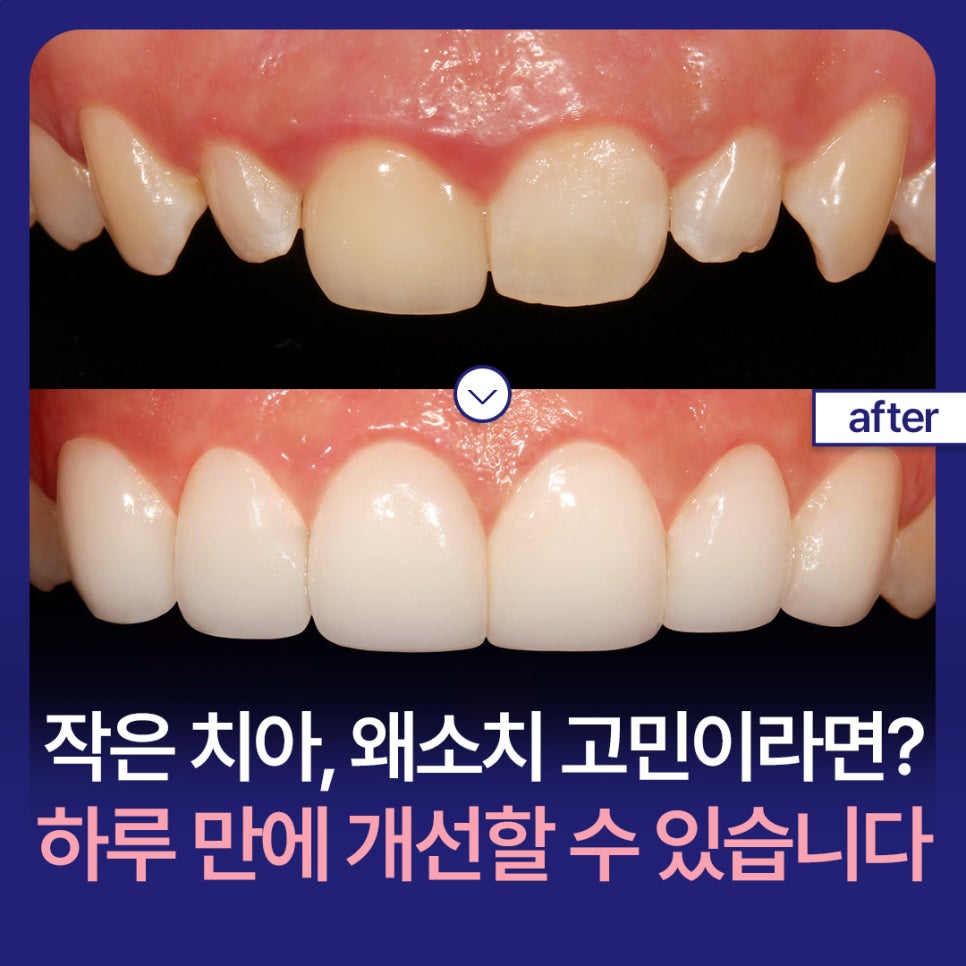
Have you ever felt self-conscious because your teeth are small when you smile? In particular, if the tooth next to the front teeth is unusually small or looks oddly shaped, it can make the overall alignment appear unbalanced. Because even a difference in the size of a single tooth can change the impression you give, this often goes beyond a simple concern and becomes a complex. Today, let’s look at the cause of this issue, microdontia, and how it can be addressed.
Microdontia is not just a small tooth
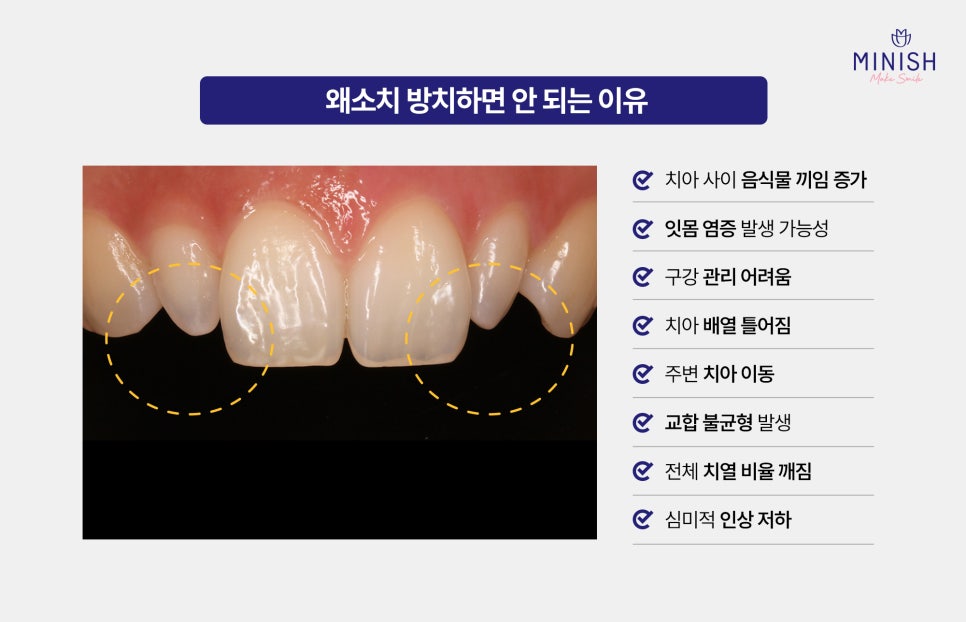
Microdontia refers to teeth that are smaller than normal or abnormally shaped. It often appears around the front teeth, and because the shape as well as the size can differ, it tends to stand out easily. The problem is that it does not end with appearance alone. If microdontia is left as is, spaces between teeth can widen, making it easier for food to get stuck. This can lead to gum inflammation and difficulty maintaining oral hygiene. In addition, neighboring teeth may shift into the empty space, causing the alignment to become distorted, and over time it can also disrupt the balance of the bite. Therefore, rather than simply dismissing microdontia as “small teeth,” it is important to consider improving it while also taking functional aspects into account.
What treatments are available for microdontia?
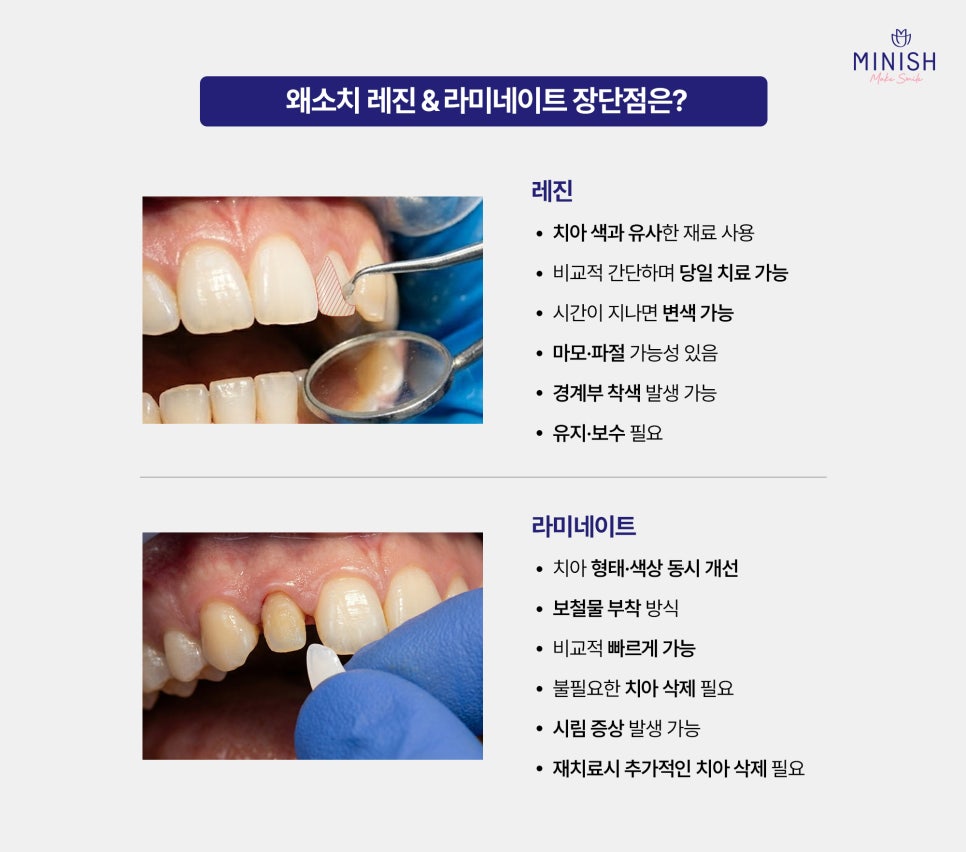
Microdontia can be improved in several ways, and resin and laminate are commonly mentioned.
✔️ Resin
Resin is a method that uses a tooth-colored material to directly fill in 부족한 areas and correct the shape. It is carried out through a relatively simple process, and because there is little to no tooth reduction, it is a less burdensome treatment option. In many cases, treatment can be completed on the same day, making it quite accessible. However, due to the nature of the material, discoloration may occur over time, and if strong force is applied, it may wear down or partially chip. In addition, staining or tiny gaps may form at the boundary where the tooth and resin meet, so regular maintenance or repair may be necessary.
✔️ Laminate
Laminate is a method in which the surface of the tooth is refined and then a thin prosthetic is attached to improve both shape and color. Because it can improve the tooth’s shape, size, and color at the same time in a relatively short period, it offers a significant aesthetic change. It also has the advantage of maintaining a consistent finished shape. However, the process may require removing some of the tooth surface in order to attach the prosthetic, and depending on the individual, sensitivity after the procedure may occur. Also, once it has been done, it is difficult to return to the original state, so careful consideration is needed.
Each method has its own pros and cons, so rather than choosing based only on speed or cost, it is important to consider the current condition of the teeth and the desired outcome together.
A solution that can be completed in one day
Tooth restoration solution, Minish
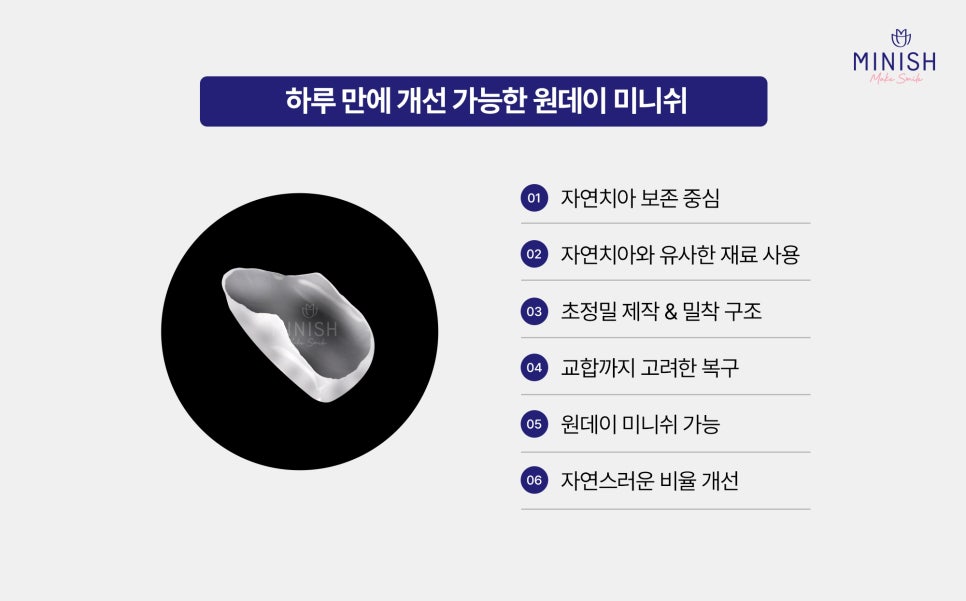
For small teeth such as microdontia, treatment that preserves the natural tooth as much as possible is important. Minish is a tooth restoration solution that considers both shape and function, and it has the following features.
✔️ Focused on preserving natural teeth
It is performed without unnecessary tooth reduction, preserving the existing teeth as much as possible.
✔️ Uses materials similar to natural teeth
Not only the color, but also the texture and strength are reproduced naturally.
✔️ Ultra-precise fabrication & close-fitting structure
It increases the fit with the tooth, resulting in less discomfort and a stable condition.
✔️ Restoration that also considers the bite
It takes into account not only aesthetic improvement, but also chewing function and balance.
✔️ No temporary teeth, one-day Minish possible
Improvement can be completed in one day without the burden of multiple visits.
✔️ Natural proportion improvement
The shape and size are designed together so they harmonize with the surrounding teeth.
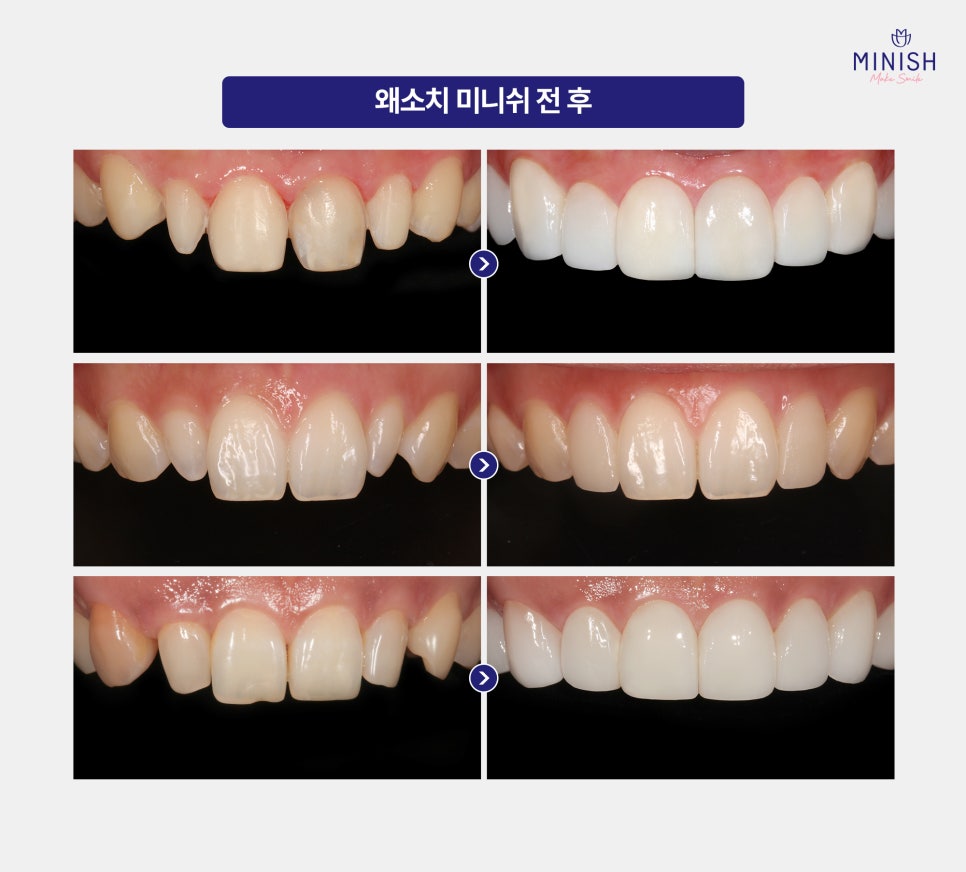
You can see how the appearance changes with Minish for the microdontia complex caused by small teeth.
Microdontia can affect not only what is visible on the surface, but also the overall oral environment. Rather than putting it off because it seems like a small difference, it is important to check the method that fits your current condition. Since teeth are difficult to restore once damaged, it is preferable to approach the issue in a way that preserves the natural tooth as much as possible. If you are worried about microdontia, we recommend consulting to find the improvement method that is right for you.