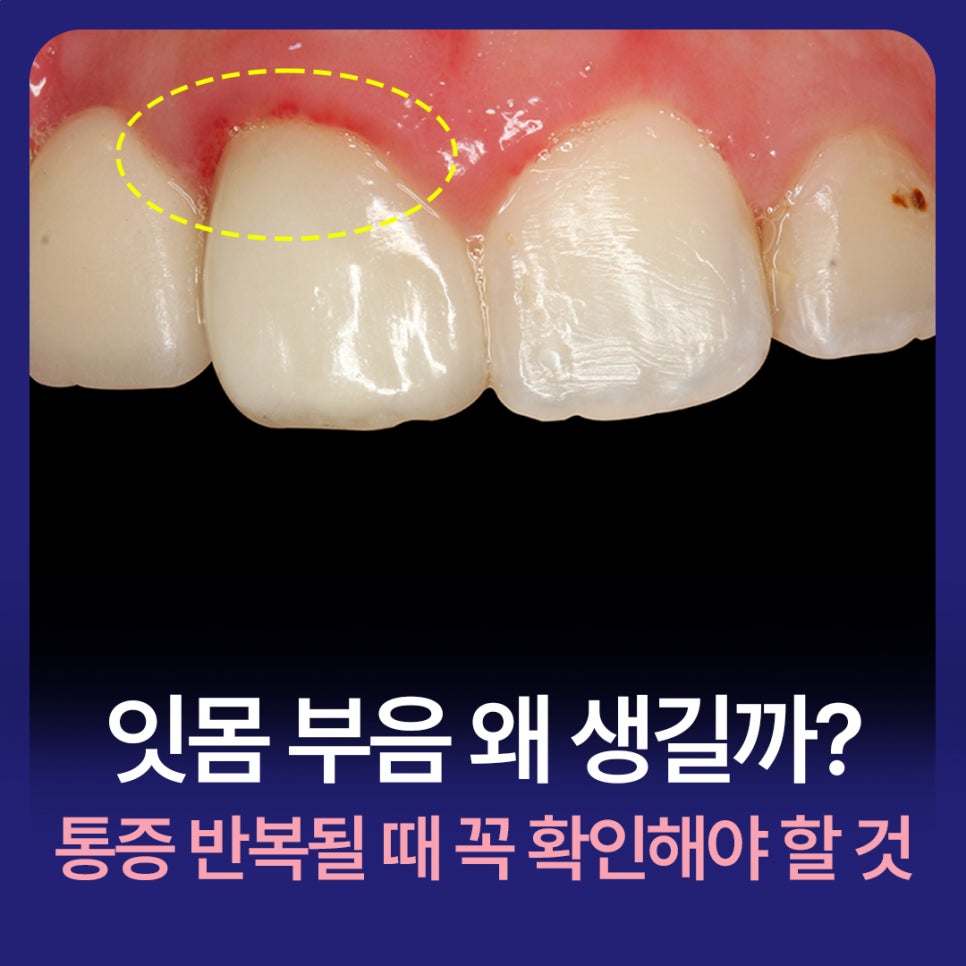
Have you ever had bleeding when brushing your teeth, or felt your gums throb when chewing food? At first, you may brush it off, thinking, “It’ll go away in a moment,” but when this gum swelling starts happening repeatedly, it can become increasingly uncomfortable in daily life. In particular, if the pain keeps continuing, it may be a sign that it is not just a simple issue, so it is important to know the cause accurately.
How to respond quickly when gums swell and hurt

When pain suddenly flares up, the first step is to reduce the pain. In general, anti-inflammatory pain relievers can help ease inflammation and pain, and taking them after meals can help reduce stomach irritation. However, it is important to remember that medicine only plays a temporary role in calming symptoms and is not a fundamental solution. In other words, even if gum swelling feels better for a while with medicine, that does not mean the cause has disappeared.
(Please consult a medical professional before taking it.)
Why do gum swelling and pain keep recurring?
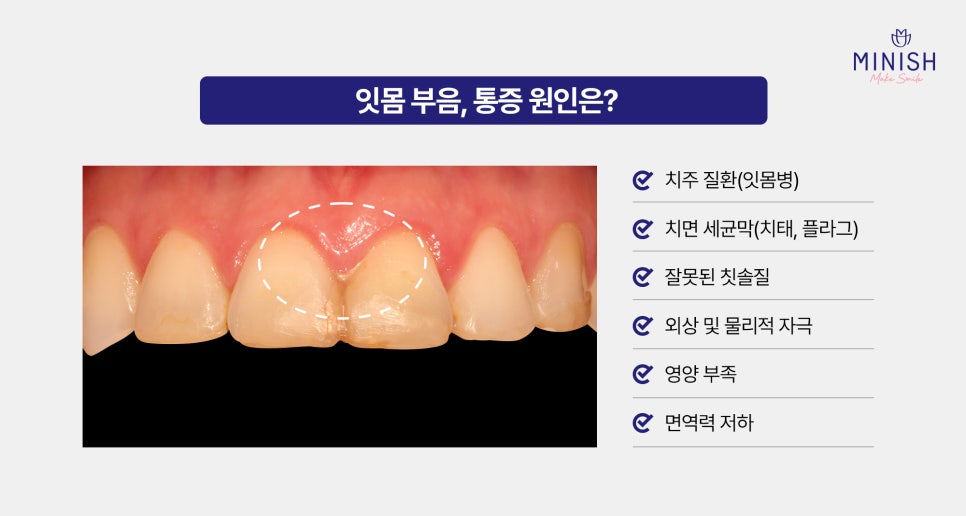
The biggest reason pain keeps recurring is that the cause has not been resolved. Typical causes include the following.
- Periodontal disease (gum disease)
Bacteria build up between the teeth and gums, causing inflammation. If it progresses, the gums may recede or the teeth may become loose.
- Dental plaque (biofilm, plaque)
Food debris remains and turns into a biofilm, continuously irritating the gums.
Brushing with too much force or using a harsh toothbrush can injure the gums.
- Trauma and physical irritation
Hard foods or bite problems can repeatedly irritate the gums.
If essential nutrients such as vitamins are lacking, the gums can become weaker and more prone to swelling.
When stress and fatigue build up, inflammation can worsen more easily.
Among these, the most fundamental cause is bacteria. In particular, food left between the teeth and gums gradually turns into plaque (biofilm) over time. If this plaque is not properly removed, it becomes a reason gum swelling keeps recurring, so the next important question is how to manage it.
How to reduce plaque and build the right habits
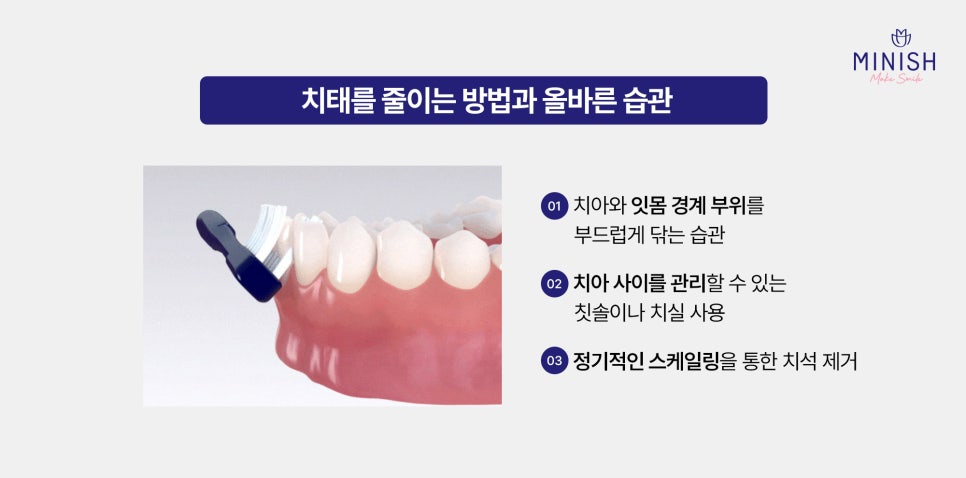
To reduce bacteria, the method matters more than simply how many times you brush.
-
Developing the habit of gently brushing along the gum line
-
Using interdental brushes or dental floss to clean between teeth
-
Removing tartar through regular scaling
In particular, plaque turns into hard tartar over time, so daily care and dental care must go together. If proper habits are not established, the environment that causes gum swelling to recur may continue to remain.
Gum swelling: treatment tailored to the cause is important
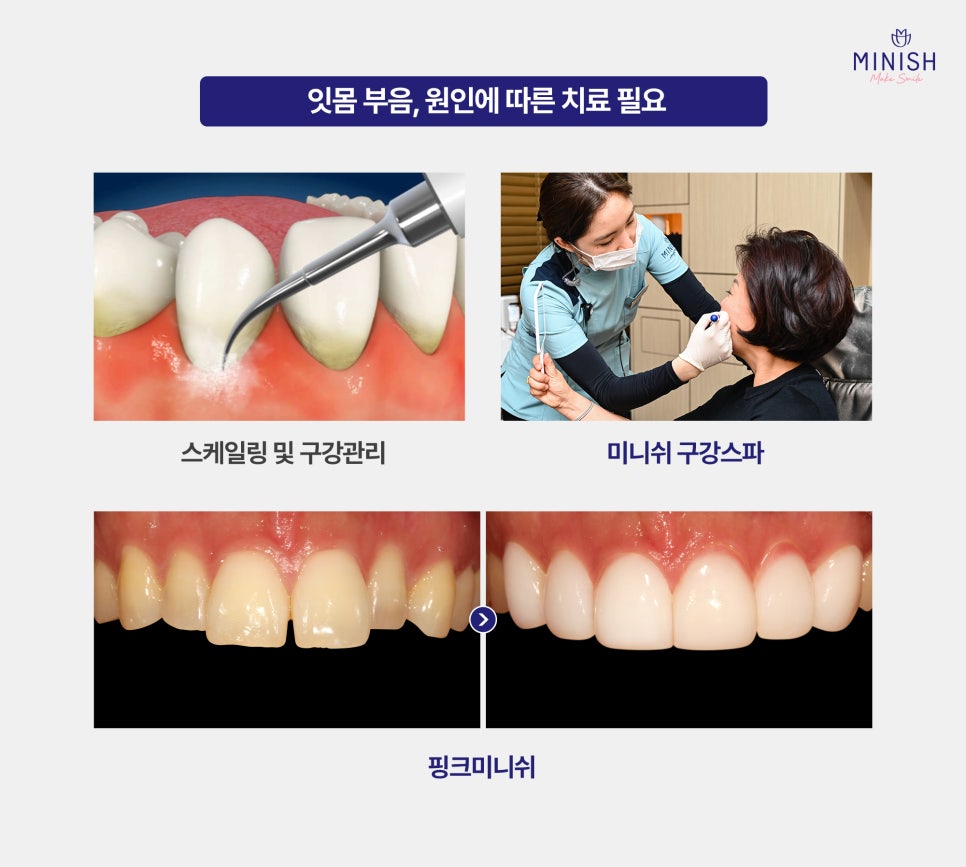
Because the treatment for gum swelling differs depending on the cause, an accurate diagnosis is more important than anything else. If left untreated, inflammation can deepen and affect both the gums and the teeth. At Minish Dental Hospital, step-by-step treatment is provided depending on the condition, as follows.
- Initial-stage care (scaling and oral care)
This is basic treatment that relieves gum inflammation by removing tartar and plaque.
This is a program that includes plaque management, removal of remaining tartar, and gum care, allowing for more systematic gum care.
When gum swelling repeats or the gums are damaged, this method helps restore gum tissue and naturally improve a collapsed gum line. It considers not only functional recovery but also aesthetic aspects, and may help maintain a more stable gum condition.
As such, gum swelling is not simply something that can be addressed with basic care alone; it may be a sign that treatment suited to the condition is needed. Therefore, if symptoms keep recurring, do not leave them untreated. Please visit Minish Dental Hospital and receive an accurate examination and treatment tailored to the cause.