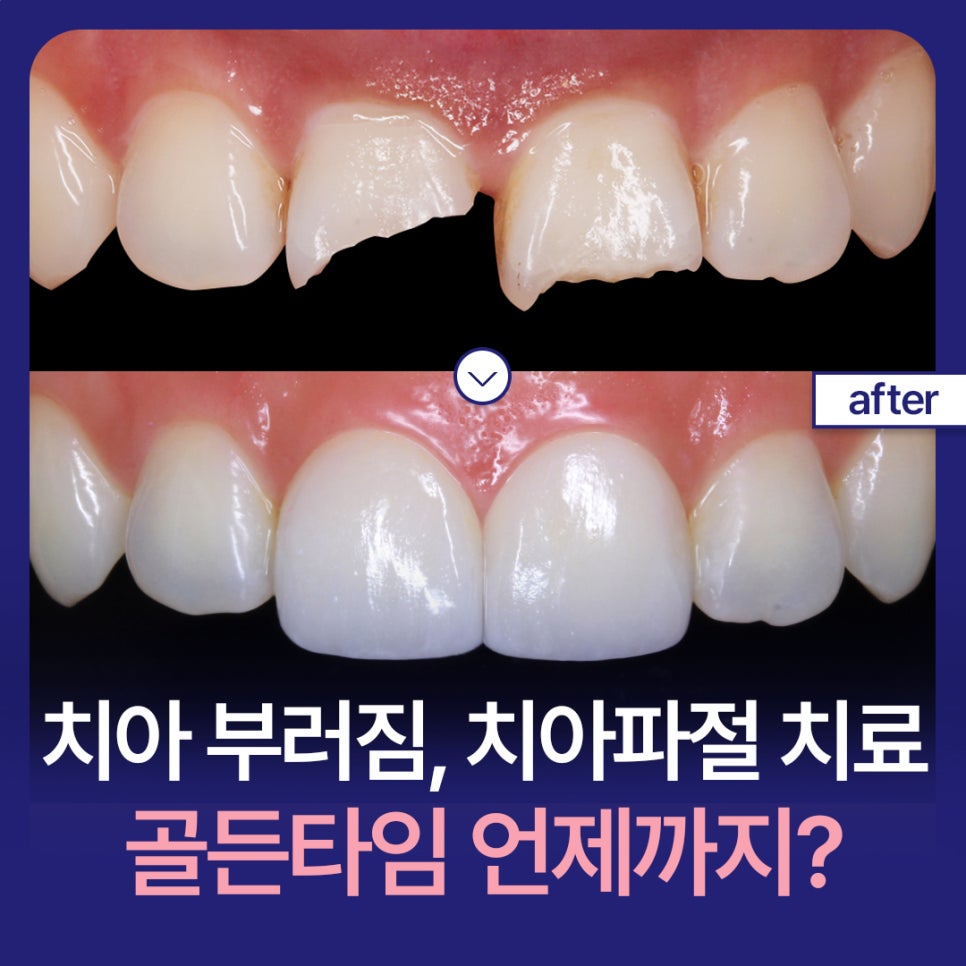
During daily life, teeth can crack or break due to unexpected accidents. This can happen for various reasons, such as eating hard foods, external impact, or falling. Even if there is no pain at the moment, internal damage often progresses. The later the initial response, the lower the chance of saving the tooth, so quick judgment is necessary.
Types of Broken Teeth (Tooth Fractures)
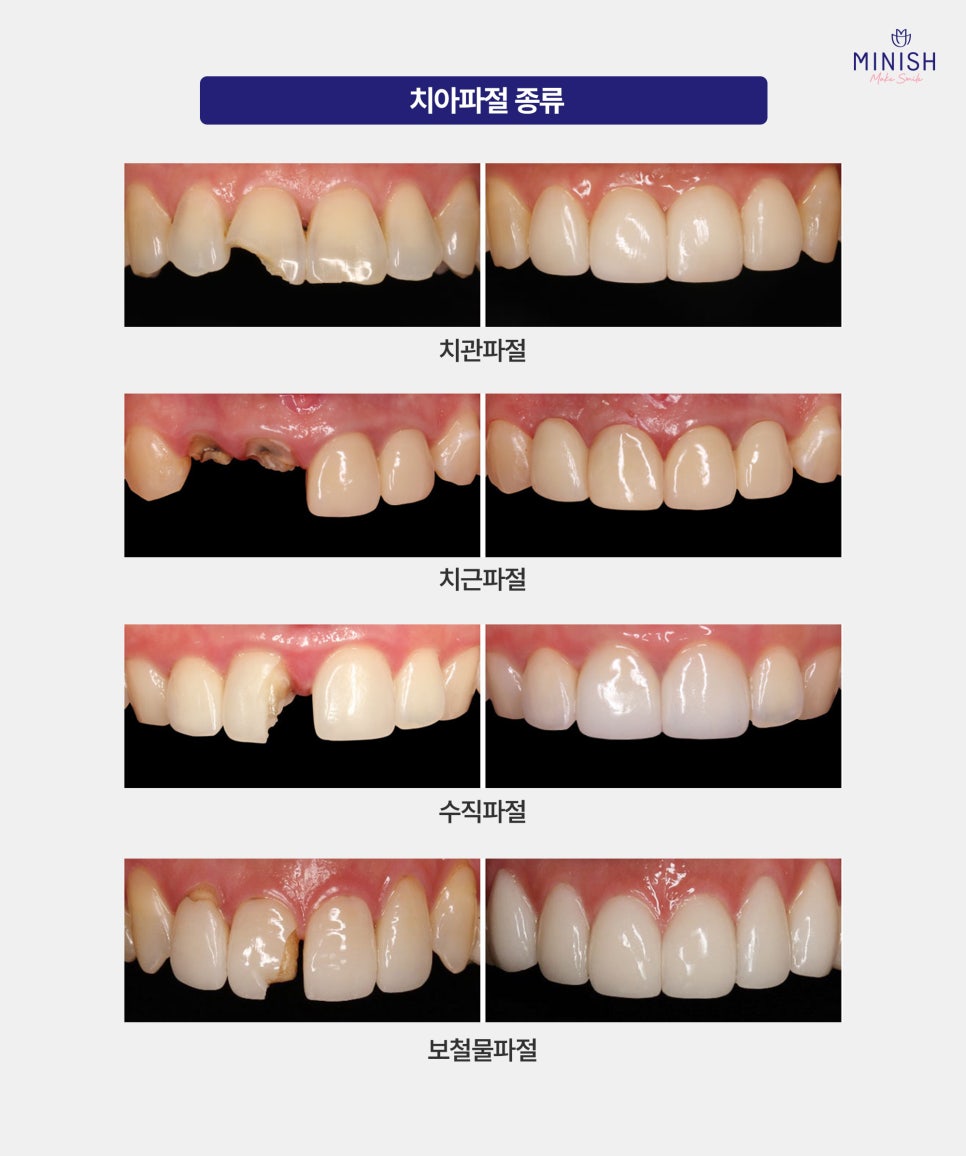
A broken tooth is not always the same condition. The treatment approach changes completely depending on the location and form of the damage. The main types of tooth fractures are as follows.
[Coronal fracture]
→ The visible crown part of the tooth is cracked or broken.
[Root fracture]
→ A crack or break in the tooth root below the gum line.
[Vertical fracture]
→ A fracture in which the tooth splits from top to bottom.
[Prosthetic fracture]
→ A fracture caused by damage to an existing prosthetic restoration such as a crown or resin.
Even within the broad category of “broken teeth,” the range can vary greatly from simple surface damage to the possibility of extraction.
How to Respond to a Broken Tooth (Tooth Fracture)
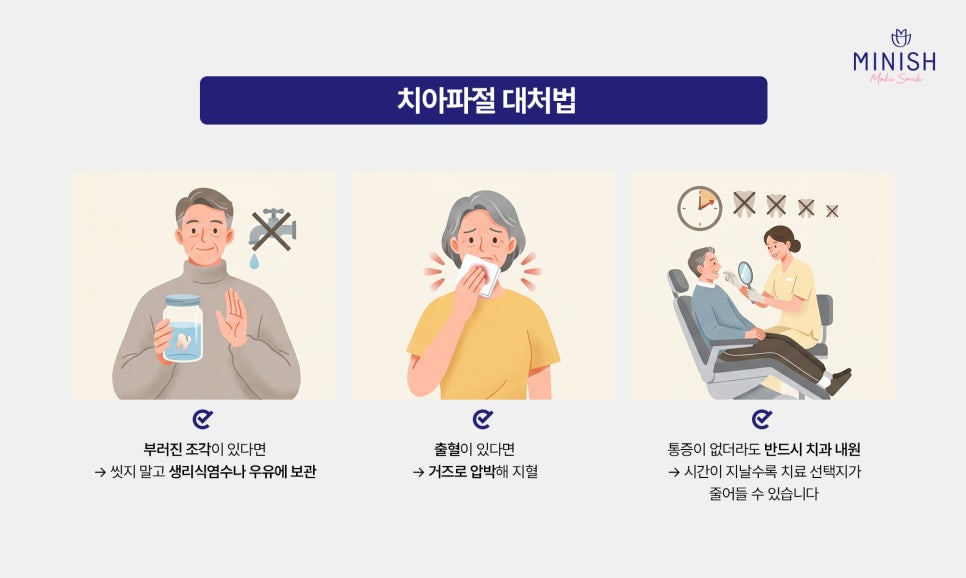
✔ If you have the broken piece
→ Do not wash it; store it in saline solution or milk
✔ If there is bleeding
→ Apply pressure with gauze to stop the bleeding
✔ Even if there is no pain, be sure to visit a dentist
→ As time passes, treatment options may decrease
What Happens If a Broken Tooth (Tooth Fracture) Is Left Untreated!

If a tooth fracture is treated as a minor injury, the following problems are very likely to occur.
✔ The crack gradually expands, leading to a complete tooth fracture
✔ Nerve damage and inflammation occur
✔ Secondary problems affecting the jawbone and gums
✔ Eventually, it may lead to extraction
In other words, a condition that could be simply repaired at an early stage can become much broader in scope if left untreated.
Limitations of Traditional Treatment Methods for Broken Teeth (Tooth Fractures)
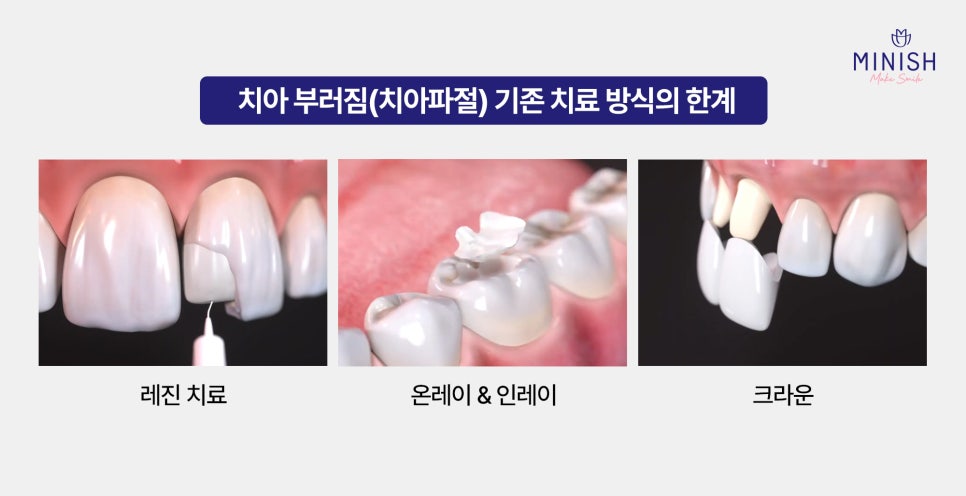
In general, treatments for broken teeth include resin treatment, crowns, and onlays & inlays. However, when the damaged area is extensive or fractures recur repeatedly, it is often difficult to sufficiently preserve the natural tooth. In such cases, a tooth restoration solution called “Minish” can be considered.
For Broken Teeth (Tooth Fractures)? Minish!
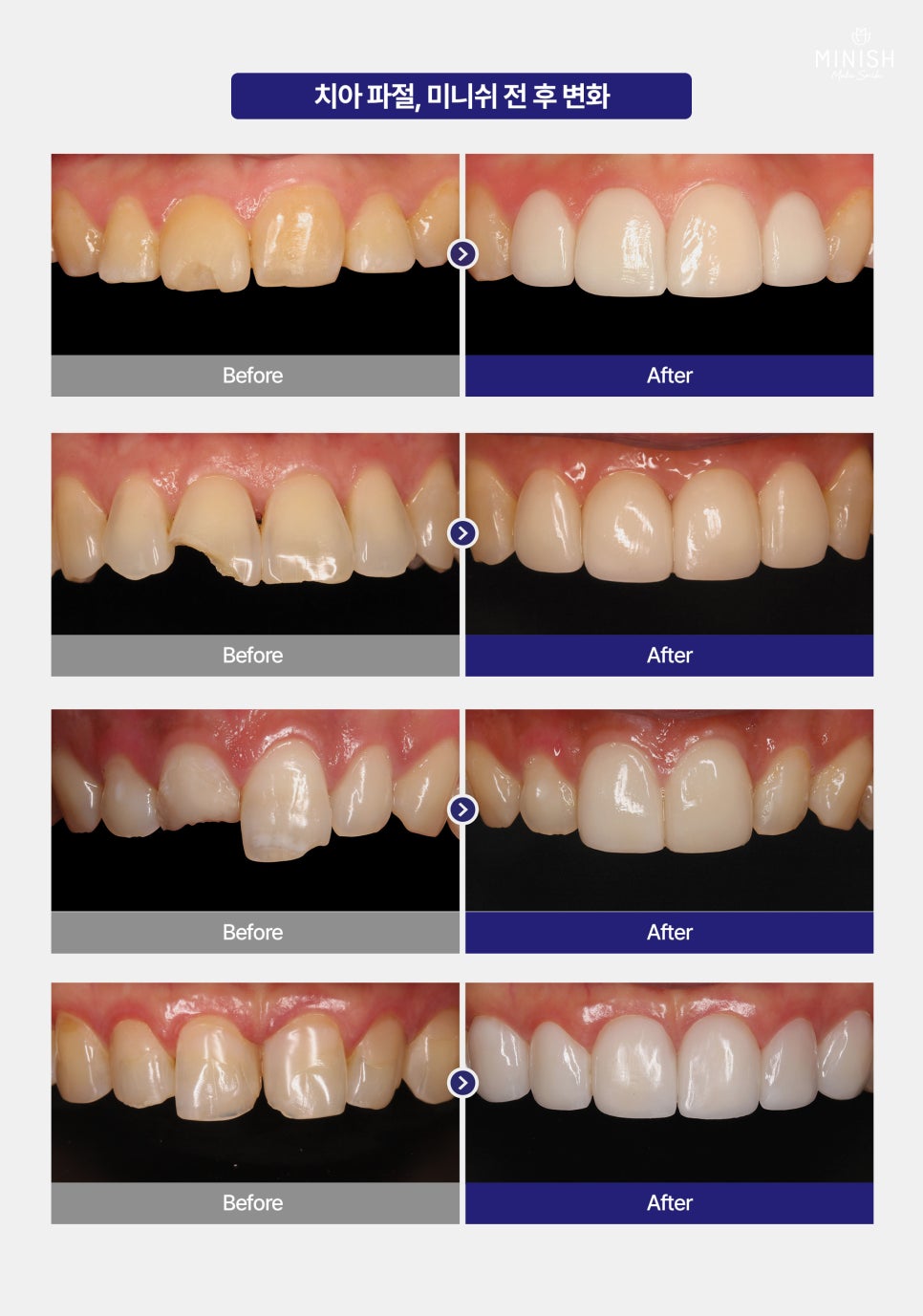
Minish is not a treatment that simply covers dental trauma, but a restorative treatment concept that rebuilds the damaged tooth.
It minimizes the removal of natural tooth structure while precisely restoring the fractured area and recovering both function and shape at the same time.
In particular, for tooth fractures:
▲ Precise restoration centered on the broken area
▲ Minimization of unnecessary removal
▲ Aesthetic appearance and function
These can be improved simultaneously, and its defining feature is that it is a tooth restoration solution centered on preserving the natural tooth rather than a simple prosthetic restoration.
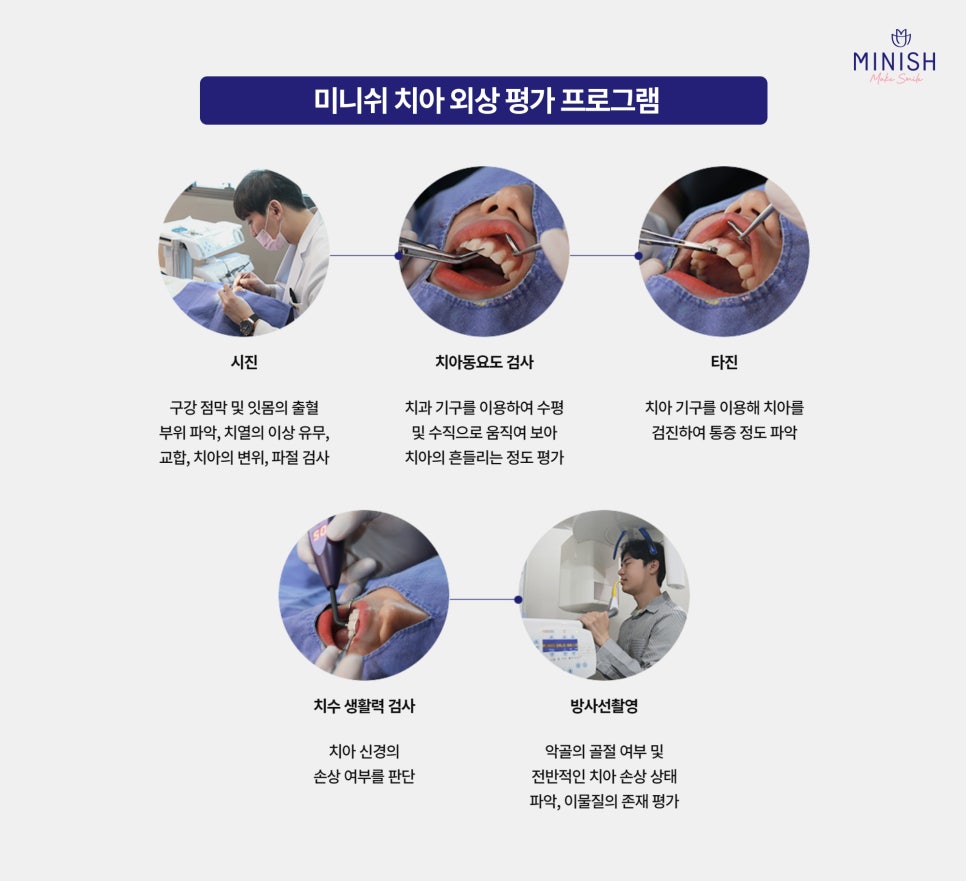
Because dental trauma is unpredictable, a rapid response system determines the treatment outcome.
At Minish Dental Hospital, treatment is carried out in a systematic way that leads from immediately after the trauma through recovery, with the goal of saving as much of the tooth as possible.
If your tooth is broken, do not delay and get an accurate diagnosis.
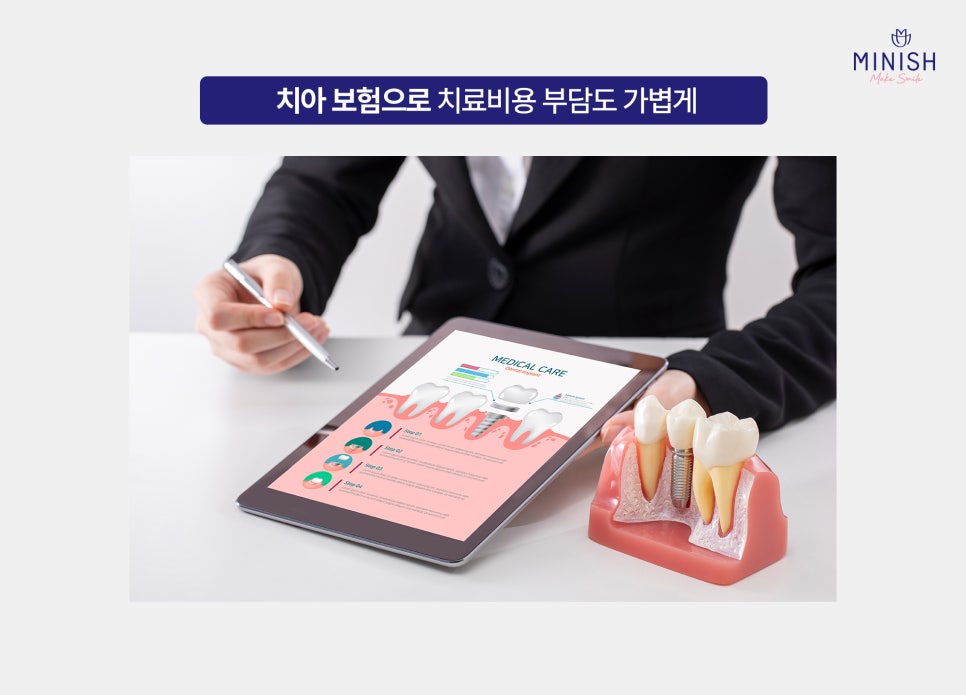
If, in the physician’s opinion, Minish is needed for treatment purposes due to a tooth fracture, the procedure can be performed together with insurance-covered treatments. Eligibility may vary depending on your current condition, so please confirm through an accurate diagnosis and consultation.