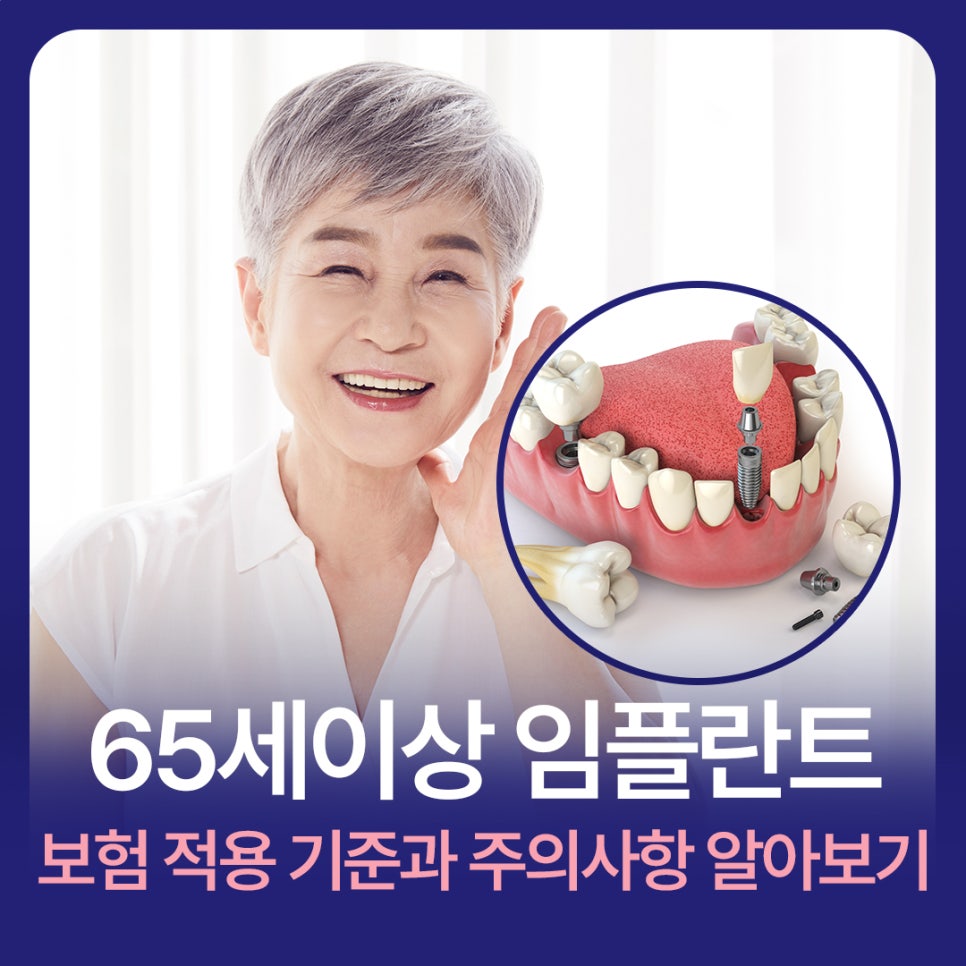
After losing teeth, many people find it difficult to chew food or speak comfortably, but hesitate to get implants because of the cost. In particular, if you are 65 or older, you may have heard that health insurance coverage is available.
However, insurance benefits do not apply in every case, so it is important to check the eligibility criteria and limitations accurately. Today, we will take a detailed look at the national health insurance standards for implants for those 65 and older, as well as the precautions you should definitely know.
Can people 65 and older get implant insurance coverage?
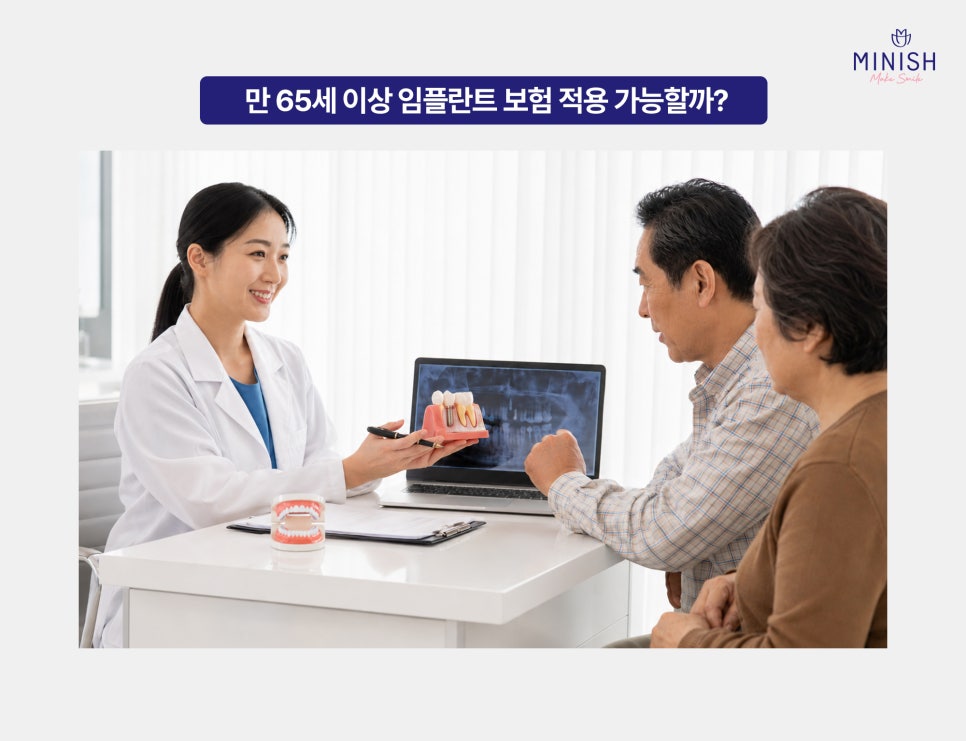
Currently, the National Health Insurance provides implant insurance benefits for insured persons or dependents aged 65 and older.
If some teeth remain, insurance coverage may apply under certain conditions, and the feature is that out-of-pocket costs can be reduced.
However, simply meeting the age requirement does not mean coverage applies in every case. Since eligibility for insurance may vary depending on the condition of the teeth, the treatment area, and the treatment plan, an accurate diagnosis should come first.
What are the insurance coverage criteria?
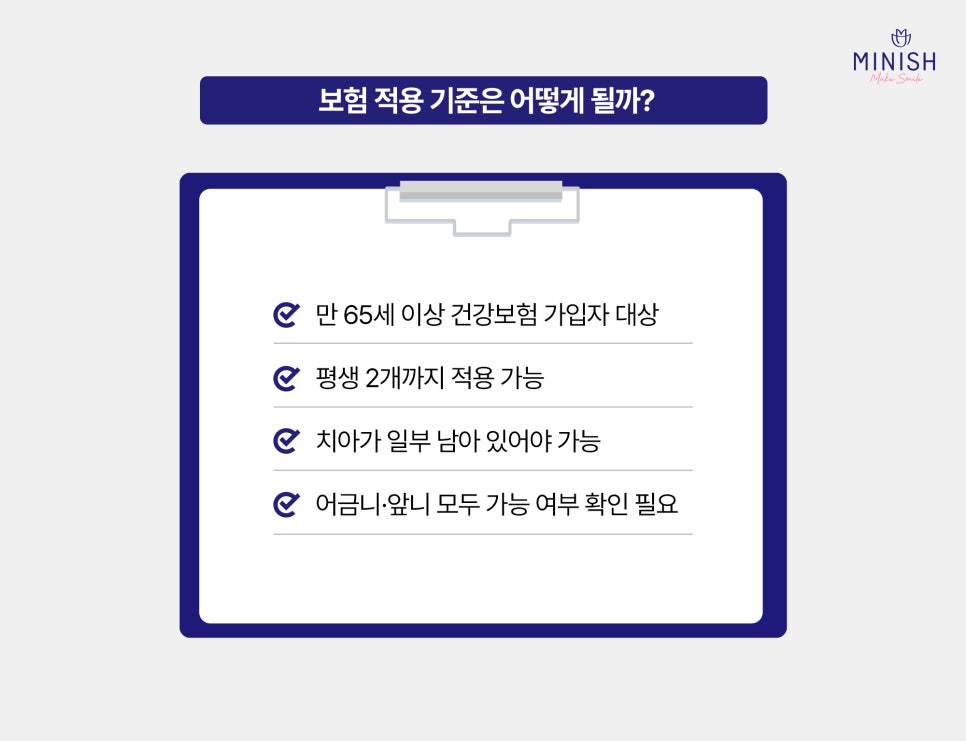
- For National Health Insurance subscribers aged 65 and older
You must be 65 or older according to your resident registration and be a National Health Insurance subscriber or dependent.
- Coverage is available for up to 2 implants in a lifetime
National Health Insurance implant coverage is available for up to two implants per person over a lifetime.
If you have already received insurance benefits, additional coverage may be difficult.
- Some natural teeth must remain
If you are completely edentulous, you may be excluded from the standard insurance implant coverage.
The remaining teeth and the condition of the gums must be checked together.
- Need to check whether it is possible for both molars and front teeth
In the past, there were restrictions on the covered area, but currently both front teeth and molars may be covered.
However, suitability for treatment may vary depending on the individual’s condition.
Is an insurance-covered implant the same as any other treatment?
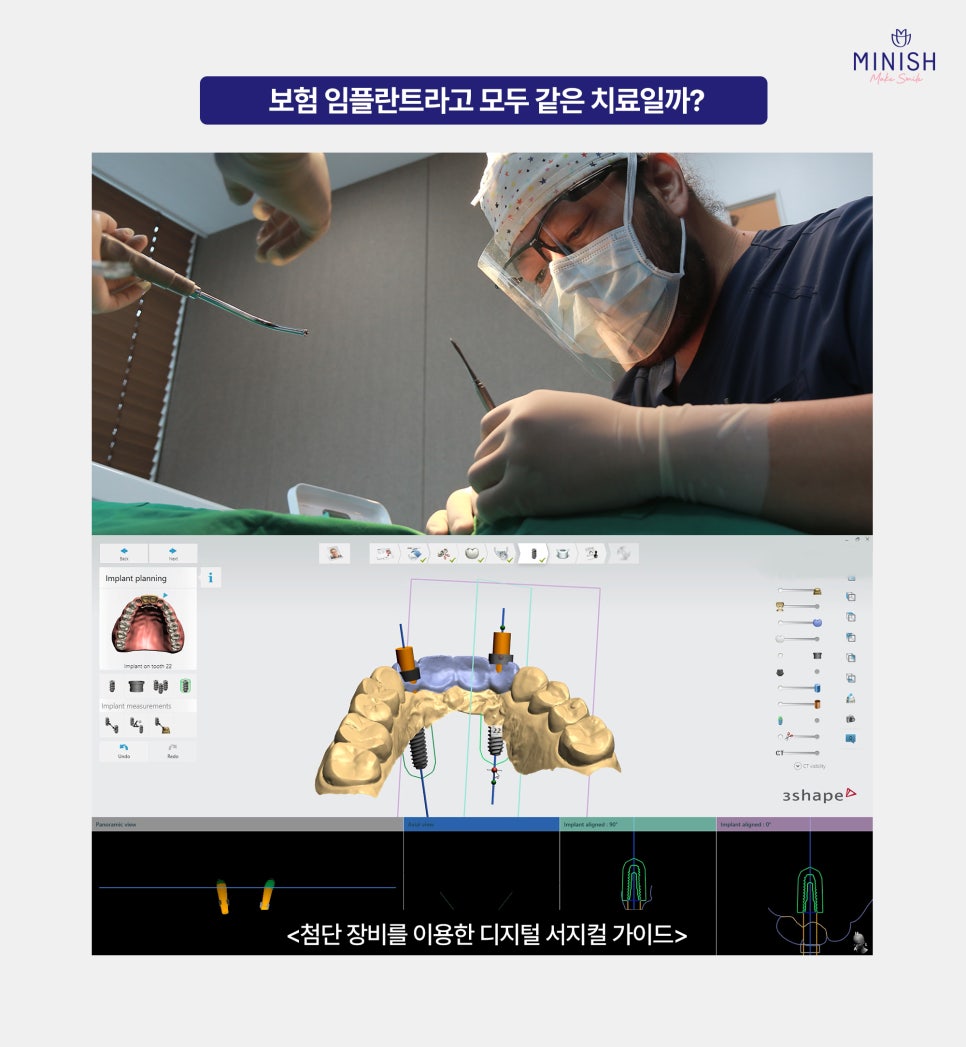
Implants are not simply a process of replacing a tooth. The condition of the jawbone, bite, and balance with surrounding teeth must also be considered for long-term stable use. In particular, for older adults, gum health and whether there are any systemic diseases must also be carefully checked. The treatment plan may change depending on whether you take medication for diabetes or osteoporosis, or depending on the degree of jawbone resorption. Recently, many cases involve planning the treatment direction while more precisely checking the jawbone and nerve positions using digital diagnostic equipment.
Be sure to know the precautions before and after implants!
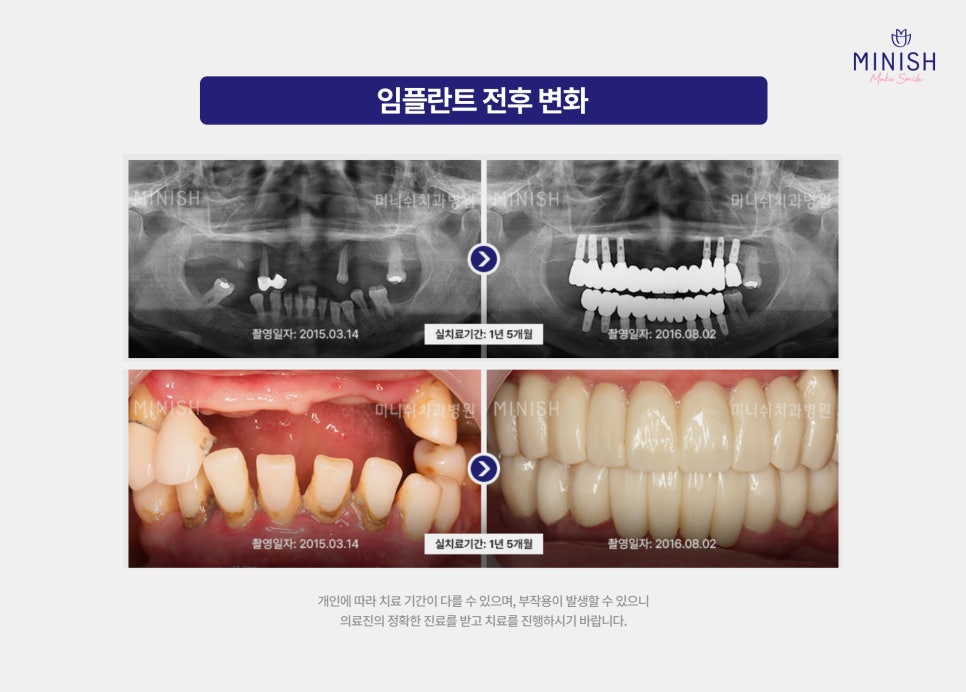
Check the jawbone condition
If teeth have been missing for a long time, the jawbone may have become thin.
In that case, additional bone-related procedures may be necessary.
Maintenance is important
Care after implant placement is also very important.
If maintenance is neglected, gum inflammation such as peri-implantitis can occur, and in severe cases it may lead to loosening or discomfort.
Regular checkups are necessary
As with natural teeth, regular checkups and oral care are important for implants as well.
In particular, older adults often experience dry mouth or gum disease at the same time, so consistent checkups are needed.
Accurate confirmation of oral condition comes first
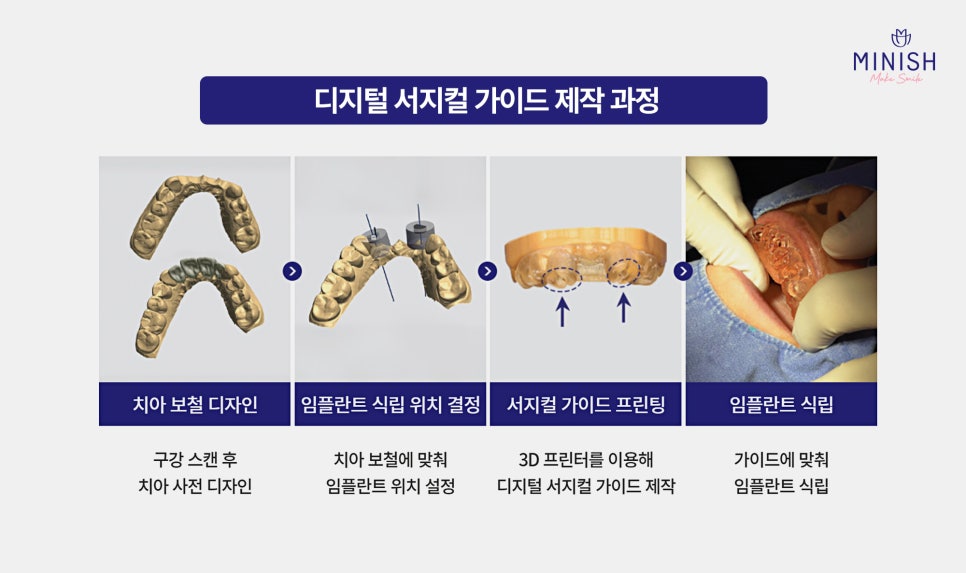
Implant insurance benefits can help reduce the burden of treatment, but what matters most is making a plan that fits the current condition of the teeth and gums.
Even for the same implant treatment, the factors that must be considered can differ depending on gum condition, tooth alignment, and chewing force.
Minish Dental Hospital is carefully checking the current oral condition through digital precision diagnostics and considering a direction that takes both function and stability into account. If tooth loss has made eating or daily life inconvenient, please check your current condition accurately along with whether health insurance coverage is available.
▼ Related post ▼
An alternative for people who find implant surgery difficult after tooth loss
or have a low success rate: 'Minish Bridge'
https://blog.naver.com/minish_smile/223673412688?trackingCode=blog_bloghome_searchlist