
If the gum around a wisdom tooth keeps swelling or throbbing with pain, it is easy to dismiss it as simple fatigue. However, if swelling is accompanied by pus, bad breath, or discomfort when opening the mouth, it is necessary to check whether wisdom tooth inflammation is progressing.
In particular, wisdom teeth are located at the very back of the mouth, making them difficult to care for, and they often grow at an angle, which makes inflammation more likely to recur. If symptoms worsen, they can affect not only daily life but also the health of nearby teeth and gums.
Today, we will look in detail at why wisdom tooth inflammation causes swelling and pus, as well as when extraction is needed and when treatment should be considered.
Why does wisdom tooth inflammation keep recurring?
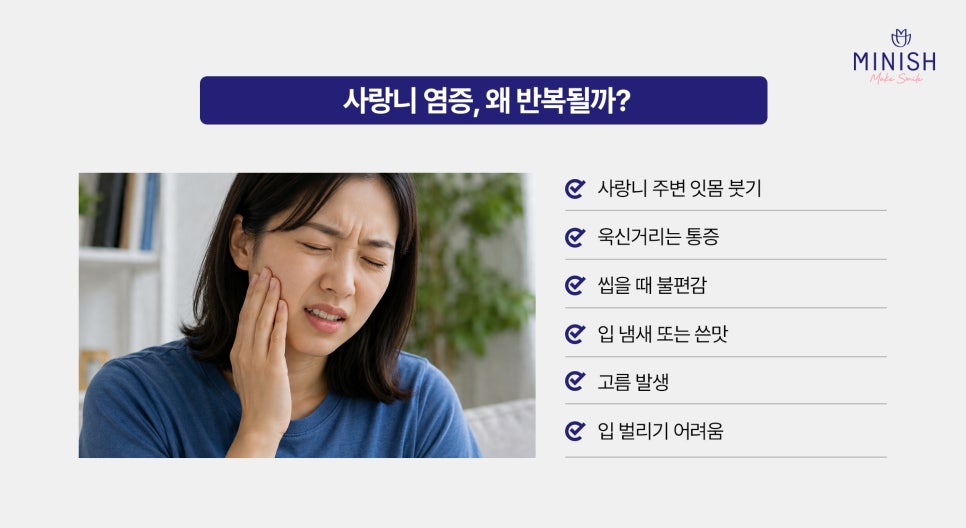
Wisdom teeth often cannot erupt normally because there is not enough space.
If part of the tooth is covered by the gum or grows at an angle, a toothbrush cannot reach it well, making it easy for food particles and bacteria to build up.
When inflammation develops around the gums in this process, the following symptoms may appear:
✔ Swelling of the gum around the wisdom tooth
✔ Throbbing pain
✔ Discomfort when chewing
✔ Bad breath or a bitter taste
✔ Pus formation
✔ Difficulty opening the mouth
At first, it may feel like simple gum pain, but if the inflammation repeats, the area of discomfort can gradually expand.
What happens if wisdom tooth inflammation and swelling are left untreated?
 If wisdom tooth inflammation is repeatedly left untreated, it can also affect the surrounding tissues. In particular, an angled wisdom tooth can touch the molar in front of it, making food easily get stuck, which may lead to cavities in the adjacent tooth or gum problems. If the inflamed area becomes larger, the following symptoms may also occur:
Difficulty opening the mouth
ㄴ If the muscles around the jaw are affected as well, it may become difficult to open the mouth wide.
Facial swelling
ㄴ In severe cases, a swollen feeling may extend to the cheek or jawline.
Recurring pain
ㄴ Even if the inflammation temporarily subsides, if the cause is not resolved, swelling and pain may keep coming back.
When is extraction needed for wisdom tooth inflammation?
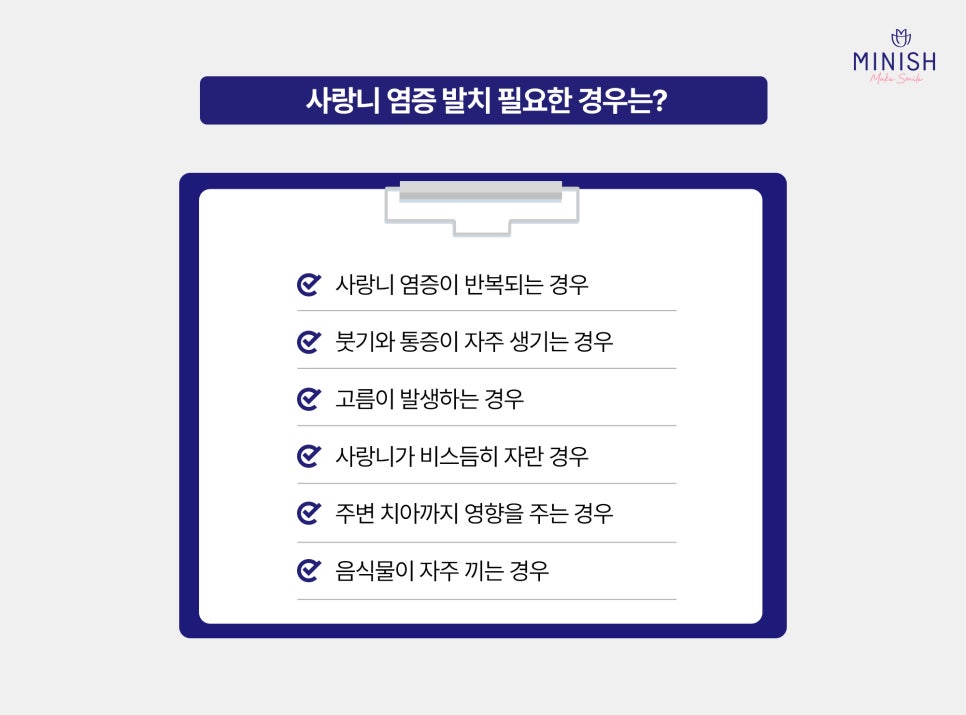 Not all wisdom teeth must be extracted. However, depending on their current position and whether inflammation keeps recurring, extraction may be necessary.
It is especially important to check the condition in the following cases:
✔ Repeated wisdom tooth inflammation
✔ Frequent swelling and pain
✔ Pus formation
✔ An angled wisdom tooth
✔ Effects on nearby teeth
✔ Food often getting stuck
Because the treatment approach can differ depending on the direction of the wisdom tooth, the position of the nerves, and the condition of the gums, confirmation through a detailed diagnosis is necessary.
Why a detailed diagnosis before wisdom tooth extraction is important
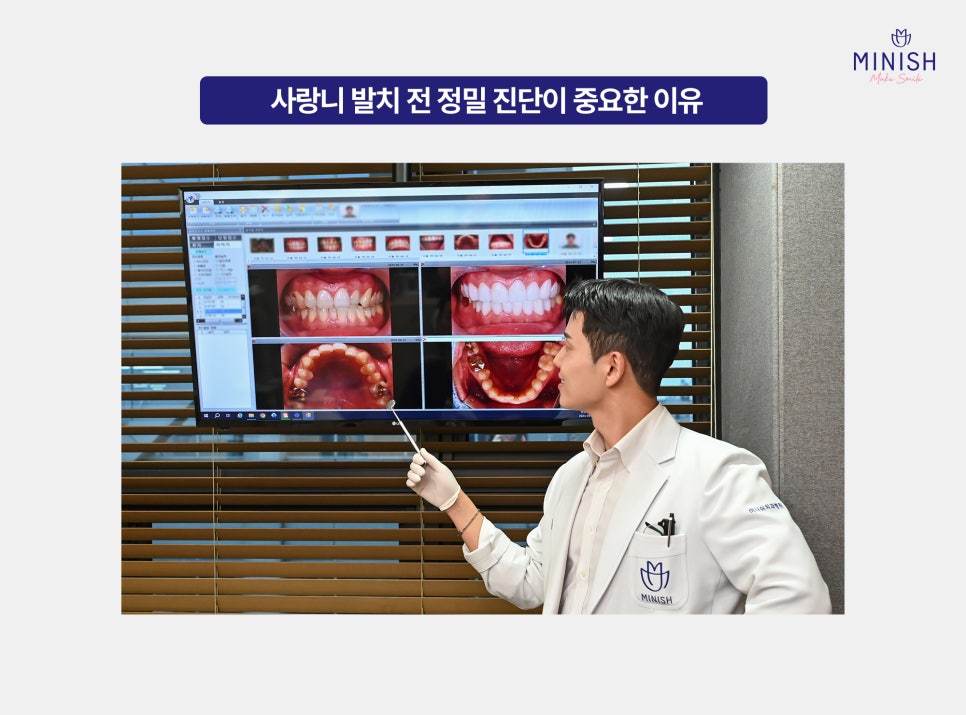 The difficulty of wisdom tooth treatment can vary depending on its position. In particular, lower wisdom teeth may be close to the nerves, so the process of accurately determining the current condition is important.
Recently, digital diagnostic tools such as 3D CT have been used to examine the wisdom tooth’s direction, the condition of the jawbone, and the location of the nerves in greater detail before creating a treatment plan. Repeated wisdom tooth inflammation is not simply a pain issue; it can affect overall oral health, so diagnosis and management tailored to the condition are important.
For recurring wisdom tooth inflammation, it is important not to delay
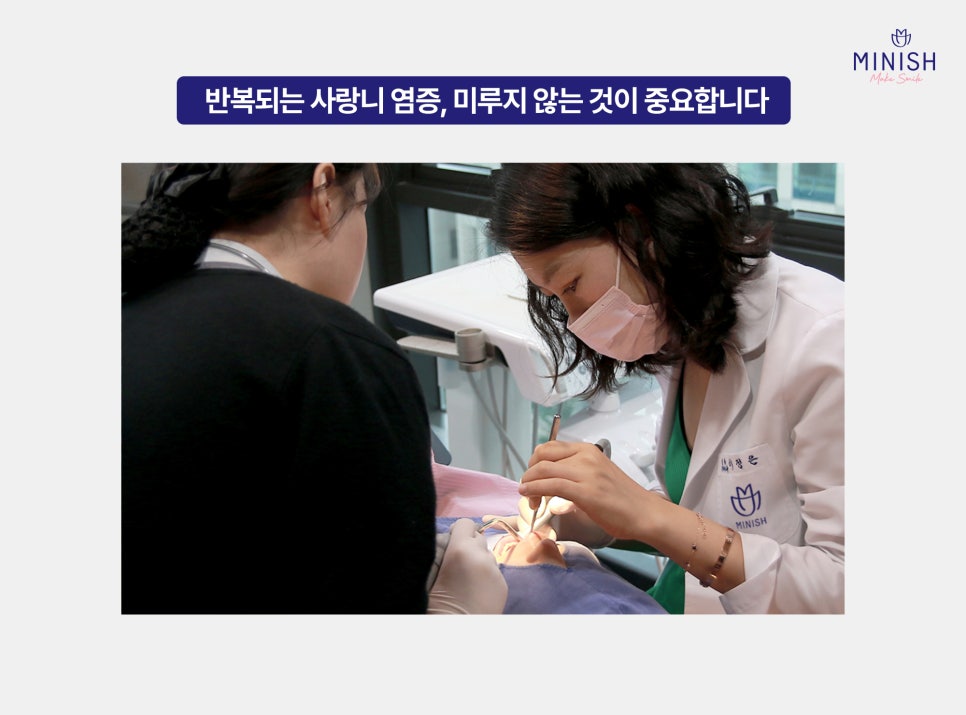
Wisdom tooth inflammation often worsens temporarily when you are tired and then subsides, so it is easy to miss the timing for treatment. However, if swelling and pus keep recurring, it is important to determine the cause accurately.
At Minish Dental Hospital, we carefully check the position of the wisdom tooth and the condition of the surrounding tissues through digital precision diagnostics.
If pain or swelling around a wisdom tooth keeps recurring, rather than leaving it untreated, please check your current oral condition accurately.