
Even after brushing your teeth thoroughly, you may have experienced a lingering unpleasant feeling in your mouth or concern about bad breath. At times like these, many people use mouthwash as part of their oral care. It is convenient to use and has become part of many people's daily oral care routines, but surprisingly, not many people know exactly how to use mouthwash properly.
In particular, questions such as “Should I rinse my mouth after using mouthwash?” and “How effective is mouthwash?” continue to come up. Today, we will take a detailed look at the role of mouthwash, how to use it properly, and what to be careful about.
Mouthwash Benefits: Supplementing What Brushing Alone May Not Cover

Mouthwash is an oral care product that may help reduce bacteria in the mouth, food residue, and factors that cause bad breath. Because the liquid reaches areas that are difficult for a toothbrush to touch, it serves a supplemental role in maintaining oral cleanliness. Representative benefits of mouthwash include the following.
-
Helps freshen bad breath
-
Helps reduce bacteria in the mouth
-
Helps maintain a fresh feeling
-
Supports gum care
-
Supports cavity prevention (in products containing fluoride)
However, an important point is that mouthwash cannot replace toothbrushing. Mouthwash is only a supplemental oral care method; proper brushing and flossing are the basics.
Proper Mouthwash Use: The Duration and Amount Matter
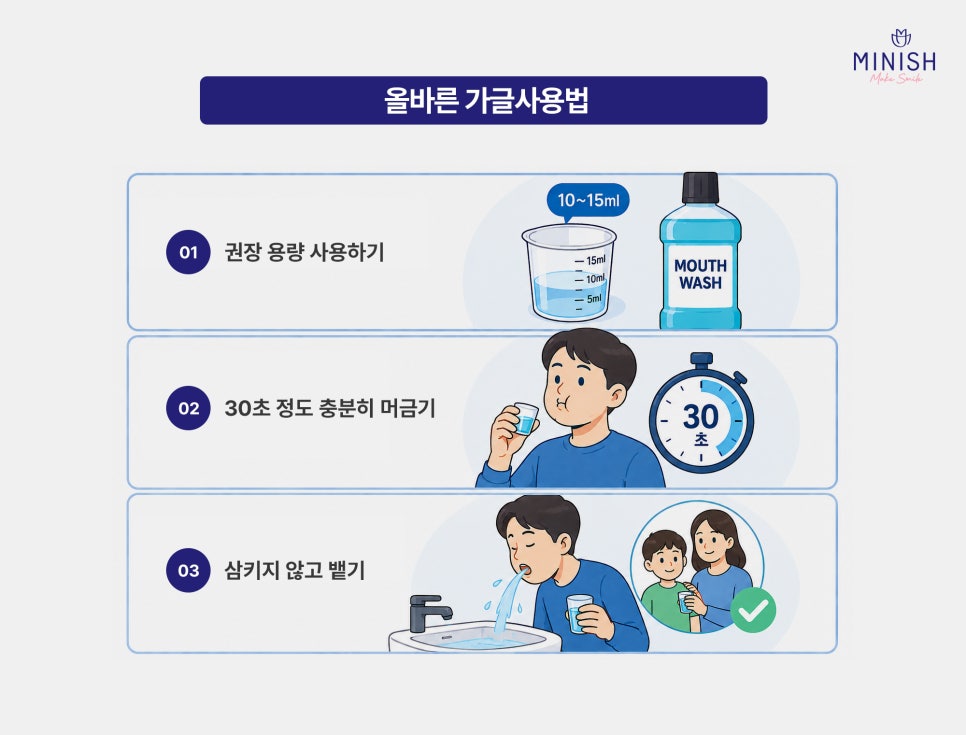
The instructions may vary slightly from one product to another, but mouthwash is generally recommended to be used as follows.
- Use the recommended amount
Most products instruct users to use approximately 10–15 ml. Using too little may reduce its effectiveness, but using more does not make it better.
- Hold it in your mouth for about 30 seconds
It is a good idea to gargle for about 30 seconds so that the liquid can reach the entire mouth. If used for too short a time, the active ingredients may not have enough time to work.
- Spit it out without swallowing
Mouthwash is a product for cleaning the mouth and must be spit out. When a young child uses it, supervision by a parent or guardian is necessary.
Should You Rinse After Using Mouthwash?

Many people wonder whether they should rinse their mouth with water after using mouthwash. The answer may vary depending on the product's ingredients. In particular, when using mouthwash containing fluoride, it is often recommended not to rinse with water immediately afterward. This is because the fluoride may remain on the tooth surface for a certain period of time and provide support.
On the other hand, if you experience strong irritation or are sensitive to a particular ingredient, it is important to use the product according to its instructions. Therefore, the safest approach is to check the instructions for the product you are using first to determine whether you should rinse after using mouthwash. Also, rather than consuming food or beverages immediately after using mouthwash, it may be helpful to leave your mouth undisturbed for a certain period of time.
Using Mouthwash Too Frequently May Cause Irritation Instead
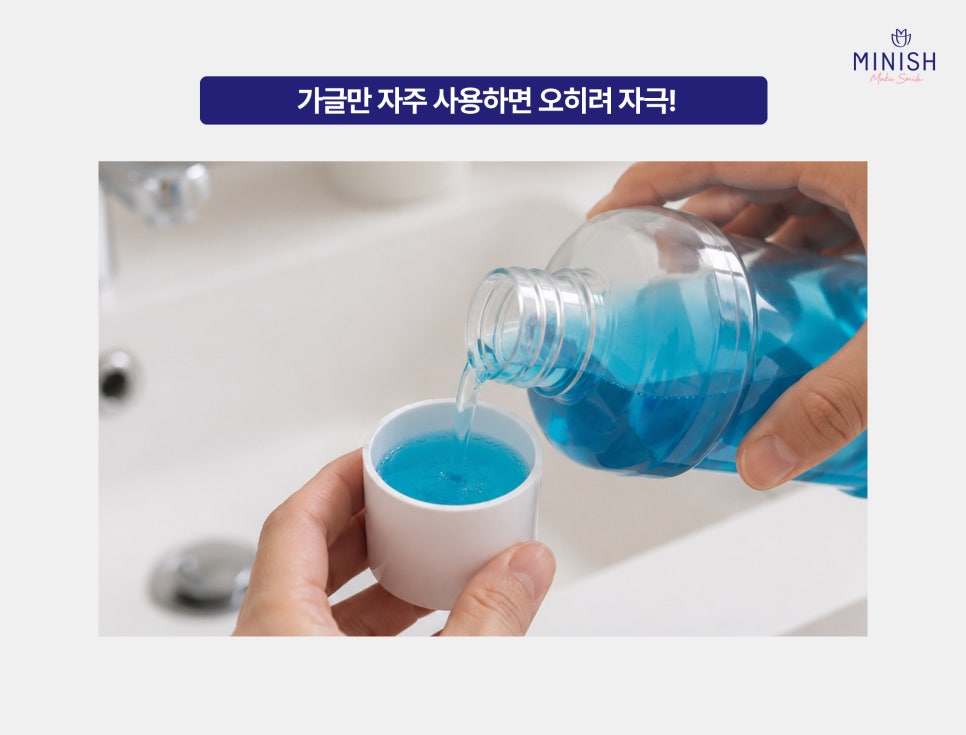
Some people use mouthwash several times a day because it makes their mouth feel refreshed. However, excessive use may irritate the oral mucosa or cause dryness in the mouth, so caution is needed.
In particular, products with a high alcohol content may feel irritating when the mouth is sensitive. If you often experience dry mouth or have sensitive gums, it is a good idea to check the ingredients carefully.
The necessary care may vary depending on your oral condition. If gum bleeding, bad breath, or tooth sensitivity persists, it is a good idea to receive an accurate examination.
Healthy Oral Care Begins with Proper Habits

Mouthwash may help with oral care when used properly. However, the most important things are basic toothbrushing habits and regular oral examinations. In particular, issues involving the teeth and gums may sometimes progress along with problems that are not visible from the outside, so consistent routine care is important.
미니쉬치과병원 prioritizes the preservation of natural teeth and helps patients maintain a healthy oral environment through treatment and care tailored to each individual's oral condition. If you are concerned about your oral health, we recommend having your current condition accurately evaluated.