
Do you feel that your mouth stays dry even after drinking water, or that your mouth feels parched when you wake up in the morning? It is easy to assume that this is simply due to a lack of hydration, but recurring dry mouth may be a sign that can affect your overall oral health.
Today, we will take an in-depth look at everything from the causes and symptoms of dry mouth to treatment methods and what to check at a hospital.
What Is Dry Mouth?
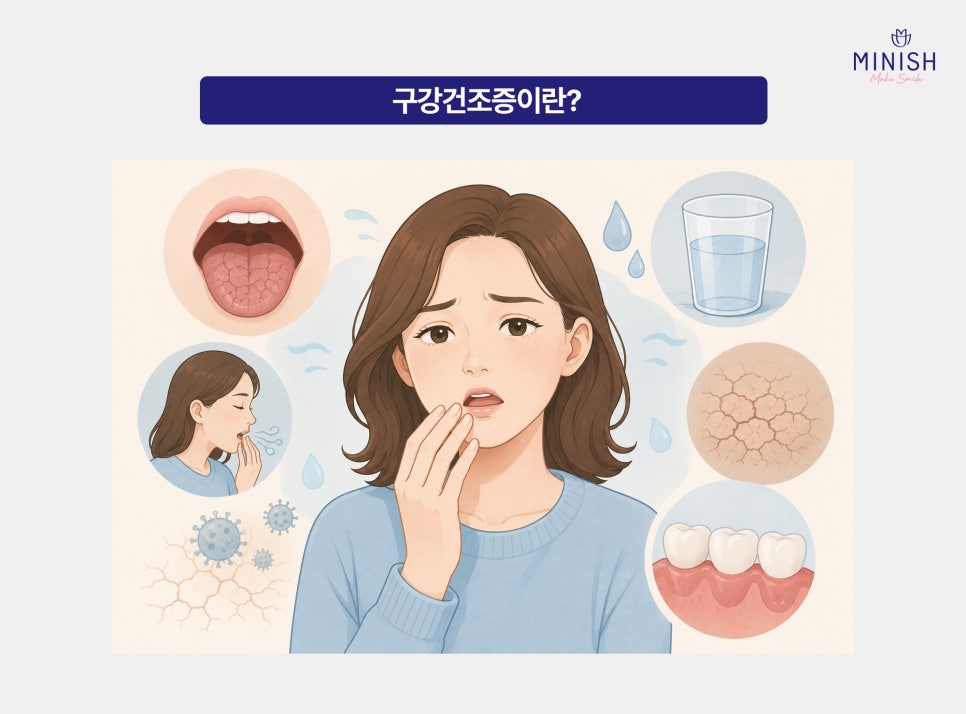
Dry mouth refers to a condition in which the mouth remains persistently dry because saliva production has decreased or saliva function has declined. Saliva not only keeps the mouth moist, but also plays an important role in maintaining oral health by regulating bacteria in the mouth, preventing cavities and gum disease, helping digest food, and reducing bad breath. Therefore, when saliva production decreases, not only dry mouth symptoms but also the overall oral environment—including cavities, gum health, and bad breath—may be affected.
What Causes Dry Mouth?
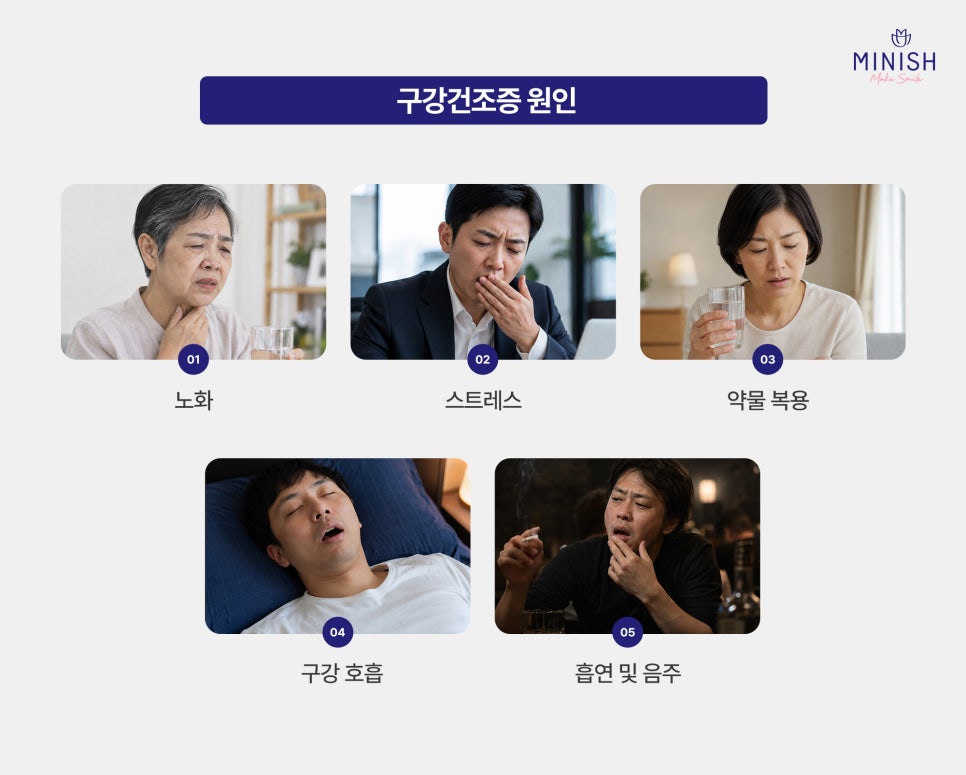
Aging
Salivary gland function may decrease with age.
Stress
Saliva production may decrease when tension or stress continues for an extended period.
Medication Use
Some medications, including those for high blood pressure, antihistamines, and antidepressants, may cause decreased saliva production.
Mouth Breathing
The habit of breathing through the mouth instead of the nose can also easily dry out the mouth.
Smoking and Alcohol Consumption
These can irritate the oral mucosa and worsen dryness.
Dry Mouth Symptoms: More Than Simple Thirst or Dryness

Dry mouth can appear as various symptoms beyond the simple discomfort of having a dry mouth. Your mouth may become dry frequently, causing you to reach for water often, and your tongue may feel sore, stinging, or burning. Bad breath may also worsen, and swallowing food may become uncomfortable. You may wake up with a parched mouth or experience a sticky feeling inside your mouth. If these symptoms continue repeatedly, it may be worth considering dry mouth as a possible cause. In particular, decreased saliva production can also increase the risk of cavities and gum disease, so caution is needed.
Many people think of mouthwash or drinking water when they consider ways to treat dry mouth. However, management methods may vary depending on the cause. For example, it is important to first determine whether the condition is caused by medication use, a problem with salivary gland function, mouth breathing, or an issue related to gum health. In other words, the priority is not simply to look at the symptom of a dry mouth, but to comprehensively assess the current oral environment.
Minish Dental Hospital Comprehensive Oral Examination Program

If dry mouth, bad breath, or gum problems occur repeatedly, it is important to comprehensively assess your current oral condition. Minish Dental Hospital’s comprehensive oral examination program does not simply check the condition of your teeth; it examines your overall oral health. In addition to the condition of your teeth and gums, the program assesses the overall oral environment, which can help identify the cause of your current symptoms and establish a management plan.
In particular, since dry mouth is closely related to cavities, gum disease, and bad breath, it is important to maintain a healthy oral environment through regular dental checkups.
“Do Not Neglect Dry Mouth”
Dry mouth may not end as merely a symptom of having a dry mouth.
Because it can lead to cavities, bad breath, and gum health problems,
if dry mouth symptoms occur repeatedly, it is a good idea to have your current oral condition checked.
Healthy teeth and gums begin with sufficient saliva and a healthy oral environment.