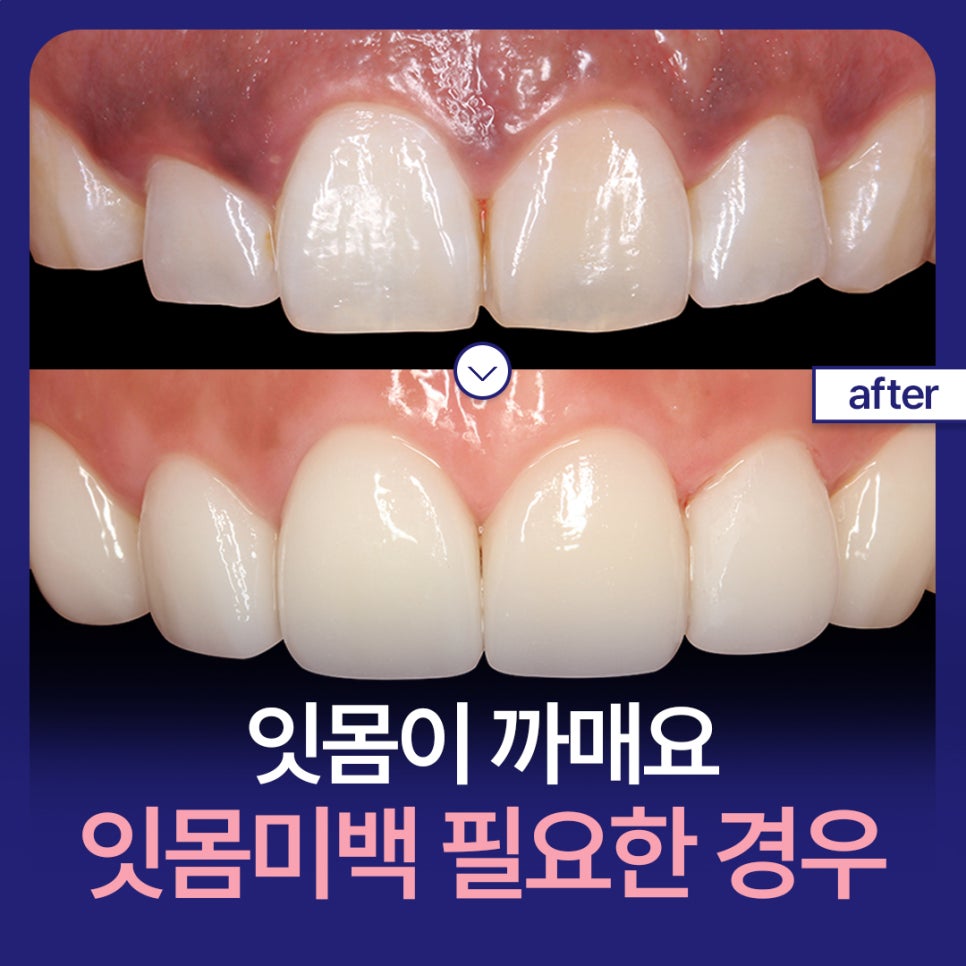
Some people are concerned because, although their teeth are white and evenly aligned, their gums appear unusually black or dark when they smile. In fact, many people focus only on the color of their teeth, but when they take photos or smile brightly, they often notice that the color of their gums can change their overall appearance.
One method that may be considered when the gums appear dark is gum whitening. Today, we will take a detailed look at what gum whitening is, when it may be helpful, and the questions many people have about the procedure.
Why Do the Gums Appear Black?
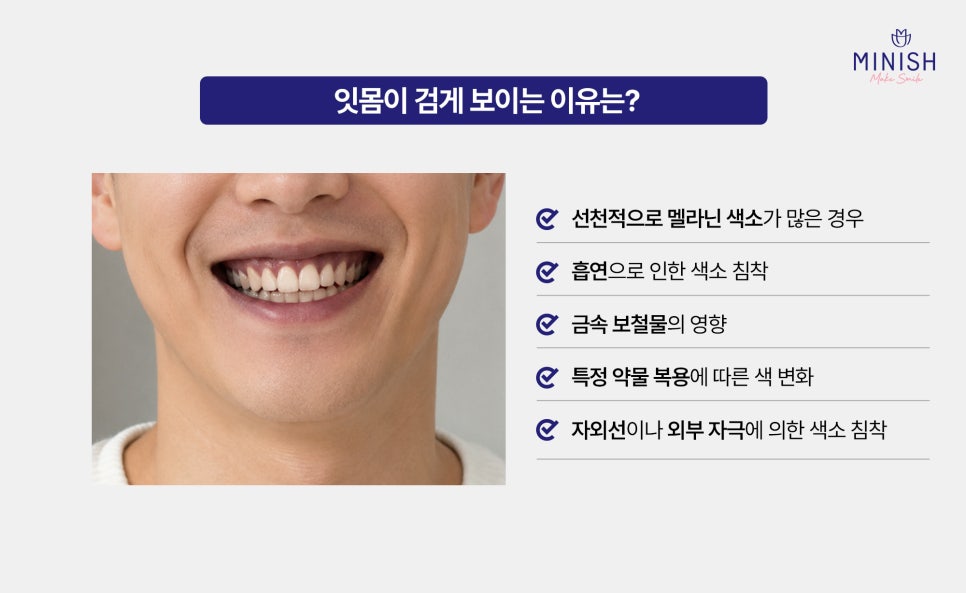
Healthy gums generally have a light pink color. However, the gums may turn brown or black for various reasons. Common causes include the following:
-
Having a naturally high amount of melanin pigment
-
Pigmentation caused by smoking
-
The effects of metal prosthetic restorations
-
Changes in color associated with taking certain medications
-
Pigmentation caused by ultraviolet rays or external irritation
In particular, when the teeth are bright but the gums appear dark, the contrast may become stronger when smiling, making the gum color stand out more.
What Is Gum Whitening?
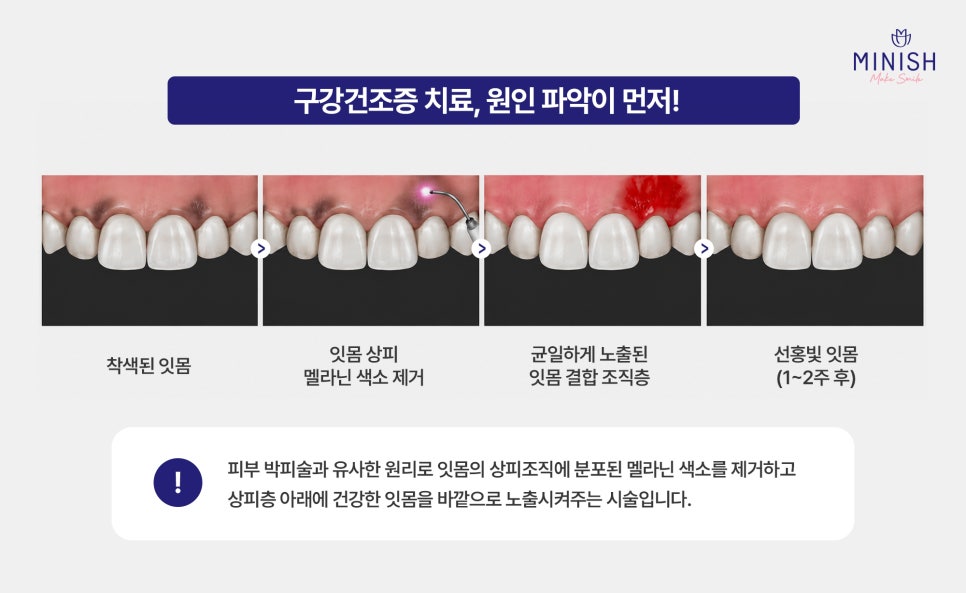
Gum whitening is a process intended to produce a brighter and more natural gum color by removing melanin pigment deposited on the surface of the gums. Rather than making the gums themselves white, the goal is to improve excessive pigmentation and bring the gums closer to a healthy gum color. After the pigmentation is removed, new gum tissue forms, allowing for a more natural-looking gum condition.
When Gum Whitening May Be Needed
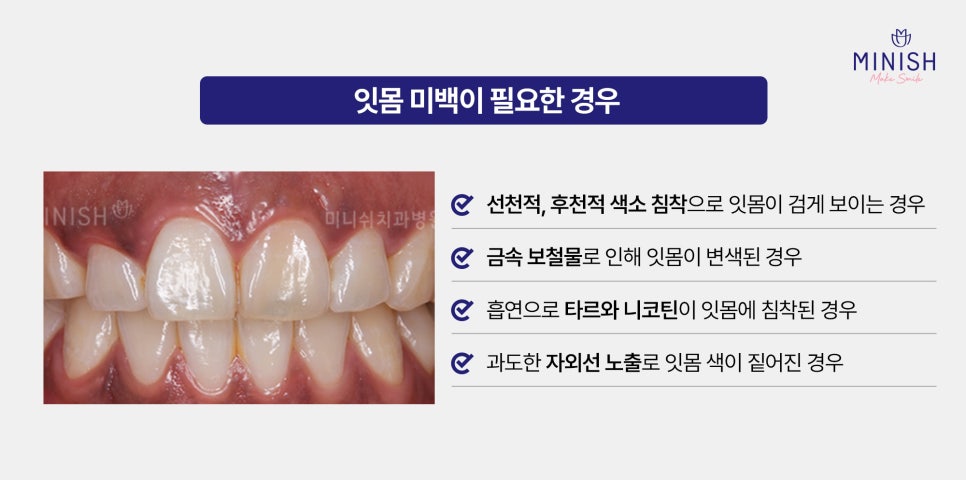
✔ When the gums appear black due to congenital or acquired pigmentation
Melanin pigment may become deposited in the gums, making their color appear dark.
✔ When the gums have become discolored because of metal prosthetic restorations
The influence of metal components may cause the area around the gums to become black or dark.
✔ When tar and nicotine from smoking have become deposited in the gums
Long-term smoking may cause gum pigmentation, making the gums appear black.
✔ When the gum color has darkened due to excessive ultraviolet exposure
Continuous exposure to sunlight may increase melanin pigment and cause the gums to become darker.
Precautions After Gum Whitening
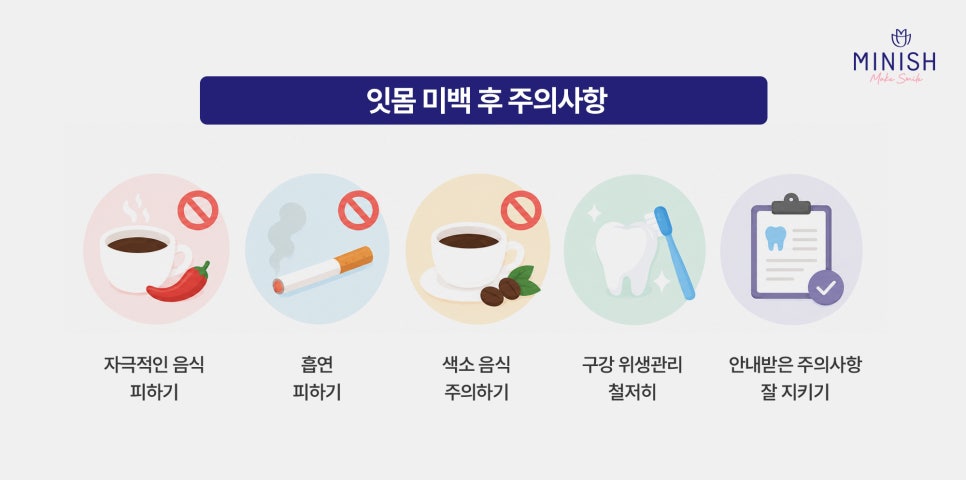
Because the gums may be temporarily sensitive after gum whitening, it is advisable to avoid irritating foods and hot or spicy foods for several days. Smoking may also cause pigment to redeposit, so quitting smoking can be helpful. It is also advisable to be cautious about consuming foods and beverages with a high pigment content, such as coffee, tea, and wine. During the recovery period, it is important to maintain thorough oral hygiene and follow the precautions provided by the medical staff to maintain healthy gums.
If You Are Considering Gum Whitening
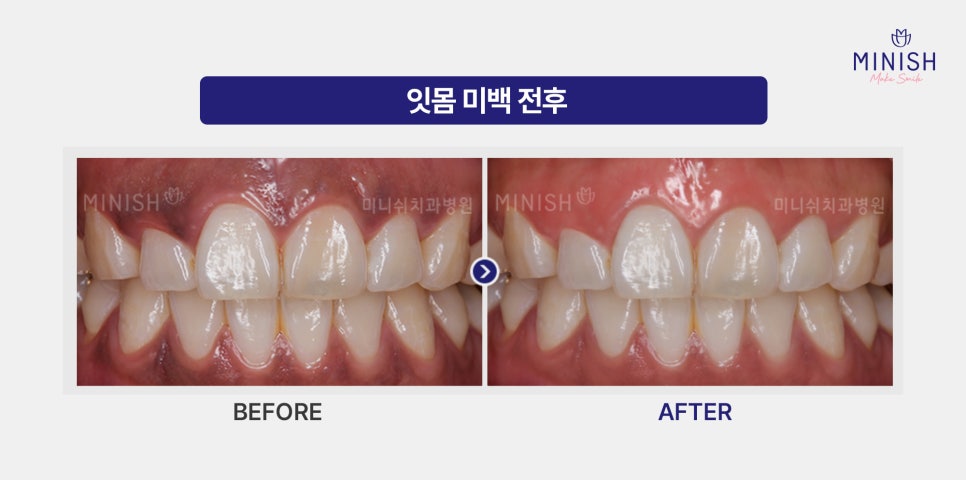
Dark-looking gums do not all develop for the same reason. The appropriate approach may vary depending on whether the pigmentation is congenital, related to smoking, or associated with a prosthetic restoration. The important thing is to assess not only the gum color itself but also the overall harmony between the teeth and gums. If you feel self-conscious about your smile because of your gum color or lose confidence when taking photos, receiving an accurate evaluation of your current condition may be helpful.
When you are concerned about your gum health, an accurate diagnosis is the most important first step.
Have your current condition checked at Minish Dental Hospital and maintain a healthy smile for years to come.