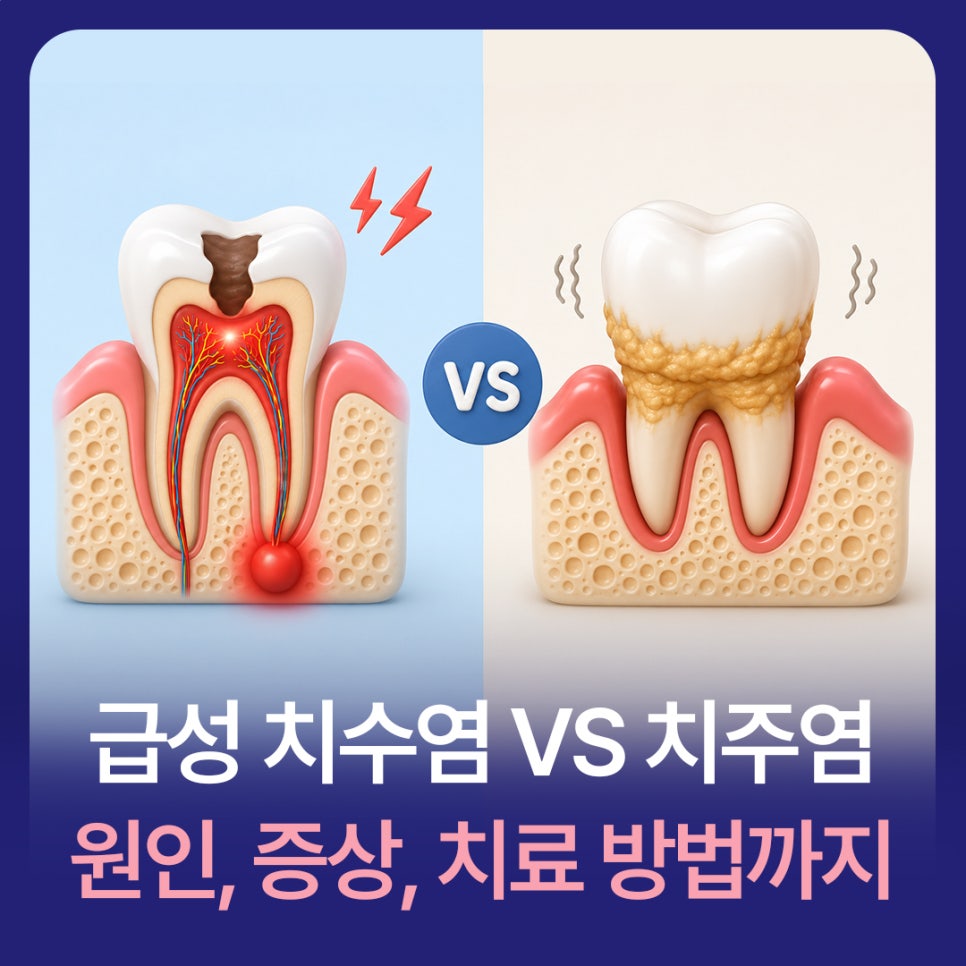
When tooth pain develops, many people may assume that it is simply caused by a cavity. However, there can be various causes, including acute pulpitis, which occurs when a problem develops in the nerves inside the tooth, and periodontitis, which is inflammation of the gum tissue.
Because both conditions can cause pain, they are easily confused. However, they differ in terms of where they occur, their symptoms, and the treatments they require. Today, we will look at the differences between acute pulpitis and periodontitis.
What Is Acute Pulpitis?
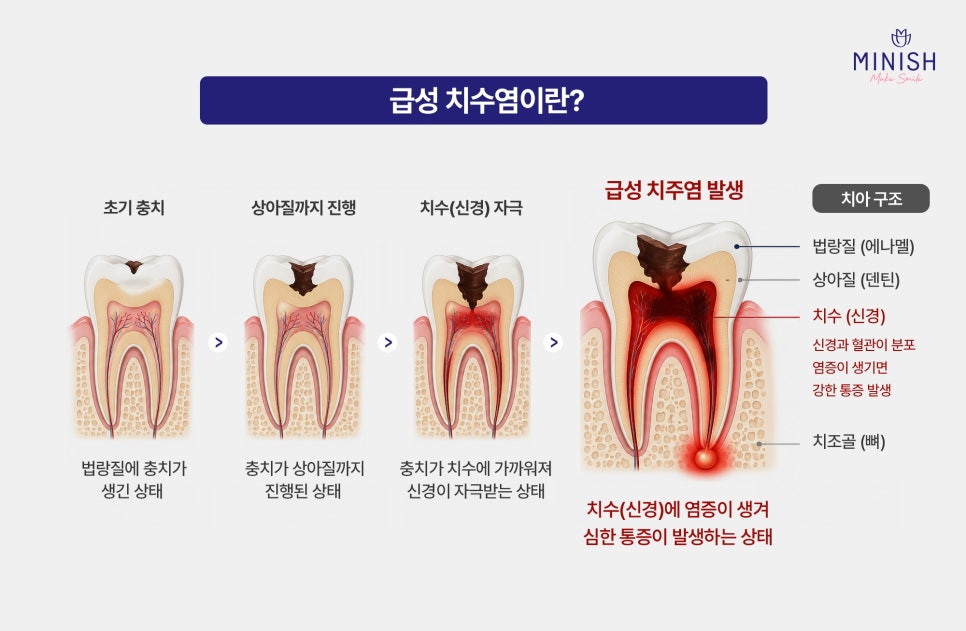
Acute pulpitis is a condition in which inflammation develops in the pulp tissue located inside the tooth. The pulp contains nerves and blood vessels, so inflammation can lead to severe pain. It may occur when a cavity has progressed deeply, when the tooth develops a crack, or when repeated irritation accumulates over time.
Understanding the Symptoms of Acute Pulpitis
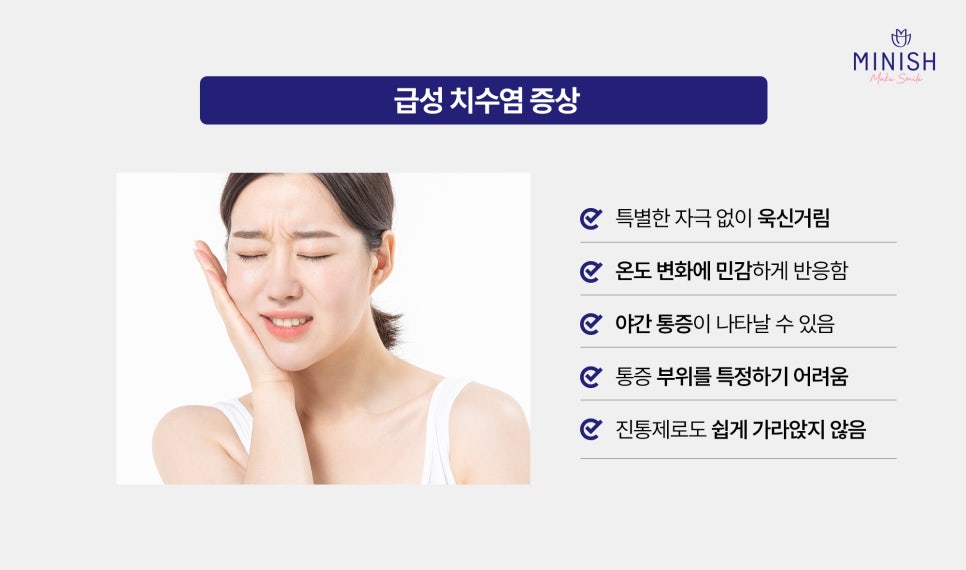
Acute pulpitis often causes a relatively distinctive pattern of pain.
-
Persistent throbbing pain, even when remaining still
-
Sensitivity to cold or hot foods
-
Pain that worsens at night and may make it difficult to sleep
-
Difficulty identifying exactly which tooth is painful
-
Pain that may recur even after taking painkillers
At first, discomfort may occur only when the tooth is stimulated. However, as the inflammation worsens, the pain may become severe enough to interfere with daily life.
What Is Periodontitis?
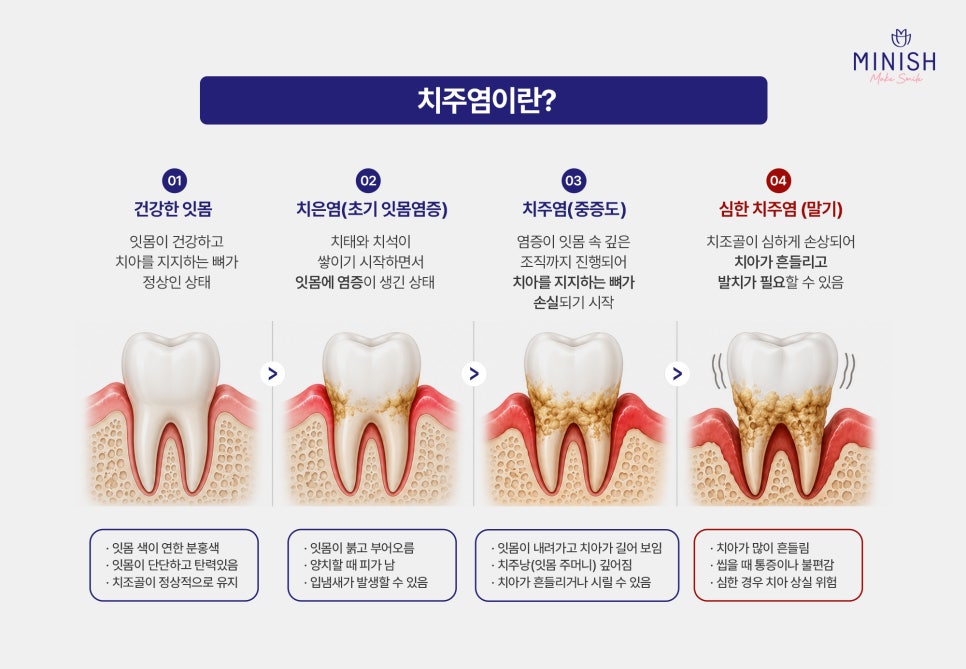
Periodontitis is a condition in which inflammation develops in the gums and surrounding tissues that support the teeth. It occurs when plaque and tartar accumulate over a long period, allowing bacteria to multiply and the gum inflammation to progress into deeper tissues. Because symptoms may be minimal at first, the condition is often left untreated. As it progresses, it can also affect the bone that supports the teeth.
How Do the Symptoms of Periodontitis Differ?
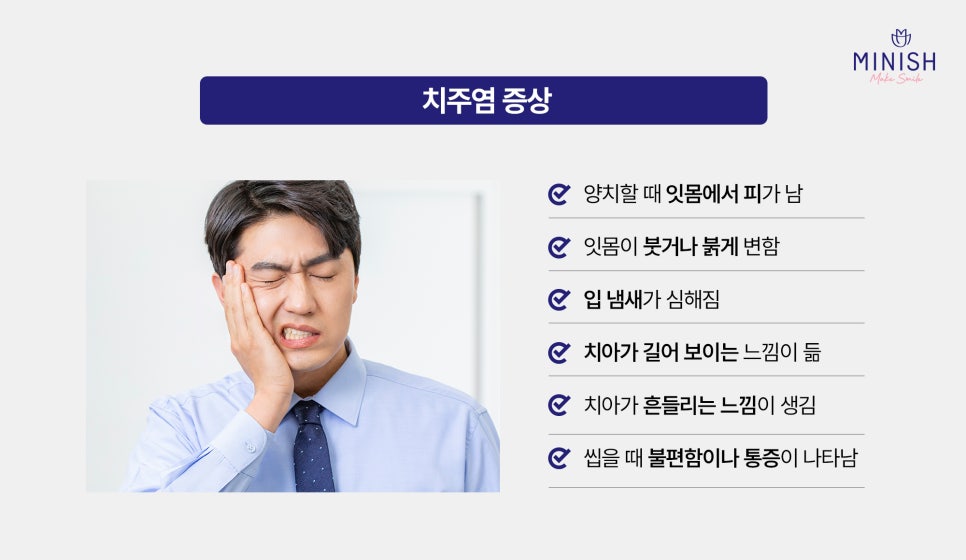
Periodontitis, unlike pulpitis, is often accompanied by changes in the gums.
-
Gums that bleed when brushing
-
Swollen or reddened gums
-
Worsening bad breath
-
A sensation that the teeth look longer
-
A feeling that the teeth are loose
-
Discomfort or pain when chewing
The symptoms of periodontitis often progress gradually, so it is important to pay close attention to the condition of your gums even if the pain is not severe.
Differences Between Acute Pulpitis VS Periodontitis
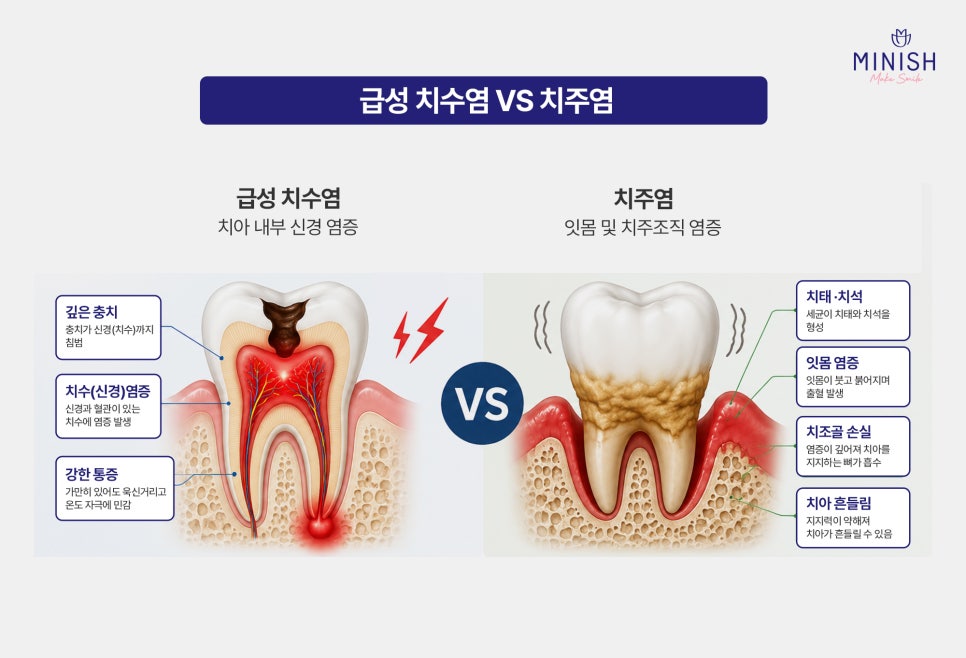
The biggest difference is that acute pulpitis involves the nerve tissue inside the tooth, while periodontitis involves the gum tissue surrounding the tooth.
| | Acute pulpitis | Periodontitis |
|---|
| Location | Pulp inside the tooth | Gums and periodontal tissues |
| Main causes | Cavities, cracks, trauma | Plaque, tartar, bacteria |
| Typical symptoms | Severe pain, sensitivity to temperature | Gum bleeding, swelling, looseness |
| Pattern of pain | Throbbing and spontaneous pain | Discomfort when chewing |
| Treatment methods | Root canal treatment, etc. | Scaling and periodontal treatment |
Although the pain may feel like similar toothache, the actual causes and necessary treatments differ, making an accurate diagnosis important.
Treatment Methods for Acute Pulpitis VS Periodontitis
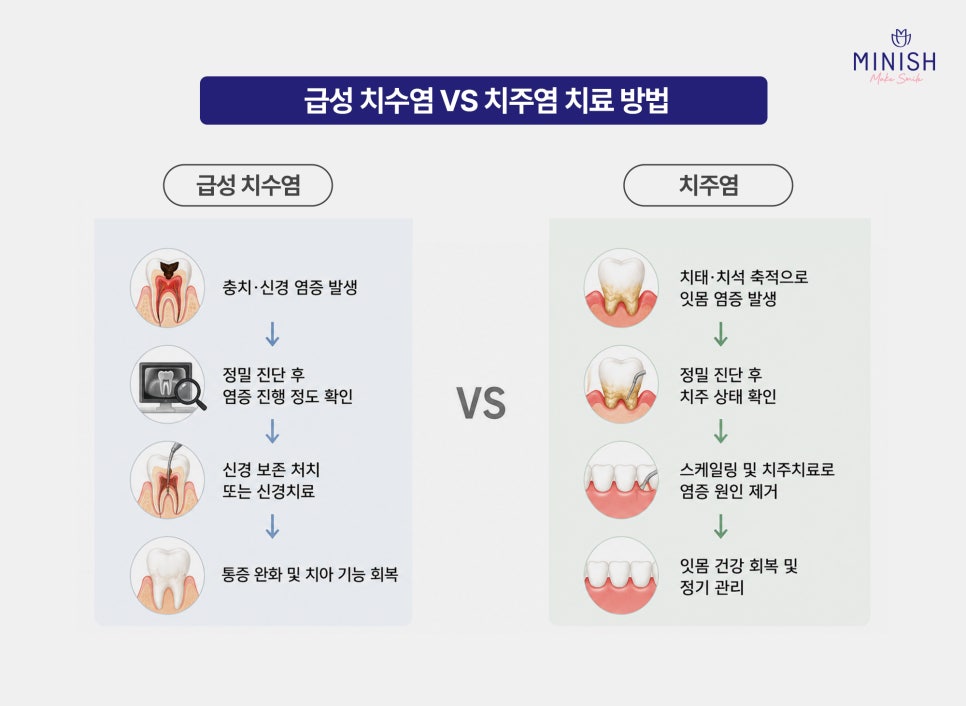
For acute pulpitis, treatment to preserve the nerve may sometimes be performed depending on how far the inflammation has progressed. However, if the inflammation has advanced deeply, root canal treatment may be necessary.
For periodontitis, the priority is to remove the cause of the inflammation through tartar removal and periodontal treatment. Depending on the extent of progression, gum treatment or regular care may be necessary.
Because the same treatment cannot be applied to every case of pain, the cause must be accurately identified first.
It Is Important to Identify the Cause of Tooth Pain First
Tooth pain is not always caused by a cavity or the same condition. The necessary care and treatment approach may vary depending on whether the problem is inside the tooth or in the gums. In particular, if pain keeps recurring or is accompanied by gum bleeding or swelling, it is important not to leave it untreated and to receive an accurate examination.
The causes of tooth pain are more varied than you might think.
Acute pulpitis and periodontitis may feel similar,
but their causes and necessary treatments may differ.
At Minish Dental Hospital, receive an accurate assessment of your current condition through a detailed diagnosis,
and develop a necessary treatment plan.