Have you ever experienced bleeding gums even though you brush your teeth thoroughly? Many people put it off, thinking, “I think I have a little tartar,” or “It should be okay to get scaling later.” However, tartar left on the surface of the teeth is not simply a cosmetic issue; it can also affect gum health. Today, we will look at why tartar removal is important, the symptoms of gum disease, and treatment methods for gum disease by stage.
What Happens If You Put Off Tartar Removal?
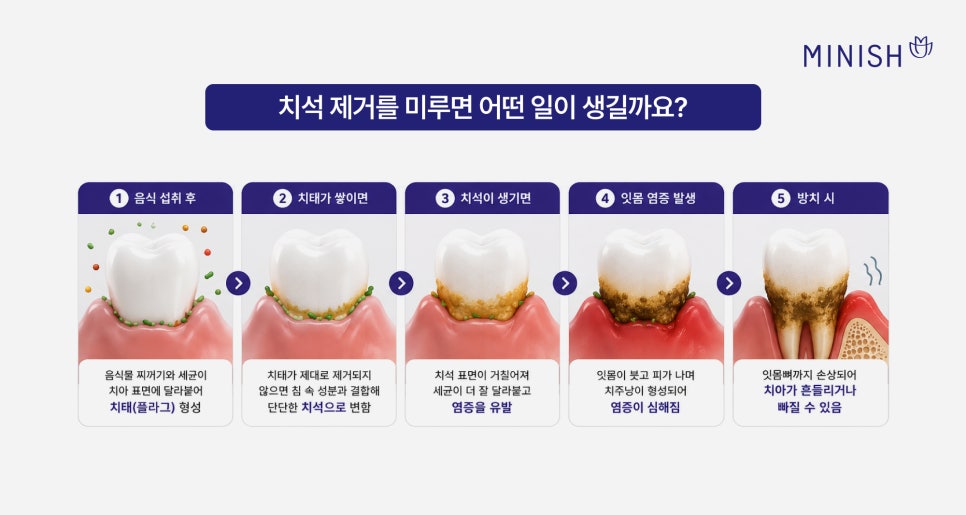
When we eat, dental plaque forms on the surface of our teeth as food particles combine with bacteria. Plaque can be removed by brushing, but if it is not removed sufficiently, it combines with minerals in saliva, gradually hardens, and turns into tartar.
Once tartar forms, its surface becomes rough, making it easier for bacteria to adhere. Bacteria also continue to accumulate in the spaces between the teeth and gums. When this process is repeated, the gums become inflamed, and if left unmanaged, the inflammation may gradually affect the jawbone supporting the teeth.
Why Does Gum Disease Develop?
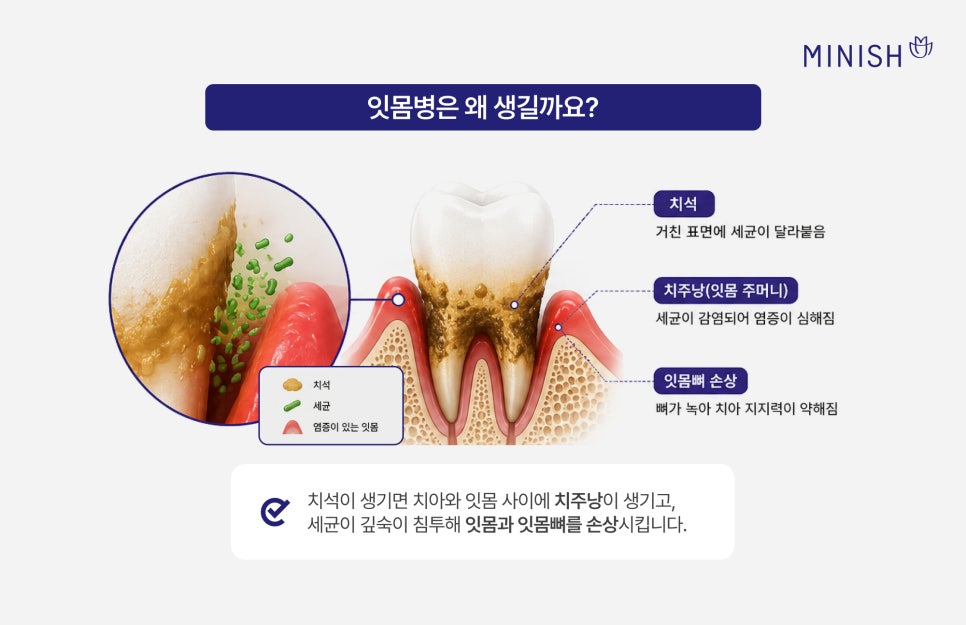
Many people think gum disease is caused by aging, but its primary cause is inflammation caused by bacteria. There is naturally a small space where the teeth and gums meet, called the gingival sulcus.
When bacteria and plaque remain there for a long time, tartar forms. Over time, periodontal pockets may develop, creating an environment where bacteria can multiply easily. As the periodontal pockets deepen, bacteria penetrate farther into the gums and the inflammation gradually progresses. If the following symptoms recur, it is advisable to have your gums checked for periodontal disease.
Learn About the Symptoms of Gum Disease

-
Your gums bleed when you brush your teeth.
-
Your gums are swollen or itchy.
-
You have persistent bad breath.
-
Your gums have receded, making your teeth look longer.
-
Your teeth feel sensitive when you eat cold foods.
-
Your teeth feel loose.
One characteristic of gum disease is that it often goes unnoticed in the early stages because there is little to no pain.
Symptoms and Treatment Methods by Stage of Gum Disease
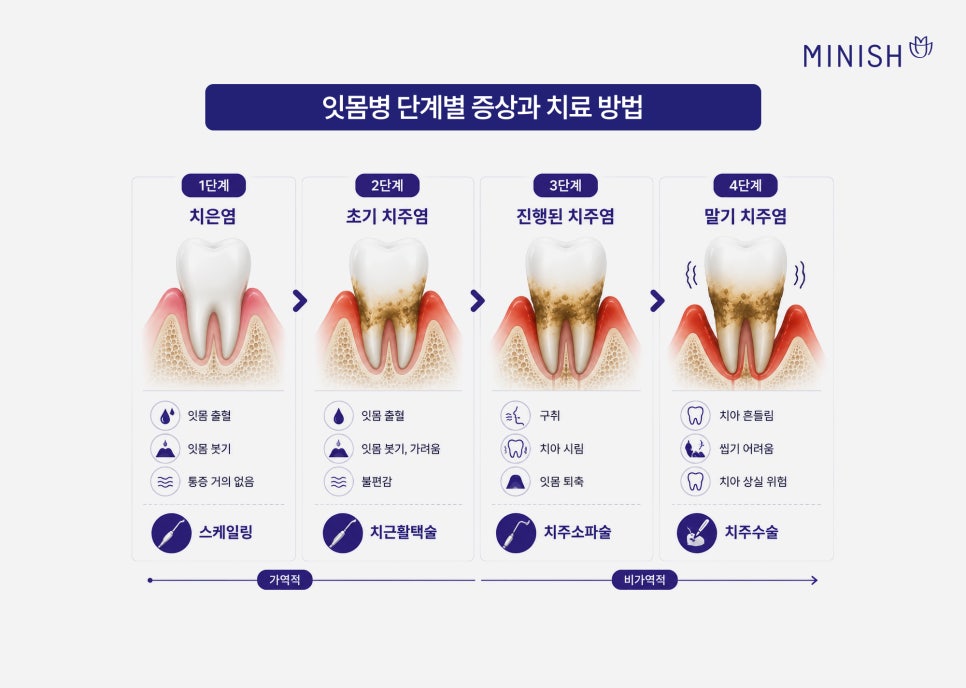
| Stage | Gum condition | Main symptoms | Periodontal pocket depth | Treatment method |
|---|
| Stage 1: Gingivitis | An early stage in which inflammation is limited to the gums | Bleeding when brushing; swollen or itchy gums; little to no pain | 3 mm or less | Scaling removes plaque and tartar from the tooth surface to alleviate inflammation. |
| Stage 2: Early periodontitis | Inflammation has progressed to the tissues beneath the gums | Persistent gum bleeding; swollen and itchy gums; beginning of periodontal pocket formation | 3–5 mm | Root planing smooths the surface of the tooth roots, reducing bacterial adhesion and helping the gums recover. |
| Stage 3: Advanced periodontitis | Damage to the gums and jawbone is progressing | Severe bad breath; gum recession; tooth sensitivity; exposed tooth roots | 5–7 mm | Periodontal curettage removes inflamed tissue and tartar from inside the gums to reduce inflammation. |
| Stage 4: End-stage periodontitis | Severe jawbone damage has weakened the support for the teeth | Loose teeth; difficulty chewing; changes in tooth position; risk of tooth loss | 7 mm or more | Periodontal surgery If necessary, the gums are incised to directly treat the tooth roots and areas of inflammation. |
Why Regular Tartar Removal and Personalized Periodontal Treatment Are Important

Once tartar has hardened, it is difficult to remove with brushing or flossing alone. Therefore, regular tartar removal (scaling) is a basic form of care for managing plaque and tartar and preventing gum disease. In particular, if symptoms such as recurring bleeding or swelling of the gums, bad breath, tooth sensitivity, or loose teeth occur, it is important to have your current gum condition accurately evaluated rather than leaving the symptoms untreated.
At Minish Dental Hospital, the patient’s gum condition and the progression of periodontal disease are carefully assessed. Based on the findings, the appropriate periodontal treatment—such as scaling, root planing, periodontal curettage, or periodontal surgery—is planned to help restore gum health. The earlier gum disease is detected and managed, the more helpful it may be in maintaining healthy gums with simpler treatment. For this reason, regular checkups and tartar removal are important for ongoing care.
Healthy gums start with proper care.
Prevent gum disease through regular tartar removal and proper brushing habits,
and if you have symptoms, we recommend getting an early examination.
Check the proper brushing method in the Minish Dental Hospital YouTube video below. 🦷✨