Hello. This is Yonsei Bomvit Dermatology.
These days, the weather has a large temperature difference—chilly in the morning and evening, but warm during the day.
Not only the body but also the skin can easily become stressed.
Today, I’ll explain the skin conditions that can easily occur in weather with large temperature swings, as well as how to care for them.
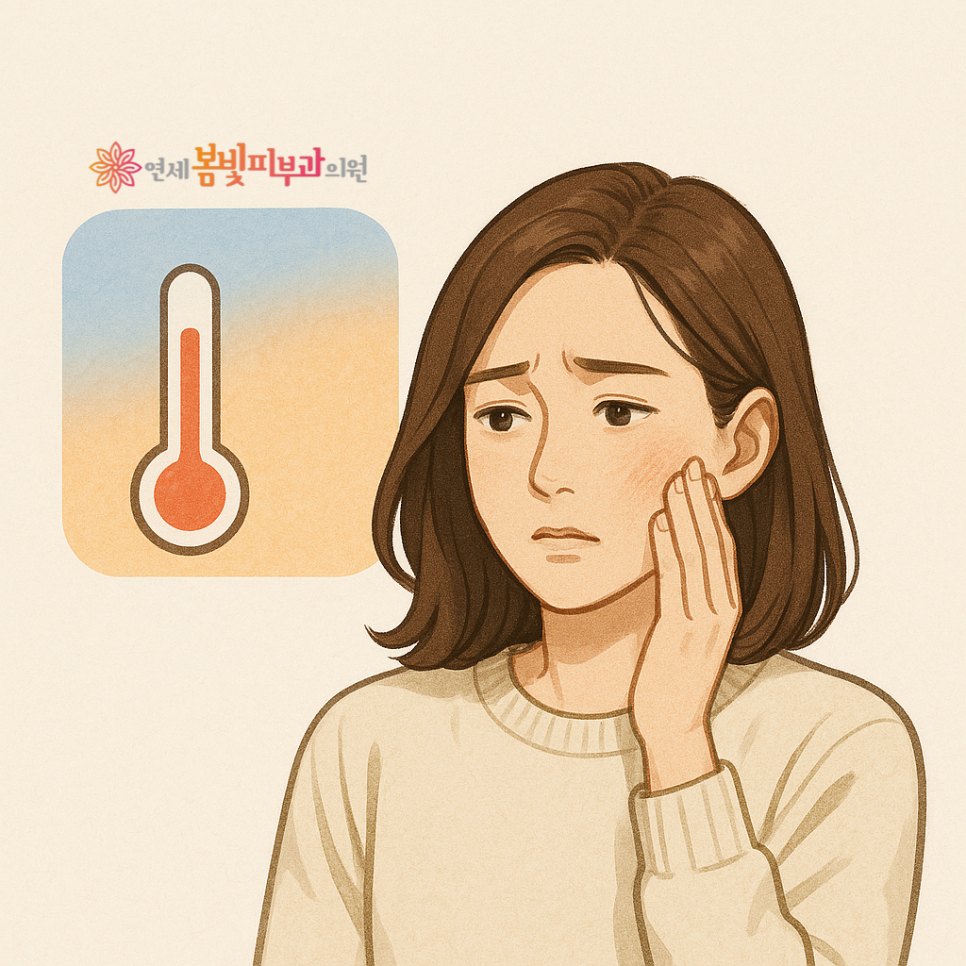
🌬 How Temperature Differences Affect the Skin
Our skin is very sensitive to changes in temperature and humidity.
In weather with large temperature swings, the following changes can occur.
-
Decreased skin barrier function
-
Rapid temperature changes disrupt the skin’s oil and moisture balance, weakening the skin barrier.
-
Increased moisture loss
-
Cold air and dry wind can easily strip moisture from the skin, causing itching and flaking.
-
Abnormal blood vessel reactions
-
Sudden temperature changes cause blood vessels to repeatedly constrict and expand, which can trigger symptoms such as facial flushing or hives.
🧾 Skin Conditions to Watch For
The larger the temperature difference, the more likely the following conditions are to appear:
- Dry dermatitis
Due to lack of moisture, the skin becomes rough, flakes, and is accompanied by itching. It commonly occurs on the legs, arms, and back.
- Seborrheic dermatitis
As the temperature drops, sebum production decreases, and at the same time the skin may become irritated, which can worsen inflammation.
A representative symptom is red flaking around the sides of the nose, between the eyebrows, and on the scalp.
- Hives
People who are sensitive to temperature changes may frequently develop hives in response to cold air or warm indoor environments.
- Facial flushing, rosacea, and telangiectasia
When exposed to cold wind and then moving into a warm indoor space, the face may become easily red and remain that way for a long time.
🧴 Skin Care Tips for Coping With Temperature Swings
Basic care that can restore the skin barrier and help it respond to temperature changes is important.
✔ Moisturize thoroughly
After washing your face in the morning and evening, apply a moisturizer with a proper balance of moisture and oil to help prevent moisture loss from the skin.
✔ Avoid harsh cleansing
Hot water or excessive cleansing can further weaken the skin barrier. Using lukewarm water and a mildly acidic cleanser is recommended.
✔ Don’t forget sun protection
Even in weather with large temperature swings, ultraviolet rays are still present. In particular, skin that has become sensitive due to temperature changes is more easily irritated by UV exposure.
✔ Adjust indoor humidity
Using a humidifier or placing a cup of water indoors to keep humidity at 40–60% can help prevent skin dryness.
🍲 Lifestyle Habits for Coping With Temperature Swings
-
Drink warm water often to maintain moisture in the body.
-
Reduce caffeine and alcohol intake, and eat seasonal fruits and vegetables rich in vitamins.
-
If your skin becomes severely dry or flaking keeps recurring, it is important to see a dermatologist rather than trying to treat it on your own.
✅ When You Need to See a Doctor
-
If red and itchy skin symptoms continue for more than 2 weeks
-
If flaking and oozing appear together and interfere with daily life
-
If an existing skin condition (for example, atopic dermatitis or seborrheic dermatitis) suddenly worsens
Early consultation and appropriate treatment are the best way to improve symptoms without making them worse.
✨ In Closing
During spring, when temperature differences are severe, the skin can easily become sensitive.
It is best to maintain basic moisturizing and cleansing habits well, and to visit a clinic if there are any unusual signs on the skin.
Small daily care is the surest way to keep your skin healthy and comfortable.
Yonsei Bomvit Dermatology always supports your healthy skin.
Thank you
📍 Written by / Yonsei Bomvit Dermatology
📞 Inquiry 02-837-8275
#DermatologySpecialist #SkincareForTemperatureDifferences #SpringSkinConditions #DrySkin #SeborrheicDermatitis #Hives #FacialFlushing #SeasonalSkinCare #StrengtheningTheSkinBarrier #MoisturizerRecommendation #SensitiveSkin #DermatitisSymptoms #SeasonalMoisturizing #SkincareTips #DermatologyConsultation #SpringSkincare #SensitiveSkin #PreventionOfSkinConditions #YonseiBomvitDermatology #GuroDigitalComplexDermatology