Can naturally derived ingredients really help acne-prone skin?
Hello, this is Yonsei Bomvit Dermatology Clinic.
These days, many people look for products containing “naturally derived ingredients” like aloe and tea tree for acne-prone skin.
People choose them because they seem gentler than “chemical ingredients” or because they are said to have a soothing effect...
But do they really work for acne scientifically?
Today, we’ll introduce the characteristics of four representative ingredients often used for acne-prone skin—aloe, tea tree, centella, and salicylic acid—along with a dermatologist’s practical evaluation.
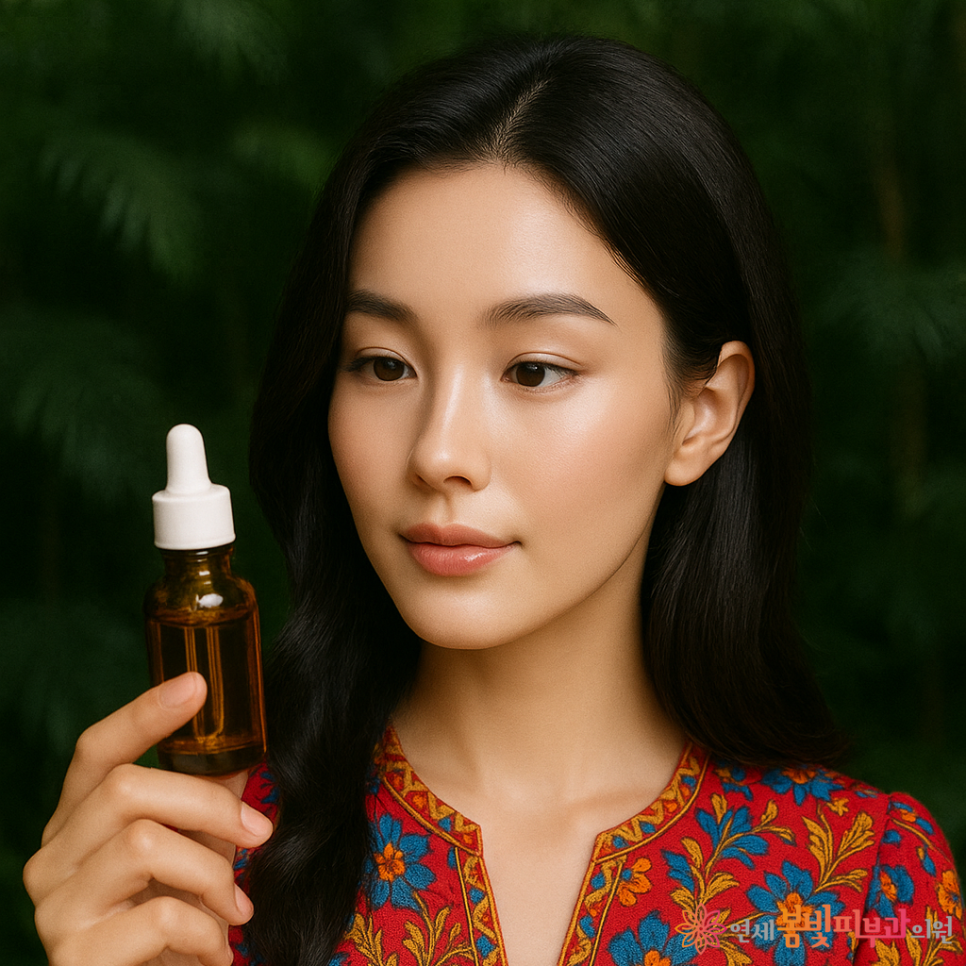
Can naturally derived ingredients really help acne-prone skin?
1️⃣ Aloe vera – OK for soothing and moisturizing, but limited inflammation control
✔ Aloe is known to have a soothing effect because it contains anti-inflammatory components (acemannan, lupeol, etc.).
✔ It can help relieve irritation after sun exposure and calm temporary redness.
✔ However, it has limited effect in treating inflammatory acne itself.
👉 It can be used as an auxiliary option when your skin feels hot or strongly irritated, but used alone it does not have a major acne-treatment effect. In fact, highly viscous gel types can sometimes clog pores, so caution is needed.
2️⃣ Tea tree oil – Clear antibacterial effects, but watch out for irritation
✔ Tea tree is a representative plant-based oil with antibacterial and anti-inflammatory properties.
✔ In particular, it has been reported to inhibit Cutibacterium acnes, the bacteria associated with acne.
However, high-concentration tea tree oil can cause skin irritation and allergic contact dermatitis.
In fact, quite a few people come in with peeling skin after applying tea tree oil.
👉 It is safer to use products diluted to a low concentration for a short period of time, and if you have sensitive skin, it is best to do a patch test before use.
3️⃣ Centella asiatica (gotu kola) – Excellent for wound healing, but limited acne relief
✔ Centella helps with wound healing and strengthens the skin barrier through ingredients such as madecassoside.
✔ Its effects on reducing sebum production or directly suppressing inflammation inside pores are limited.
👉 It may be helpful for recovering irritated skin after acne has subsided or for preventing pigmentation. However, it is difficult to consider it a first-line treatment for reducing inflammatory acne.
4️⃣ Salicylic acid (BHA) – Effective for clearing sebum and dead skin cells
✔ Salicylic acid is originally a fat-soluble ingredient derived from willow bark, and it penetrates deep into pores to dissolve dead skin cells and regulate sebum production.
✔ It is very effective at reducing acne formation by preventing the buildup of dead skin cells and sebum that clog pores in acne-prone skin.
In dermatology, products with salicylic acid at a concentration of 0.5–2% are used for home care, and professional salicylic acid peels may also be used to improve treatment results.
👉 However, sensitive skin may experience irritation, so moisturizing and soothing care must be used together.
✨ Tips from a dermatologist
Many people think, “If it’s a naturally derived ingredient, it must be safe,” but that is not always true.
Even naturally derived ingredients can cause allergic reactions or irritation, and in many cases the ingredient itself does not directly address the cause of acne inflammation.
📌 If acne is severe or inflammation keeps recurring, simple cosmetic care has its limits.
📌 In dermatology, we apply anti-inflammatory, exfoliation-control, and sebum-suppressing treatments step by step to help achieve more fundamental improvement.
�6
📍 Yonsei Bomvit Dermatology Clinic
📞 02-837-8275
#YonseiBomvitDermatologyClinic #GuroDigitalComplexDermatology #DermatologySpecialist #AcneIngredientAnalysis #AloeEffect #TeaTreeIrritation #CentellaExtract #SalicylicAcidAcne #AcneFriendlyCosmetics #SebumControl #AcneSoothing #AcneScarCare #AcneCausingIngredients #NaturalIngredientCaution #AcneProductRecommendations #SensitiveAcneSkin #CosmeticIngredientAnalysis #OilySkinCare #TroubledSkin #AcneTreatmentConsultation #RecommendedDermatologyIngredients