I don’t remember exactly when it started, but one day while brushing my teeth, I happened to notice something odd on a tooth in the mirror. At first, I thought it was food stuck there, but even after wiping it with a cotton swab, it wouldn’t come off. So I held up a hand mirror and shone a light on it, and there it was—a definite black spot. It looked like nothing more than a tiny dot, but the first word that came to mind was “cavity.” And from that moment on, I started feeling anxious. Should I go to the dentist right now, or should I wait and see a little longer? I worried that if I went to the dentist only to be told it was nothing, I would just waste time. And once I thought about the smell of the dental office and the sound of the machines, my feet naturally stopped moving. At first, I thought it would be fine after a day or two, or that it would disappear if I brushed it, but the spot never went away. In fact, as time passed, it seemed to get a little wider.
This kind of abnormal symptom on a tooth is not only pain or sensitivity; it can also appear externally, like a black spot from tooth decay. Since waiting until pain becomes clearly noticeable or severe often leads to major treatment, it may be important to respond quickly in the early stages.
In the beginning, cavities often have no obvious symptoms on the outside. Then, at some point, they are suddenly noticed in the mirror or when someone points out a spot on the tooth. The most common visible form is a small black dot that appears on the tooth.
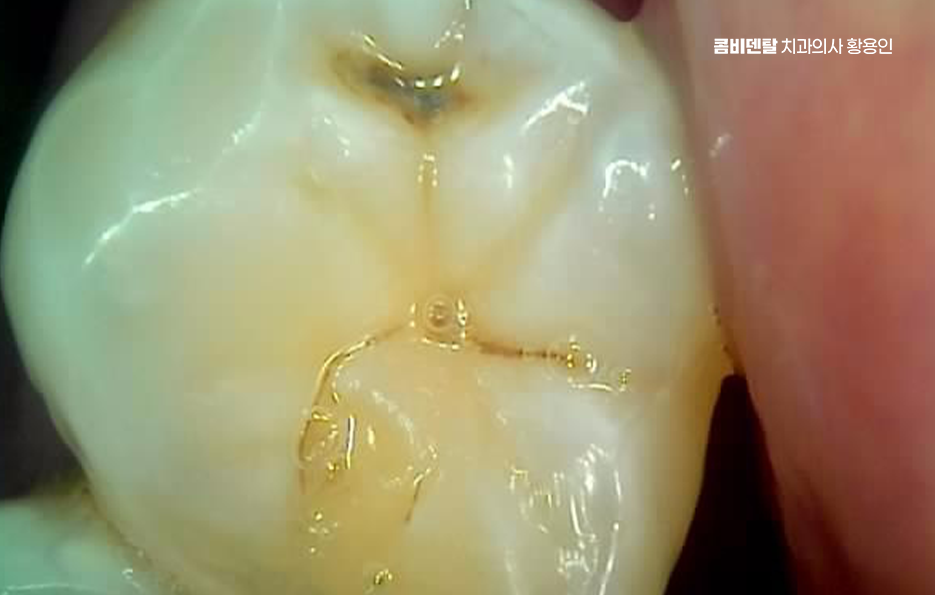
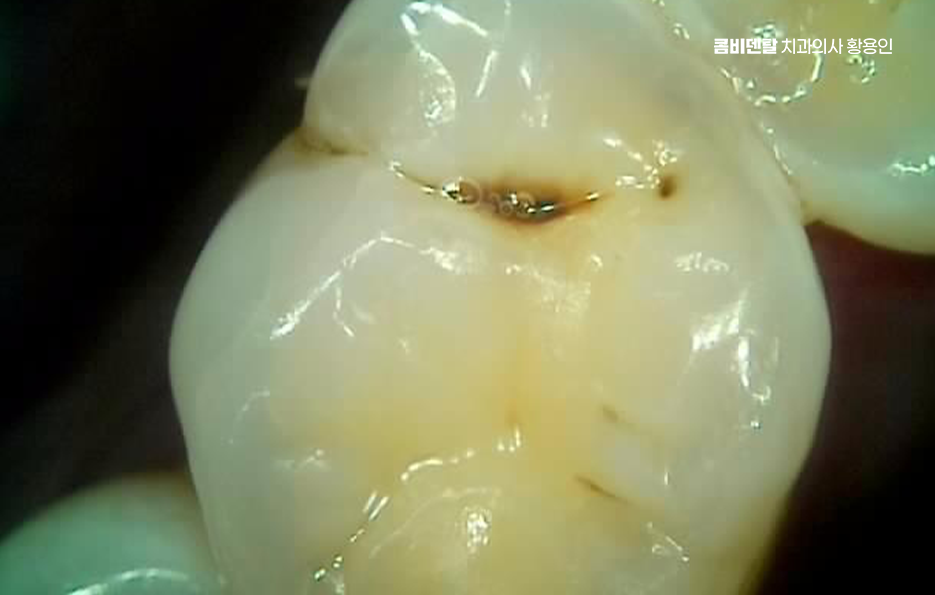
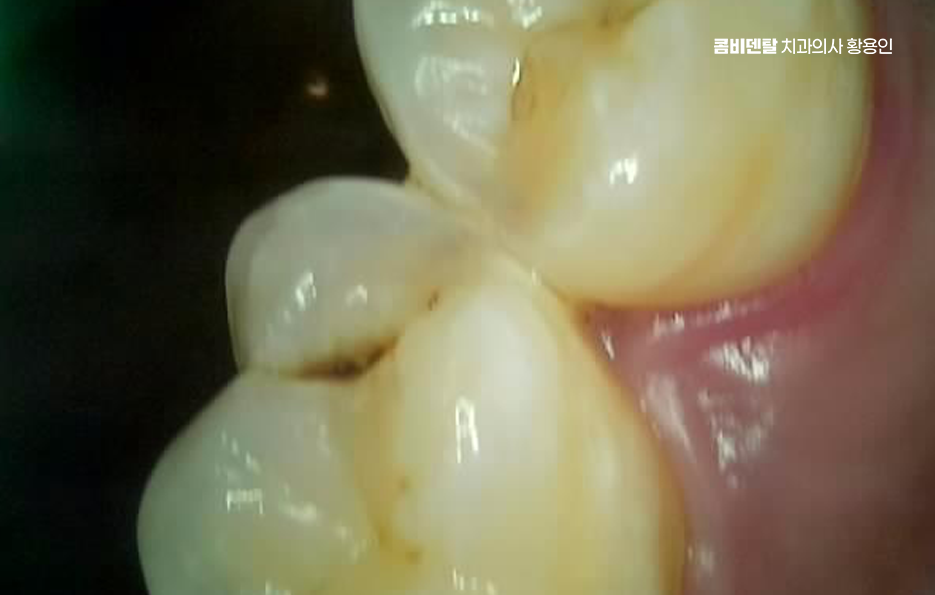
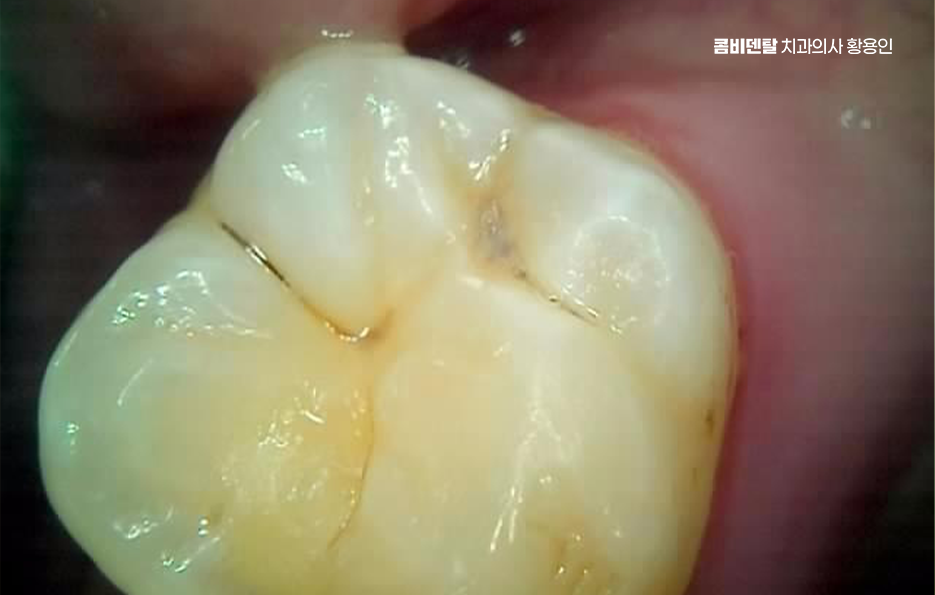
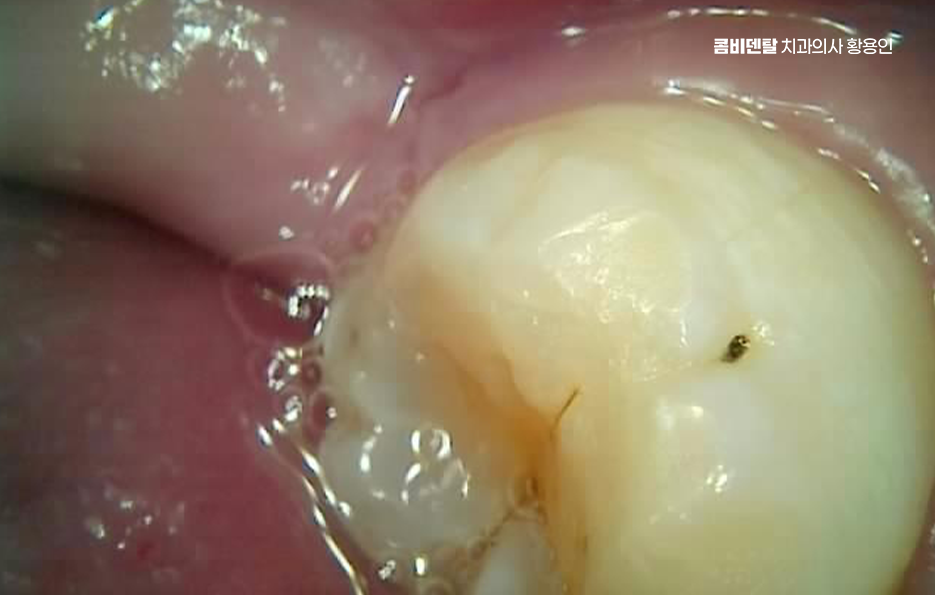
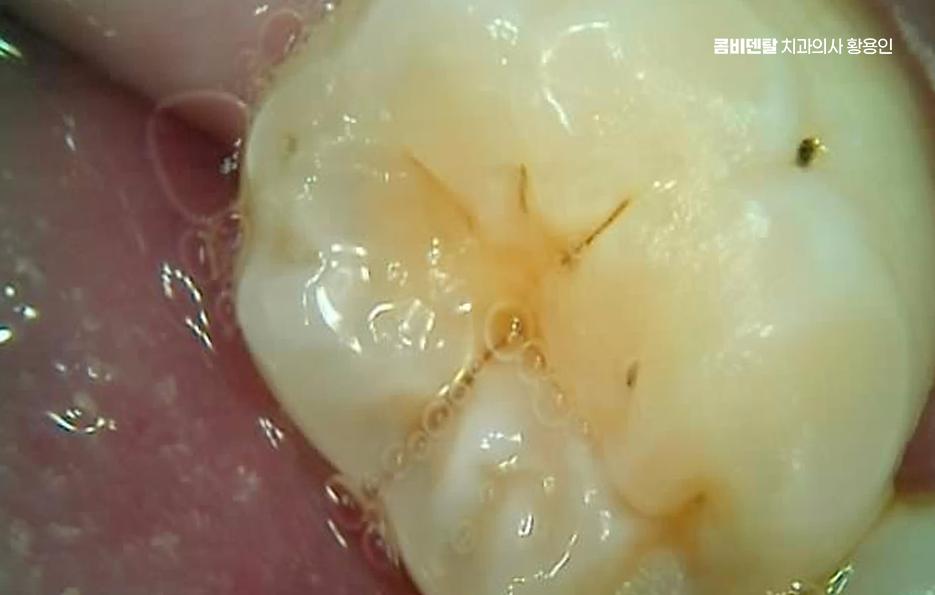
A black spot from tooth decay is sometimes dismissed as harmless because it does not hurt. But in reality, it is often an early sign of decay and a warning signal that can progress quickly if the treatment timing is missed. It commonly appears on areas that are hard for a toothbrush to reach, such as the chewing surface of molars or between the front teeth, or in places where food frequently gets stuck. This is not simply leftover food; rather, acids microscopically erode the tooth surface, weakening the enamel layer. Then pigments or bacteria enter the gap and cause discoloration.
Although teeth look hard, once the surface is damaged, bacteria can spread inward easily. If left as is, the black spot from tooth decay widens and gradually works its way into the tooth, eventually developing into pain, sensitivity to cold water, or throbbing toothache.
If it is clear that the black spot is caused by tooth decay, that area must be checked at a dental clinic. Even if it looks very small and shallow on the outside, the decay may already have progressed significantly inside. Cavities tend to advance faster toward the root or the center of the tooth than what is visible, so the outside may look small while the inside is actually hollowed out like a beehive.
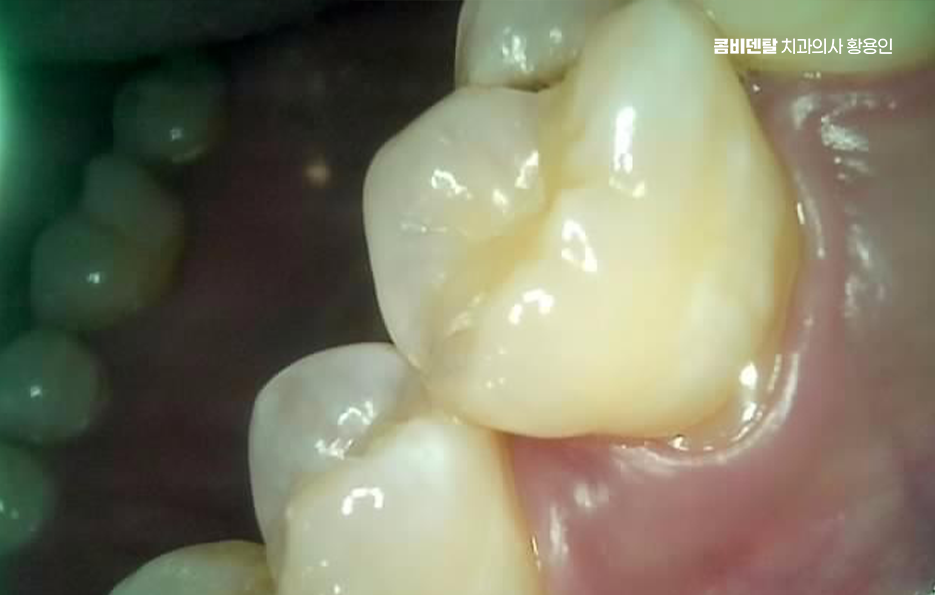
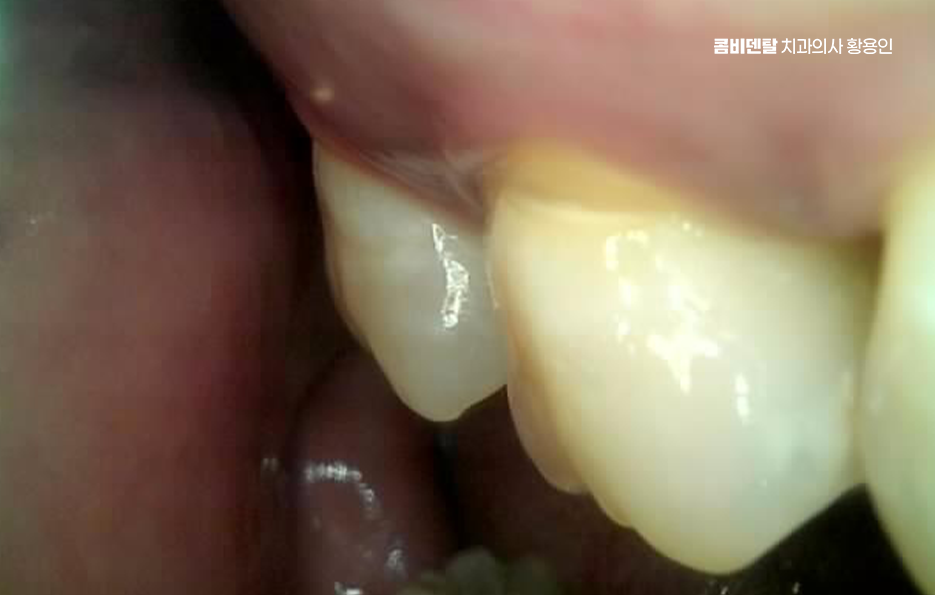
So if you simply look at the surface and think, “It’s not that big, so it’s fine,” it is easy to miss the right time for treatment. To properly assess it, you need an X-ray to accurately check the depth and extent of the decay. Black spots between teeth are especially difficult to see with the naked eye, so they are often discovered during an exam or when an X-ray is taken. If the decay has already spread close to the tooth’s nerve, root canal treatment may be necessary.
Because early cavities have not yet reached the nerve, they can be treated in a relatively simple way. First, the decayed area is cleaned out, and then the cavity is filled using a composite resin called resin. Resin is similar in color to natural teeth, so it is aesthetically pleasing and effective for small cavities. Treatment time is short, and it is often performed with little to no anesthesia, so it is known as a relatively 부담이 적은 treatment.
However, if the cavity is somewhat deeper or covers a wider area, an inlay treatment with greater strength than resin may be necessary. An inlay involves removing the decayed portion, taking an impression, and bonding a custom-made material to the tooth. It has the advantage of being more resistant to deformation and wear than resin, so it can last longer. If the decay is even more advanced, crown treatment may also need to be considered. And if the decay has reached the nerve, the next step is root canal treatment followed by a crown.
What matters when a black spot from tooth decay appears is not to leave it to self-diagnosis. If you assume it is just staining from coffee or food and let it go, it is common to only visit the dentist once pain develops after the decay has already progressed deep enough to reach the nerve. In that case, treatment becomes more complicated and the tooth’s lifespan shortens. On the other hand, if it is caught early, even shallow resin treatment may be enough, making early detection an important time to reduce the burden and cost of treatment.
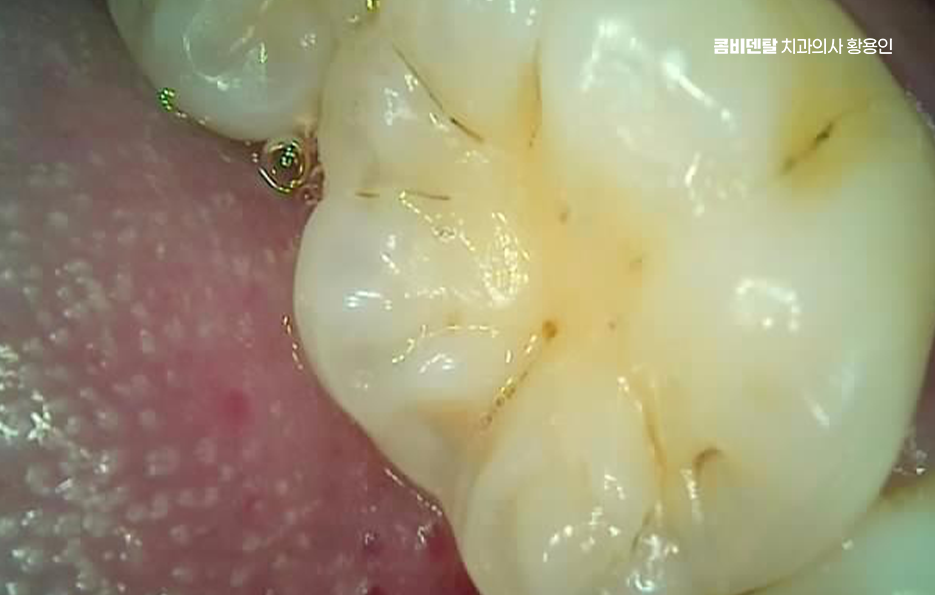
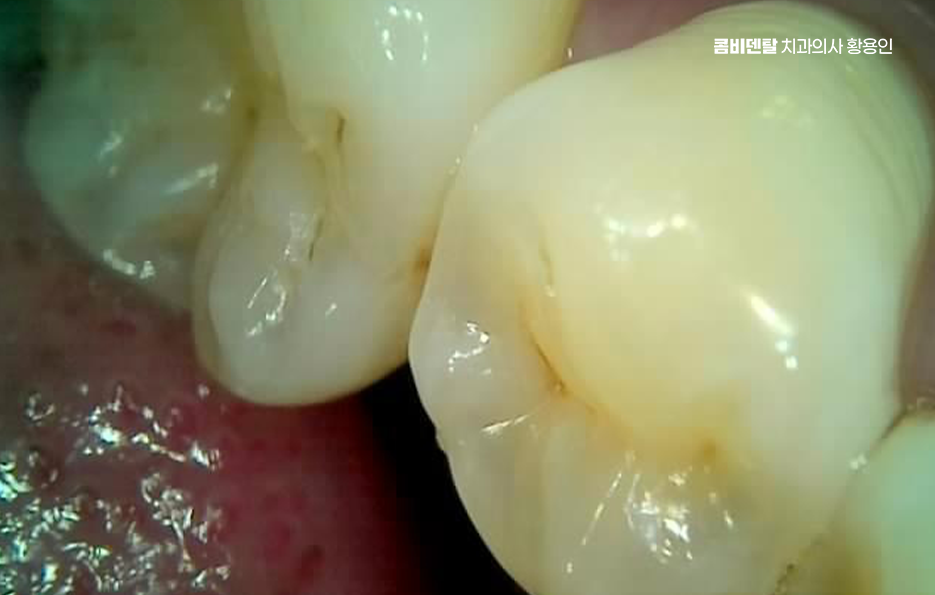
The reason tooth decay appears as a black spot is the biochemical process occurring within the tooth structure. After eating, leftover sugars meet bacteria and create acid, and that acid dissolves the minerals on the tooth surface. As this demineralization repeats, the tooth surface gradually becomes thinner or rougher, and bacteria and staining substances stick to the gaps, making them appear black. To prevent this process, brushing is of course essential, and brushing before bedtime should be considered the most important. In addition, regular scaling and dental checkups to periodically examine the condition of the tooth surface are effective ways to catch the early stages of cavities in advance.
In conclusion, if you see a black spot on a tooth, it is best not to decide for yourself whether it is just discoloration or the beginning of a cavity. Getting an accurate diagnosis at a dental clinic is the surest approach. The earlier it is treated, the simpler and less expensive it can be, and the better the chance of preserving the tooth for a longer time. So even if you do not feel discomfort right away, do not just wait and see; I hope you will get a prompt dental examination to identify the cause accurately and receive proper treatment.










Previous image
Next image









Previous image
Next image









Previous image
Next image









Previous image
Next image