For a while, I had been feeling a strange discomfort near my lower right molar. At first, I thought food was just getting stuck there more often than usual, but one day, when I brushed that area, I felt a strange, sharp sensation. It wasn’t painful enough to call it pain, but it felt oddly sensitive and a little sharp, leaving an unpleasant feeling behind. Before I knew it, I started avoiding that area while brushing, and that made me worry that I might actually have been managing it worse. In the end, I found out that a cavity had developed in my wisdom tooth, and the molar right in front of it had also been affected, with decay progressing in both teeth. Once I realized that, I was hit all at once by regret that I should have had the wisdom tooth removed earlier. Why did that wisdom tooth at the very back have to damage the molar in front of it too? That molar needs to last a lifetime, and it was upsetting that a healthy tooth had been affected because of a wisdom tooth that was already poorly positioned.
This is why people often delay wisdom tooth extraction because they are scared or find it bothersome, but wisdom tooth problems should not be taken lightly because they can lead not only to issues with the wisdom tooth itself, but also to problems in the surrounding molars and gums.
In other words, it is common for wisdom teeth to cause trouble, but it is not just the wisdom tooth that becomes a problem. In many cases, the adjacent molar also develops decay. In particular, when a lower wisdom tooth is lying sideways, it sits tightly against the molar in front of it, making it hard to clean between the two teeth and allowing food to get trapped easily.
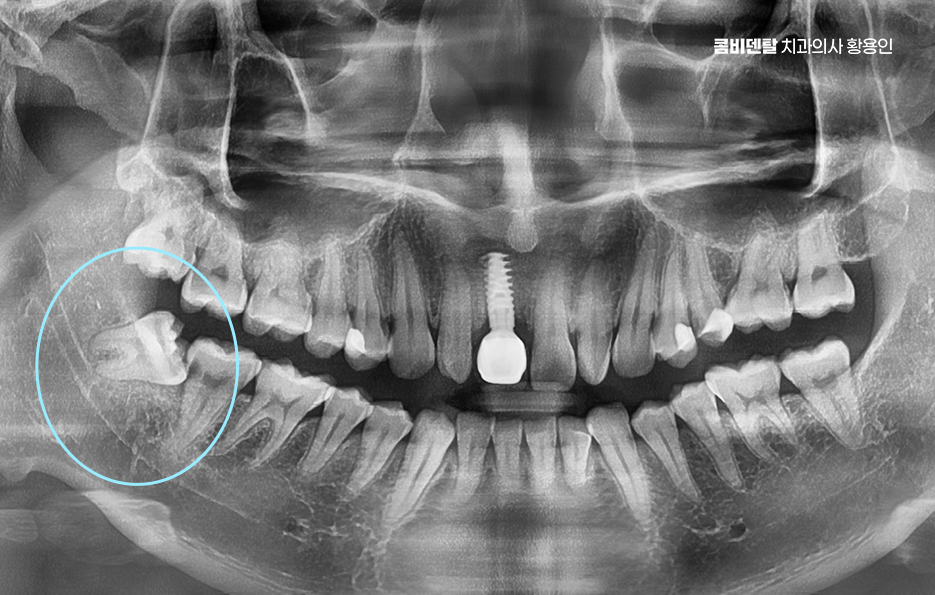
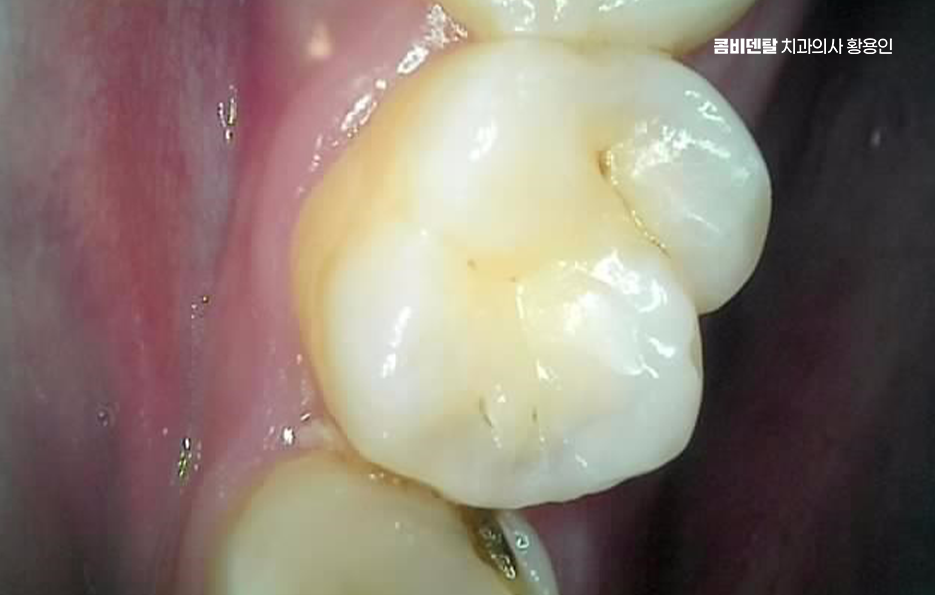
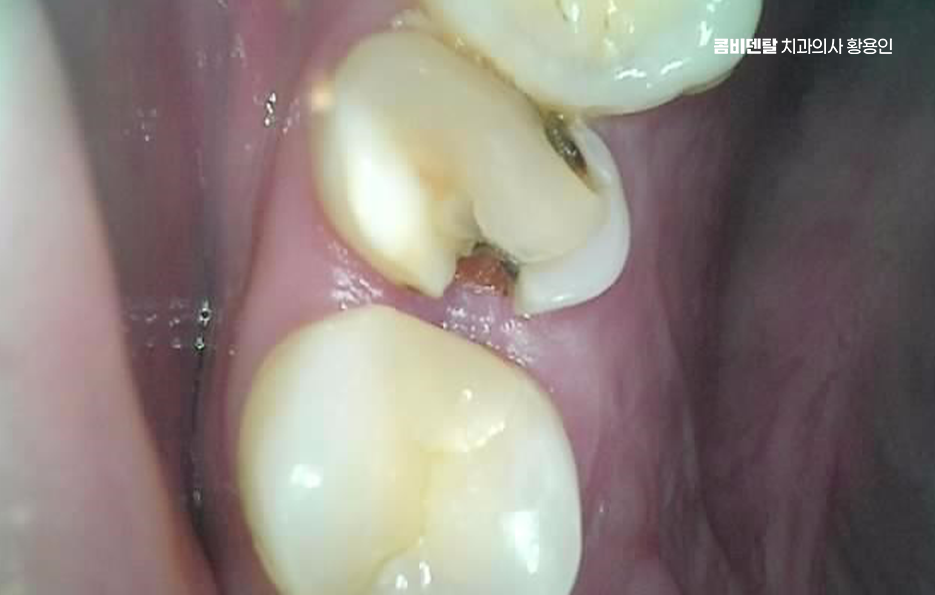
The problem does not end there. When decay develops at the same time between a sideways wisdom tooth and the molar in front of it, treatment becomes more complicated. Because the wisdom tooth is lying sideways, it is difficult to properly see the cavity on the back side of the molar in front, and there is also not enough space for treatment instruments to enter, which makes cavity treatment more difficult. In particular, decay on the back side of the molar in front is hard for patients to notice themselves, and diagnosis is often delayed, so in many cases the decay has already reached the nerve or has progressed to the point where root canal treatment is needed.
If this is the case, treating only the molar cavity without removing the wisdom tooth will not solve the problem, and in fact, it is difficult to approach the treatment effectively. So if the wisdom tooth is the cause of the molar cavity, the correct order is to remove the wisdom tooth first and then treat the molar.
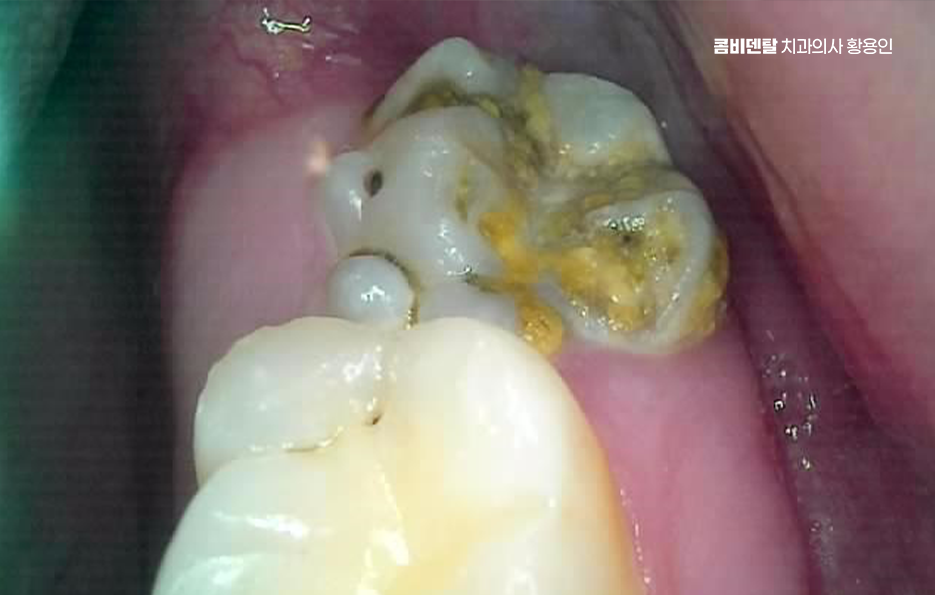
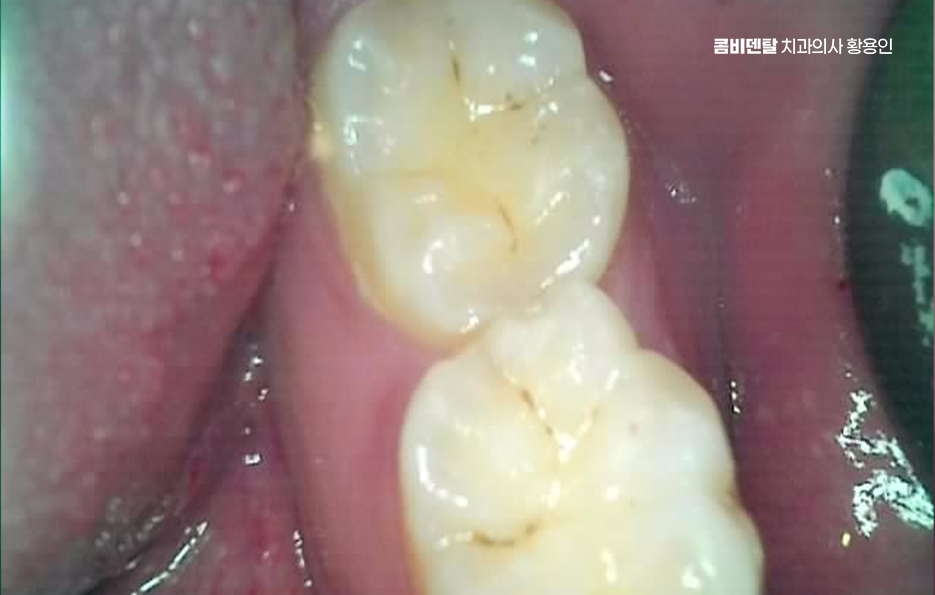
Another important point is that the space created after removing the wisdom tooth can actually make molar cavity treatment easier. While the wisdom tooth is still there, it is difficult to access with treatment instruments, but after extraction, visibility improves and the molar can be treated more cleanly and accurately.
That is why removing the wisdom tooth first and then treating the molar can lead to a better outcome, and because the tooth was already affected by the wisdom tooth, the chance of the cavity recurring is also lower.
In conclusion, when it comes to cavity treatment after wisdom tooth extraction, it is important to determine the treatment order and direction properly when both the wisdom tooth and the molar have decay at the same time. Rather than treating only the side that hurts, the cause and current condition need to be identified accurately so a systematic treatment plan can be made. In particular, when molar decay is only noticed later through pain, there is a higher chance of nerve damage, so it is important not only to visit the dentist when it hurts, but also to have regular checkups and take good care of wisdom tooth extraction timing as well as your everyday tooth and gum health.



 Previous image
Next image
Previous image
Next image





 Previous image
Next image
Previous image
Next image




 Previous image
Next image
Previous image
Next image



 Previous image
Next image
Previous image
Next image