
Since I was young, I knew my front teeth were a little protruded and seemed to be twisted to one side, but back then I vaguely thought that time would naturally make me less concerned about it.
Then one day, even when I looked fine from the front, as soon as I turned my face slightly to the side, my mouth seemed to stand out first. And when talking up close, the uneven line kept catching my eye, so there were many days when I found myself checking my expression first.
It may be something others could pass by without much thought, but to me that small misalignment strangely held onto my mind for a long time. Even when I wanted to smile brightly, I would first adjust my lips, and choosing a moderately closed expression instead of a natural smile gradually became familiar.
At first, I thought it was only an appearance issue, but as time went on, I began to notice specific areas that were hard to reach with a toothbrush when brushing. Food also kept getting stuck in similar places, and as I repeatedly realized that it was not easy to manage, I came to think that this issue was not just a simple complex.
Sometimes it felt as if my pronunciation leaked very slightly when I spoke, and even when I kept my mouth closed and stayed still, there was still an awkward feeling that my front teeth were not naturally aligned when closed. That made me realize that the imbalance in my teeth was affecting much deeper parts of daily life than I had expected.
In the past, orthodontic treatment felt like something that required too much time and a major decision, so I could not easily bring it to mind. But now I clearly understood why I was considering this treatment, and that made me think about it more seriously and realistically than before.
Of course, starting orthodontic treatment was not an easy decision. The time spent living with appliances was burdensome, and the fact that I would be receiving treatment as an adult made me hesitate. I also worried whether I could endure the process all the way through if it took longer than expected.
Still, the reason I kept leaning toward it was not simply because I wanted straighter teeth. I wanted to finally let go, even a little, of the long time I had spent being careful when smiling because of protrusion and misalignment, and checking my teeth first in front of a camera.
This kind of misalignment of the front teeth accompanied by protrusion is difficult to view as merely a few teeth not being aligned. When the front teeth are overlapped, misaligned, and also appear to protrude forward, an orthodontic plan that considers both alignment and the shape of the mouth may be necessary.
Many people think that it is enough to simply straighten the front teeth, but in reality, the reason the teeth became misaligned and the cause of the protrusion must be distinguished first. In orthodontic correction for misaligned front teeth, the process of considering the space for the teeth, the bite of the molars, and the balance of the jaw together can be important rather than focusing only on appearance.
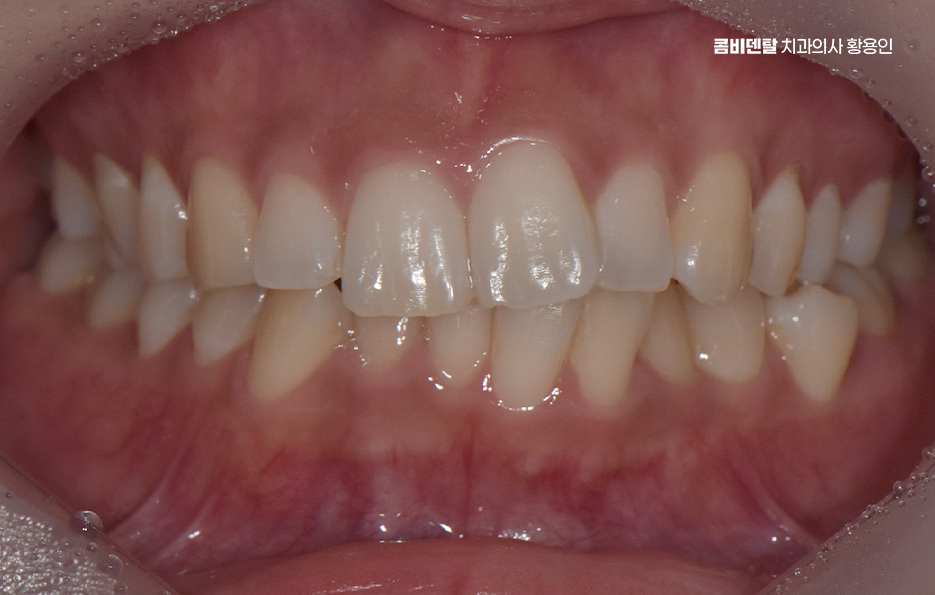
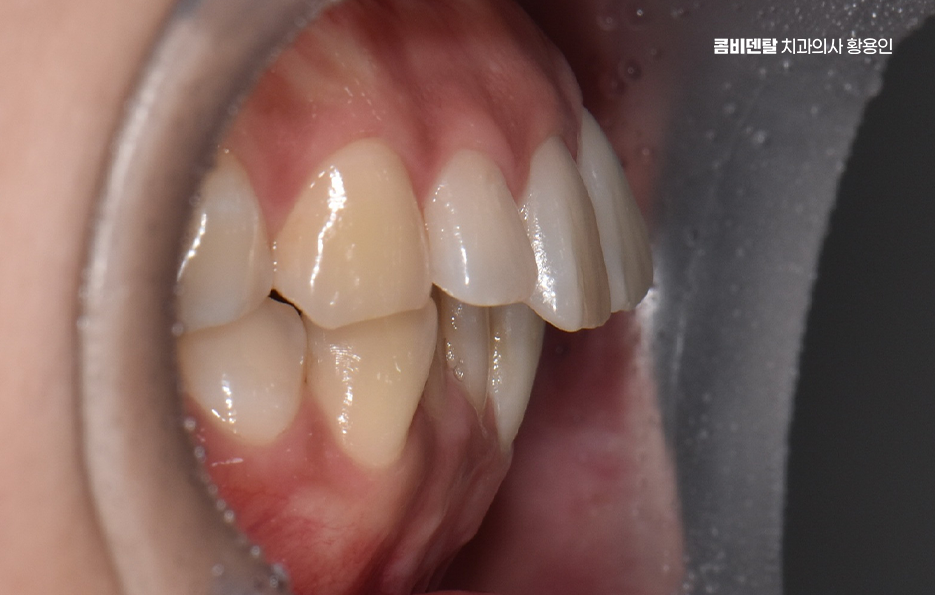
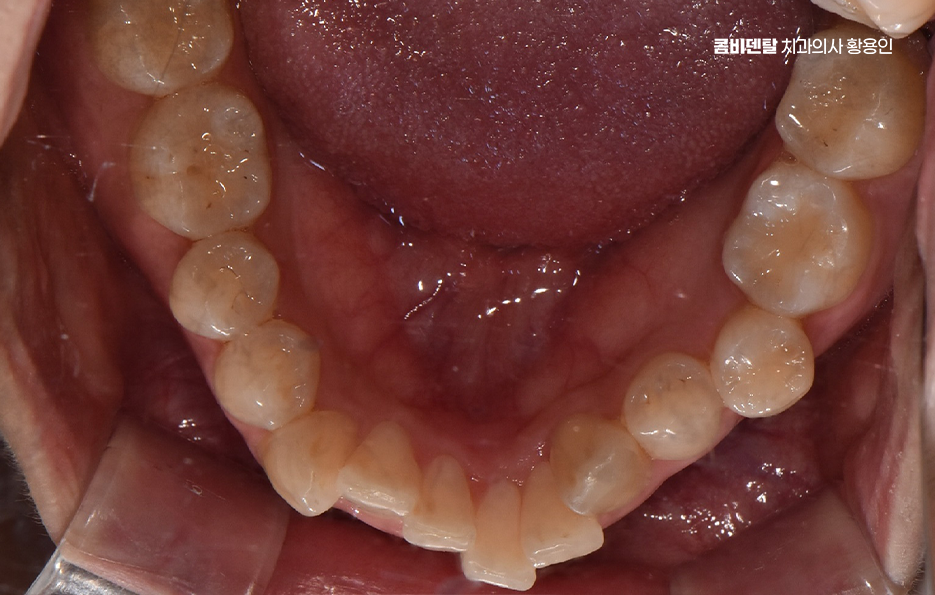
A common background for misaligned front teeth is lack of space. If the width or length of the jaw is narrower than the space needed for the teeth, the teeth that come in first may take up the available room, and the front teeth that erupt later may twist or overlap. If protrusion is also present, it becomes necessary to look beyond simply aligning the teeth and also consider the angle at which the front teeth lean forward and how much they push the lips outward. Depending on whether it is enough to simply organize the alignment or whether changes in the mouth line and harmony with the face must also be considered, the treatment plan can differ.
Even if teeth look similarly protruded from the outside, in some people only the teeth themselves are tilted forward, while in others the position of the upper jaw or the skeletal structure is involved. Because of this difference, the method for correcting misaligned front teeth also changes. Dental protrusion is relatively approached mainly through tooth movement, but when skeletal protrusion is significant, there may be limits to moving only the teeth backward. For that reason, it can be important to consider the facial line and side profile together in the initial diagnosis.
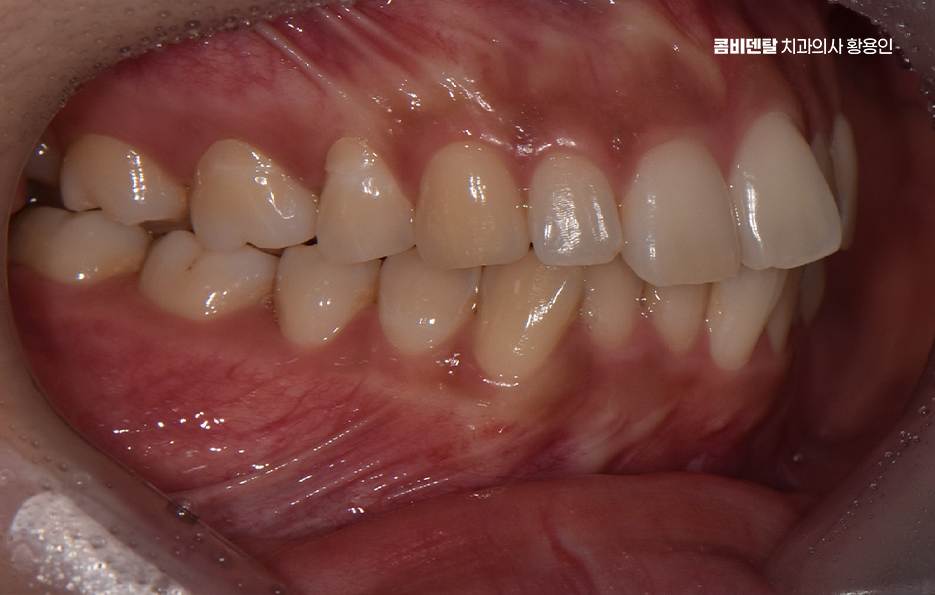
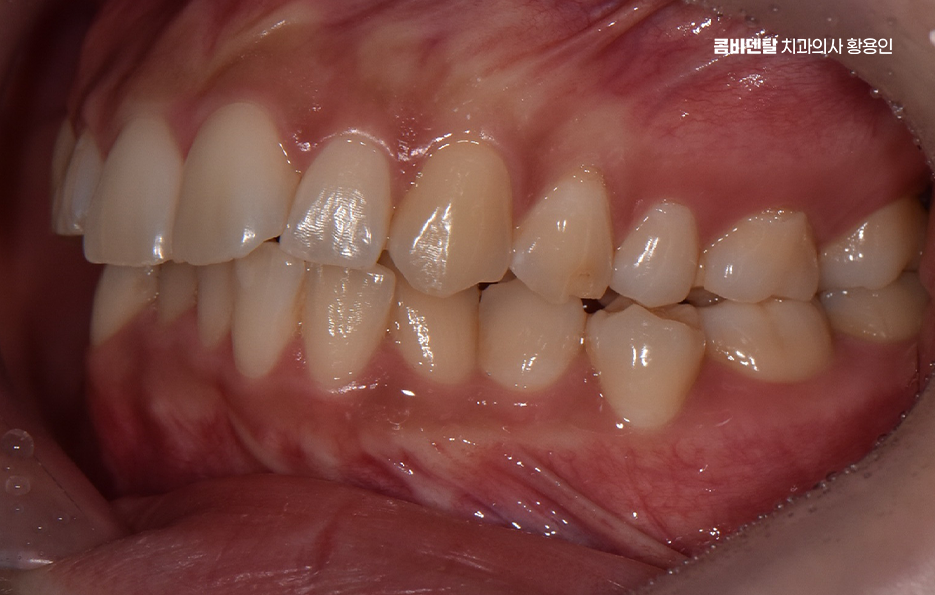
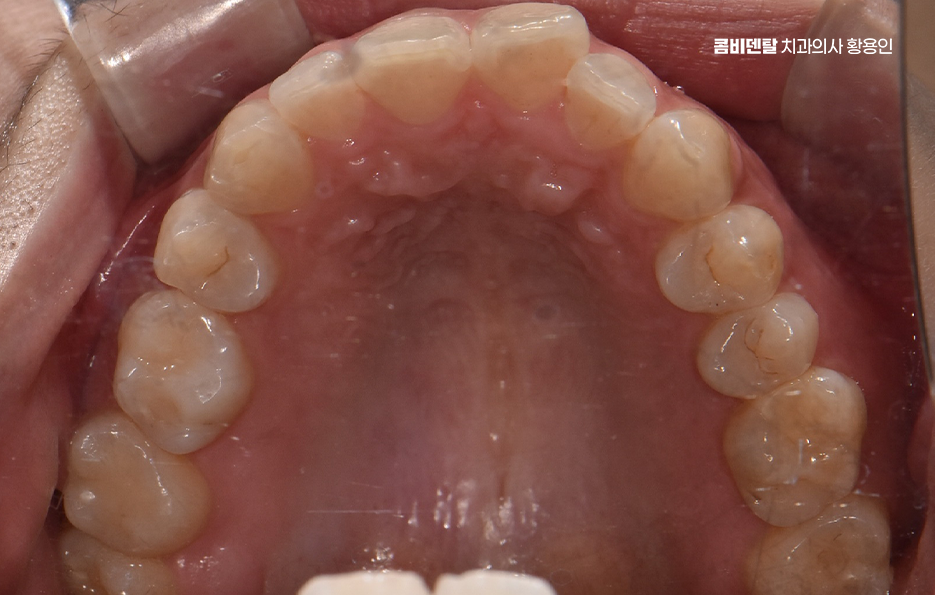
Treatment for misaligned front teeth accompanied by protrusion usually depends on how space will be created. If there is almost no space, trying to force the teeth into alignment can make the front teeth look even more protruded, so a plan to create room first is important. There are several ways to create space: widening the dental arch, making small adjustments between the teeth, or moving the molars backward when possible. If the lack of space is severe, a plan that includes extraction can create a more natural result.
When people hear about extraction, they may think it automatically means a major orthodontic treatment, but when protrusion is pronounced and changes in the mouth line are also desired, extraction can instead create space to move the front teeth backward, leading to a more stable and orderly result.
On the other hand, if protrusion is not severe and misalignment is the main issue, non-extraction orthodontic treatment may be sufficient. However, this kind of judgment cannot be made by looking only at a few front teeth; it requires checking the molar bite, skeletal structure, and face shape together. In particular, the process of reducing protrusion while straightening misaligned front teeth requires more delicate force control than simple alignment. The front teeth must be straightened while also being controlled so they do not get pushed too far forward, so the completeness of the treatment plan and the experience and skill of the orthodontic specialist are important factors.
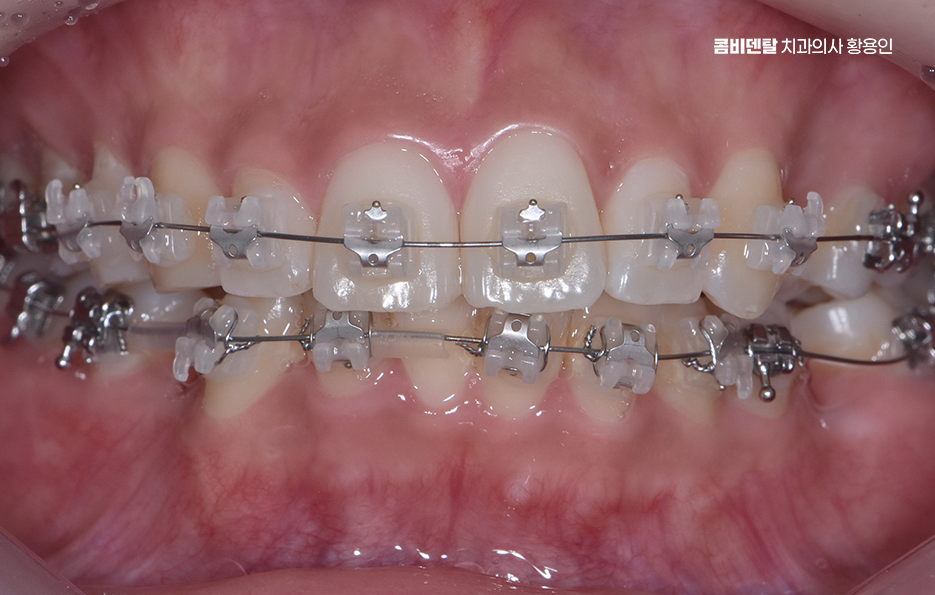
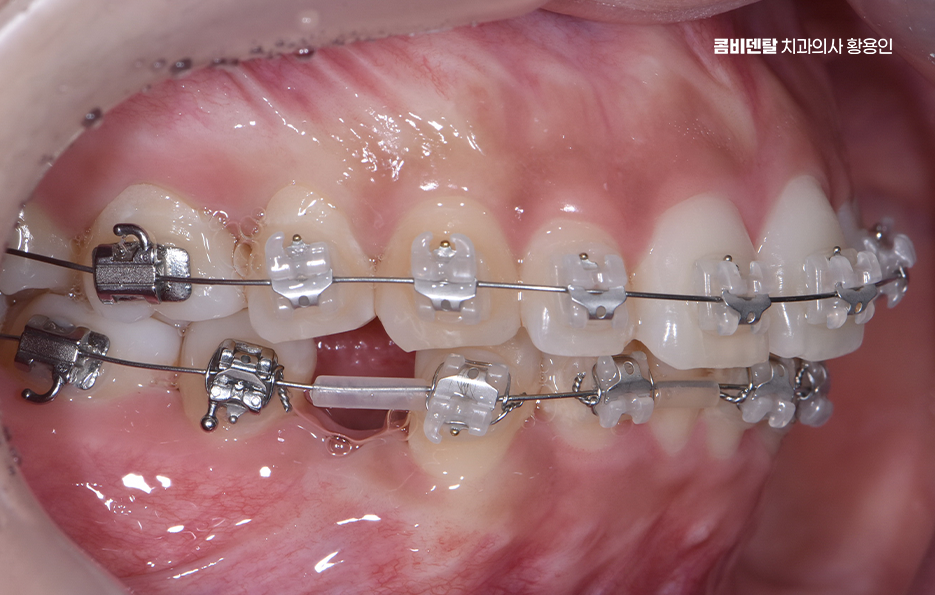
When protrusion is present, the length of the teeth visible when smiling and the feeling of how the lips close together can also change. So when setting orthodontic goals, it is important to honestly discuss not only the alignment of the teeth but also the impression of the smile and changes in the side profile. Also, front teeth with protrusion are especially important to maintain after orthodontic treatment. Because the teeth that originally sat forward are moved inward, there is a tendency for them to try to return to their original position, so the retention device must be used faithfully for the results to remain stable over time.
In conclusion, the important point in how to correct misaligned front teeth with protrusion is not to treat straightening the crooked teeth and reducing the protruding appearance as separate issues. The space, angle, and mouth line must be designed together so that a natural result, long-term stability, and harmony with the face can all be considered in the treatment plan.



Previous image
Next image
Previous image
Next image
Previous image
Next image




Previous image
Next image