
At first, the area around my wisdom tooth only felt sensitive from time to time, so I assumed that, because it was the rearmost tooth, I probably had not brushed it well enough and did not think much of it. But as time passed, a heavy pain arose whenever I chewed, and it no longer seemed like something I could take lightly.
I had heard that wisdom teeth are difficult to manage, but when they were not causing immediate pain, I did not pay much attention to them.
However, once I began to feel that the cavity had become severe, I regretted possibly having neglected it for too long.
Even when I tried to look inside my mouth with a mirror, the tooth was too far back to see properly. Even when I shone my phone’s flashlight on it, I could only make out what seemed to be a dark, hollowed area, so I could not tell how extensive the decay really was, which made me even more anxious.
At first, I wondered whether the tooth could be saved with treatment. But after hearing that wisdom teeth are often poorly positioned and may not be essential for chewing, I increasingly wondered whether I should have the decayed wisdom tooth extracted instead.
Still, the idea of having a tooth removed was not easy to accept. In particular, I had read many accounts saying that wisdom tooth extraction can cause swelling or pain. I did not want to leave the cavity untreated any longer, but I was also afraid of the extraction process, so I kept wavering between the two options.
I tried to avoid chewing on that side whenever I ate, but I often felt small pieces of food getting stuck around the wisdom tooth. Even after brushing, an unpleasant feeling remained, and I worried throughout the day that the cavity was becoming deeper.
When I felt a sharp sensation around the wisdom tooth after drinking cold water or eating something sweet, I worried that the problem might already have progressed close to the nerve. Each time, I felt frustrated with myself for having postponed making a dental appointment.
Even at work, my mouth did not feel fresh after lunch, so I spent a long time brushing my teeth in the restroom. I worried that there might be an odor, and even when speaking with people up close, I found myself opening my mouth less than usual for no particular reason.
Then one night, the gum around the wisdom tooth began to throb, and I felt a heavy pulling sensation beneath my jaw. Only then did I realize that a cavity could cause discomfort not only in one tooth but also in the surrounding areas.
As in this case, a cavity in a wisdom tooth may initially feel like a small black spot or simply food getting stuck. However, because wisdom teeth are positioned deeply and are difficult for a toothbrush to reach, delayed detection can often eventually lead to extraction of the decayed wisdom tooth.
Because wisdom teeth are located at the very back of the mouth, they are difficult to brush and not easy to inspect visually. As a result, cavities in them are often harder to notice early than cavities in other teeth. In particular, when a wisdom tooth grows at an angle or only partially emerges from the gum, a small gap can form between the tooth and gum. If food and bacteria accumulate there, cavities and inflammation may recur.
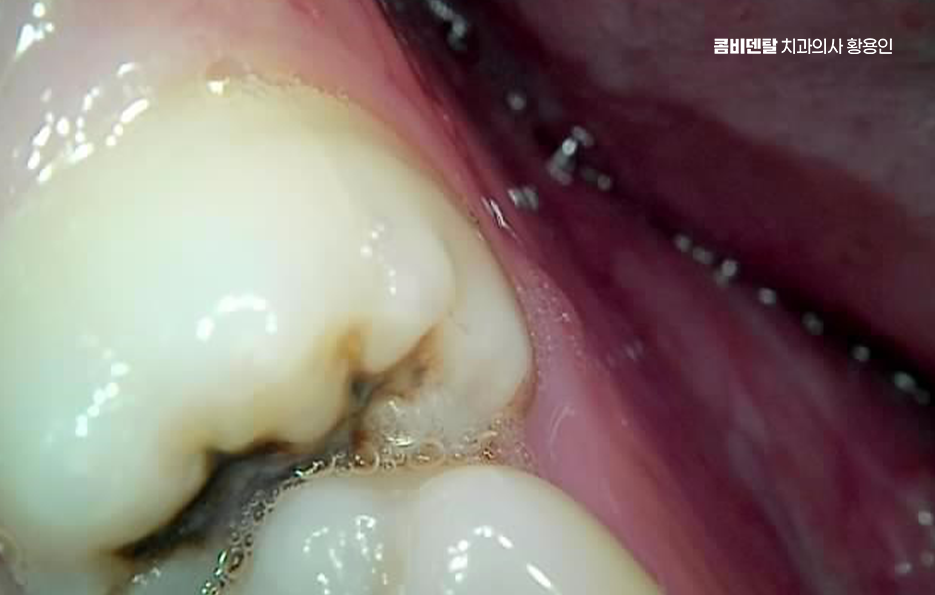
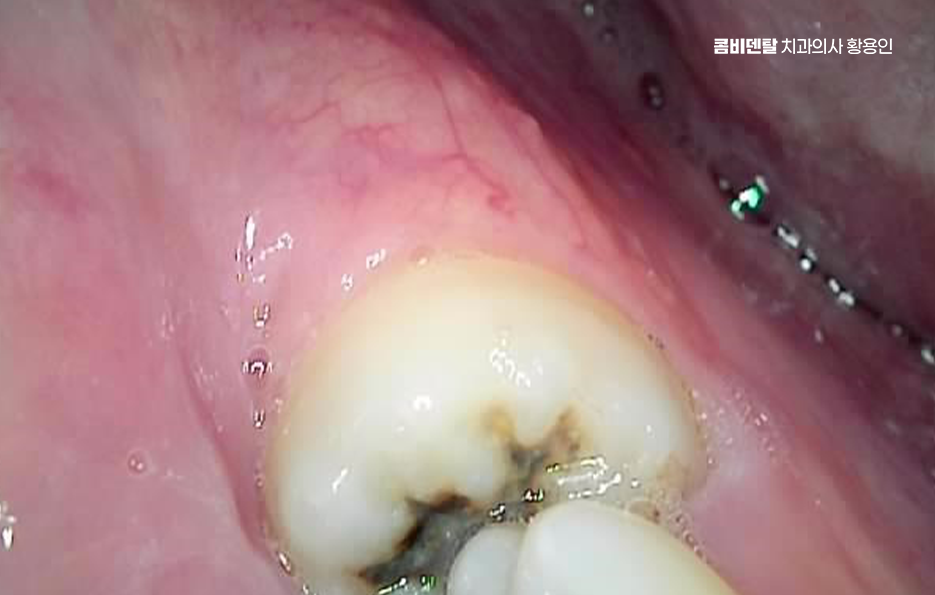
A major reason why a cavity in a wisdom tooth leads to extraction is that treatment access is difficult. In many cases, wisdom teeth are not essential for chewing. If the tooth does not properly meet the opposing wisdom tooth or is positioned in a way that only causes food to become trapped, extraction may be a more practical choice than preserving it.
When a cavity progresses deep inside a wisdom tooth toward the nerve, the pain may become severe. Because wisdom teeth often have complex root shapes and are in an unfavorable position, extraction of the decayed wisdom tooth is generally recommended more often than root canal treatment.
Another concern is that a cavity in a wisdom tooth can affect the molar in front of it. If the wisdom tooth is lying sideways or touching the adjacent molar, a cavity can develop between the two teeth and damage the important molar as well.
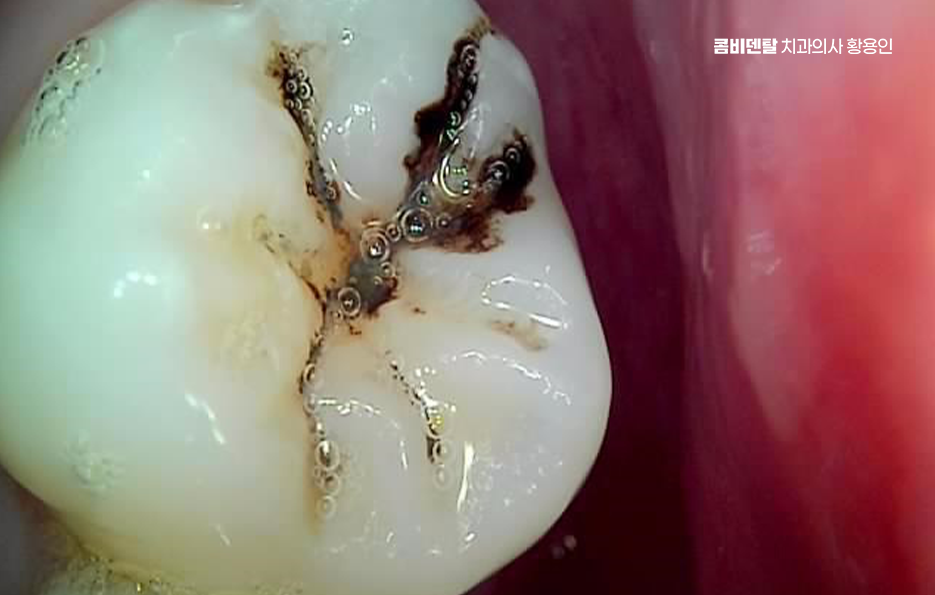
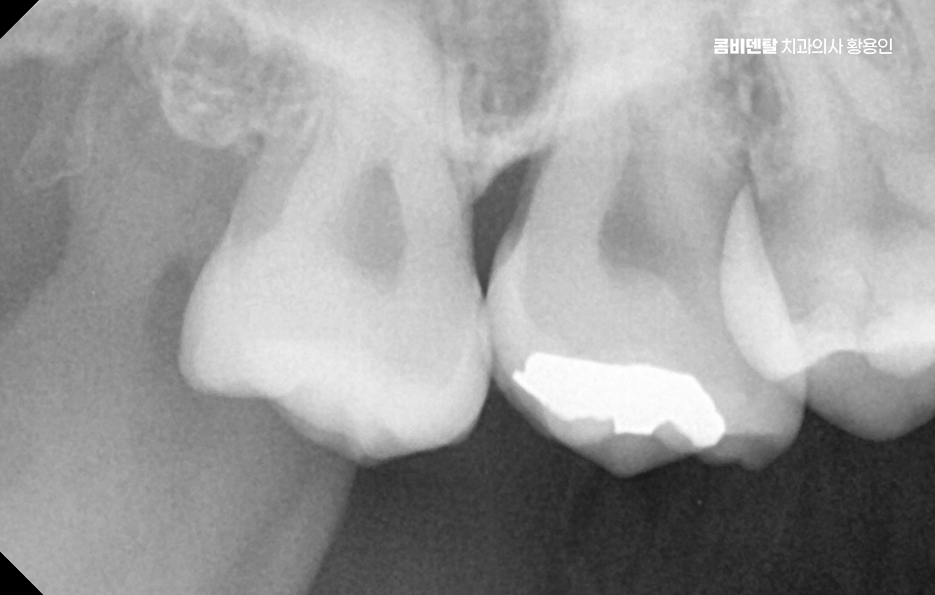
The molar in front needs to be protected because it is an important tooth that should be used for a long time. If cavities repeatedly develop behind the molar because of the wisdom tooth, removing the wisdom tooth may be more helpful than leaving it in place. If the gum around the wisdom tooth often swells, has an odor, or produces a pus-like taste, cavities and inflammation may be present together. In such cases, medication may temporarily relieve the symptoms, but because the underlying cause has not been resolved, the inflammation may return.
Having a cavity in a wisdom tooth does not always mean that it must be extracted immediately. If the tooth has grown straight, can be managed well, and has only a small area of decay, it may be possible to treat it and monitor it. However, if the wisdom tooth is deeply positioned, develops cavities repeatedly, or is accompanied by gum inflammation, it is advisable to establish a plan that includes extraction. The longer it is left untreated, the greater the pain and treatment difficulty may become.
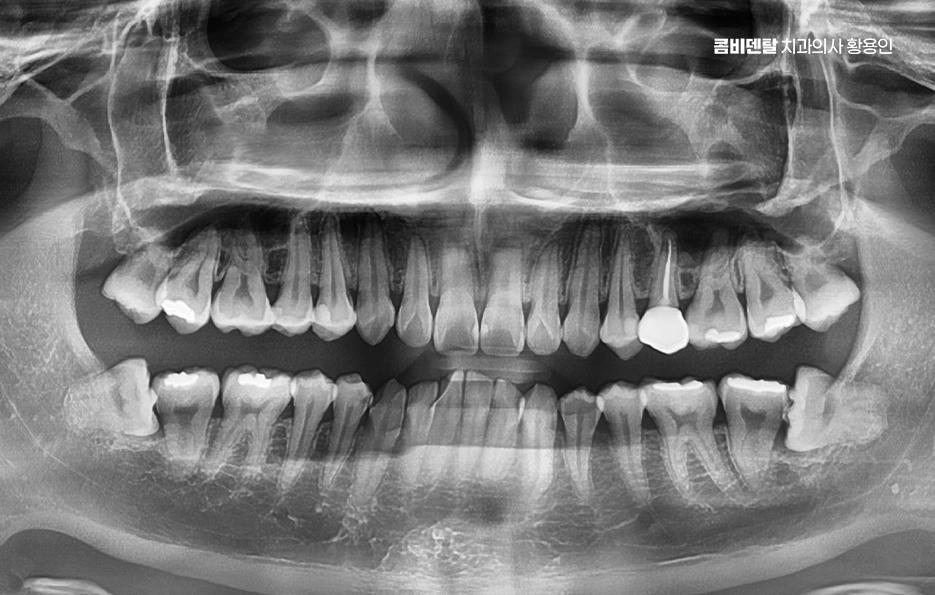
Planning extraction of a decayed wisdom tooth begins with an X-ray to check the tooth’s direction, root shape, and relationship with the molar in front. The position of the roots may determine the difficulty of extraction more than the visible cavity itself. Lower wisdom teeth may be close to the nerve inside the jawbone, so they require more careful evaluation. If the tooth appears close to the nerve canal, three-dimensional imaging with a 3D CT scan can be used to assess the level of risk.
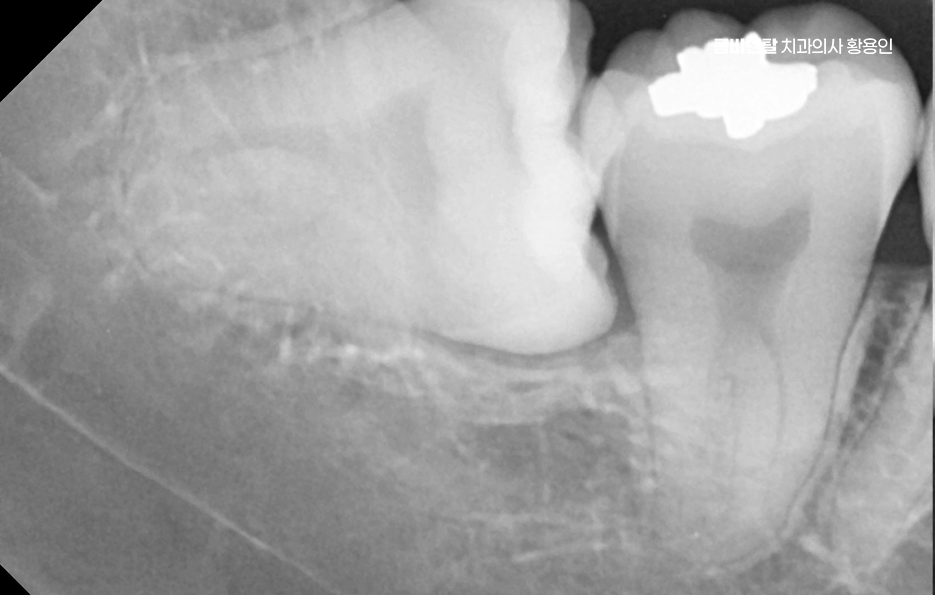
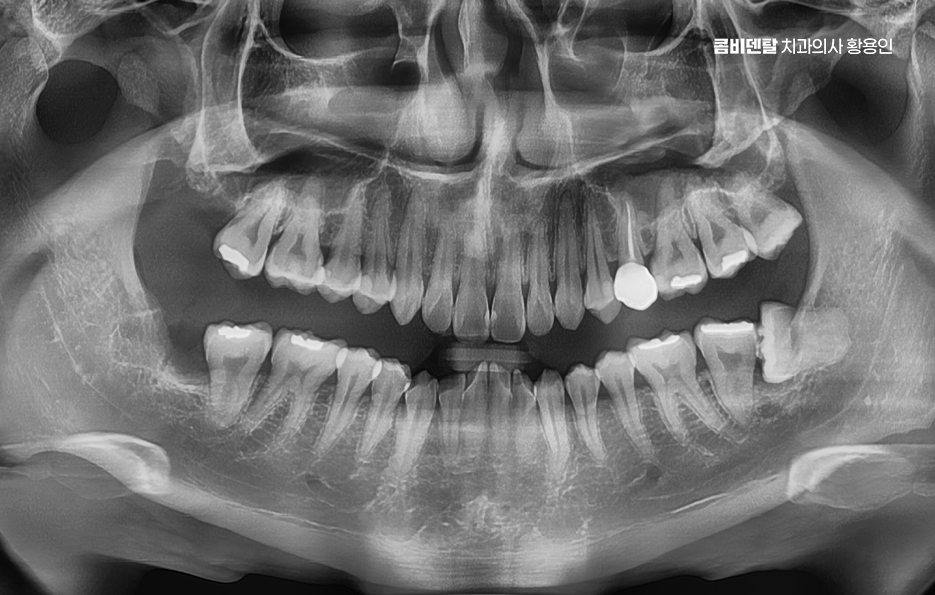
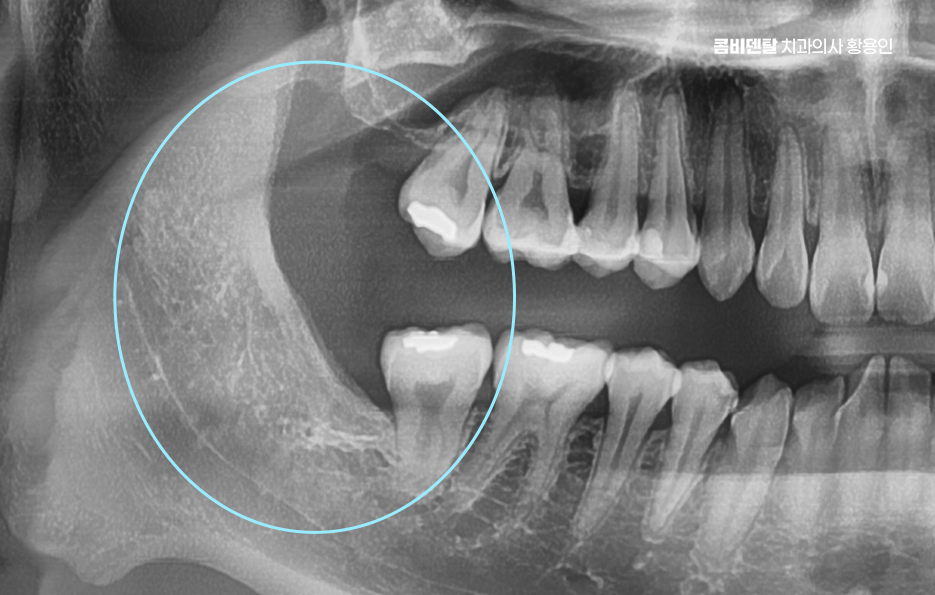
Upper wisdom teeth need to be evaluated for their proximity to the maxillary sinus. Depending on the position of the roots, it may be necessary to avoid blowing your nose forcefully after extraction, so it is important to follow the instructions provided before and after surgery. If the inflammation is severely swollen or the pain is intense, a plan may be made to reduce the inflammation first rather than extracting the tooth immediately. Severe swelling can make anesthesia less effective and recovery more difficult.
On the day of extraction, the wisdom tooth is removed after anesthesia. An impacted or sideways wisdom tooth may require surgical extraction, in which the gum is opened and the tooth is divided before removal.
After extraction, it is important to bite down firmly on the gauze for sufficient time to control bleeding and avoid spitting frequently. Because the blood clot protects the wound, it is best to avoid using a straw or rinsing vigorously. For the first few days, eat soft, lukewarm foods, and for safety, avoid alcohol, smoking, and strenuous exercise. Hot and irritating foods may increase bleeding and swelling and delay recovery.
In conclusion, cavities in wisdom teeth often lead to extraction because these teeth are difficult to treat and manage due to their location and can damage the surrounding molars. To complete treatment safely, the possibility of preserving the tooth and the need for extraction should be determined through an accurate examination. Because recovery as well as the extraction itself needs to be considered, do not postpone care indefinitely. If you experience discomfort, or even if you do not, undergo regular checkups and make a careful plan for wisdom tooth extraction.
Previous image
Next image



Previous image
Next image





Previous image
Next image

Previous image
Next image