
There are many people who are considering rhinoplasty, right?!
Rhinoplasty, along with eye surgery,
has become one of the popular cosmetic surgeries.
Since the nose is located at the center of the face, it can greatly change the overall
appearance of the face, so it should be chosen carefully.
Also, because there are many different types of rhinoplasty,
there are various materials used as well.
From now on, let’s take a look at
materials used in nose surgery!
Types of rhinoplasty materials
Rhinoplasty materials
are broadly divided into autologous tissue and artificial tissue.
Autologous tissue materials include septal cartilage, ear cartilage, costal cartilage, and dermis/fascia.
Artificial tissue materials include septal cartilage, donated costal cartilage, silicone, Gore-Tex, Silitex, Medpor, mesh, and others.
Among them,
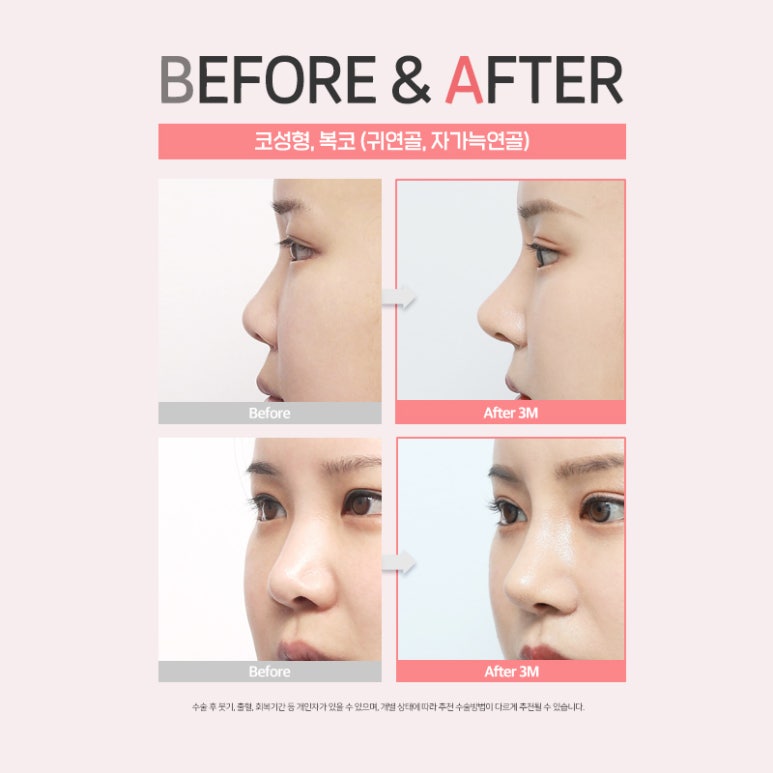
autologous cartilage such as ear cartilage and septal cartilage is typically used for the tip of the nose,
while silicone implants are used for the bridge of the nose.
In some cases, dermis, periosteum, or fascia may also be used to reinforce the skin.
What matters most is selecting an implant according to the condition of your own nose and the line you want.
Today, we will look at
ear cartilage, septal cartilage, donated costal cartilage, autologous dermis,
and donated dermis, which are mainly used in rhinoplasty.
Autologous costal cartilage
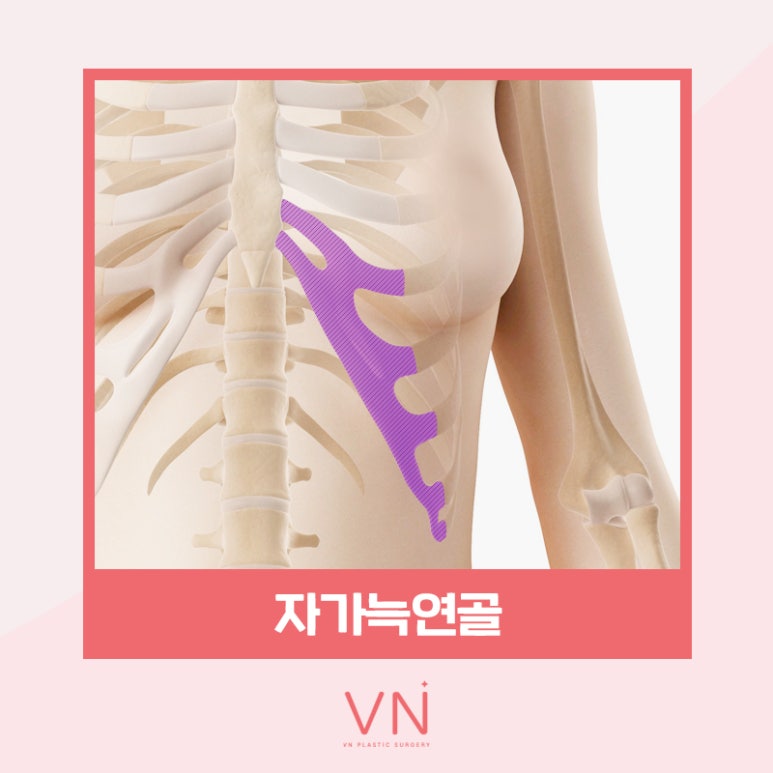
Autologous costal cartilage, mainly used in rhinoplasty,
is cartilage located at the front end of the ribs.
It allows a large amount of cartilage to be harvested, is strong,
and is resistant to inflammation. In addition, because the amount that can be used is
greater than that of ear cartilage or septal cartilage, it is easier to shape and
is highly useful in revision surgery.
Donated costal cartilage
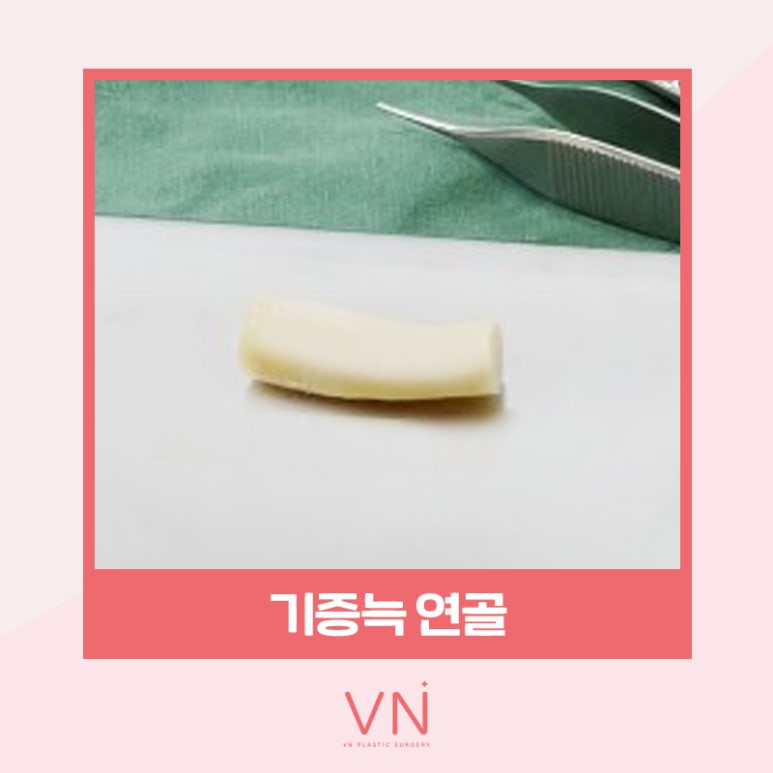
This is processed from another person's costal cartilage
so that an immune reaction does not occur.
It has the disadvantage of a higher resorption rate than autologous costal cartilage.
However, since there is no separate harvesting process required,
it can be used conveniently,
and as a result, the surgery time is shorter than when harvesting is performed.
It is also useful when autologous tissue is insufficient because it was already used in a previous surgery.
Ear cartilage
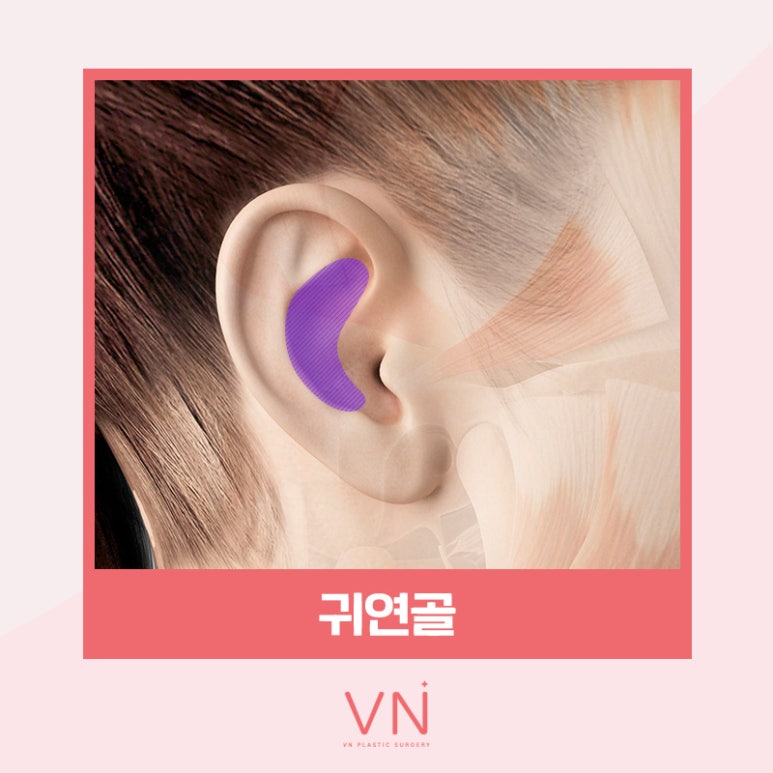
Ear cartilage is harvested by making an incision along the crease behind the ear
so that no scar is visible, and cartilage from the broad inner area of the ear is used.
Compared with septal cartilage, it is thicker and softer,
so it is often used to create a natural shape.
Its support is somewhat weak, so it is not enough for firmly supporting areas such as the tip of the nose,
but it is easy to create rounded structures and has good elasticity,
which makes it very advantageous for a natural design.
In addition, autologous tissue shows almost no visibility issue
even when the skin is thin.
Septal cartilage
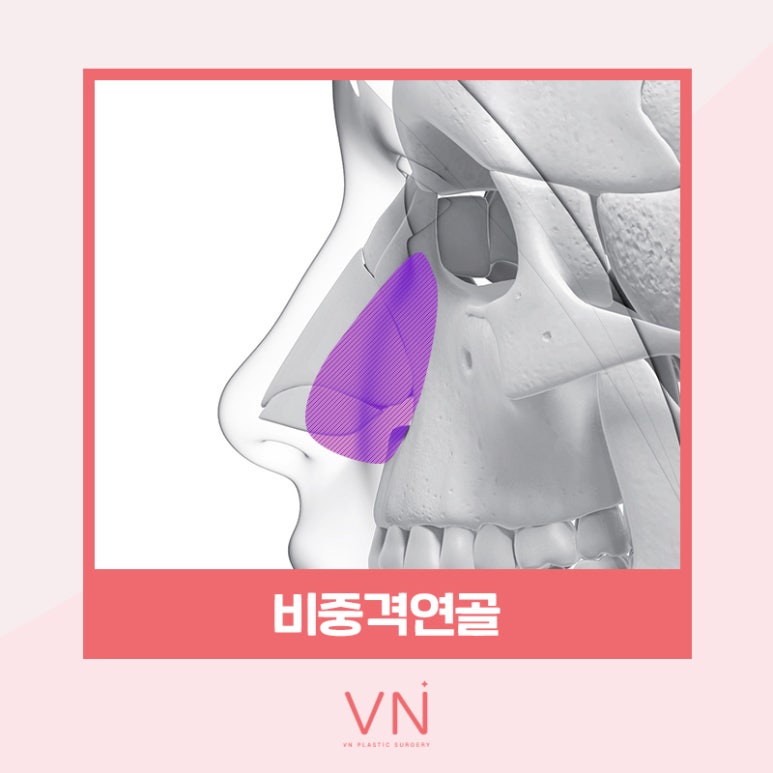
Septal cartilage is the cartilage inside the nose,
and serves as the central partition that divides the two sides of the nose.
It is widely used among autologous tissues.
Because it is harvested from inside the nose without an additional incision in another area,
it is a good material for rhinoplasty.
It also has an appropriate thickness and strength,
making it suitable for shaping the bridge and tip of the nose.
It is effective for noses with a short length and for cases where the tip of the nose droops downward,
but if the amount is insufficient,
other additional procedures may be necessary.
However, there is no visible scar at all when it is harvested,
and there are almost no functional or structural problems,
so it is used first in rhinoplasty.
Autologous dermis

Autologous dermis is mainly used in revision surgery,
and it is harvested from areas where scars are not visible,
such as the crease of the buttocks, around the tailbone, or the groin.
Along with a soft feel, it can create a natural shape without a noticeable feel on touch or visibility issues.
Compared with artificial tissue, the likelihood of inflammation after surgery is lower,
but handling autologous dermis is difficult and delicate, so the procedure should be performed by a specialist with abundant experience and expertise.
Donated dermis
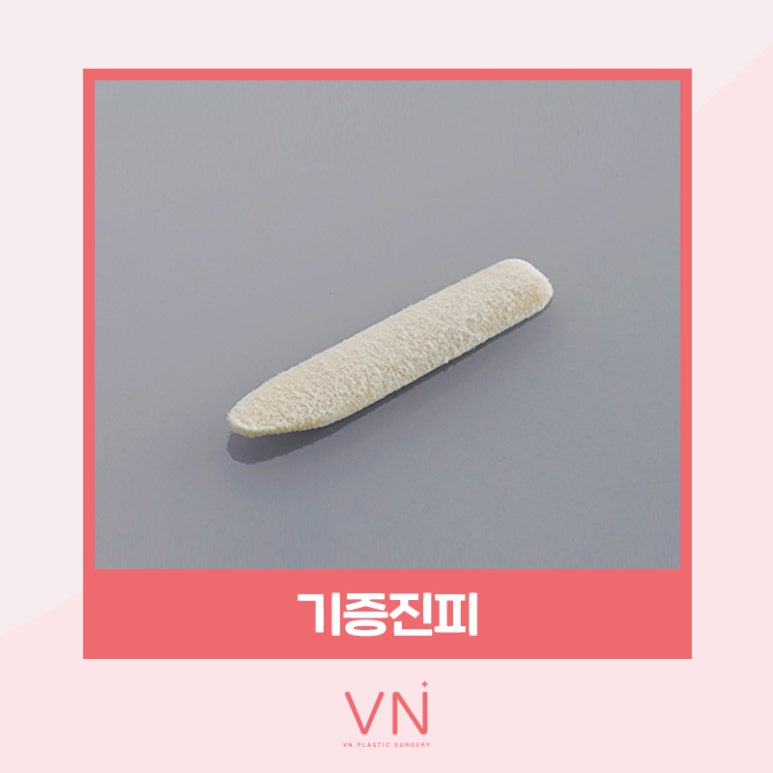
Donated dermis is also good for revision rhinoplasty
and is used as an alternative when visibility is an issue.
It is also suitable for people who previously had a rejection reaction to artificial implants such as silicone.
In addition, since it does not require a separate harvesting process,
there is no burden regarding scars, which is a major advantage,
and during revision surgery it can reinforce thin skin while also addressing height.
In addition to the rhinoplasty materials covered above,
there are various materials and surgical methods,
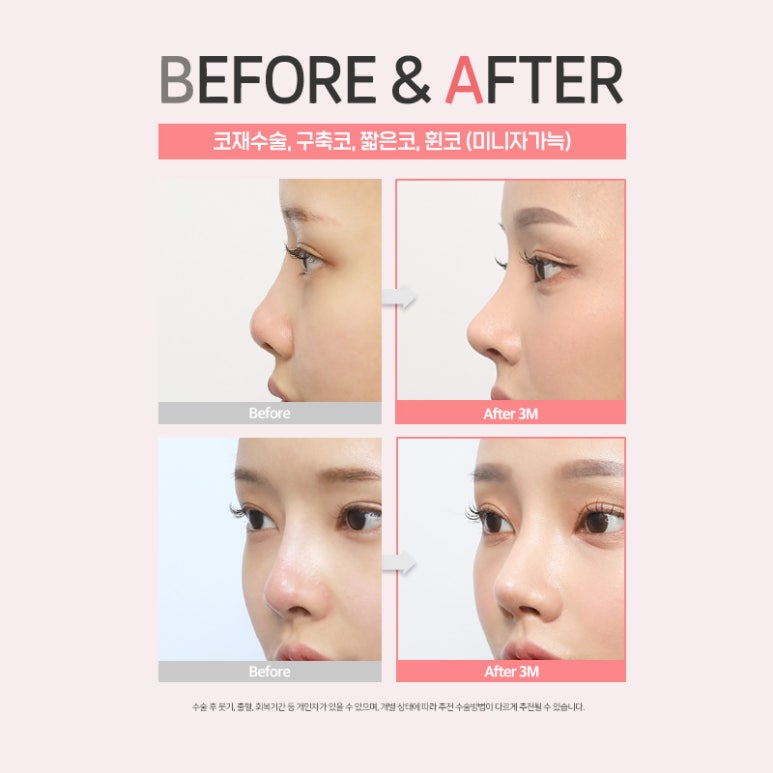
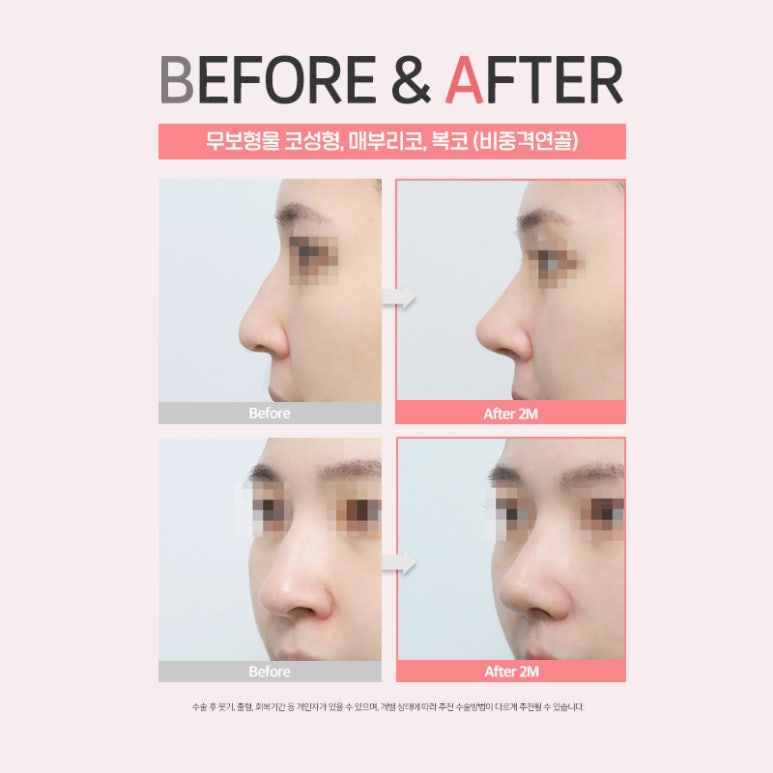
so it is important to choose the material according to the patient's condition and desired design.
Also, depending on the individual, the amount and location of autologous tissue that can be harvested may differ,
so an experienced specialist and hospital must work together.
If you are planning surgery,
I recommend considering a method that solves your current nose concerns
without harming the function of the nose,
and choosing the method that is right for you.
 Previous image
Next image
Previous image
Next image
The VN Plastic Surgery Clinic Director Oh Seung-il introduces
'Mini Autologous Rib' among rhinoplasty materials!

This post is an informational advertisement for VN Plastic Surgery Clinic.
During surgery or procedures, side effects such as bleeding, inflammation, and swelling may occur,
and recovery time and results may vary depending on the individual.