Hello,
this is V&N Plastic Surgery.
The nose is a part of the face that greatly affects the overall impression and image,
and because even a small improvement can make a big difference,
many people consider nose surgery to improve their appearance.
However, unlike the expectations for nose surgery,
side effects can appear after the procedure,
which can instead cause even greater stress.
The inside of the nose is a sensitive tissue,
and because nose surgery involves raising the bridge by inserting an implant or autologous dermis,
there is a possibility of side effects,
so careful decision-making is necessary.

When is silicone removal needed after nose surgery?
After nose surgery,
side effects can include
upturned nasal tip or shortened nose length,
and other problems may also appear.
If the silicone shifts or becomes displaced
If the silicone becomes visible or protrudes
If you feel a sharp sensation on the bridge of the nose
If the nostrils become uneven after nose surgery
If the shape changes into an unnatural appearance
If inflammation develops and causes contracture of the nose
In addition,
if you feel a foreign-body sensation
or notice a foul odor from inside the nose,
it is a good idea to visit the hospital and get examined.
If infection or inflammation occurs and is left untreated,
it can spread to surrounding tissues and other areas,
become harder to treat,
and lead to complications.
If the foreign-body reaction continues for a long time,
it can cause permanent damage
and may even lead to functional problems with breathing,
so the silicone that is causing the side effects should be removed quickly.

Why do silicone side effects occur?
Situations that require removal of nasal silicone
are mostly caused by problems such as inflammation
or capsular contracture.
These side effects can occur if tissue is accidentally damaged during surgery,
if it is inserted in the wrong position,
or if an implant that does not fit the size is inserted.
After surgery,
reduced immunity due to excessive drinking or smoking,
overly strict dieting,
or overwork,
as well as an immune response to the foreign material,
can trigger inflammation or contracture
and cause side effects.
At V&N Plastic Surgery,
we create a customized plan based on a variety of causes and goals
and perform nasal implant removal surgery.
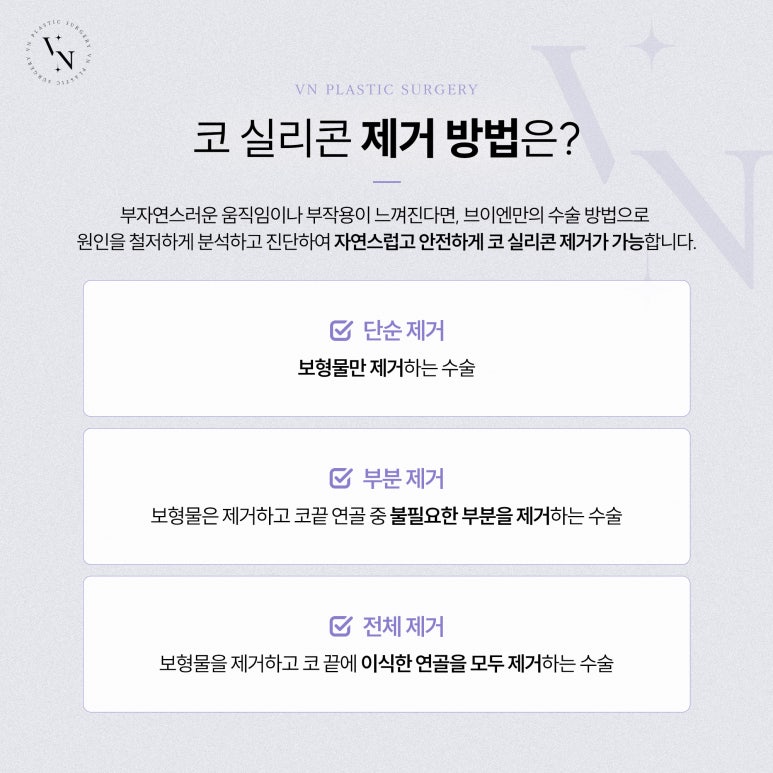
Simple removal of only the implant
Partial removal, in which the implant is removed and unnecessary parts of the nasal tip cartilage are also removed
Total removal, in which the implant is removed and all cartilage grafted to the nasal tip is removed
By precisely analyzing the current condition of the nose,
whether contracture is present,
and the skin condition,
we proceed with the surgery using the best method.
If you feel unnatural movement or side effects,
V&N Plastic Surgery's surgical approach can thoroughly analyze and diagnose the cause
so that nasal silicone can be removed naturally and safely.

If all implants are removed at once,
surrounding tissues may be damaged,
so delicate removal is necessary.
A careful operation is performed by understanding the internal condition of the nose,
such as adhesion status and inflammation,
and the method of implant removal may vary depending on the type of implant and the condition of the nose.
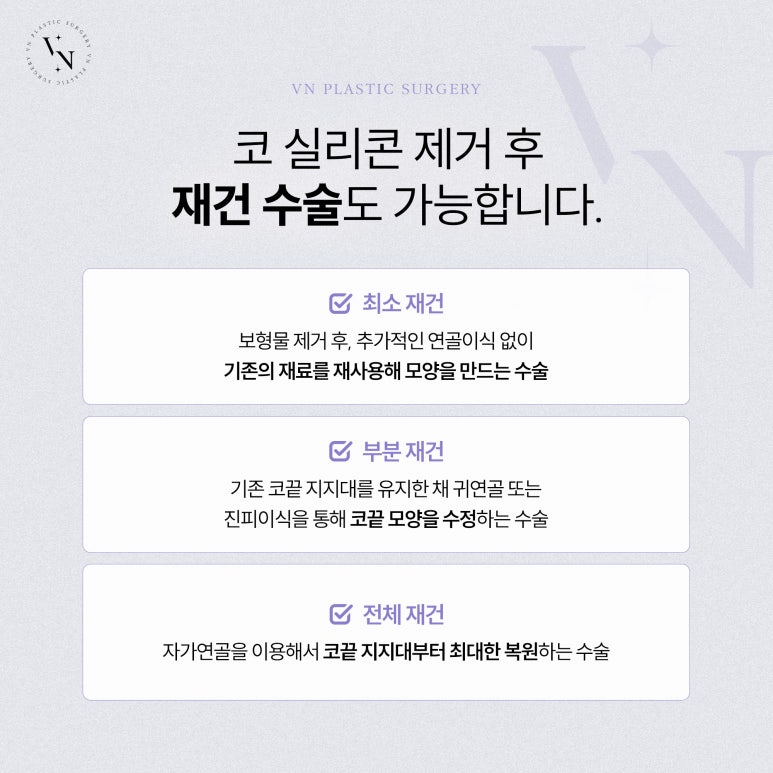
Reconstructive surgery after nasal silicone removal is also possible.
In the case of minimal reconstruction,
after implant removal, the existing materials are reused to create the shape without additional cartilage grafting.
In the case of partial reconstruction,
while maintaining the existing nasal tip support,
the shape of the nasal tip is corrected through ear cartilage or dermal grafting.
In the case of full reconstruction,
autologous cartilage is used to restore as much as possible,
starting from the nasal tip support.
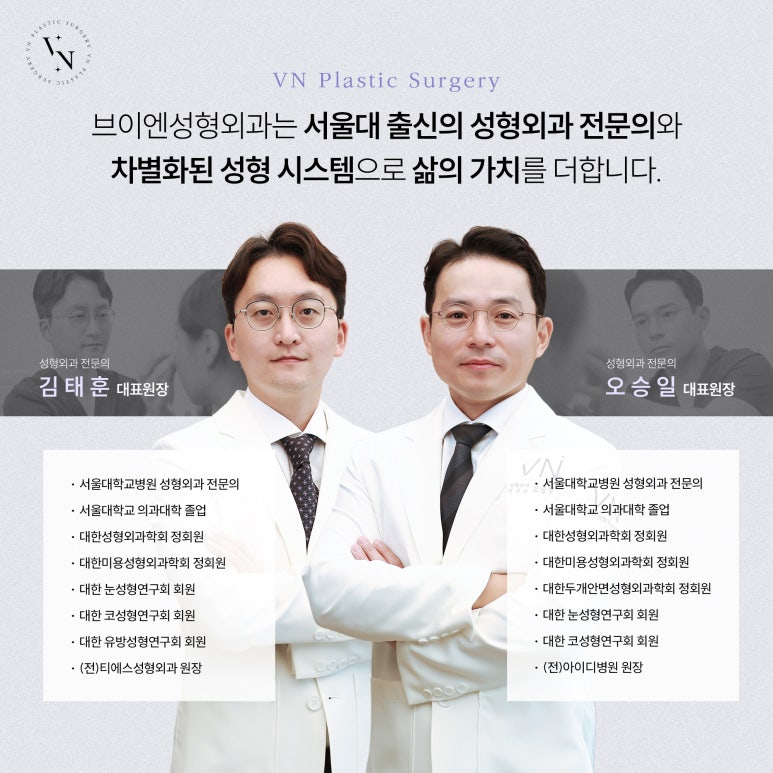
V&N Plastic Surgery
suggests the optimal implant and treatment method
by considering each patient's individual situation.