
Hello, this is VN Plastic Surgery.
Today, we’d like to talk about
"eyelid correction," which many people are curious about.
In particular, we will carefully organize everything from
the need for eyelid correction
to the differences between incision and non-incision methods
and the recovery period.
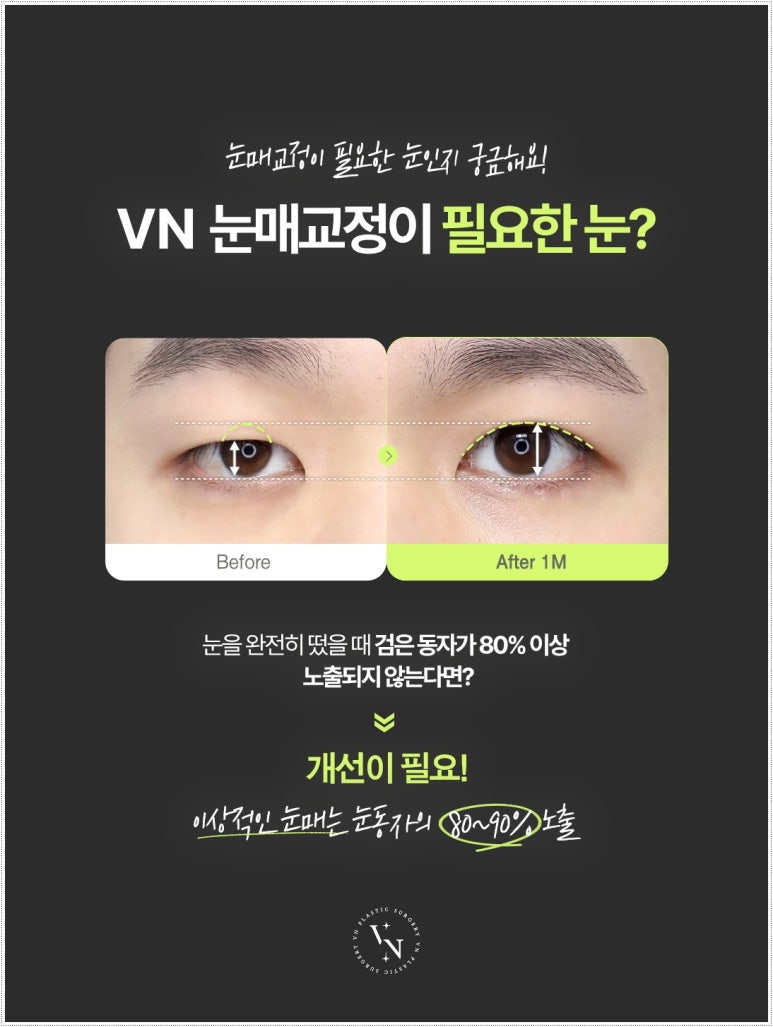
First, eyelid correction is not simply a surgery to make the eyes bigger.
Eyelid correction is a procedure that improves the function of the muscles that open the eyes,
creating a clearer and more defined eye appearance.
That is why eyelid correction is an important procedure in that it can provide
both functional and aesthetic improvement at the same time.
Many people think that if they just have double eyelid surgery,
their eyes will look bigger and they will be satisfied.
That is half right and half wrong.
If someone with weak eye-opening strength undergoes double eyelid surgery without eyelid correction,
a crease may be created,
but the eyes may still look sleepy or seem heavy,
and they may not feel very satisfied.
In cases where eyelid correction is needed,
double eyelid surgery alone has limitations in terms of satisfaction.
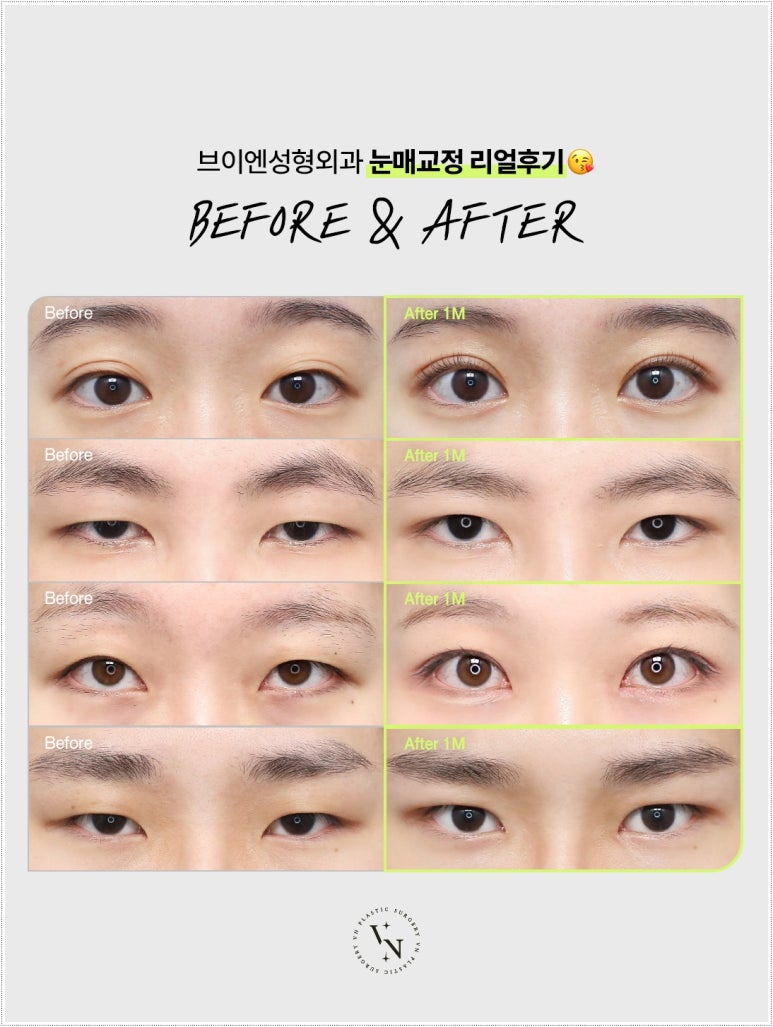
So when is eyelid correction necessary?
Eyelid correction is especially needed when the ability to open the eyes is weak.
If, when you normally open your eyes,
only about one-third of the pupil is visible,
or if you always have a sleepy-looking impression,
you may want to consider eyelid correction.
Also, if you have a habit of using your forehead muscles when opening your eyes,
there is a high possibility that eyelid correction is needed.
By improving the function of the muscle that lifts the eyelid through eyelid correction,
you can reduce forehead use
and open your eyes more naturally.
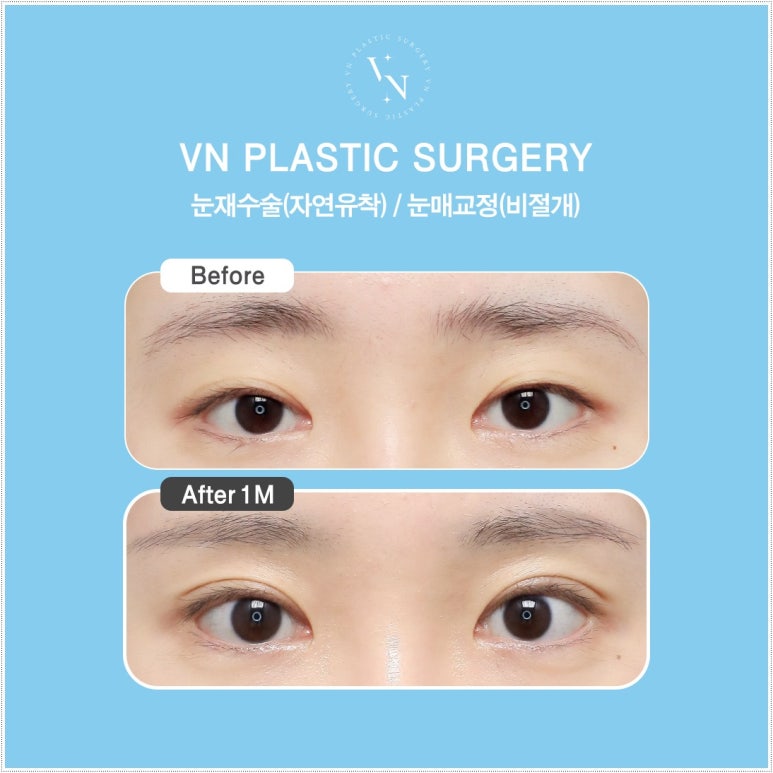
Eyelid correction can also be helpful when you have already had double eyelid surgery
but your eyes still do not look clear.
Eyelid correction plays an important role in these revision surgery cases as well
and can complement the aspects that were unsatisfactory in the previous surgery.
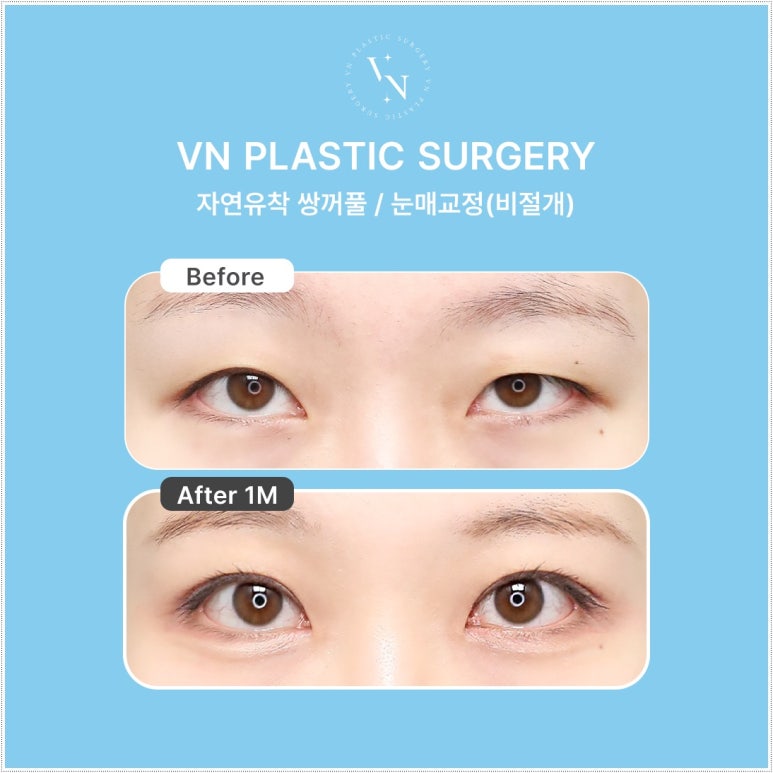
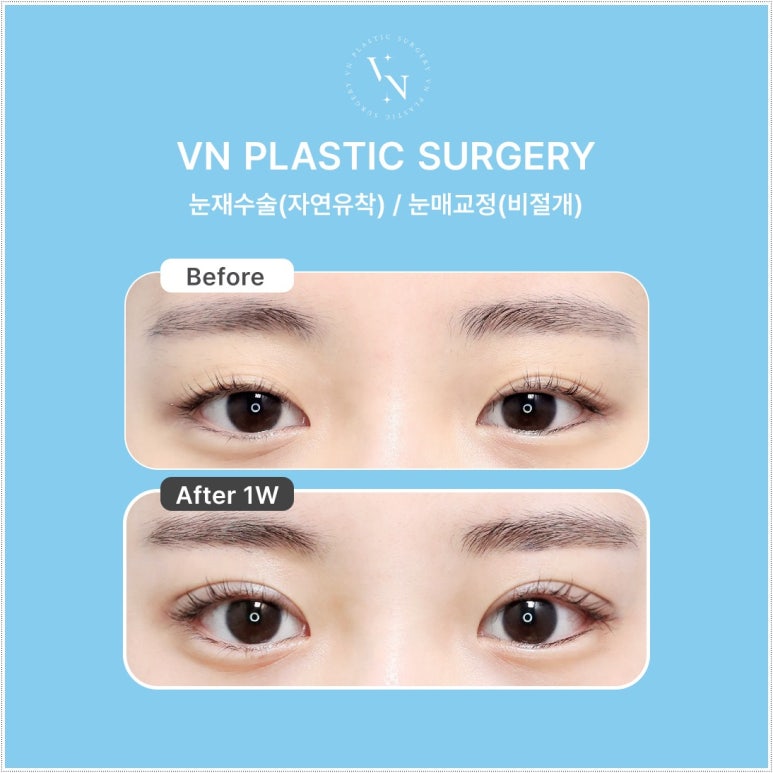
Eyelid correction is divided into incision and non-incision methods.
Non-incision eyelid correction is a method that adjusts the length of the muscle
through tiny openings without making a skin incision.
Among eyelid correction procedures, it has the advantage of faster recovery
and less concern about scarring.
Non-incision eyelid correction induces natural adhesion,
so there is almost no visible sign after surgery,
and you can expect results that look naturally like your original eyes.
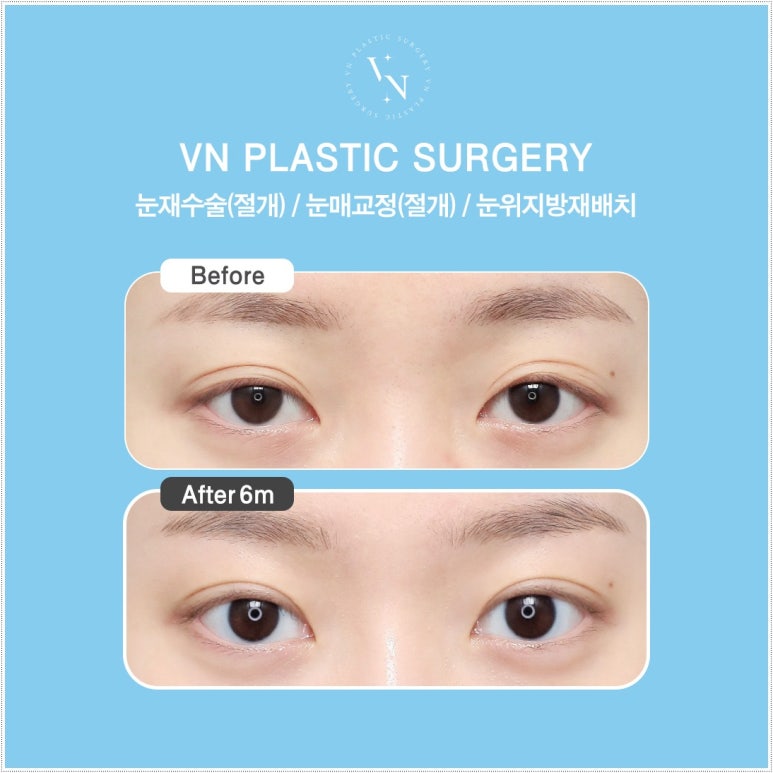
On the other hand, incision eyelid correction is a method that directly adjusts the muscle
by making an incision in the skin.
It is more suitable when there is a lot of fat and the eyelids are thick,
or when there is significant sagging of the skin.
Compared with the non-incision method, incision eyelid correction generally requires
a slightly longer recovery period,
but it has the advantage of allowing structural improvement.
The eyelid correction method varies depending on each person’s eye condition.
Considering eyelid thickness, amount of fat, skin elasticity, and other factors,
you should choose the appropriate method between non-incision eyelid correction and incision eyelid correction.
Therefore, it is important to decide on eyelid correction only after consulting with a specialist.
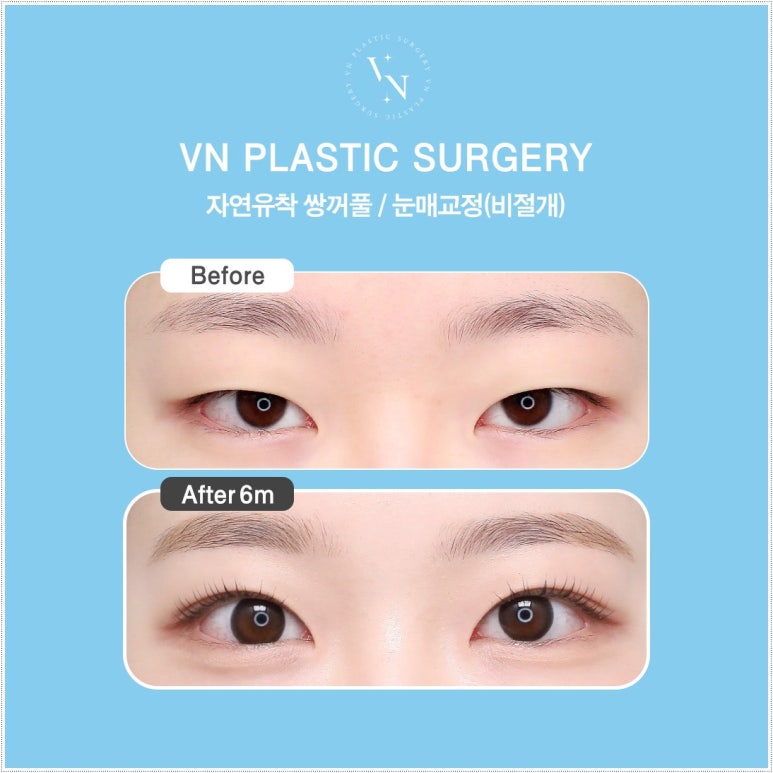
Many people are also curious about the recovery period after eyelid correction.
Non-incision eyelid correction tends to have swelling subside relatively quickly,
allowing a faster return to daily life, while incision eyelid correction takes
more time for swelling and bruising to disappear.
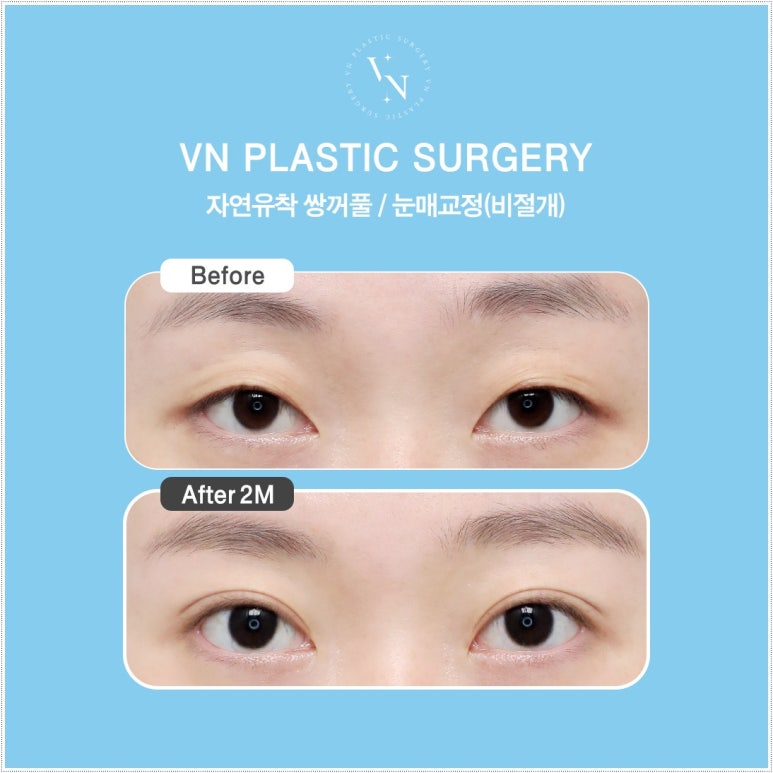
At the early stage of eyelid correction, there may be swelling and a little bruising,
but these gradually improve over time.
With recent advances in eyelid correction techniques, the burden of recovery is also
gradually decreasing.
The biggest advantage of eyelid correction is that it does not simply make the eyes bigger,
but improves both eye function and overall impression at the same time.
Through eyelid correction, you can change to a clearer and more lively appearance.

Lastly, because the results of eyelid correction can vary depending on each person’s eye condition,
thorough consultation and an accurate diagnosis are very important.
If you are considering eyelid correction,
it is better to approach it in a way that improves not only the crease line
but also the function of the eyes.


I hope today’s post was helpful for those considering eyelid correction.
If you have any questions,
please feel free to contact us anytime.
Thank you😊