Hello.
We are VN Plastic Surgery, a clinic that considers natural change and safety together.
As time passes after rhinoplasty,
some people become more satisfied,
but on the other hand,
there are also many who begin to consider nasal implant removal
due to discomfort or side effects.
In particular, recently it has gone beyond simply
"removing it because inflammation occurred"
to cases where people want a more natural and comfortable nose,
and therefore choose implant removal and non-implant revision rhinoplasty.
Implant removal is not a surgery that simply takes out the silicone.
The current condition inside the nose, whether there is inflammation, the degree of contracture,
skin thickness, and the previous surgical method
all need to be considered,
and the plan must also include how to stably rebuild the nasal line after removal.
Why do people undergo nasal implant removal?
[ Recurrent inflammatory reactions and contracture ]
This is the most common reason for removing silicone.
If swelling keeps recurring after nose surgery,
or heat, pain, and redness appear,
and the symptoms continue even after taking antibiotics,
a deeper inflammatory reaction inside the nose may be suspected.
If inflammation continues for a long time,
the internal tissue can harden and contract,
leading to contracture. In such cases,
the tip of the nose may look lifted or shortened,
and from the front the nose may even appear bent.
When contracture progresses,
it is often not enough to simply remove the implant;
removal of inflamed tissue and reconstruction of the nasal structure
are often needed as well.
[ A foreign-body sensation and discomfort ]
It may have felt fine at first,
but over time the bridge of the nose may feel firm,
or you may notice a foreign-body sensation, pulling, or skin pressure.
In particular, the older
"L-shaped silicone"
had a structure that transmitted pressure all the way to the nasal tip,
so there have been many cases where it led to problems such as thinning skin, redness, or swelling.
In such cases, rather than ending with simple removal,
reconstruction that also takes into account the nasal tip cartilage condition and skin condition is important.
[ Simple dissatisfaction with the shape ]
Recently, even people without side effects are choosing
nasal implant removal.
- The bridge feels too high and burdensome
- The overall impression feels too strong
- It looks artificial
- They want a more natural and soft appearance
For reasons like these,
cases of choosing non-implant revision rhinoplasty for aesthetic reasons
are steadily increasing.
In fact, by removing an implant that was overly high and correcting it to a natural line,
many people find that the overall impression of the face becomes softer and more feminine.
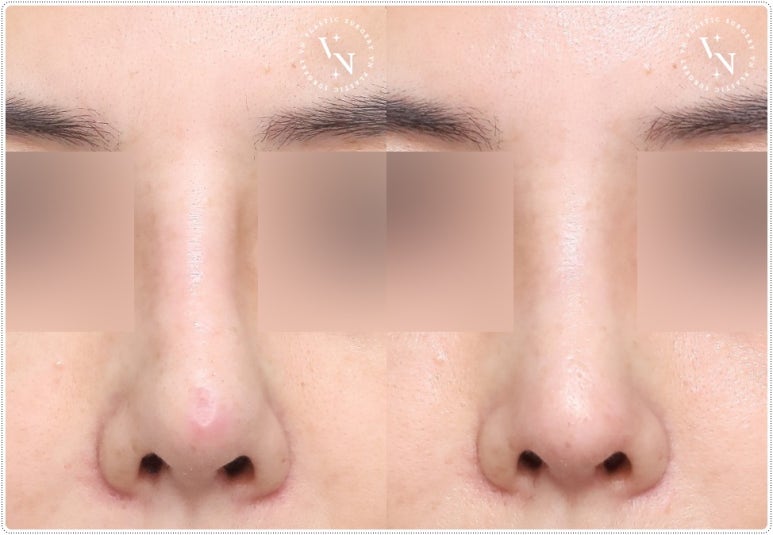
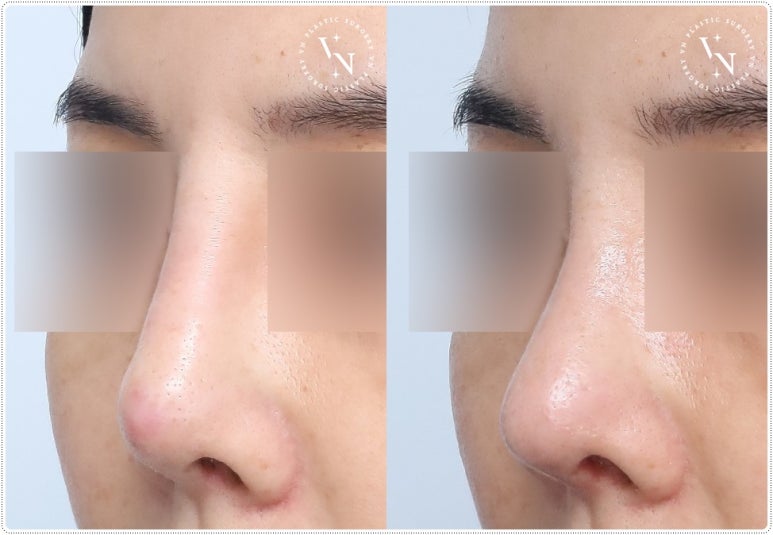
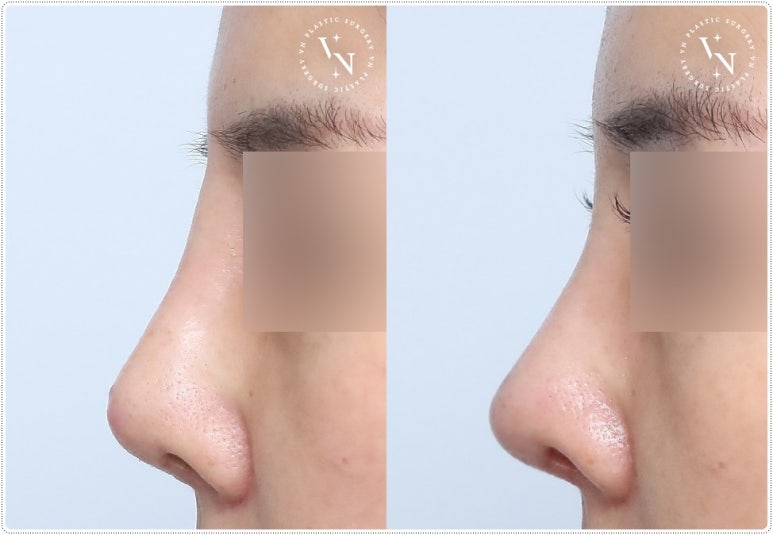
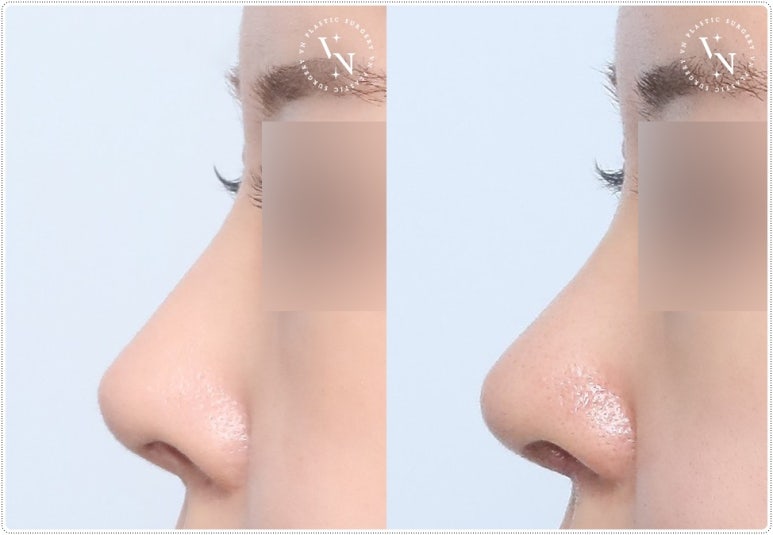
[ CASE 01 : A nose with contracture and inflammation ]
The first case involved a patient who had nose surgery with silicone two years ago,
and inflammation had repeatedly occurred since immediately after surgery.
From right after surgery, the inflammation kept recurring,
and the nasal tip gradually began to feel shorter,
with even a symptom in which the nose appeared bent from the front.
Even after taking medication, the inflammation kept recurring,
and eventually the area around the nasal tip became red and inflamed,
leading to the decision to remove the nasal implant.
In the revision surgery, not only the silicone was removed,
but also
- removal of internal inflamed tissue
- cleaning up tissue that had changed due to contracture
- correction of irregular nasal bones
- improvement of the bridge step formed after silicone removal
were performed together.
In particular, after nasal implant removal,
the bridge line that could have looked sunken
was naturally connected using ear cartilage,
and the shortened nasal tip was also stably corrected again
with the overall proportions taken into account.
In cases where contracture and inflammation are both present,
tissue damage has already progressed,
so stable reconstruction is important.
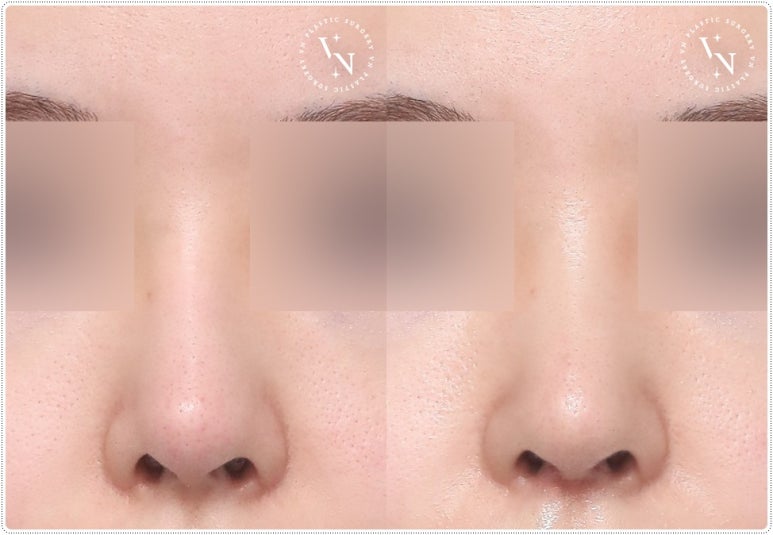
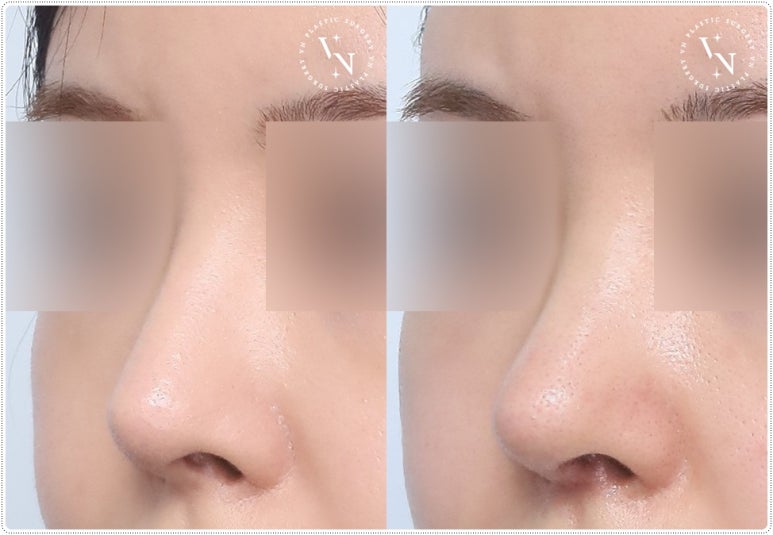
[ CASE 02 : Revision surgery for dissatisfaction with the shape ]
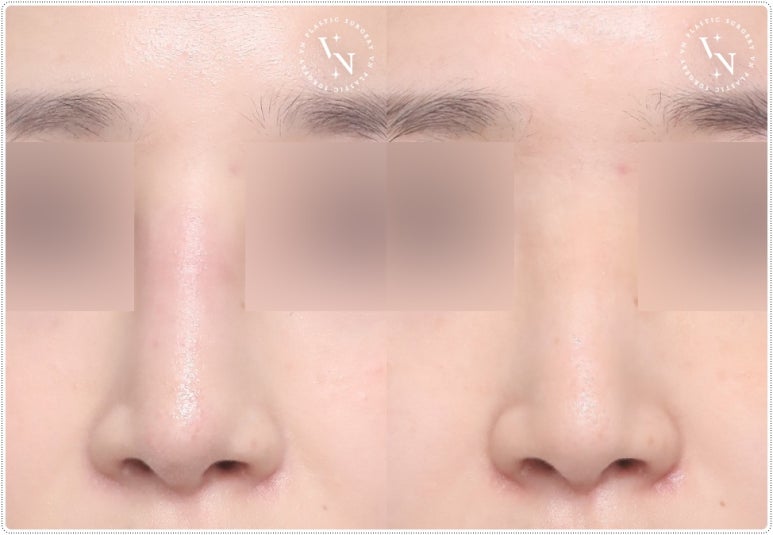
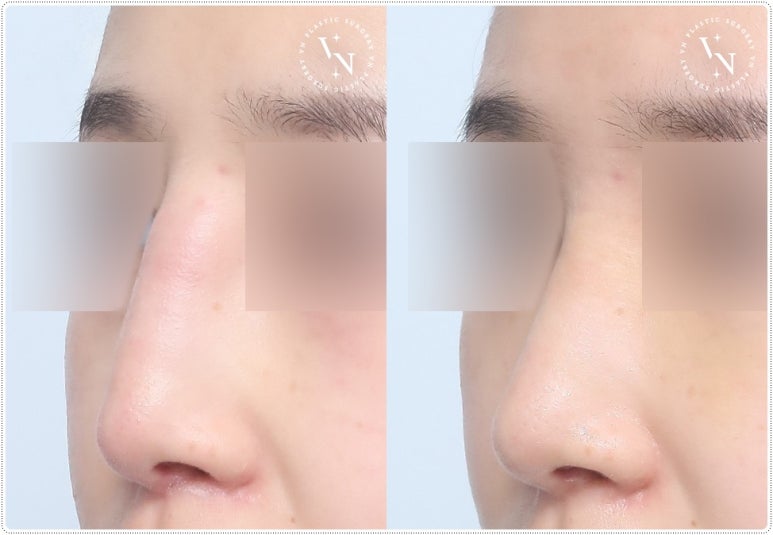
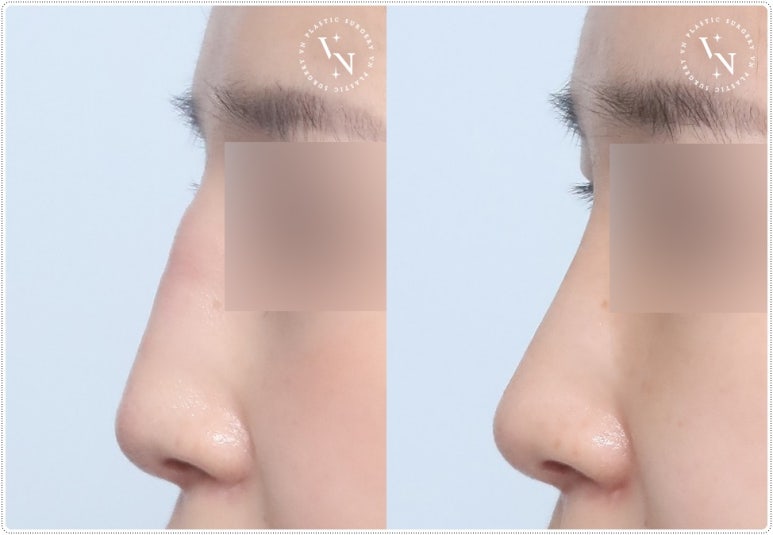
The second case chose nasal implant removal
because of dissatisfaction with the shape rather than a functional problem.
The previous bridge of the nose was too high,
which made the face look strong and masculine,
and the patient wanted a more natural and feminine impression.
So in this revision surgery, the procedure proceeded in the direction of
implant removal along with non-implant revision rhinoplasty.
The surgery was performed with silicone removal + removal of foreign material inside the nasal tip,
correction of the raised nasal tip + improvement of the elevated nostril line (bulbous tip)
together.
A high, dramatic nose is not always the answer.
Recently, for this reason, more and more people are choosing nasal implant removal
because they prefer a natural non-implant rhinoplasty.
[ CASE 03 : Recurrent swelling and fluid buildup ]
The third case involved a patient who, after nose surgery five years ago,
experienced repeated swelling of the bridge of the nose and discharge buildup.
At first the symptoms were not severe,
but in recent months the swelling and itching became severe,
and when the symptoms suddenly worsened,
the patient decided to remove the nasal implant.
However, the patient wanted a "closed revision surgery" with less concern about scarring,
and VN Plastic Surgery performed nasal implant removal using a closed approach.
During surgery,
nasal implant removal + removal of inflamed tissue + reconstruction of irregular nasal bones
were all performed together,
creating a more stable nasal condition.
Nasal implant removal is not only possible through an open approach.
Depending on the current condition of the nose and the internal structure,
VN can also sufficiently perform surgery using a closed approach.
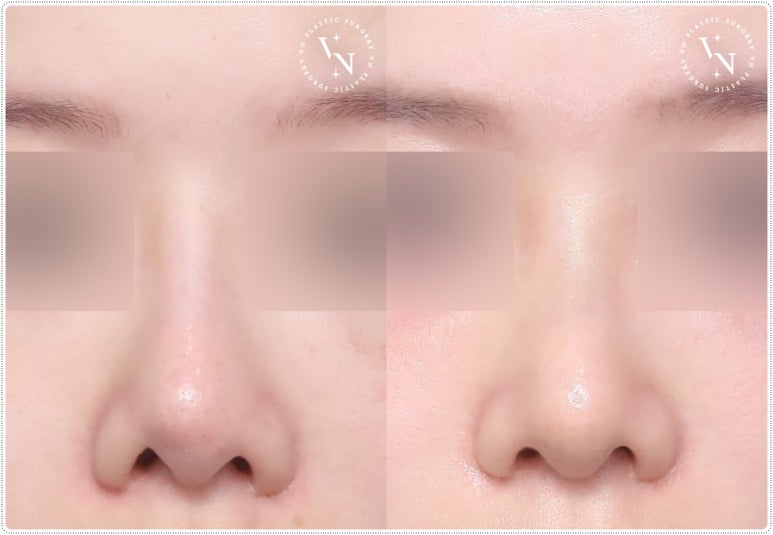
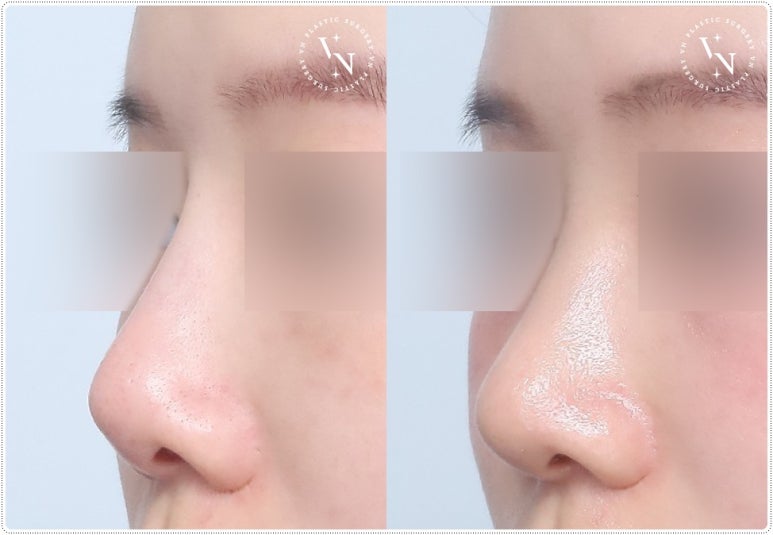
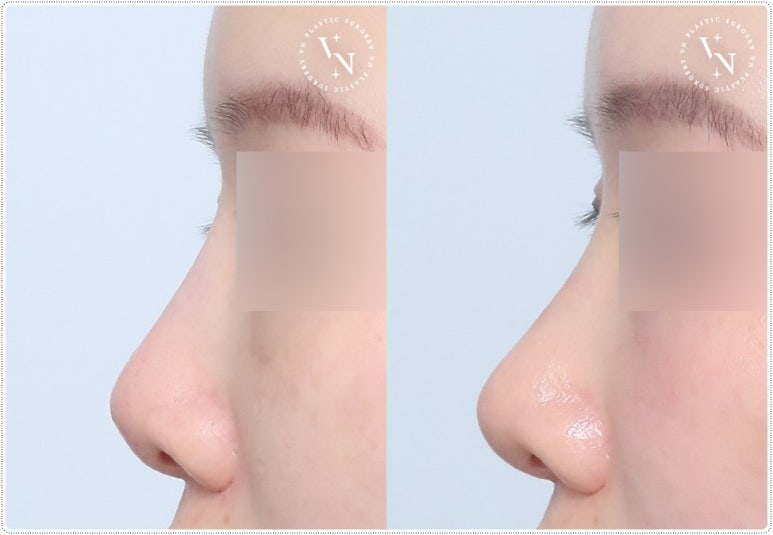
[ CASE 04 : Removal of L-shaped silicone ]
The last case involved a patient who had undergone surgery long ago with L-shaped silicone.
Over time,
the bridge of the nose repeatedly swelled and became red,
and there was also a strong foreign-body sensation,
so the patient decided to have it removed.
This case also underwent revision surgery using a closed approach,
and
- removal of L-shaped silicone
- cartilage repositioning
- organization of inflamed tissue
- grafting of cartilage particles to correct the step
were performed together.
In particular, after nasal implant removal,
the bridge step and hollowing that can occur
were naturally filled with VN’s ShashaCo (cartilage particles).
ShashaCo (cartilage particles) helps create a natural connection,
and is also effective in easing an impression that looks overly sunken after removal.
Even for the same nasal implant removal surgery,
the surgical method can vary completely depending on the case.
It is not simply a matter of removing the implant,
but the structure must be stably reconstructed so that the nose does not collapse after removal,
and the process of making it connect naturally must also be considered.
Among those considering nasal implant removal,
many worry,
"Is this the right time to remove it?"
"Will my nose become too low after removal?"
Director Oh Seung-il of VN Plastic Surgery analyzes each person’s nasal condition and tissue condition,
then plans an appropriate surgical direction based on the current state.
If you are considering nasal implant removal and non-implant revision rhinoplasty,
please make sure to confirm your current nasal condition accurately through a thorough consultation.
Thank you.