Hello, this is VN Plastic Surgery.
Have you ever felt particularly self-conscious about the area under your eyes whenever you look in the mirror?
When the area under the eyes appears puffy or shadowed, it can make you look more tired and fatigued than your actual age.
Lower blepharoplasty and lower eyelid fat repositioning are two of the most common procedures for addressing these concerns.
Today, we would like to compare the differences between these two procedures in detail.
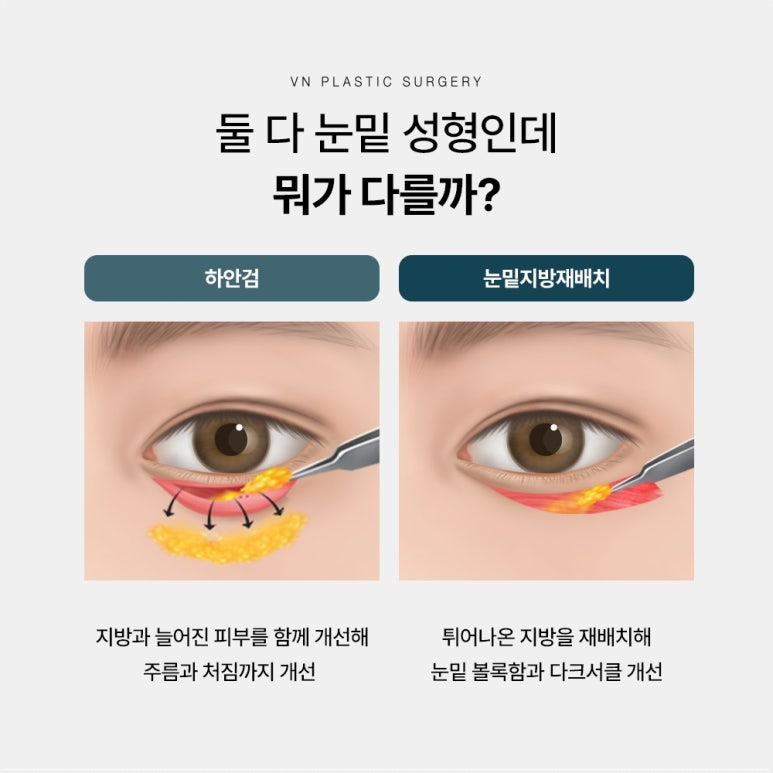
Since both lower blepharoplasty and lower eyelid fat repositioning are categorized as procedures for the area under the eyes, many people mistake them for the same procedure.
However, the two procedures differ from the way they are performed.
The most significant difference is the “incision location.”
This difference in incision location is an important factor that determines the appropriate candidates and the results of each procedure.
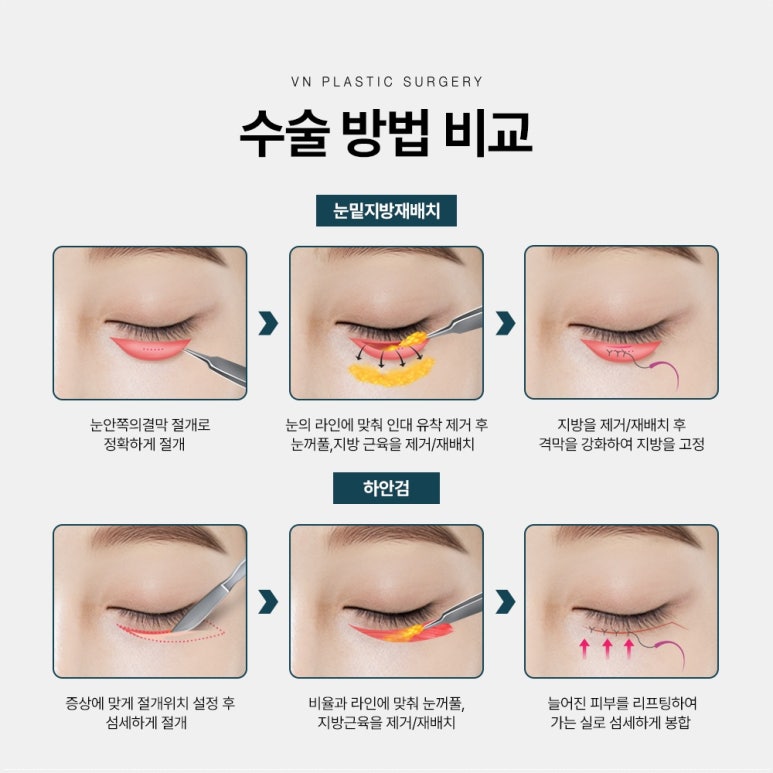
First, let’s take a look at lower blepharoplasty.
Lower blepharoplasty is performed by making an incision in the skin beneath the eyes.
The reason an incision is made is that lower blepharoplasty is essentially a “middle-aged eye rejuvenation” procedure.
When we think of eye rejuvenation for middle-aged individuals, aging naturally comes to mind.
As we age, the skin loses elasticity and becomes saggy. Since lower blepharoplasty involves directly removing this excess skin, an incision is made beneath the eyes.
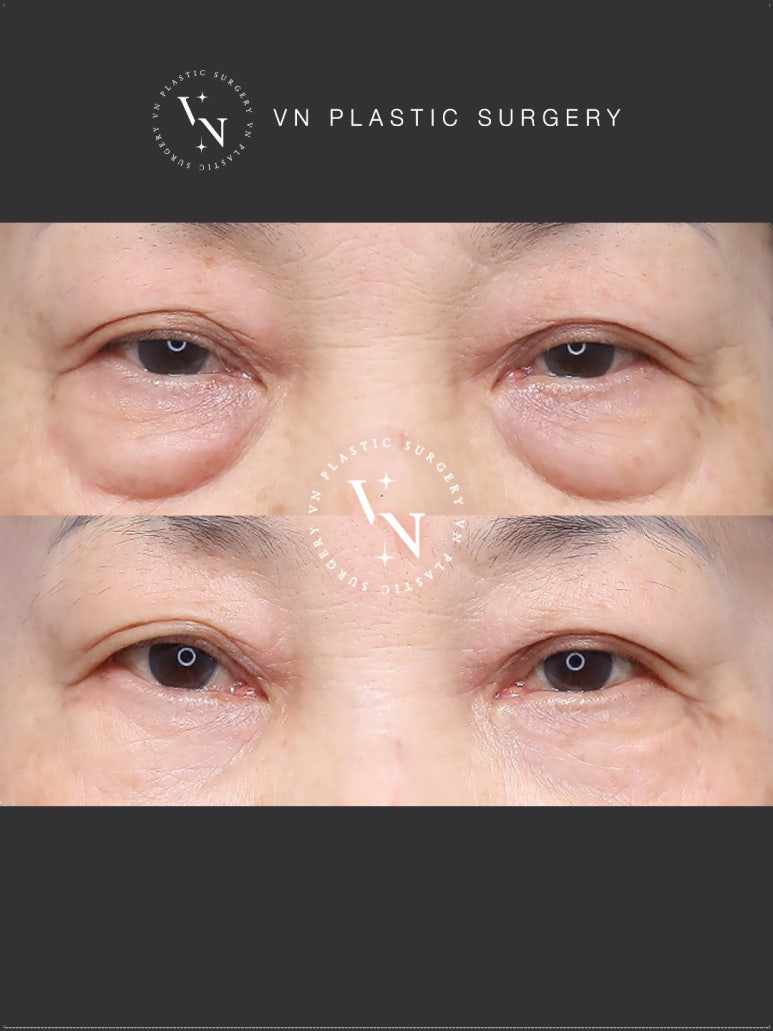
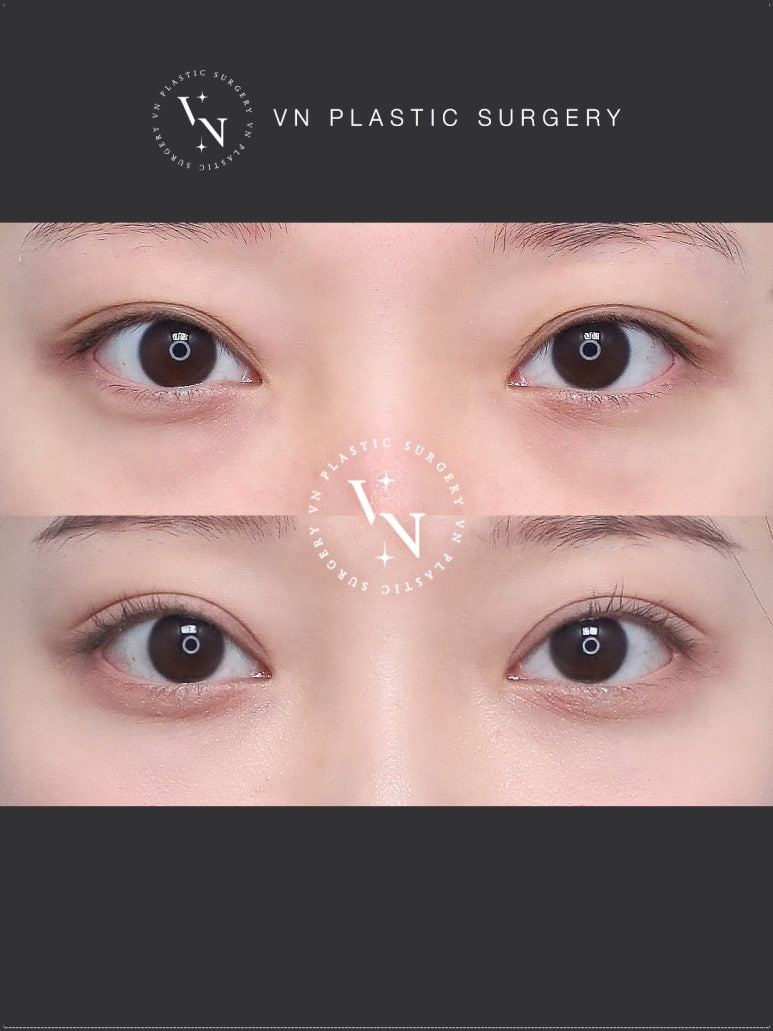
Lower blepharoplasty case
After making the incision, lower blepharoplasty removes excess skin and also refines tissues beneath the eyes, such as sagging muscles and fat.
Rather than simply removing skin, the procedure also lifts and secures sagging muscles and adjusts the position of the fat. This makes it possible to improve both sagging and wrinkles beneath the eyes at the same time.
If you have deep wrinkles beneath the eyes or skin that appears loose and saggy, lower blepharoplasty may be the more suitable option.
Lower eyelid fat repositioning case
Lower eyelid fat repositioning is clearly distinguished from lower blepharoplasty in that it is performed through the inner conjunctiva of the eye.
The conjunctiva refers to the “inner mucosal area” visible when the lower eyelid is gently turned outward.
Because the fat is repositioned through this area, no external incision line is visible.
Lower eyelid fat repositioning is commonly performed on people in their 20s to 40s whose skin still has relatively good elasticity.
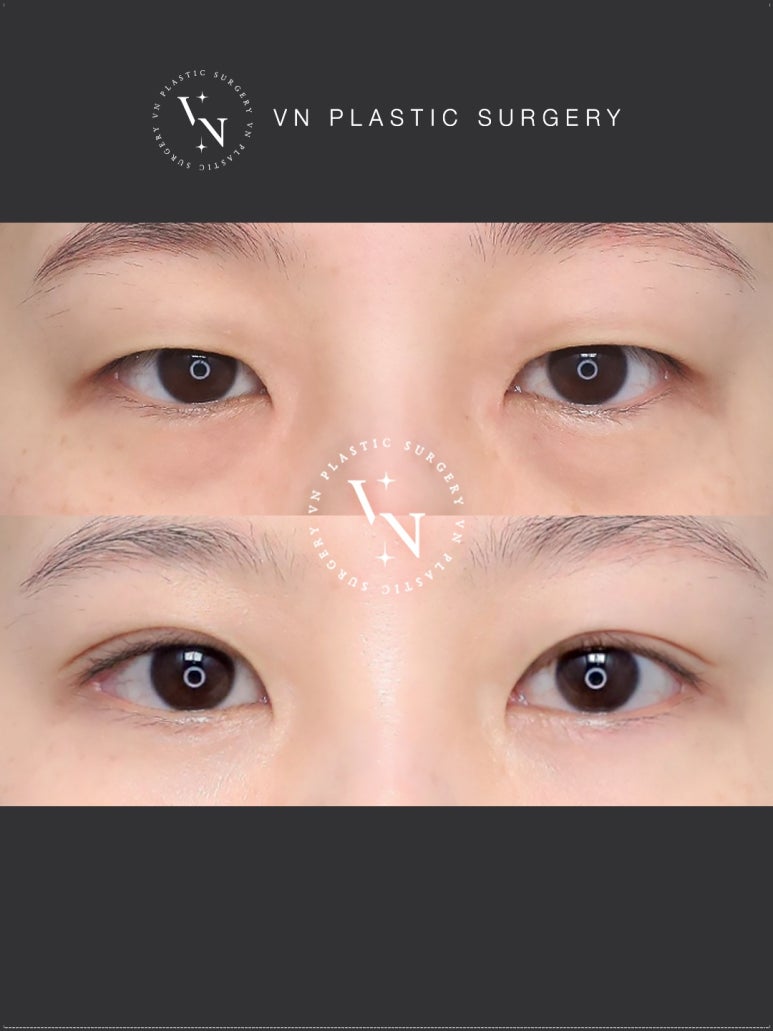
Lower eyelid fat repositioning case
Lower eyelid fat repositioning is performed by moving protruding fat to hollow areas to create a smoother, flatter contour.
As part of the fat repositioning process, depressed areas such as the tear trough can also be filled. This allows both puffiness and hollowness to be smoothed out at the same time.
Since the incision is made inside the conjunctiva, there is no concern about a visible scar, and the recovery period is relatively short.

Lower eyelid fat repositioning may be recommended in the following cases:
- When the area beneath the eyes appears puffy
- When you are concerned about always looking tired and hollow-eyed
- When dark circles are particularly bothersome
- When fat protrusion is present but significant skin sagging is not
In these cases, repositioning the fat beneath the eyes into hollow areas can address both puffiness and hollowness at the same time.

The cases in which lower blepharoplasty is recommended are different.
If you have numerous wrinkles beneath the eyes, loose and sagging skin, or both fat protrusion and skin sagging, lower blepharoplasty may offer more comprehensive improvement.
It is a suitable procedure for those who want to improve multiple signs of aging beneath the eyes, including puffy fat, loose skin, and hollow tear troughs.
In summary, lower blepharoplasty addresses sagging skin, fat, and muscles together, while lower eyelid fat repositioning focuses on adjusting the position of the fat.
For this reason, lower eyelid fat repositioning alone may not be sufficient to improve already loose skin.
Ultimately, the appropriate procedure varies depending on the condition of the area beneath your eyes.


When the area beneath the eyes is puffy or sagging, you may look older than your actual age and are more likely to appear tired.
Both lower blepharoplasty and lower eyelid fat repositioning are procedures that address these concerns.
However, since they differ in incision location and the extent of improvement, it is important to accurately assess your skin elasticity, fat volume, and degree of sagging before choosing a procedure.
At VN Plastic Surgery, we carefully consult with you to determine which procedure is more suitable—lower blepharoplasty or lower eyelid fat repositioning—through a detailed assessment of the area beneath your eyes.
If you have concerns about the area beneath your eyes, please feel free to contact us.
Thank you for reading.