When researching rhinoplasty,
you may come across a procedure called
“cartilage particle rhinoplasty.”
This may raise one question:
Why not use the cartilage as one whole piece,
but instead finely mince it
before grafting it into the nose?
Shasha Nose, a cartilage particle rhinoplasty procedure,
involves processing ear cartilage into small particles
and grafting them into the areas where they are needed.
So, what is the difference from conventional rhinoplasty,
and how is Shasha Nose at VN Plastic Surgery performed?
Let’s take a look at each point.
What are the “cartilage particles” used in cartilage particle rhinoplasty?
Cartilage particles are materials made by harvesting ear cartilage
and finely mincing and processing it
according to the purpose of the surgery.
Rather than using the ear cartilage as one large piece,
it is made into small particles
so that specific areas can be refined
in greater detail.
For example, when the tip of the nose needs support
or its position needs to be adjusted,
the cartilage can be shaped into a specific form
and used as a structural support.
On the other hand, if a particular area of the nasal bridge is sunken
or lacks volume,
cartilage particles can be used to augment that area.
Therefore, cartilage particle rhinoplasty should not simply be understood
as a procedure in which minced cartilage is inserted.
Rather, it is a method that uses cartilage in different forms
depending on the area being corrected and the purpose of the procedure.
Which areas of the nose can cartilage particles be used for?
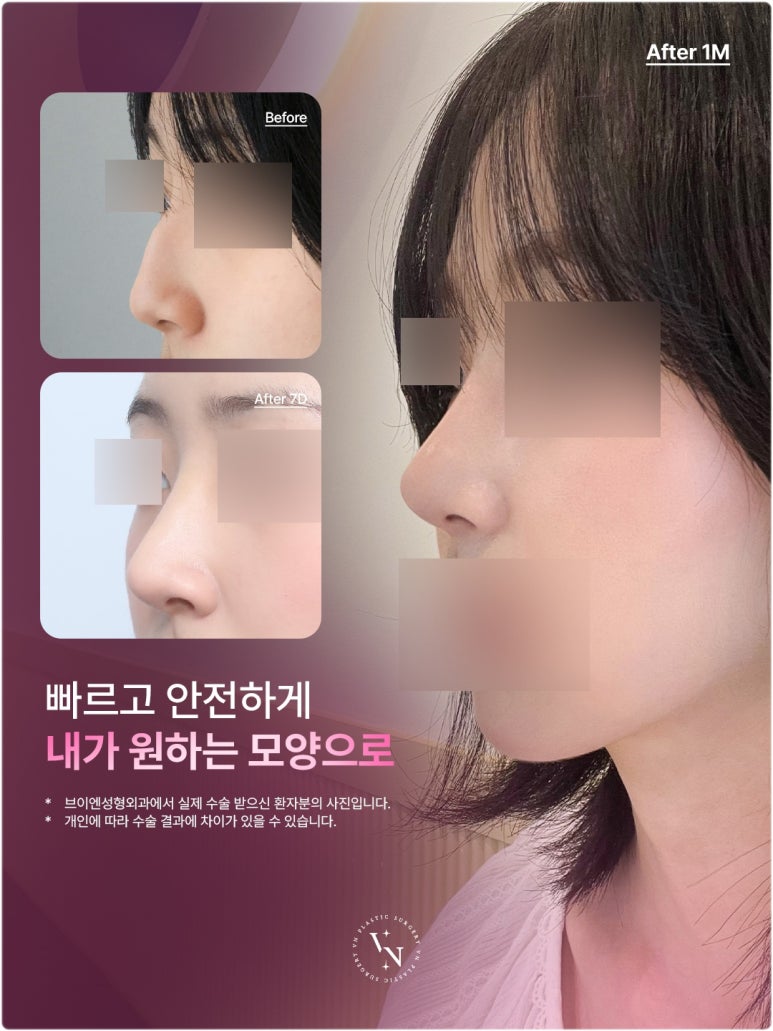
Cartilage particles can mainly be used
to improve depressions or unevenness along the nasal bridge
or to augment areas that lack volume.
If there is an uneven area on the nasal bridge
or a difference in height has developed after previous rhinoplasty,
cartilage particles can be grafted into that area for improvement.
However, if adjustment of the nasal tip’s position
or structural support is needed,
correction may be difficult with cartilage particles alone.
In such cases, it may be appropriate to combine them
with nasal-tip correction methods such as
septal extension, cartilage repositioning, or cartilage suturing.
Advantages and limitations of cartilage particle rhinoplasty
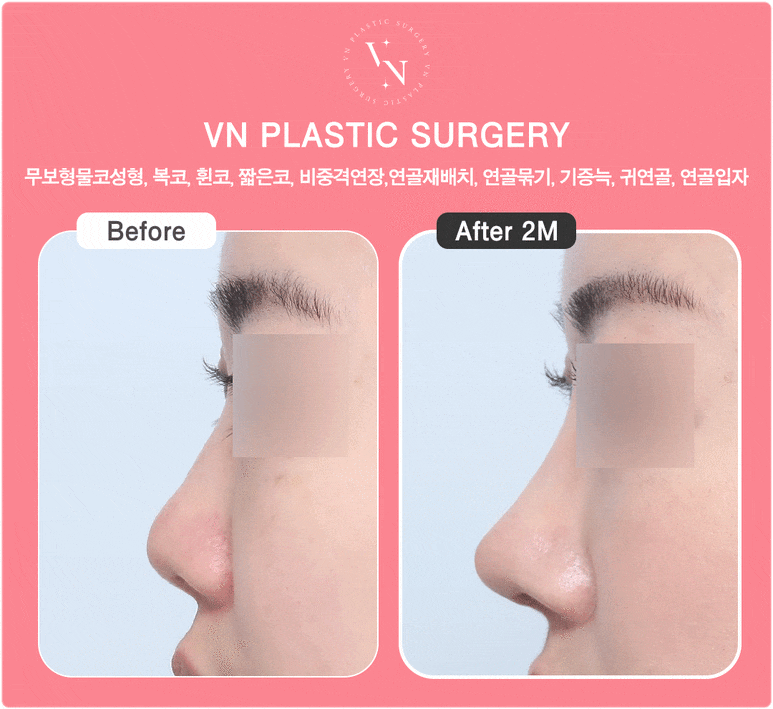
The most notable feature of cartilage particle rhinoplasty
is that the processed ear cartilage
can be used in the areas where it is needed,
much like a filler.
In addition, instead of inserting an artificial implant such as silicone,
the procedure uses the patient’s own ear cartilage for augmentation,
which is considered an advantage in terms of safety.
However, it is not possible to perform every type of rhinoplasty
using cartilage particles alone.
If the height and angle of the nasal tip need to be adjusted,
or if the patient has previously undergone rhinoplasty,
the surgical method may vary depending on whether the implant is removed,
as well as on adhesions and the condition of the internal nasal tissues.
Therefore, when considering cartilage particle rhinoplasty,
it is important not only to confirm that cartilage particles will be used,
but also to determine what role they can play in your nose.
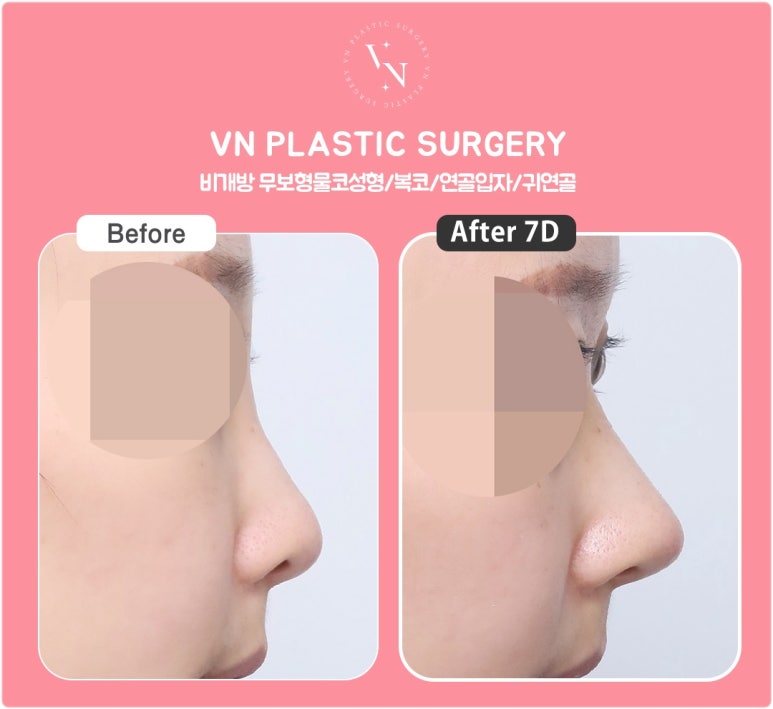
Who may be a suitable candidate for cartilage particle rhinoplasty?
Cartilage particle rhinoplasty may be considered
if you want to refine the shape of your nose
by augmenting areas that lack volume.
For example, cartilage particles may be used
if the bridge or tip of the nose lacks three-dimensional definition
and does not produce the desired shape,
or if additional correction is needed in a specific area
after rhinoplasty.
It may also be a suitable surgical method
for people who are reluctant to use implants
or who want a natural-looking nose shape.
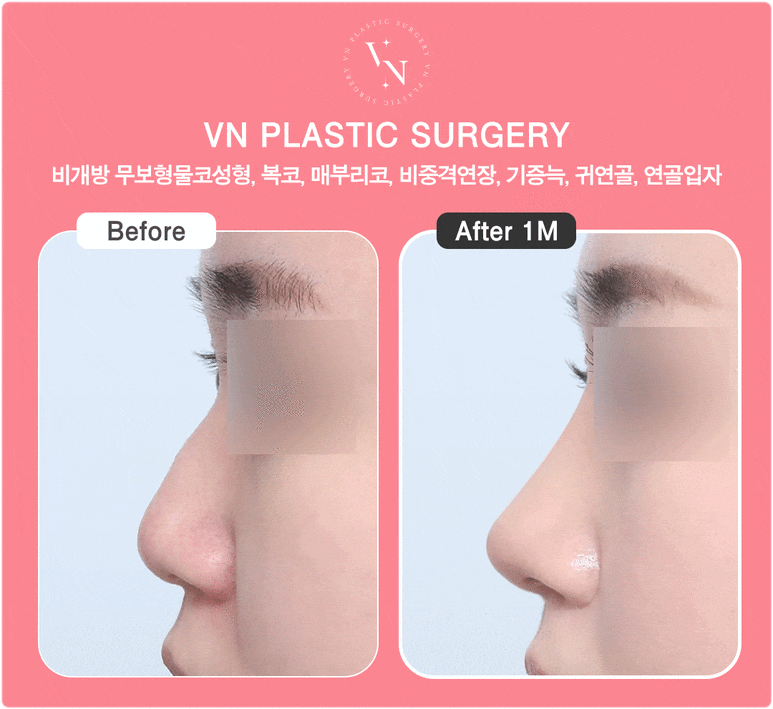
How is VN Plastic Surgery’s Shasha Nose performed?
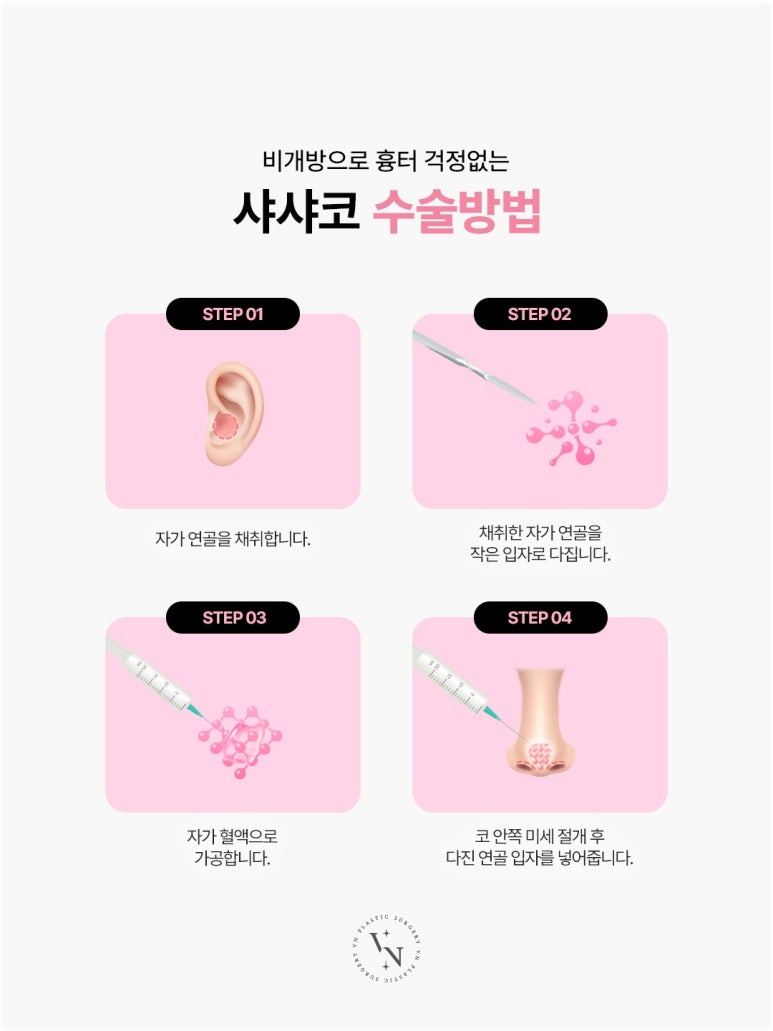
Shasha Nose is performed using a closed rhinoplasty approach,
with cartilage particles grafted into the areas where they are needed.
First, ear cartilage is harvested,
then finely minced into cartilage particles
and processed by mixing it with the patient’s own blood.
The processed cartilage particles are grafted into the necessary areas,
but they may also be used after septal extension
or cartilage suturing.
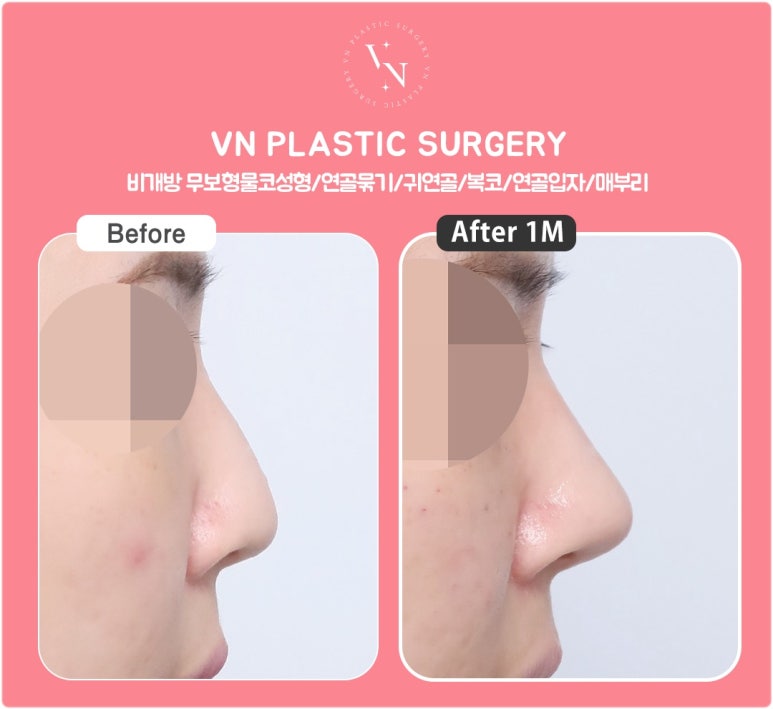
What should you check when considering cartilage particle rhinoplasty?
When researching cartilage particle rhinoplasty,
rather than simply confirming the explanation
that “cartilage particles will be used,”
you should carefully review the specific surgical plan.
You need to clearly confirm
which areas will receive the cartilage particles,
whether the desired nasal shape can be achieved with cartilage particles alone,
and, if not, what additional corrections besides Shasha Nose may be needed.
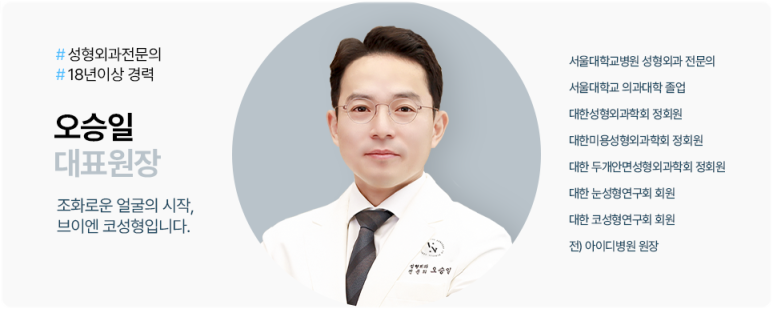
Dr. Oh Seung-il, Director of VN Plastic Surgery
Signature procedure: “Shasha Nose”
Shasha Nose is one of
Dr. Oh Seung-il’s signature procedures.
Even with the same cartilage particle rhinoplasty procedure,
the required surgical method may vary
depending on the current shape of the nose,
skin thickness,
and whether there has been previous surgery.
If you accurately determine what your nose lacks
and how cartilage particles can be used,
you may achieve a satisfying rhinoplasty result.
If you have any questions about cartilage particle rhinoplasty,
please feel free to contact us.
Thank you.