Naebang Station Dermatology: To Restore Skin Elasticity, You Need to Fill It from Within, Not Just Tighten the Surface
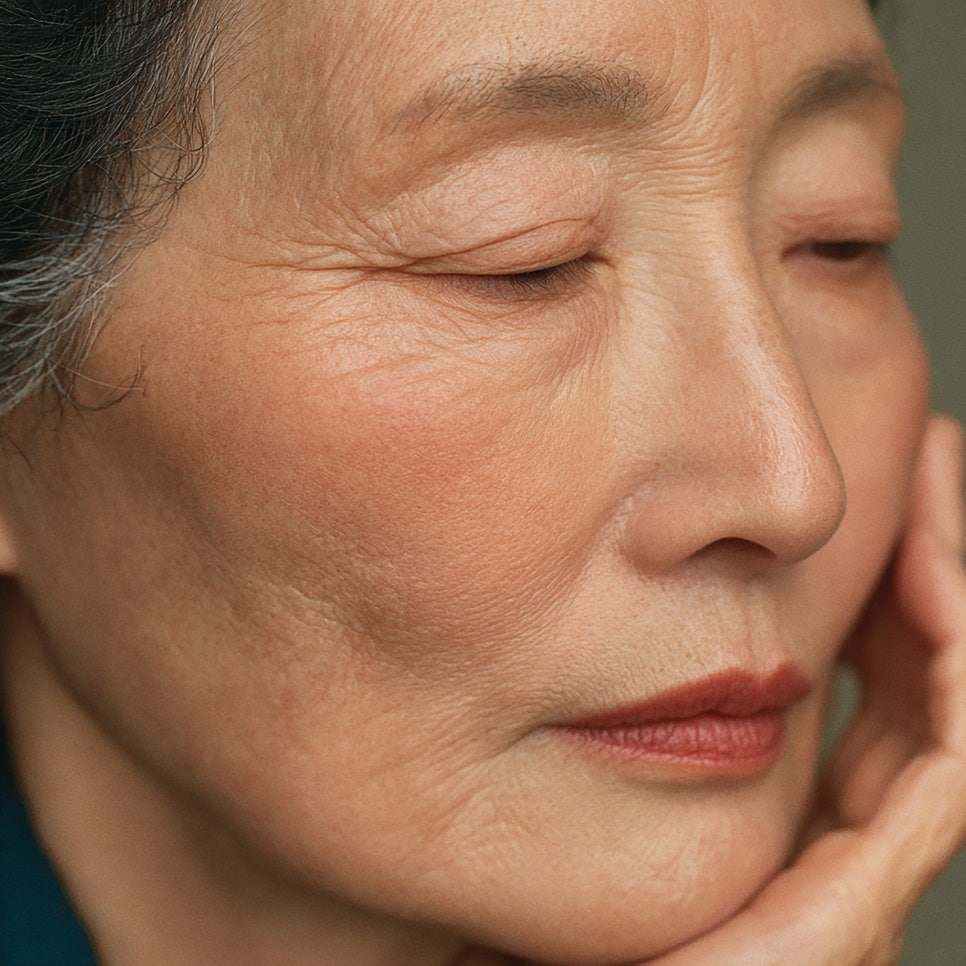
When you wash your face in the morning and look in the mirror, or when you remove your makeup in the evening, have you ever casually lifted your cheek skin toward your ears with both hands? "If only it would lift just this much, I’d have no more wishes..." "My jawline used to be sharp—when did it get so bulky?"
Whenever I meet patients who are worried about facial skin gradually sagging downward under the influence of gravity and the resulting uneven lines, I can feel that disappointment very clearly as well. Many people try applying large amounts of functional skincare products or massaging their face to restore elasticity, but once the facial contours have already collapsed, they rarely return to their original state, and in the end they come to the clinic.
That is because skin aging is not simply the outer skin stretching out; it is a phenomenon in which the internal structures supporting the skin break down. Today, I’ll explain in detail how skin elasticity, which loses strength as time passes, can be medically restored, and what type of lifting treatment is suitable for my own face shape.
The skin sags because both the "support structure" and the "cushion" have broken down

Naebang Station Dermatology: To Restore Skin Elasticity, You Need to Fill It from Within, Not Just Tighten the Surface
The process by which our skin loses elasticity is very similar to a building aging over time. First, the "fascia layer," a support structure that holds the muscles and skin in place deep within the skin, becomes loose. It is like the reinforced pillars of a building bending, and the skin can no longer withstand gravity, so it begins to sag overall. This is what causes jowls to descend and the jawline to collapse.
Second, the skin’s dermal layer loses "collagen and elastin." These are the components that act like the bricks and cement of a building, but as we age, their density becomes looser, leaving the skin thinner and flabbier. That is why pillow marks remain on the face for a long time and fine wrinkles begin to gather.
Therefore, true lifting treatment should not simply pull on the outer skin like leather; it should become a "reconstruction project" that tightens the loosened fascia layer and refills the emptied dermal layer with collagen.
Ultrasound and radiofrequency should be used together for tailored work by skin layer

Naebang Station Dermatology: To Restore Skin Elasticity, You Need to Fill It from Within, Not Just Tighten the Surface
Depending on the patient’s skin thickness and degree of sagging, elasticity should be restored by combining ultrasound and radiofrequency energy. First, ultrasound lifting builds the deep support structure. Ultrasound lifting procedures such as Ulthera or Shurink deliver high-intensity ultrasound energy to the deep fascia layer of the skin. Just as a magnifying glass concentrates light to burn paper, thermal energy is focused on a single point to contract the loosened fascial tissue. Because it serves to rebuild the pillars that firmly support the skin from deep within, it is effective for lifting the overall facial contour.
After that, radiofrequency lifting fills the skin from within so it feels firm and dense. Radiofrequency lifting procedures such as Thermage, InMode, and Tune Face broadly deliver warm thermal energy throughout the dermal layer. This thermal stimulation awakens dormant fibroblasts and dramatically promotes collagen production. As the loosened skin density becomes tighter, you can see a "tightening" effect, with pores becoming smaller and fine wrinkles smoothing out. You may feel as if the once-flabby skin has become chewy and elastic, like glutinous rice cake.
The "design" must change according to face shape for results to look natural

Naebang Station Dermatology: To Restore Skin Elasticity, You Need to Fill It from Within, Not Just Tighten the Surface
The most important part of a lifting procedure is individualized "custom design." That is because everyone’s facial bone structure, amount of fat, and skin thickness are different. For example, if strong energy is applied unconditionally to someone with little facial fat and thin skin, the cheeks may look hollow and the person may actually appear older. For such patients, radiofrequency-centered treatments that make the skin firm without causing fat loss are more suitable.
On the other hand, for people who have a lot of facial fat and are bothered by a thick double chin, procedures such as ultrasound lifting or InMode, which reduce fat while strongly tightening the fascia, are effective. That is why, before the procedure, it is most important to have 충분히 consult with a dermatologist to create a precise treatment plan that preserves the strengths of your face while improving only its weaknesses.
Elasticity treatment is fastest when started now

Naebang Station Dermatology: To Restore Skin Elasticity, You Need to Fill It from Within, Not Just Tighten the Surface
Aging is like a train that keeps moving without stopping. But if you apply the brakes at the right time, you can slow it down much more and age more gracefully and healthily.
Don’t just stand in front of the mirror and sigh, wondering, "Isn’t it already too late?" Even now, if the right diagnosis and treatment tailored to your skin condition are added, you can once again meet the lively lines you had five or ten years ago.