Treatment period: 2024.07.10 ~ 2024.11.05
Nice to meet you.
I am Director Park Jeong-gi from a dental clinic in Bongcheon-dong.
Everyone,
Have you heard of "Obok" (五福)?
It is a term that refers to the five blessings a person can receive in life.
One of them is having strong teeth.
These days, as life expectancy has also increased,
many people are paying attention to it.
As such, oral health plays an important role in life.
Intraoral photos
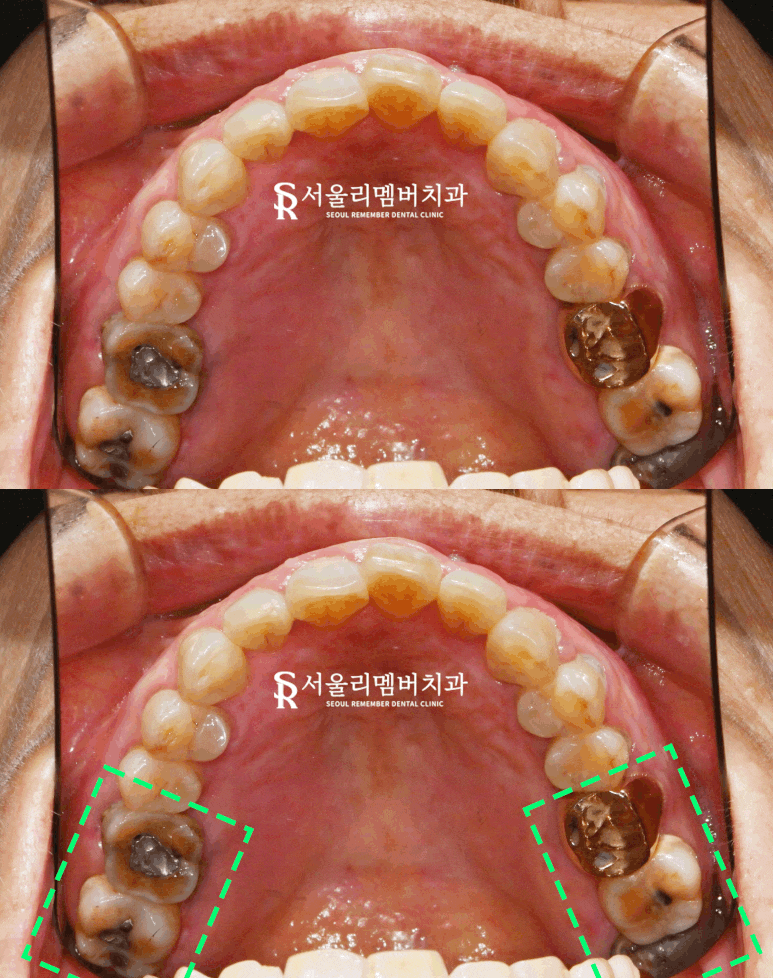
Photo date:2024.07.10
Let's start with the upper jaw.
Tooth 28, the wisdom tooth, is already badly decayed,
and the crown portion is fractured.
In addition, it is also affecting tooth 27,
and the prosthesis is worn down.
Teeth 16 and 17 have been filled with amalgam.
The crowns are significantly worn.
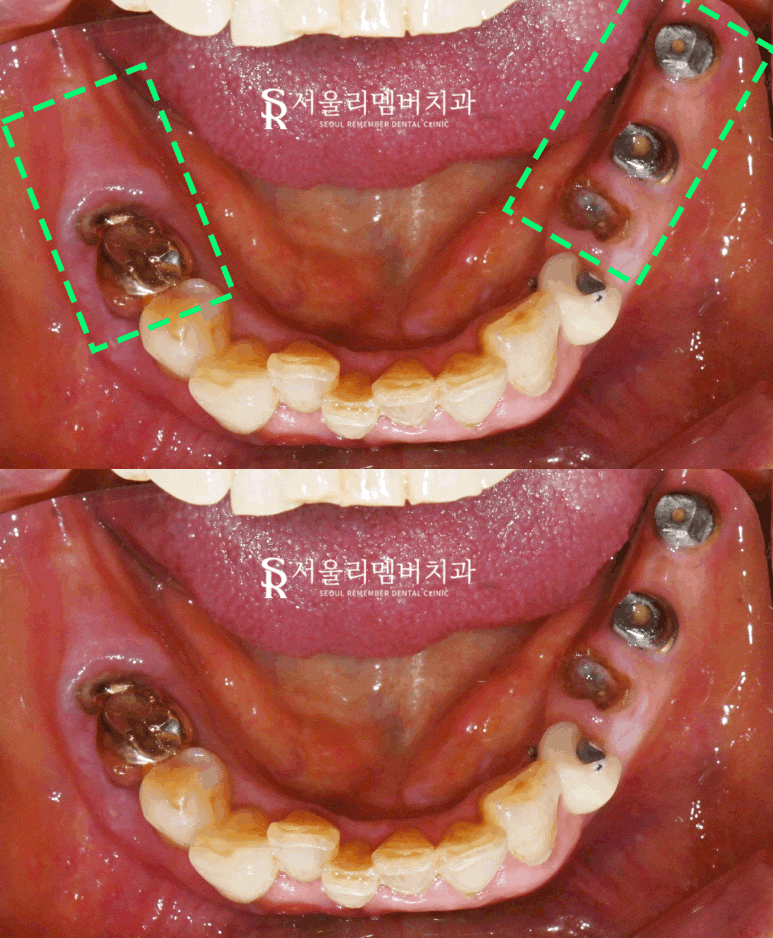
Photo date:2024.07.10
Let's look at the lower jaw as well.
Tooth 35 has lost the crown completely,
and tooth 46 also has only the root slightly remaining.
In addition, both molars are missing,
so they are not functioning in chewing.
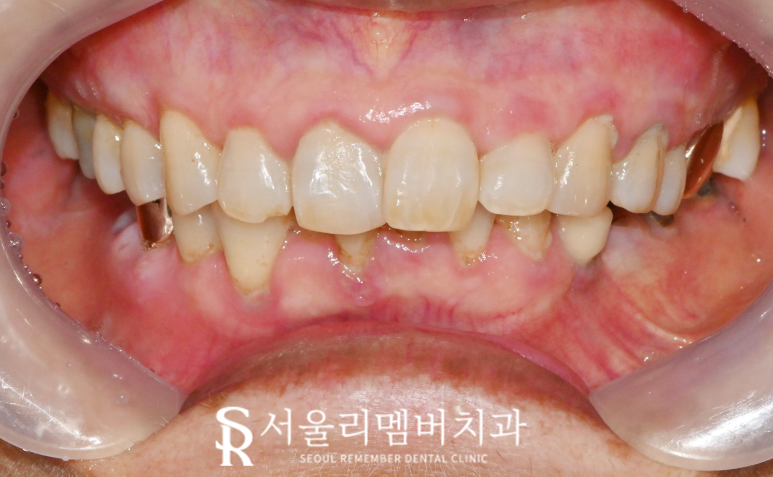
Photo date:2024.07.10
Both the upper and lower jaws have accumulated tartar and plaque,
and as a result, the periodontal condition appears poor.
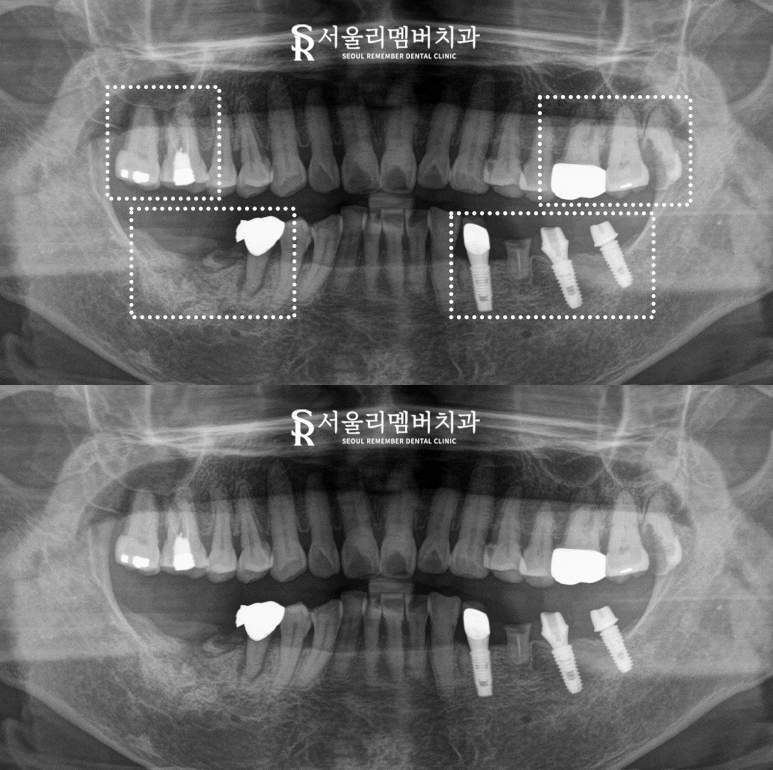
Photo date:2024.07.10
Let's look at the X-ray.
Tooth 35 and tooth 46 have only the roots remaining,
the tooth 28 wisdom tooth is half decayed,
and tooth 16 did not receive a crown after root canal treatment,
so the crown has been severely worn down.
In addition, tooth 47 is missing.
What happens if this is left as it is?
Once a tooth is lost, it does not grow back.
Then that space remains empty.
If it is left untreated, the surrounding adjacent teeth and opposing teeth will move.
As a result, the alignment becomes distorted,
making chewing difficult.
In addition, the upper and lower teeth normally contact each other,
applying pressure and maintaining balance.
This is called occlusion.
As occlusion collapses, the opposing tooth receives force to move outward in an attempt to rebalance,
leading to extrusion, where it rises upward.
At the same time, alveolar bone degeneration and atrophy also occur,
and oral hygiene management becomes difficult,
causing the gums to recede.
So how can it be resolved?
-
28
: Extraction due to wisdom tooth decay and fracture
-
17, 16, 25, 26, 27
: Root canal treatment and crowns
-
34=37, 45=47
: Remove remaining roots, then place implant bridges
-
Scaling for oral care
Here, an implant bridge does not mean placing implants one by one
for each missing tooth when multiple teeth are lost.
Instead, several fixtures that serve as roots are placed,
and a bridge is attached to them.
Because there is no need to place fixtures
for each missing tooth,
it is less burdensome,
and it is a method that can restore occlusal function
by placing a bridge.
I will explain what is commonly called guided implant treatment.
This is a method that precisely examines bone tissue and nerve positions,
which are difficult to confirm visually, using digital equipment.
Based on that data, a 3D simulation surgery is performed on a computer
to determine the thickness, length, and width of the fixture that is suitable for the individual.
Through this, the fixture can be placed in the correct position.
Through the above process,
the function of the missing natural teeth can be restored
and periodontal problems can be addressed.
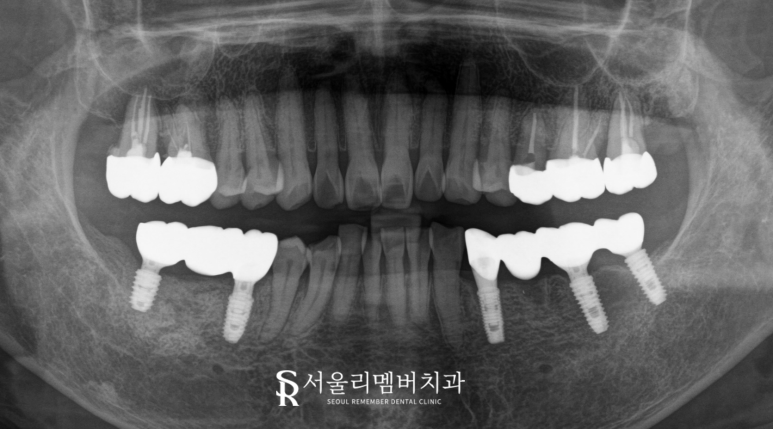
Photo date:2024.11.05
Let's take a look together at the completed treatment result at the Bongcheon-dong dental clinic.
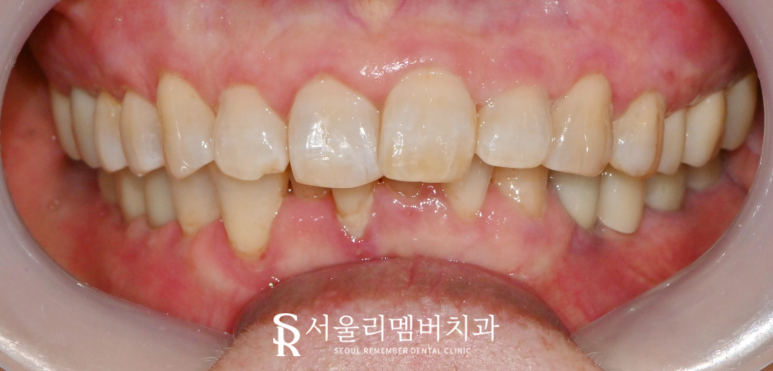
Photo date:2024.11.05
Through scaling,
we first removed the tartar and plaque.
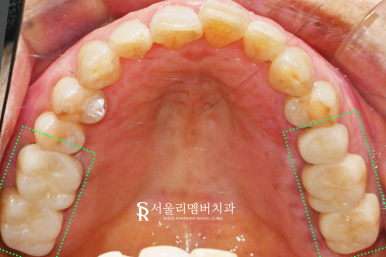
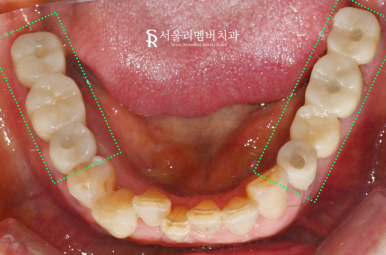
Photo date:2024.11.05
After that, the roots were extracted,
and natural teeth were replaced through implants and bridges.
In addition, areas where the crowns were worn down
and problems had occurred with old prosthetics
were preserved by saving the natural teeth
and covering them with zirconia for protection.
Today, we introduced a case involving multiple missing teeth
and replacement of old prosthetics.
Natural teeth that can be saved should be saved,
and missing areas should be managed through implants and bridges
so that chewing function is not affected.
To use these restorations for a long time,
aftercare is important.
For the areas around the prosthetics, consistent care is needed
with floss and interdental brushes, as well as toothbrushing.
In addition, please make sure to continue making efforts
to maintain oral health through regular checkups.
Thank you for reading this long post.
This was Director Park Jeong-gi from a dental clinic in Bongcheon-dong.