Treatment period: 2025.02.29 ~ 2025.06.30
Nice to meet you,
I’m Director Park Jeong-gi from Seoul Remember Dental Clinic at Sadang Station.
When severe tooth decay occurs, root canal treatment and crowns are
last-resort methods that can relieve a patient’s severe pain
and extend the life of a natural tooth.
Especially, a crown covers and protects the entire damaged tooth crown
with a durable material.
Once a tooth has been covered in this way,
its internal condition cannot be known until the prosthesis is removed,
so from that point on, you need to be careful with hard and chewy foods
and manage it carefully through thorough oral hygiene.
However, no matter how carefully it is managed,
unexpected problems can arise as time passes.
"There’s a strange smell coming from
the lower right molar,
and it throbs from time to time."
At Sadang Station Dental Clinic, after confirming the chief complaint (C.C.)
reported by the patient,
we perform several examinations corresponding to it.
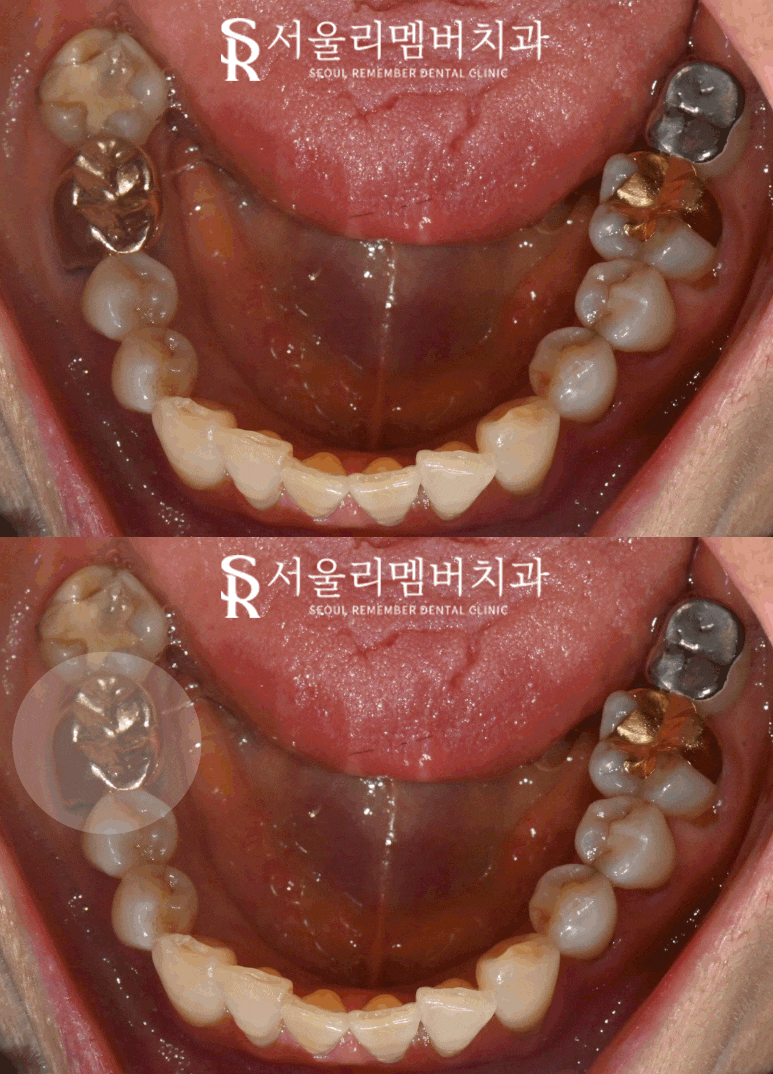
The area where the patient felt discomfort had undergone root canal treatment
a long time ago and was covered with a gold crown,
so because the molar was fully covered,
the internal condition was difficult to assess accurately with the naked eye.
In cases like this, Sadang Station Dental Clinic explains that a radiographic examination is essential,
and with consent, we took a panoramic X-ray.
The results were as concerning as expected.
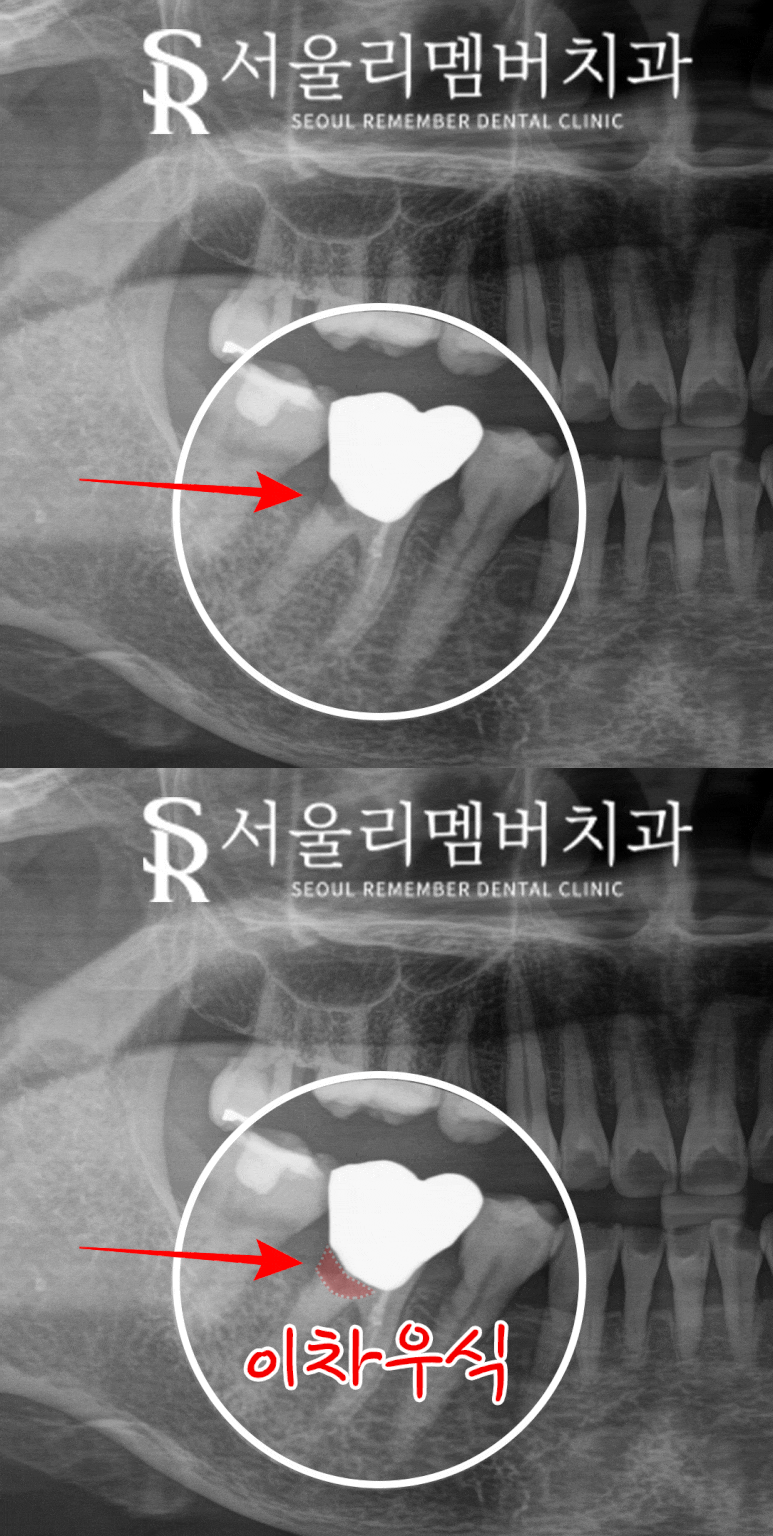
A clear radiolucent shadow was observed in the root area beneath the crown,
which meant that secondary decay had progressed significantly.
A tooth that has undergone root canal treatment
no longer has a nerve,
so it cannot feel pain or temperature,
which is why the patient had not noticed at all
that the decay was progressing.
As the root slowly decayed,
plaque and food debris accumulated in the gaps,
causing bad breath and inflammation in the surrounding gums,
and only then did it seem that the patient finally noticed something was wrong.
While making the treatment plan at Sadang Station Dental Clinic,
the first thing we considered was:
Is there really no way left to save the natural tooth?
If the decay had been limited to the crown area,
a possible approach would have been to remove the existing crown,
remove only the decayed portion,
fill the interior with restorative material,
and cover it again with a new prosthesis.
Unfortunately,
in this case the decay had progressed severely deep into the root,
so it was no longer in a condition that could be preserved.
So we explained the situation in detail to the patient and guardian,
and decided to proceed with extraction followed by an implant.
Fortunately, after extraction, we checked the condition of the alveolar bone
and found that the bone density and bone volume were very good.
This meant that immediate implant placement was possible,
so we placed the fixture on the same day
without an additional bone grafting procedure.
Immediate placement, in which the implant is inserted at the same time as extraction,
has the advantage of greatly shortening the total treatment period,
which can minimize the patient’s discomfort.
Also, because the bone quality was very dense
and healthy,
the fixture was able to settle stably without the need to add separate bone graft material.
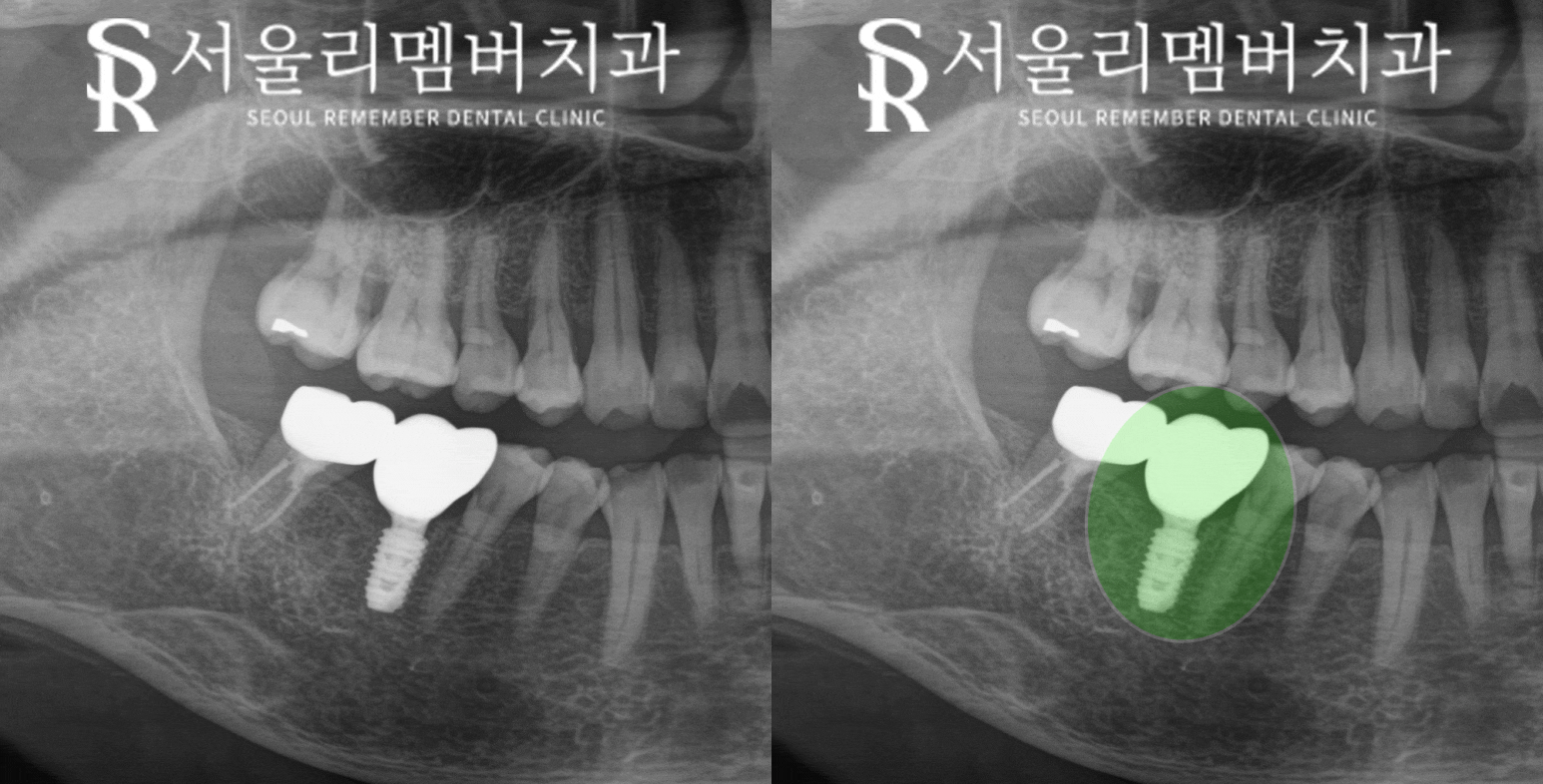
After about three months of osseointegration,
the final prosthesis was successfully completed,
and chewing function was restored.
After all implant treatment is completed,
more careful management is needed.
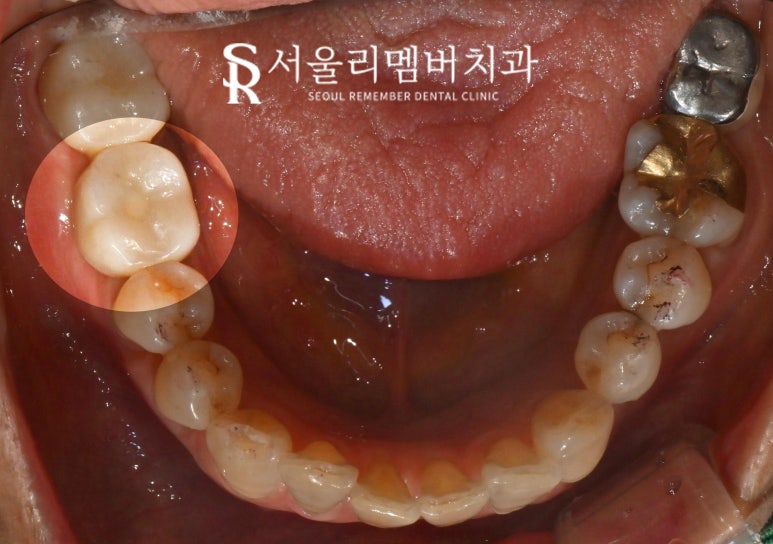
Now, compared with when it was a natural tooth,
plaque removal around the gum line and between the teeth is even more important,
so we provided detailed instruction on how to use floss and interdental brushes.
If you learn the proper oral care methods
and continue to monitor it through regular checkups,
you can use it healthily for a semi-permanent period.
Cavities are a disease that cannot be prevented 100%.
However, if the oral environment is kept clean through regular checkups and scaling,
they can be sufficiently prevented and detected early.
Even if such a problem does occur,
there is now an excellent solution called implants,
so there is no need to worry too much.
At Sadang Station Dental Clinic, we sincerely hope that all patients
will maintain a healthy oral condition for life
without a single treated tooth,
and enjoy a happy daily life.
However, when the time comes that treatment is needed,
we hope you will actively work toward recovery at that time
and resolve the problem quickly.
Thank you for reading.
This was Director Park Jeong-gi of Seoul Remember Dental Clinic at Sadang Station.