Treatment period: 2024.12.20 ~ 2025.08.20
Nice to meet you,
I’m Dr. Park Jeong-gi of Seoul Remember Dental Clinic in Sangdodong.
Koreans are known for having good hand skills
and being meticulous as well,
so Korean medical technology and expertise
are already recognized in many countries overseas.
As a result, even if you end up living abroad
because of work,
there are many patients who want to receive treatment
in Korea when they return home.
Today at the Sangdodong dental clinic,
I’ll explain how to plan in these cases
so treatment can proceed smoothly
within the period of entry and departure.
For this case, let’s assume a patient
of Korean nationality who is living in Canada
returned home briefly for implant treatment.
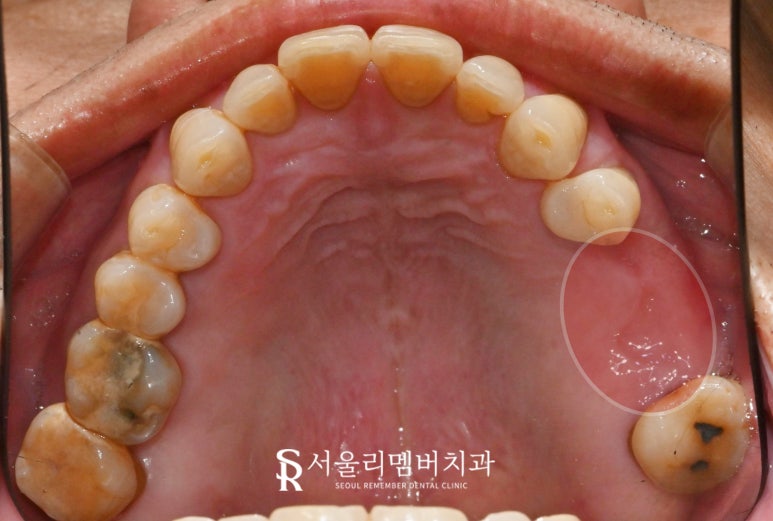
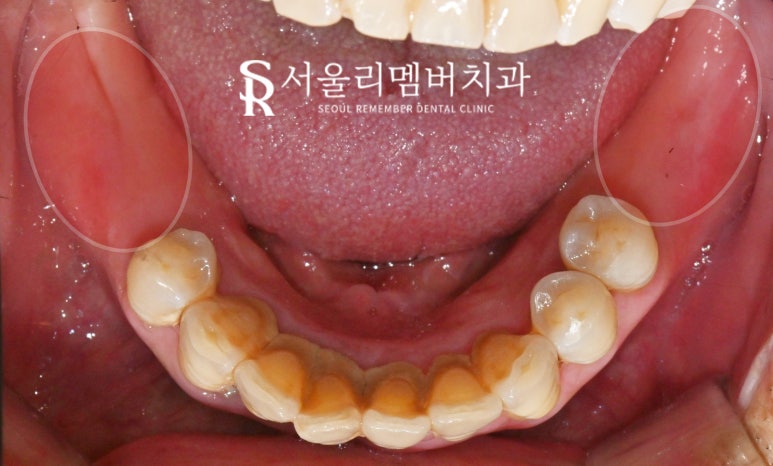
Looking inside the mouth,
you can see that teeth are missing
around the upper left and both lower molar areas.
Because the molars are missing,
meals must have been quite difficult,
and going to a clinic in Canada
would likely have been a big concern
because of the high medical costs.
That is why patients like this
often want faster, more proactive treatment
whenever they come to Korea.
At the Sangdodong dental clinic,
for patients who need to manage the number of visits carefully,
we believe that how diagnosis and planning are set up
is extremely important.
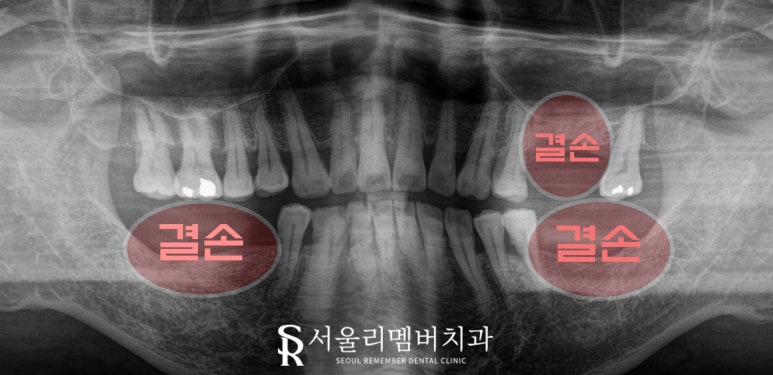
Looking at the panoramic X-ray,
fortunately, it seems quite some time has passed
since the teeth were lost, so the condition of the alveolar bone is good.
The bone height was preserved to a certain extent,
so immediate placement was possible.
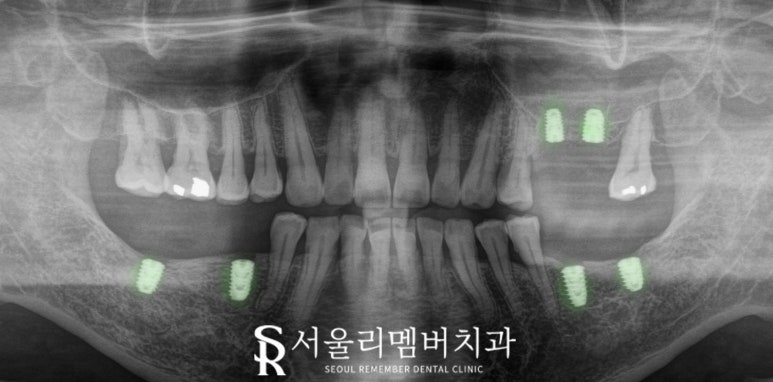
So since the patient was already here,
we proceeded with immediate placement on the same day,
and if needed, they would come back once more
a week later to have the stitches removed,
so they would not need to visit the clinic for a while.
From that point on,
only a minimum of 3 months was needed,
so the patient could come at any time
to match their next return to the country.
Because time is needed for the implant to sufficiently integrate with the alveolar bone,
we explain that at least about 3 months are required,
and the period may vary depending on conditions
such as the state of the alveolar bone,
whether there is inflammation,
or whether sinus bone grafting is needed.
Since the patient would be entering the country anyway,
when they came back we would check whether the fixture and the alveolar bone had properly fused,
and then immediately begin impression taking.
At the Sangdodong dental clinic,
we explain that at this stage
at least a 2-week stay is necessary.
On the first day, we take the implant impression,
and it takes several days
before the prosthetic is fabricated.
After fabrication, we try it in the mouth,
and if there is any discomfort or anything that needs improvement,
we make adjustments to achieve a comfortable bite.
Also, after going without teeth for a long time,
when a prosthesis is suddenly placed,
many patients feel more awkward than expected
or end up biting their cheek or tongue,
so an adjustment period is needed.
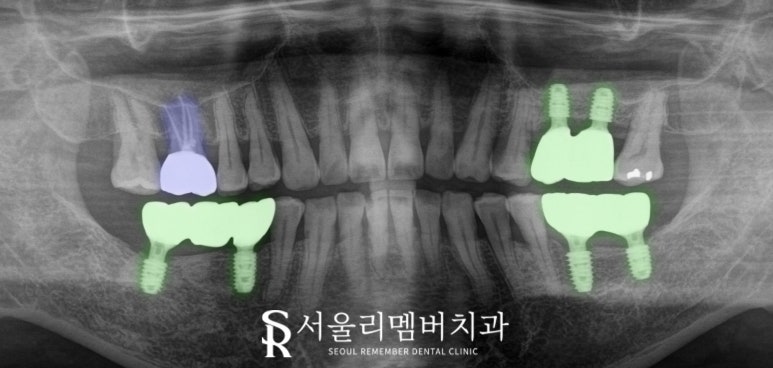
In this case, after the final prosthesis was set,
we had the patient stay for about another week,
made a slight occlusal adjustment,
and finished the treatment.
Because the days they could come were limited,
we did as much treatment as possible on the day of the visit
and completed everything well within the given time.
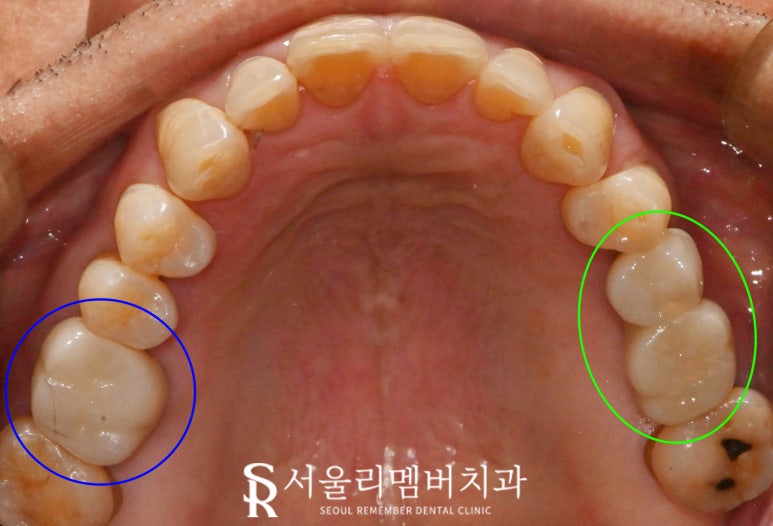
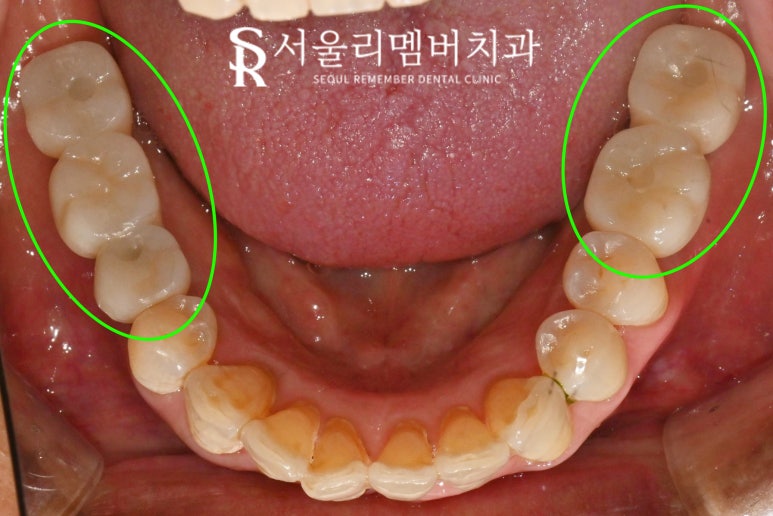
The implant treatment for patients staying overseas
that I explained today at the Sangdodong dental clinic
can proceed quickly with only a few visits
if the timing is well coordinated.
However, this must first be supported
by the patient’s oral condition,
and if the environment is well prepared,
then from that point on,
it is fully possible depending on the skill and experience of the attending doctor.
So please do not worry too much,
and if national health insurance is available,
please apply it and receive appropriate treatment.
Thank you for reading.
This has been Dr. Park Jeong-gi of Seoul Remember Dental Clinic in Sangdodong.