“Lately, I keep hearing that I look tired,
and I think it’s because my skin elasticity has declined.”
Dull, sagging skin can greatly affect a person’s impression.
That’s why when skin elasticity decreases, your face can look more tired regardless of how you actually feel.
After hearing comments like this once or twice, stress tends to build up.
For those who want to improve their skin but do not want unnatural surgery, today I’d like to introduce V-RO Advance.
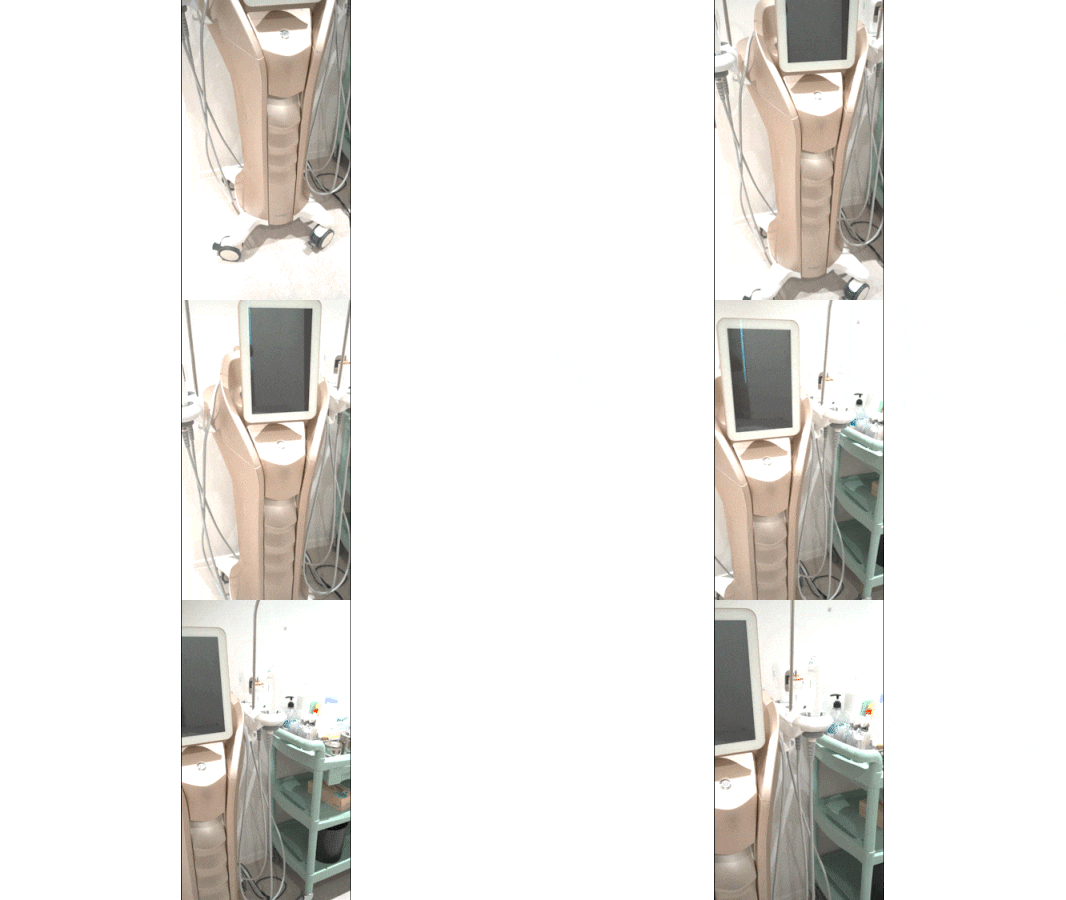 V-RO device
Among various lifting devices, V-RO is a procedure that has received many reviews for being especially effective at improving natural facial lines and refining skin texture.
Then let’s go through the principles of V-RO Advance lifting one by one.
Table of Contents
V-RO Advance
How does it work?
V-RO Advance is a procedure that uses radiofrequency and ultrasound energy at the same time to deliver heat to the dermis and subcutaneous fat layers of the skin.
Because it uses two types of energy simultaneously, I’ll explain each energy separately.
First, radiofrequency gives heat stimulation just beneath the skin.
When the skin receives this heat stimulation, it begins producing new collagen to heal itself.
As this process repeats, the collagen and elastin within the skin gradually become richer over time, and elasticity naturally improves.
That is why radiofrequency is mainly used to improve nasolabial folds and the overall texture of the face.
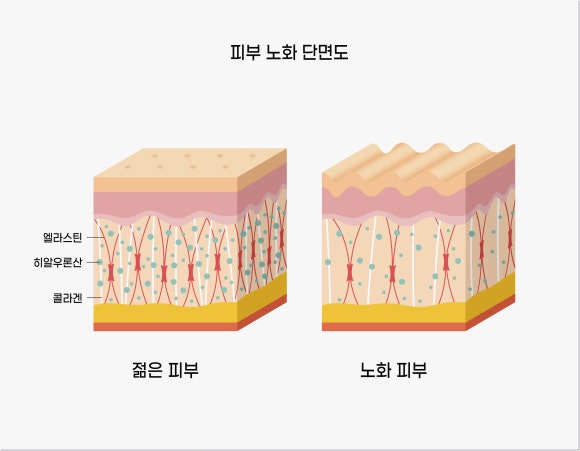
Meanwhile, ultrasound delivers heat deep into the skin.
Because it tightens loose tissue deep in the skin, sagging areas also receive heat and contract, creating a lifting effect.
That is why many people who are concerned about a blurred jawline often come in for this procedure.
V-RO Advance
How long does the procedure take, and how much does it hurt?
V-RO Advance usually takes about 20 to 30 minutes.
As for pain, the level each person feels can vary a little,
but many people say that ultrasound causes a sharper stinging sensation, while radiofrequency causes almost no pain.
However, since it can be sufficiently eased with anesthetic cream, most people receive the procedure comfortably, so you can feel a little less worried.
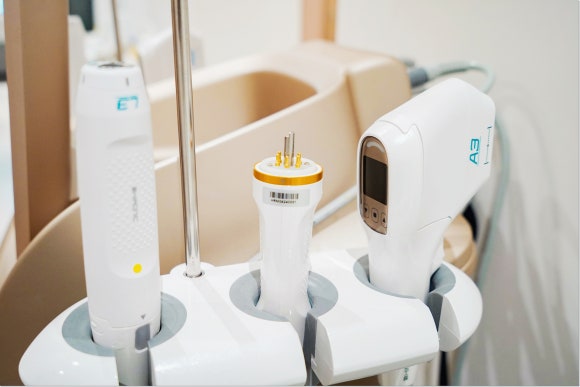
Also, compared with existing radiofrequency lifting devices, the energy distribution is more even and the depth can be adjusted.
So if a patient feels discomfort depending on their skin condition, the procedure can be performed more precisely so that the stimulation feels less intense.
Of course, there may be some redness right after the procedure, but it usually calms down within a short time, and the recovery period is relatively short, so washing your face or applying makeup is possible right away.
V-RO Advance
How often should it be done?
Although it varies depending on an individual’s skin condition and age, in general, receiving the procedure about 3 to 4 times at 1- to 2-month intervals can lead to gradual improvement.
After that, it is often done once every 6 months to 1 year for maintenance lifting.
For nasolabial folds and similar concerns, rather than expecting immediate results right after the procedure, it is important to allow time for collagen regeneration.
In most cases, gradual improvement is felt starting 2 to 4 weeks after the procedure.

However, because the effect can vary greatly from person to person, we recommend continuing to monitor changes after the procedure with a specialist and deciding on the next treatment interval together.
I’ve explained the principles of V-RO Advance, the procedure time and pain, and the treatment cycle.
In today’s post, I summarized only the information that many people are most curious about.
Whether this is the right procedure for your skin can be determined accurately by a specialist after directly examining your skin condition.
So if you have skin concerns, we recommend not worrying alone and instead consulting with a specialist.
I hope this post was helpful.
I’ll be back next time with more skin information that you may be curious about.
Thank you. This was UNI Clinic Hongdae Sinchon ^^
< Gwangbokjeol Reduced Hours Notice >
8/15 (Fri) Gwangbokjeol
Reduced hours: 10:00 ~ 17:00
Please make sure there is no confusion when visiting for treatment or making a reservation.
<Directions to UNI Clinic Hongdae Sinchon Branch>