홍대 피코토닝,
효과가 없었던 이유와 진짜 잘 받는 법
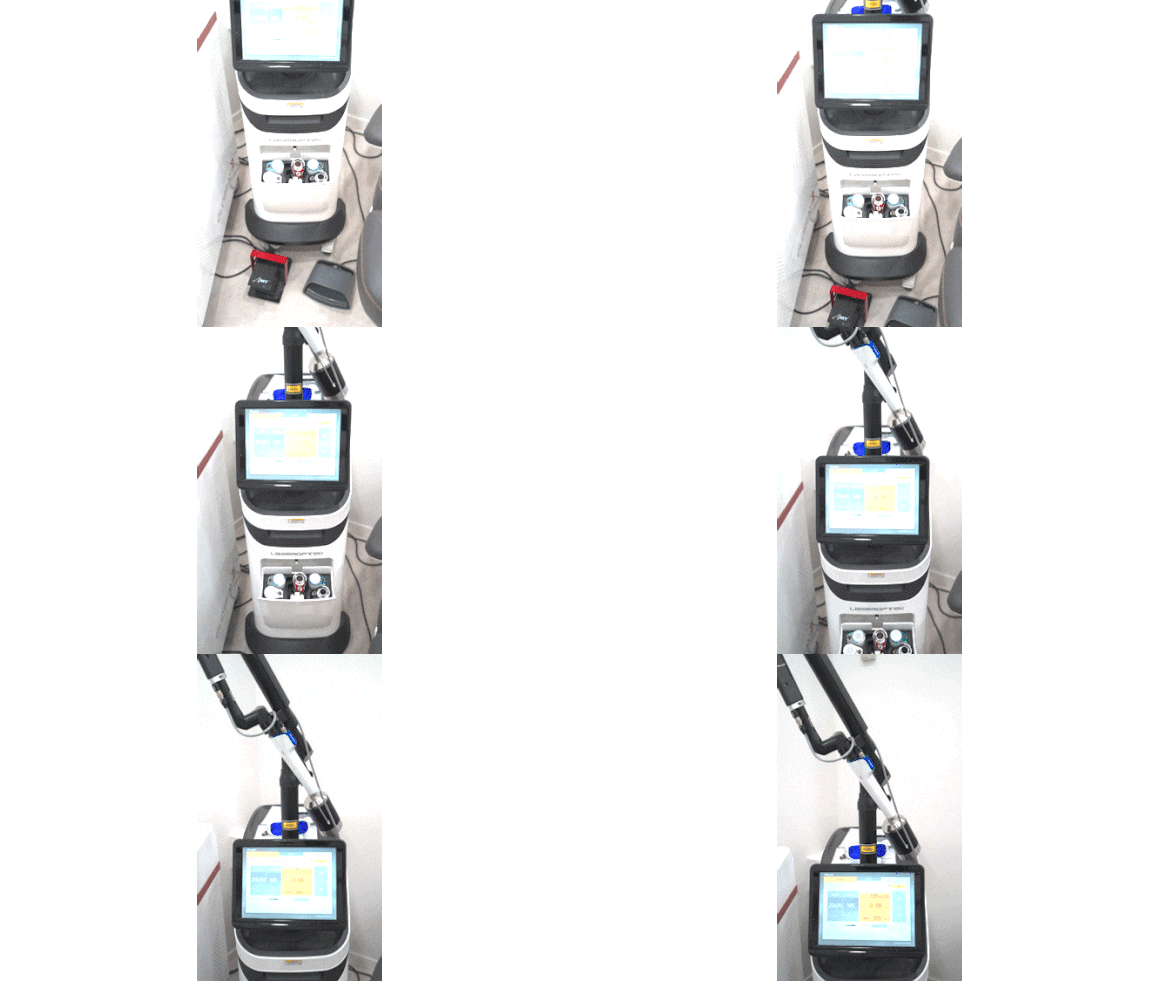
“피코토닝을 세 번이나 받았는데..
Why didn’t anything change?”
This is a question I often hear from people who visit after undergoing pico toning several times.
Pico toning is a treatment many people seek out when they are concerned about freckles, melasma, and pigmentation, but there are also many cases where they say they did not really feel the effects.
In fact, pico toning can only deliver proper results when its exact principles are understood and a customized treatment plan is carried out.
Today, based on my experience treating many patients in Hongdae,
I will explain the principles of pico toning, its effects, treatment intervals, and aftercare in an easy-to-understand way.
After reading this, you will clearly understand why pico toning responds differently from person to person,
and how to receive it for the most satisfying results.
Hongdae Pico Toning,
Why It Didn’t Work and How to Get the Best Results
-
Principles of pico toning
-
Effects of pico toning
-
Treatment intervals, number of sessions, and aftercare
Hongdae
Principles of Pico Toning
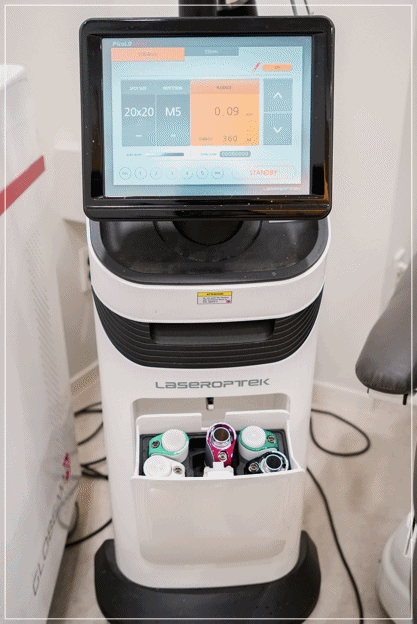
As the name suggests, pico toning is a highly precise laser procedure that emits light in picoseconds,
that is, in units of one-trillionth of a second.
This laser works 1,000 times faster than traditional nanosecond lasers, breaking pigment down into tiny pieces with shock waves rather than burning it with heat.
Because of this, the surrounding healthy skin is barely damaged,
and only the pigment particles are finely broken down and eliminated from the body.
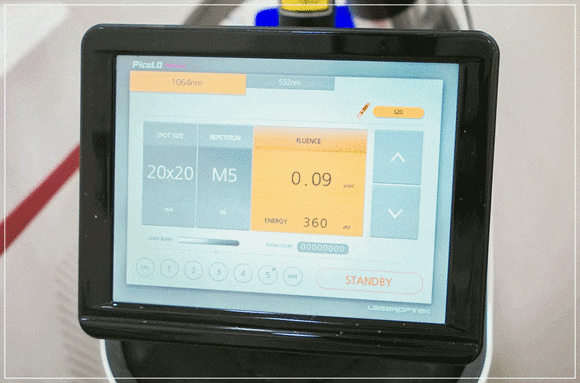
Among pico toning devices, Picolo uses two laser wavelengths.
The 532nm wavelength is suitable for treating freckles and mild blemishes located in the superficial layers of the skin,
while the 1064nm wavelength is mainly used to treat melasma and darker pigmentation located deeper in the dermis.
Before treating pigmentation, the skin is carefully analyzed with a specialized imaging device, and the wavelengths are combined and the energy adjusted according to pigment depth, skin thickness, and sensitivity.
This process is called “customized energy setting,”
and it is so important that it can determine the treatment result.
Hongdae
Effects of Pico Toning
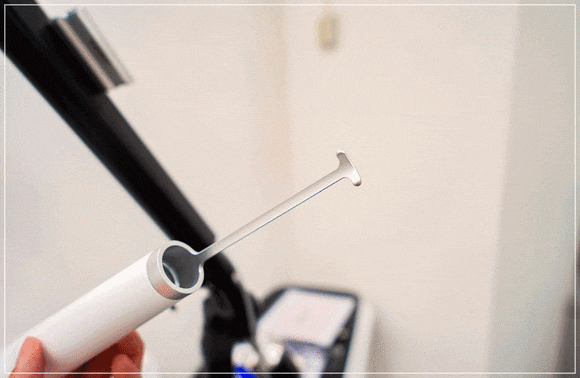
Many people think of pico toning as a procedure that “whitens the skin,” but more accurately, it is a process that restores balance to the skin’s color.
Pigmentation develops for many reasons, including UV exposure, hormonal changes, and post-inflammatory responses.
Pico toning finely breaks down this pigment to even out skin tone, reduce blemishes, and help restore a clear and transparent complexion.
Clinical studies also report that the highest effects are seen when epidermal pigmentation is treated 2 to 3 times,
and deeper dermal pigmentation is treated 5 to 10 times or more.
However, not everyone improves at the same pace.
This is because skin thickness, melanin density, lifestyle habits, and the degree of UV exposure directly affect the results.
From my experience, people who do a good job of protecting themselves from UV rays and keeping their skin well moisturized often recover to a much brighter and clearer tone even with the same number of sessions.
Hongdae Pico Toning
Treatment Intervals, Number of Sessions, and Aftercare
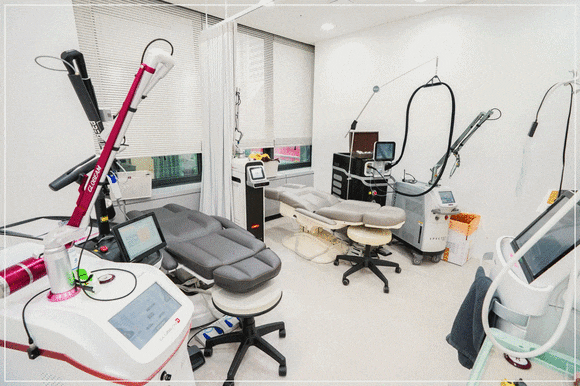
In general, pico toning is recommended at 4- to 6-week intervals for at least 5 sessions.
However, this is only an average guideline, and for people with sensitive or dry skin, it is better to extend the interval to 6 to 8 weeks.
On the other hand, people with high sebum production and frequent UV exposure can undergo treatment every 3 to 4 weeks without difficulty.
Ultimately, what matters is respecting the skin’s recovery rhythm.
Aftercare
After pico toning, the skin becomes temporarily sensitive.
Immediately after the procedure, avoid washing your face and wearing makeup for about a day,
and for several days, use a gentle cleanser and 충분한 moisturizer.
In particular, sun protection is essential.
This is because if the skin is exposed to UV rays after laser treatment, melanocytes can be stimulated and pigmentation may become darker again.
In addition, consistently applying antioxidant ingredients such as vitamin C or tranexamic acid can help prevent pigmentation from recurring.
Hongdae pico toning is not simply a procedure that brightens the skin, but a “precision customized treatment” that restores the skin’s natural balance.
In other words, even with the same device, the results can change completely depending on who sets it and how,
and on how carefully the patient manages their skin.
If an accurate diagnosis, careful energy adjustment, and consistent aftercare are all maintained,
pico toning can produce excellent results not only for melasma and blemishes, but also for improving skin texture and transparency.
If you read this post, you will now understand pico toning not as a simple whitening procedure, but as a “journey in which the skin recovers on its own.”
Thank you. This was Uni&I Hongdae Sinchon^^
< The story of the Hongdae Sinchon branch built over 10 years>
< Uni&I Clinic Hongdae Sinchon Hours >
Weekdays: am 10:00 ~ pm 08:00
Saturday: am 10:00 ~ pm 05:00
(Consultations without lunch break)
< Directions >
Uni&I Clinic Hongdae Sinchon Branch is
located near Hongik University Entrance Station.