Sinchon acne scars,
How They Are Treated by Type
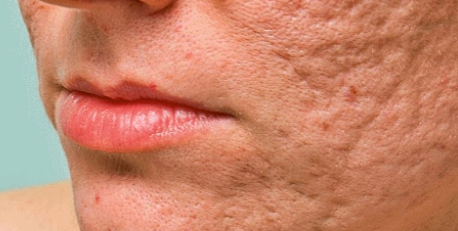
"I’m so stressed because of acne scars.."
"Can acne scars really be removed clearly?"
One thing that is as difficult to treat as acne itself is acne scars.
Deeply indented scars left after inflammation are difficult to recover naturally over time, so appropriate treatment is needed.
In fact, when consulting with patients, many people ask whether they can be completely eliminated.
Acne scars can also be expected to improve enough, but the important point is that the approach differs depending on the type of scar.
Even if they look similar on the surface, the treatment method changes depending on the internal structure.
Today, let’s look at this in detail.
Sinchon Acne Scars
Sinchon Acne Scars
Scars that differ by type
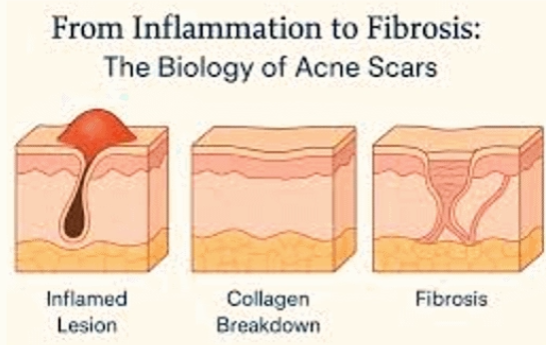
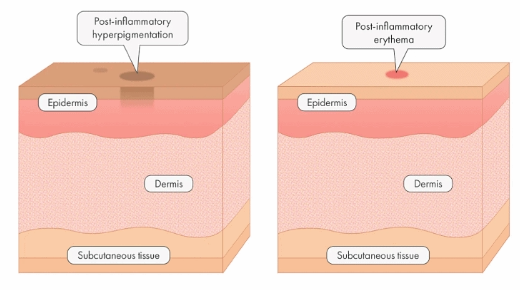
Acne scars occur when inflammation spreads into the dermis and damages the collagen structure.
When the dermis that supports the skin collapses, that area cannot recover normally and remains indented.
In this process, scar types are divided according to how the tissue has been damaged and adhered.
- Rolling scars
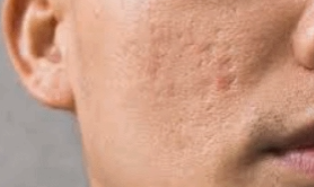
Rolling scars are characterized by a gently wavy, sunken shape.
The boundaries are not distinct, and the form transitions smoothly, with relatively shallow depth in many cases.
However, because they form when fibrous tissue between the dermis and subcutaneous fat pulls the skin downward, simple surface treatment has limitations.
- Ice pick scars
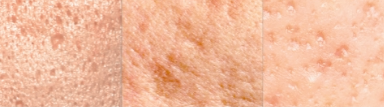
Ice pick scars have a narrow opening but a deep cavity inside.
They take on a V-shape, as if pricked by a needle, and in many cases adhesion has progressed deep into the skin.
Because of this, treatment is relatively difficult and requires a more precise approach.
As such, even scars that look similar from the outside can require different treatment methods and numbers of sessions depending on depth and structure.
Sinchon Acne Scars
How are they treated?
The treatment method used also differs depending on the scar type.
First, rolling scars focus more on relieving fibrous adhesions and breaking the skin adhesion.
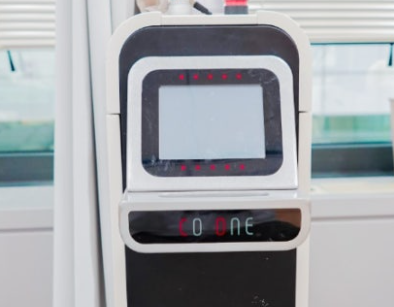
One of the methods used here is laser devices in the Fraxel or Potenza line.
They deliver micro-stimulation inside the skin, helping to break apart the firmly attached fibrous tissue beneath the scar that pulls the skin down and allowing the skin to fill in.
On the other hand, because ice pick scars have a deeper structure, the key is not so much removing adhesion as it is "allowing it to fill back in."
For example, in addition to procedures that induce regeneration of the deep dermis through microneedling (needle RF), skin recovery can also be supported with treatments such as collagen boosters.
These methods aim for a more three-dimensional improvement by delivering stimulation to the deeper parts of the scar.
However, the methods above are examples for explanation purposes, and the actual treatment plan may vary depending on the individual’s skin condition and scar type.
If you are considering treatment for Sinchon acne scars, there is one thing you should remember.
Acne scars are not simply a surface problem; they are structural changes that result from damage to the dermis.
Therefore, rather than trying to solve them with a single procedure, it is important to accurately identify the type and depth of the scar and then take a customized approach.
Even scars that look similar on the surface can require completely different treatment directions, so
rather than deciding on a specific device in advance, it is more effective to establish a treatment plan that suits you through sufficient consultation.
Thank you. This was Hongdae Sinchon UNI & I ^^
< The story of the Hongdae Sinchon branch built over 10 years >
< Hongdae Sinchon UNI & I clinic hours >
Weekdays: am 10:00 ~ pm 08:00
Saturday: am 10:00 ~ pm 05:00
(Sunday closed)
< Directions >
UNI & I Clinic Hongdae Sinchon Branch is
located near Hongik Univ. Station.