Hapjeong Acne Dermatology Clinic,
You Need to Know the Cause to Reduce Breakouts
Department : Dermatology
Hongdae Hapjeong U&I Clinic
"I had extractions and took medication,
so why am I breaking out again?"
"I keep getting breakouts in the same spots."
"What acne treatment is right
for me?"
Acne is more than a simple skin problem involving pimples. As it repeatedly returns, it can also cause significant stress and fatigue.
Some people have told us that their motivation to continue treatment decreased as they repeatedly experienced breakouts that seemed to improve once, only to return again.
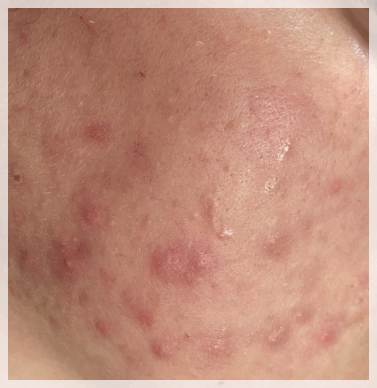
Acne
Acne that appears on the surface may improve temporarily, but if the environment forming beneath the skin remains unchanged, it is highly likely to recur.
That is why acne treatment requires not only removing the lesions that are currently present, but also examining why they keep recurring.
Today, we will take a detailed look at why acne keeps appearing, when extraction alone may not be enough, and what approaches may be considered for each type.^^
Hapjeong Acne Dermatology Clinic,
You Need to Know the Cause to Reduce Breakouts
-
Why does it keep recurring?
-
Why does it come back even after extraction?
-
Approaches that vary by type
Hapjeong Acne Dermatology Clinic (Department : Dermatology)
Why does it keep recurring?
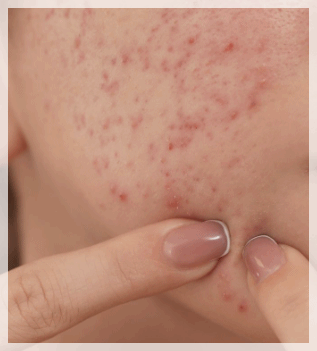
Acne
In the consultation room, many people think of acne simply as a small skin problem that has appeared on the surface.
Rather, it is closer to a condition formed through several processes occurring together inside the pores beneath the skin.
It is difficult to explain how acne develops through a single cause, so let us look at how several factors affect one another in sequence.^^
- Increased sebum production
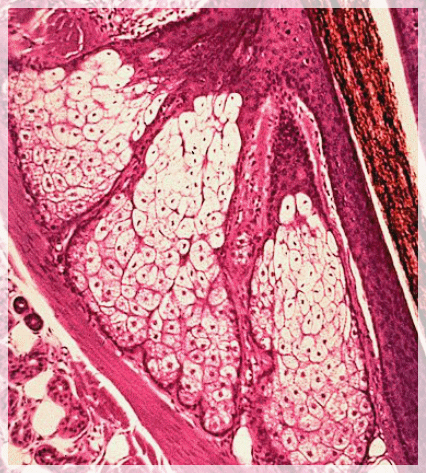
Sebaceous glands
Sebum is an oily substance naturally produced by the skin. It normally helps protect the skin and prevent moisture loss.
However, hormonal changes, genetic factors, stress, and lifestyle habits can cause the sebaceous glands to become excessively active.
As a result, sebum gradually builds up inside the pores, making the pore environment increasingly oily.
- Abnormal shedding of dead skin cells
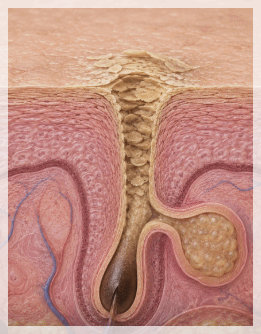
Dead skin cells accumulated around the pores
Having excess sebum does not necessarily mean that acne will develop.
Our skin repeatedly produces new cells and sheds existing ones.
With healthy skin, dead skin cells shed naturally, allowing the pore openings to remain clear.
However, in acne-prone skin, dead skin cells often fail to shed on time and accumulate around the pores.
- Clogged pores
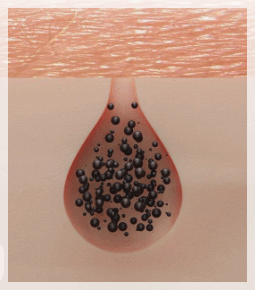
Clogged pores
When sebum and dead skin cells build up together, the pore opening becomes blocked. This is the point at which acne begins to develop in earnest.
The sebum and dead skin cells that cannot be expelled become trapped inside the pore and form a small mass, called a comedone.
Small, flesh-colored bumps often correspond to this stage, indicating that the process of acne formation has already begun.
- Proliferation of acne-causing bacteria and inflammation
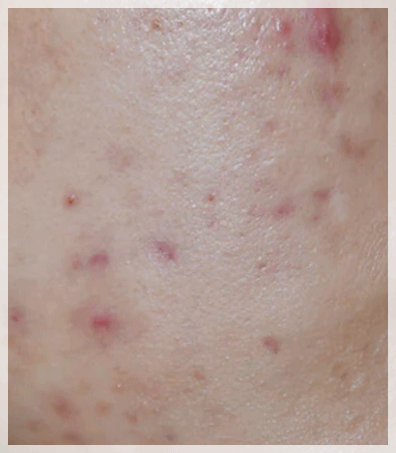
Acne
When the pores are blocked and sebum remains trapped, the environment inside gradually becomes favorable for acne-causing bacteria to multiply.
As the bacteria rapidly increase, they can trigger an inflammatory response beneath the skin. This may lead to inflammatory acne that becomes red, swollen, or painful.
Hapjeong Acne Dermatology Clinic (Department : Dermatology)
Why does it come back even after extraction?
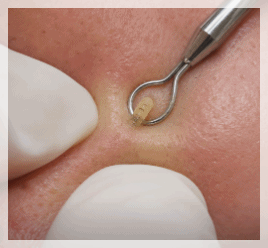
Extraction
Quite a few people have told us that they thought their acne treatment was over after undergoing extraction.
Extraction is a process that clears the contents of clogged comedones.
Removing what has accumulated inside reduces pressure in that area and can help ease the process by which the lesion becomes infected and enlarges.
Hongdae Hapjeong U&I Clinic
However, extraction only empties what is already blocked; it does not change the underlying pattern of excessive oil production.
If sebum production and the shedding of dead skin cells remain unchanged, new acne may appear again.
Therefore, it is difficult to prevent acne from recurring by repeating extraction alone.
Hapjeong Acne Dermatology Clinic (Department : Dermatology)
Approaches that vary by type
The form and characteristics of acne can vary depending on its stage, and the treatment approach may differ as well.
- Comedonal acne
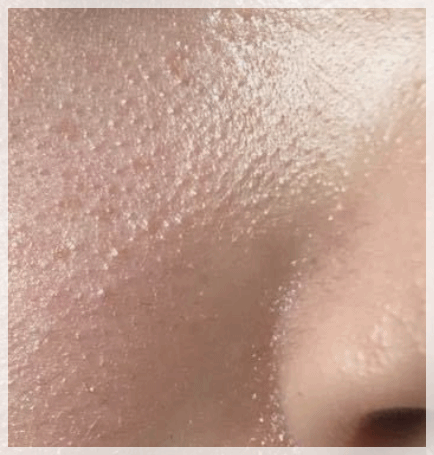
Whiteheads
This is the earliest stage. It develops as sebum and dead skin cells accumulate inside the pores, and inflammation is often not yet severe.
Whiteheads and blackheads fall into this category. At this stage, extraction to clear already-clogged pores may be helpful.
- Inflammatory acne
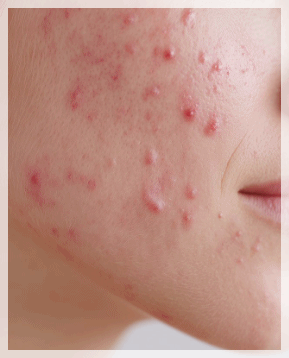
Inflammatory acne
As small bumps progress, they may become red and swollen, with pain when touched.
At this stage, an inflammatory response has begun beneath the skin, beyond simple pore blockage.
Therefore, rather than repeatedly undergoing extraction alone, medication or topical ointment treatment to reduce inflammation may be needed.
In particular, if red acne repeatedly appears or the inflammation does not subside easily, laser treatment may also be used alongside other treatments.
- Pustular acne
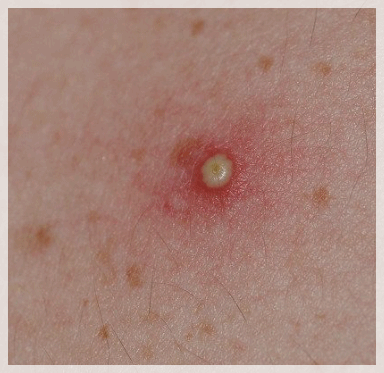
Pustular acne
This is the stage at which inflammation has progressed further and yellow pus is visible at the tip of the lesion.
Applying excessive pressure at this stage can cause the inflammation to spread deeper into the skin and may increase the risk of hyperpigmentation or scarring.
At this stage, appropriate extraction is often combined with treatment to reduce inflammation.
In particular, when inflammation frequently recurs, laser treatment to manage the overall skin environment may also be used alongside other treatments.
- Nodular acne
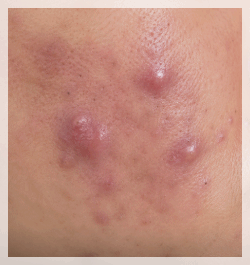
Nodular acne
This form appears as a firm lump deep beneath the skin.
Although it may not look large on the surface, it can be painful when pressed and often remains for a long time.
Among the types of acne, it is known to have a relatively higher risk of scarring.
This type is difficult to resolve through extraction alone. If it is likely to lead to scarring, laser treatment may also be included in the treatment plan.
For this reason, it is important to choose an appropriate treatment based on the current stage and the problems that continue to recur.
Hongdae Hapjeong U&I Clinic
Today, Hapjeong Acne Dermatology Clinic (Department : Dermatology) prepared this post for those experiencing stress because of recurring acne.
Since extraction alone does not resolve every problem, it is important to carefully assess the condition of your acne and establish a treatment plan suited to it.
We recommend discussing your options thoroughly with a medical professional before making a decision.
Thank you. This was Hongdae Hapjeong U&I.^^
< The Story of the Hongdae Sinchon Branch Built Over 10 Years >
< Hongdae Sinchon U&I Clinic Hours >
Weekdays : am 10:00 ~ pm 08:00
Saturday : am 10:00 ~ pm 05:00
(Sundays closed)
< Directions >
U&I Clinic Hongdae Sinchon Branch
is located near Hongik University Station.