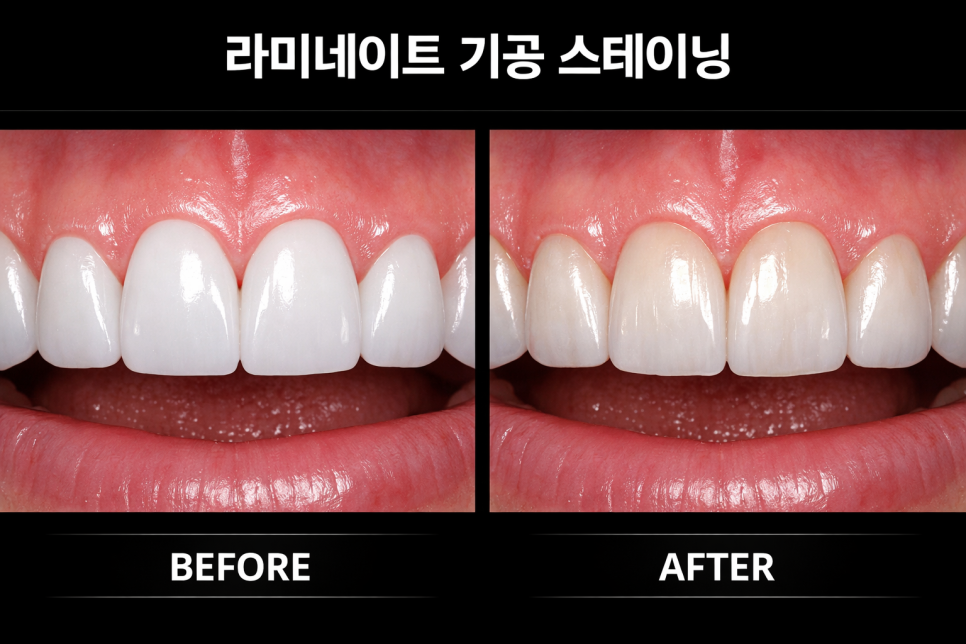
When conducting laminate consultations,
I often hear the question,
“Don’t laminates look too artificial?”
Teeth are not made up of just one plain white color.
Because brightness, translucency, and subtle color differences vary from person to person and tooth to tooth,
if these elements are not expressed well,
laminates can feel unnatural.
For laminates to be completed naturally,
not only the tooth-shaping process or the bonding process,
but also the color expression during the lab fabrication process
—especially the staining process— is very important.
In this post,
I will explain what staining is,
and why this process is important.
What is staining?
Rather than simply making a restoration in one shade,
fine color adjustments are made using various stain materials
to express the tooth’s subtle color differences, translucency, and depth.
Laminate treatment
is not simply a treatment that makes teeth whiter;
what matters is how naturally it harmonizes.
To ensure laminate treatment can be performed while considering
the shape, color, and overall impression of the teeth,
I provide a thorough explanation during consultations.