




Previous image
Next image

When the color or shape of your teeth is a concern,
many people consider laminate as a way to expect relatively quick aesthetic improvement.
However, in actual consultations,
a fair number of people wonder, “Wouldn’t the result be similar no matter where I get it done?”
But laminate is
not simply a procedure that attaches a prosthetic to the tooth surface;
it is a treatment whose natural-looking result can vary depending on the amount of tooth reduction, color design, fabrication method, and bonding process.
So, what standards are used to decide on Samseong-dong laminate so that it looks subtle and natural?
Laminate,
you need to understand the basic concept first!
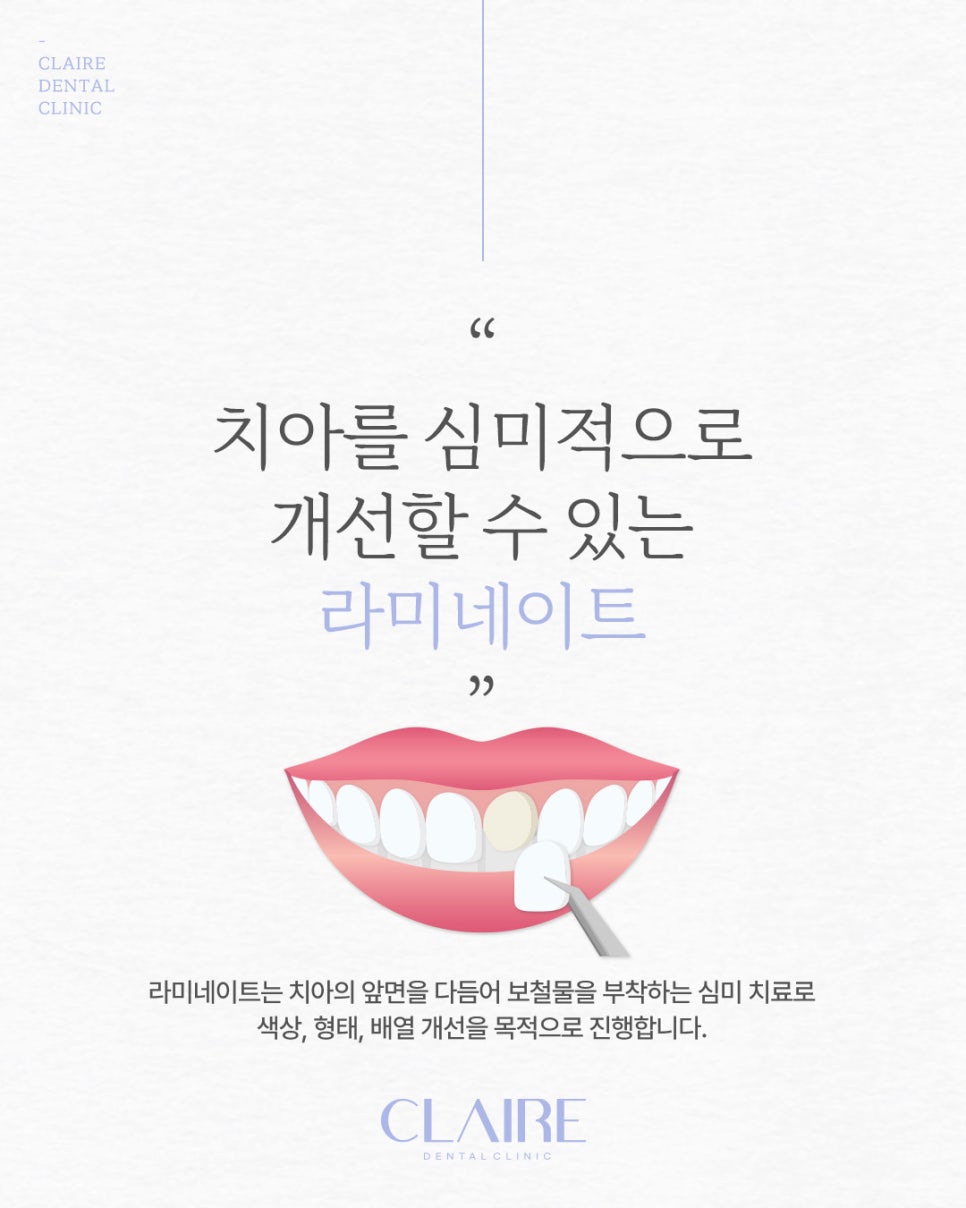
Laminate is a treatment in which the front surface of a tooth is
trimmed only as much as necessary,
then a thin ceramic prosthetic is bonded on top
to improve color or shape.
It is mainly used to correct front-tooth discoloration, shape imbalance,
and minor alignment issues,
and is often chosen because it can bring about
aesthetic changes in a relatively short period of time.
However, the important point is that
this is not simply a matter of “sticking something on.”
The key is how naturally it is designed to blend in.
If the amount of tooth reduction is increased excessively in this process,
or if the focus is only on matching the color,
the result can end up looking unnatural.
What is the glazing technique?
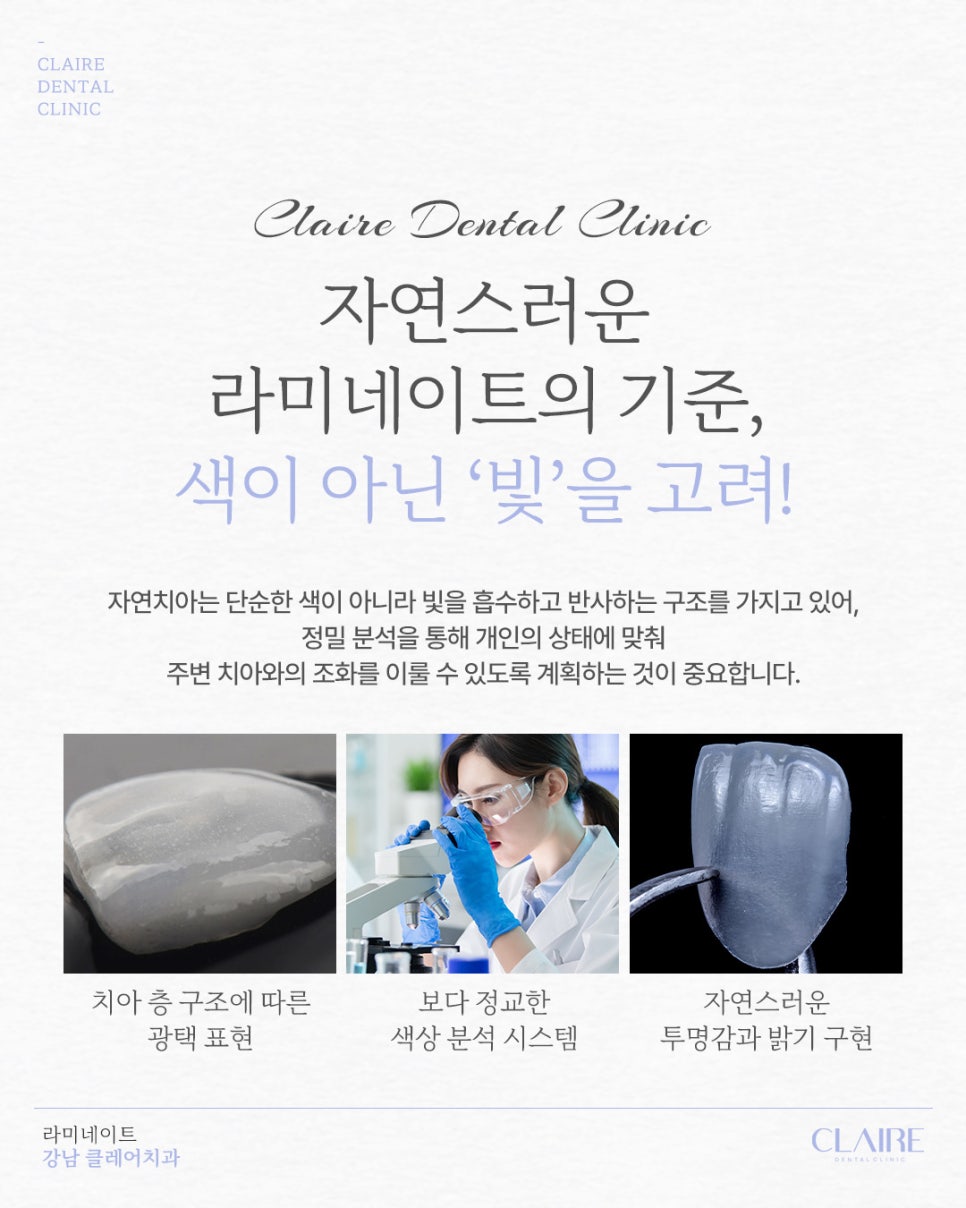
Natural teeth are not made of a single, plain color.
Because they absorb some light, reflect some of it,
and have a structure in which light is refracted internally,
they create their own clear, distinctive look.
To reflect these characteristics,
some approaches are being studied that take into account the reflection and refraction of light.
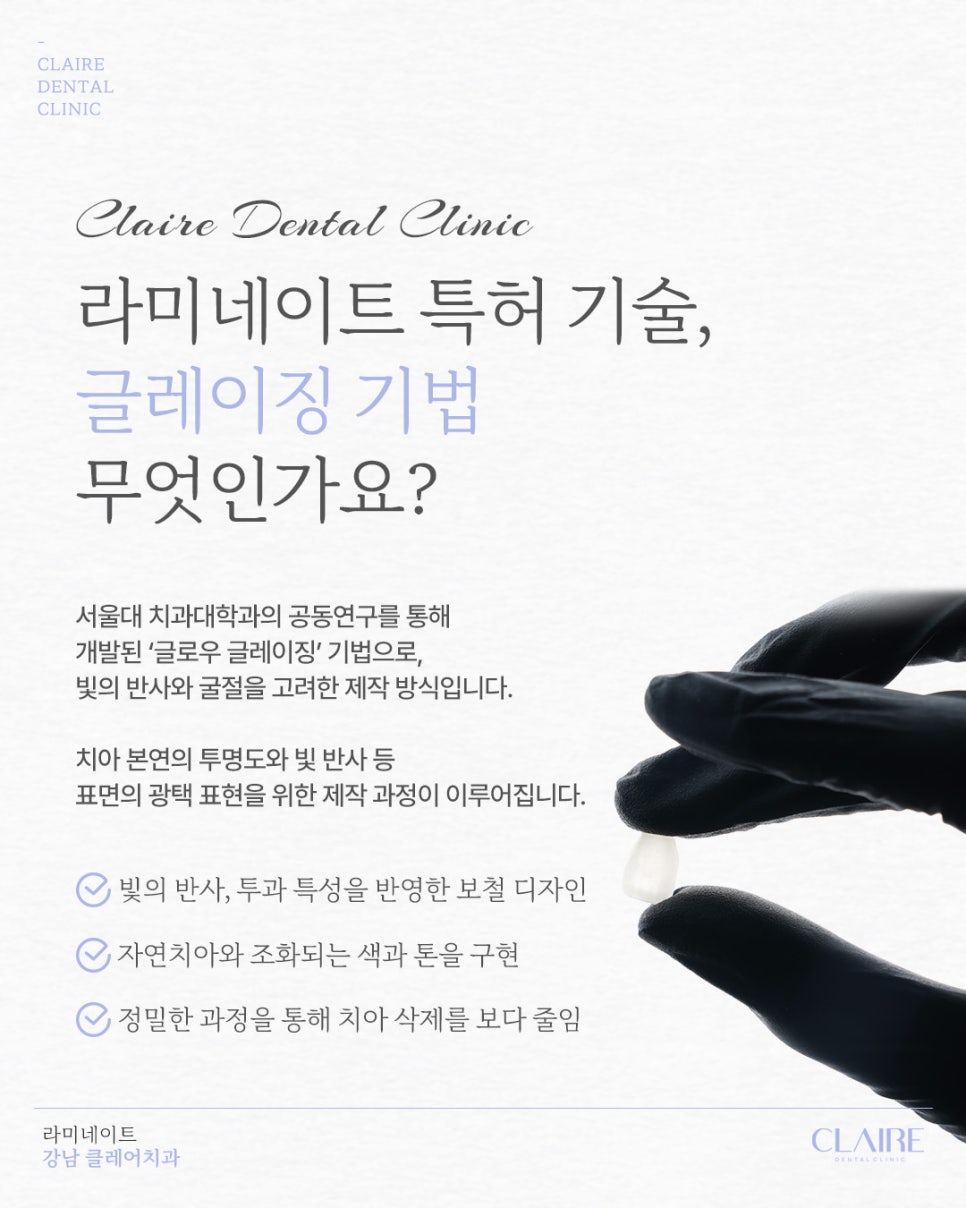
One of them is the "glazing" technique.
This method involves a process designed with the goal of a more natural appearance,
considering the surface gloss of the tooth and reflecting the transmission and reflection properties of light.
It is also characterized by designing the shade to better match the individual's tooth tone
through a more precise analysis of the tooth condition.
What matters here is not the specific technique itself,
but how it is applied to match the condition of each person's teeth.
Even with the same technique,
the result can differ depending on how it is applied.
Factors that create differences in laminate results,
not color, but "light"
The result of laminate is influenced by multiple factors working together.
✓ The extent and method of tooth reduction
✓ The thickness of the prosthetic and the fabrication process
✓ The stability of the bonding method
✓ A design that considers not only color but also translucency
Recently, the treatment standard has been changing in a direction that does not simply aim to create "white teeth," but rather to make them look like natural teeth.
In this process, the part that draws attention is "light."
✓ Translucency when light hits the tooth
✓ Subtle color changes at the edges of the tooth
✓ Natural-looking boundary with the gums
✓ Harmony with the surrounding teeth
Only when these elements are considered together can the result look natural.
If brightness alone is emphasized,
it can instead create a more artificial impression,
so the process of balancing the overall look is important.
Things to check before laminate treatment
Laminate may seem relatively simple,
but once it is done, it is difficult to reverse,
so sufficient confirmation beforehand is necessary.
✓ Whether unnecessary reduction is being performed
✓ Whether a plan suited to the individual's tooth condition is being established
✓ Whether functional aspects, not just cosmetic purposes, are being considered
✓ Whether the procedure and maintenance instructions are explained thoroughly
It is important to carefully check these points.
If you are considering Samseong-dong laminate,
rather than approaching it simply as a way to “look pretty quickly,”
it is better to look at it based on how naturalness is created.
Through methods such as the "glazing" technique, which considers not only color but also light expression and tooth structure,
you may be able to receive help in improving the area you have been concerned about.
But above all, what matters most is
a plan suited to the individual's condition and a precise process.
It is good to remember that Samseong-dong laminate is not a treatment where only the result is viewed;
it is also a treatment in which the process that creates that result
must be considered together.