Causes of Upturned Nose Contraction and Surgical Methods
Are upturned nose surgeries difficult at Apgujeong Seoul Plastic Surgery?
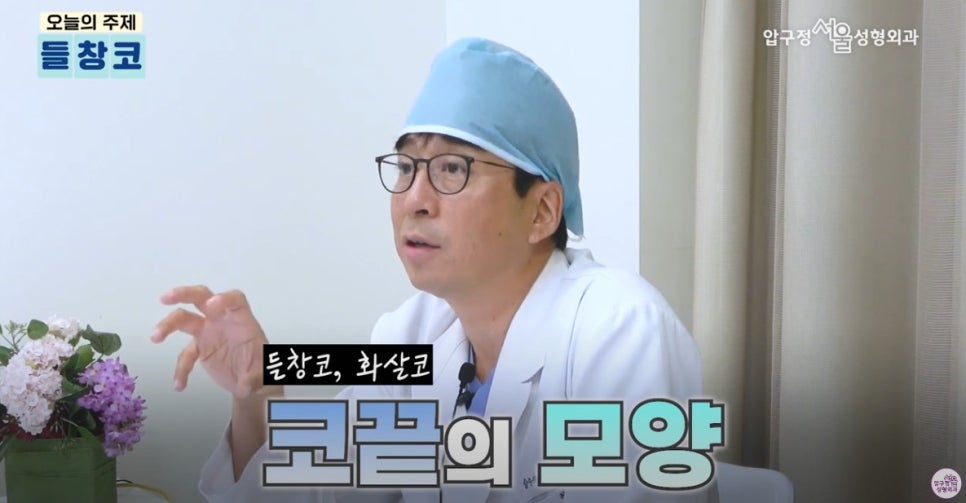
Hello, I’m Dr. Choi Joong-hyeok, a nose specialist at Apgujeong Seoul Plastic Surgery.
Today, I’d like to explain the issues related to upturned noses and contracted noses in nose revision surgery, which many patients who come in for consultations often ask about and are curious about.
What Is an Upturned Nose?
Most patients who come in for consultations ask many questions about the upturned nose mentioned above, but there are also quite a few patients who are not sure whether they fall into this category.
This surgery is recommended for people whose noses, when viewed from the front, have nostrils that are visible because the tip points upward.
Causes and Surgical Methods for an Upturned Nose?
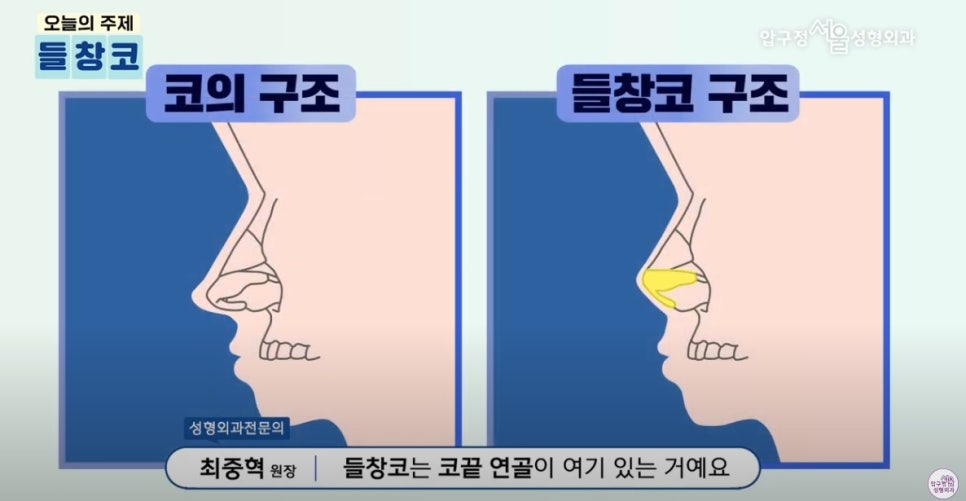
To first explain the structure of the nose, as shown in the photo above, it is divided into three layers.
The bone and cartilage located along the bridge of the nose are firm, while the cartilage at the tip of the nose is relatively more mobile than the cartilage along the bridge.
The shape of the nasal tip changes depending on the shape of the cartilage. To explain with examples of people with high noses and low noses: the tip cartilage of a person with a high nose is often long, large, and well-supported when viewed from below, while in the case of someone with a low nose, the cartilage is smaller and lower.
In addition, some people are born with relatively short nasal bones and cartilage, which makes the tip of the nose look lifted upward.
This can be considered one cause of an upturned nose.
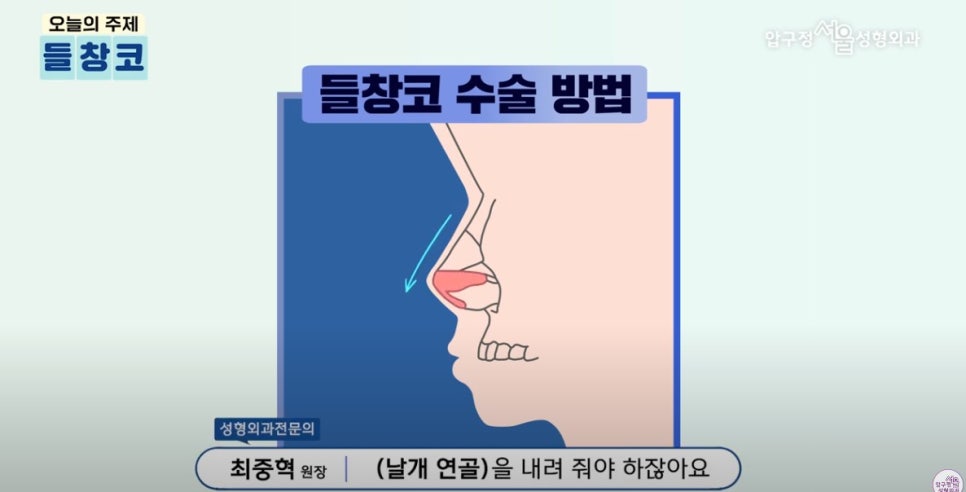
The type of upturned nose described above is corrected with septal extension surgery
(a method of moving part of the septal cartilage to the nasal tip to lengthen the nose)
while lowering the alar cartilage to bring down the length of the curled-up, short nasal tip.
After nose surgery, an upturned nose can also develop later due to contraction, where the skin shrinks as the nasal tip lifts upward.
In cases where the upturned nose is caused by a contracted nose, it occurs due to scarring from repeated inflammation. The scar tissue and contracted skin of the contracted nose must be carefully released, and the nasal tip cartilage must be lowered and fixed in place to correct it.
Upturned Nose Q&A
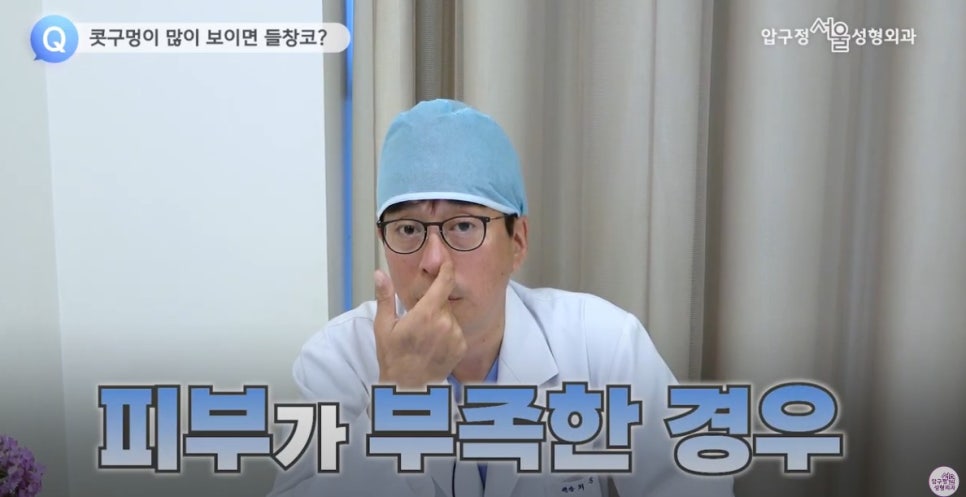
Q. If the nostrils are very visible, does that mean it is an upturned nose?
A. There are cases where the nose is only slightly upturned but the nostrils are highly visible. This can happen when there is not enough skin covering the nose.
In such cases, nostril-lowering surgery is recommended.
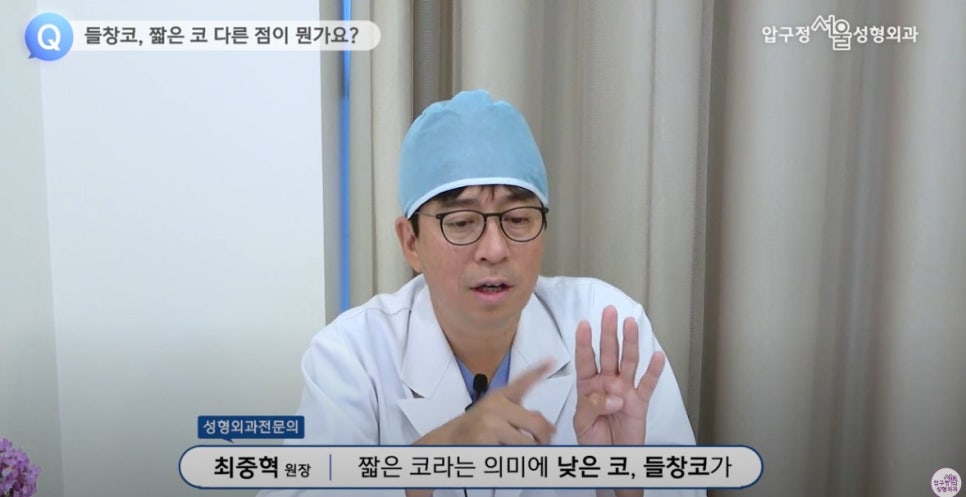
Q. What is the difference between an upturned nose and a short nose?
A. An upturned nose is often also a low nose, and because a low nose tends to look short in many cases,
the meaning of a short nose often includes both a low nose and an upturned nose.
Q. What is the difference between an upturned nose and a short nose?
A. An upturned nose is often also a low nose, and because a low nose tends to look short in many cases,
the meaning of a short nose often includes both a low nose and an upturned nose.
Analysis of a Real Upturned Nose Revision Case
Let me explain upturned nose revision surgery with a real case.
A patient who had undergone surgery with L-shaped silicone five years ago visited the clinic.
The patient wanted the nose shape to look as natural as possible and hoped to improve the part where the nasal tip looked upturned.
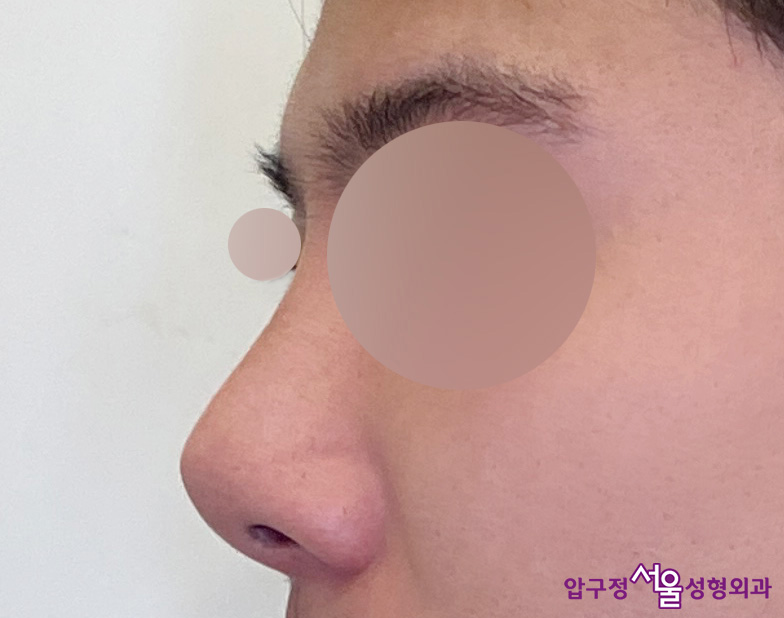
The condition had progressed slightly toward contraction, so after removing the existing silicone, the position of the nasal tip was corrected using septal cartilage, and the nasal tip was lowered.
To treat the hard, fibrotic tissue that causes contracted noses, the tissue must be removed and the skin must be well released, then the shortened nose should be lengthened using autologous cartilage that serves as a strong support.
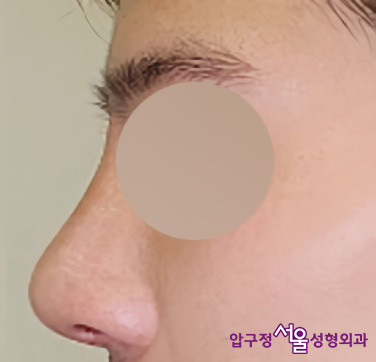
This is a photo from 7 days after surgery. After the upturned nose surgery, you can see that the elevated nasal tip has come down, and the nose has taken on a natural-looking shape as requested by the patient.
If you are curious about rhinoplasty or are considering surgery, I recommend visiting in person and having a one-on-one consultation with a specialist to find the nose that is right for you. Thank you.