Hello, I’m Director Choi Joong-hyeok of Apgujeong Seoul Plastic Surgery.
There are still many people who come to consider rhinoplasty,
but when I speak with patients recently, some express concerns about side effects from silicone.
In many cases, rhinoplasty is performed without silicone, using a non-implant approach instead.
The type that is often treated with non-implant rhinoplasty is the hump nose.
Among hump noses, I’d like to explain in detail the cases where the results can be especially clear.
Types of Hump Noses and Surgical Methods
Non-implant Rhinoplasty at Apgujeong Seoul Plastic Surgery

Twice’s Sana

ASTRO’s Cha Eun-woo
A hump nose refers to a nose in which the middle part of the bridge (cartilage, bone) has grown excessively and protrudes outward.
The tip cartilage is also often well developed, causing the tip to droop downward.
In addition, it is often accompanied by a hooked nose, and the nasal bridge bone is often wide as well.
It was mainly seen in Westerners, but recently it has also been seen more often in East Asians,
even as a small hump.
The overall impression can change depending on the shape of the nose.
If you have a hump nose, it can give a sharp impression,
and for women in particular, it can create a stronger, more masculine feeling.
Because most hump noses tend to have a high nasal bridge,
they can often be significantly improved with non-implant rhinoplasty.
Types of Hump Noses That Can Be Improved Without an Implant
They can be broadly divided into two types.
- The bridge between the eyebrows is high, and the tip is not droopy but is high
If the starting point of the nasal bridge is high and the tip is not noticeably droopy,
correction is possible by trimming and improving only the protruding hump,
without inserting a bridge implant.
- The bridge between the eyebrows is high, and the tip is droopy like a hooked nose
If the starting point of the nasal bridge is high but the tip droops slightly like a hooked nose,
surgery can be performed without an implant by improving the hump
while also lifting the tip with autologous cartilage.
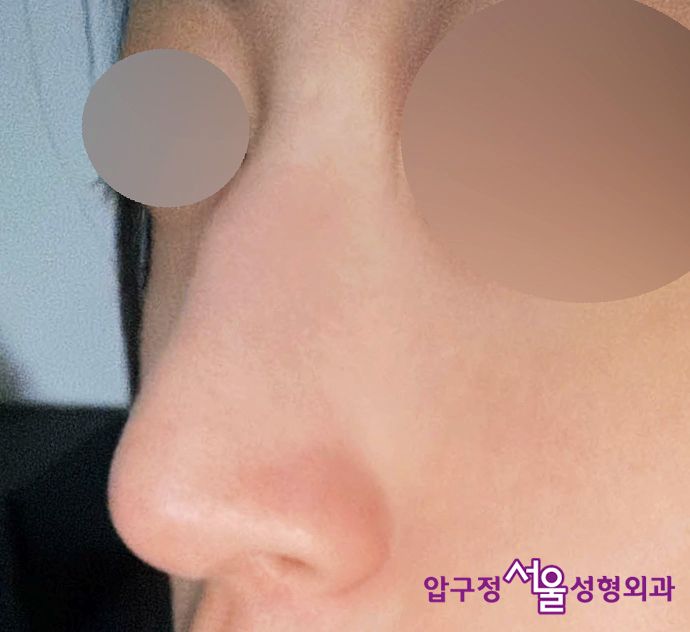
Before nose surgery at our clinic
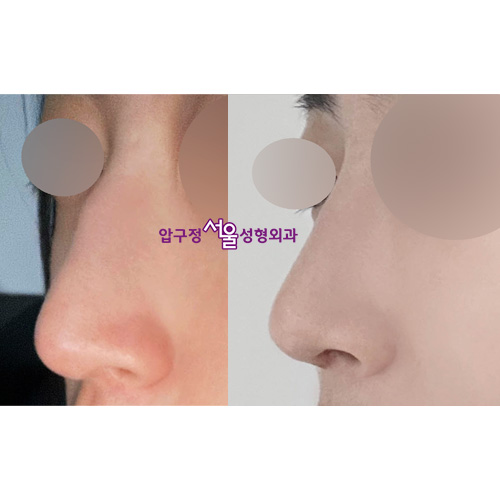
As in the photo, there is a hump on the bridge before surgery, but because the height of the nasal bridge is appropriate,
a non-implant approach can create an ideal nasal line.
In addition, the drooping tip was improved using septal autologous cartilage.
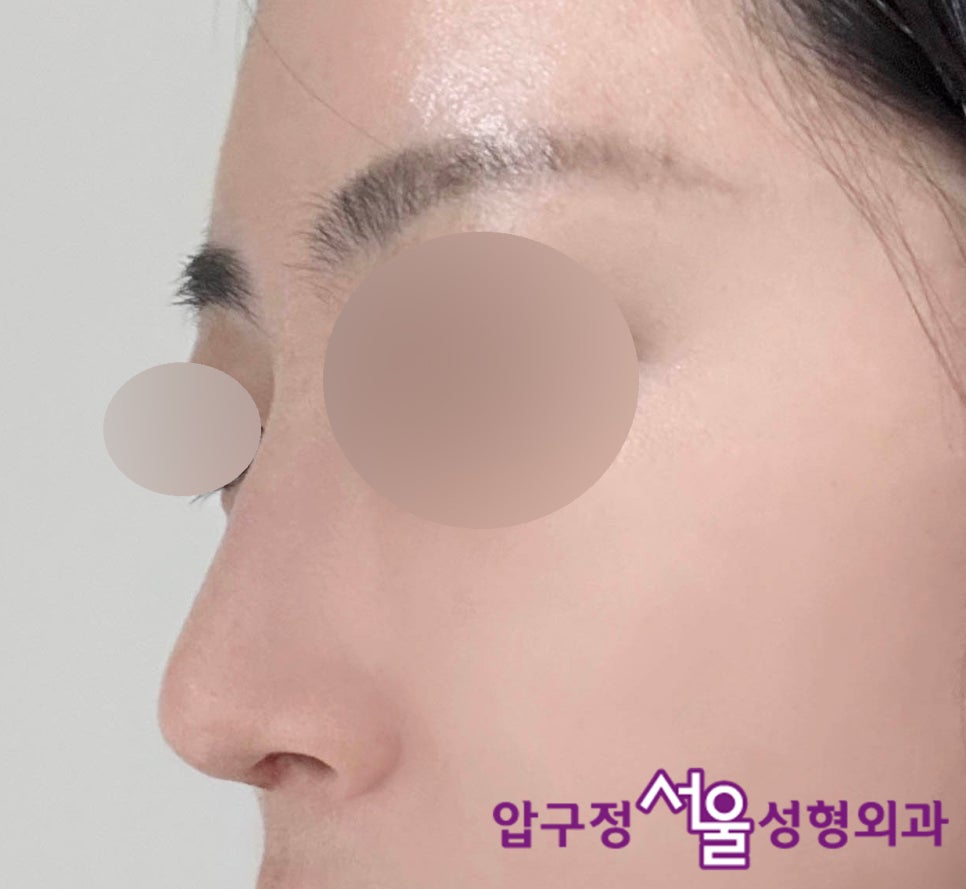
After nose surgery at our clinic
However, there are also hump nose types that require an implant.
For people who have a hump but a low bridge height between the eyebrows,
an implant must be inserted to create the ideal bridge height and line.
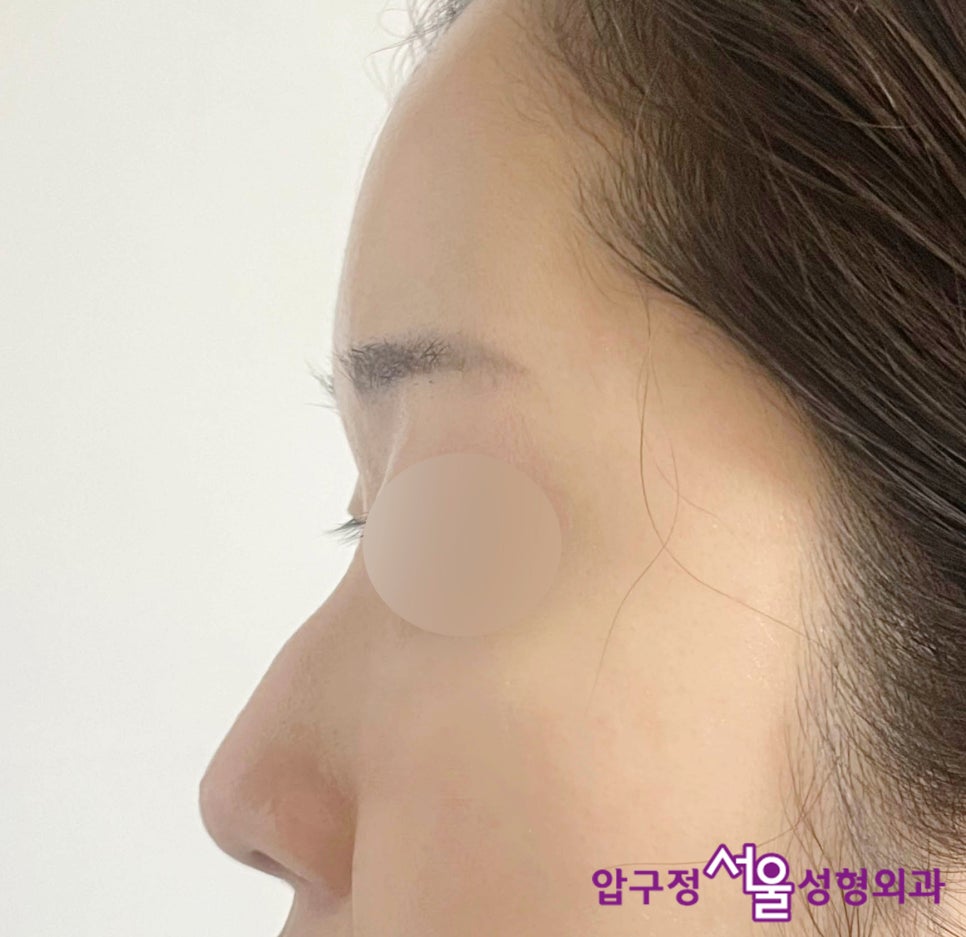
Before nose surgery at our clinic
As in the photo, there is a hump on the bridge before surgery, but because the height of the nasal bridge starting from the glabella is low,
a silicone implant is inserted while removing the hump, and the drooping tip is lifted with autologous cartilage.
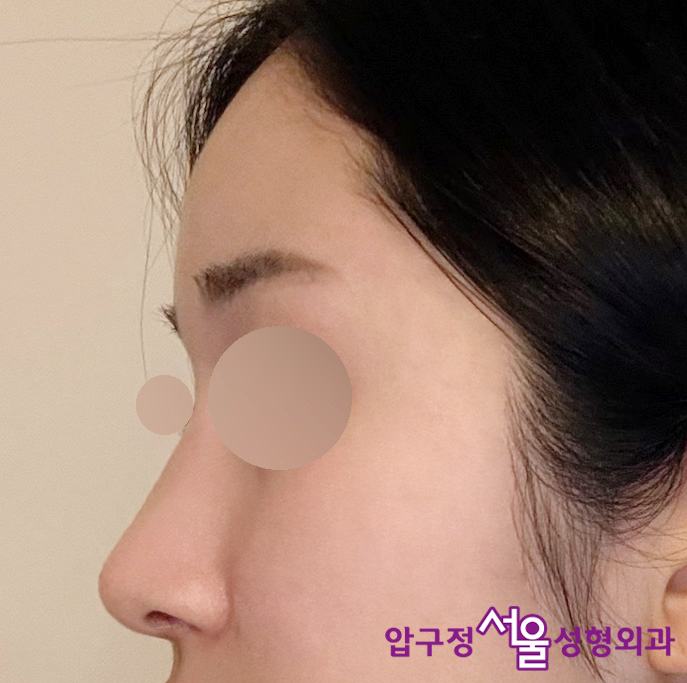
After nose surgery at our clinic
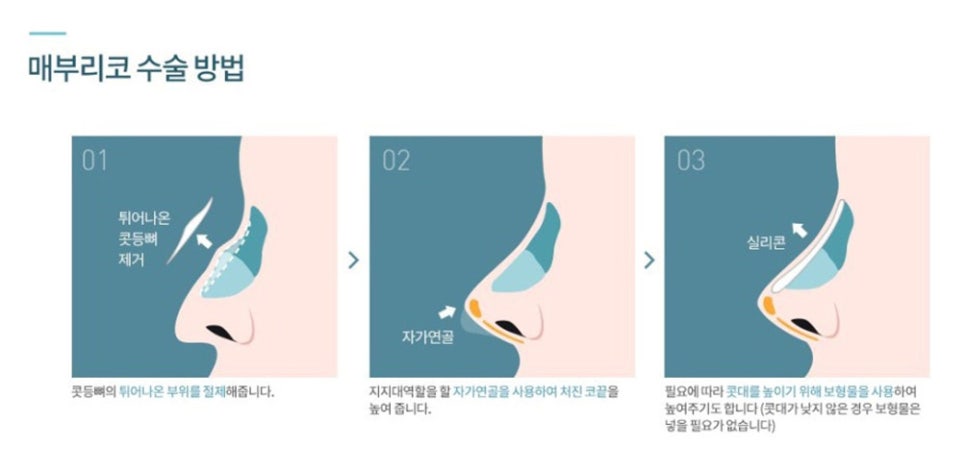
How Hump Nose Surgery Is Performed
-
The protruding part of the nasal bridge bone (the hump) is removed.
-
If the bridge is droopy or low in height, autologous cartilage (septal cartilage, ear cartilage, rib cartilage) is used as a support to lift the drooping tip.
-
If needed, an implant may also be used to raise the nasal bridge.
(If the nasal bridge is not low, an implant is not necessary.)
Today, we looked at the types of hump noses that can be improved with a non-implant approach and the surgical methods used.
If you have questions about hump nose surgery or are considering the procedure,
please visit in person and receive a one-on-one consultation with a specialist to find the nose shape that suits you.
Thank you.