Hello,
I’m Dr. Choi Joong-hyeok from Apgujeong Seoul Plastic Surgery.
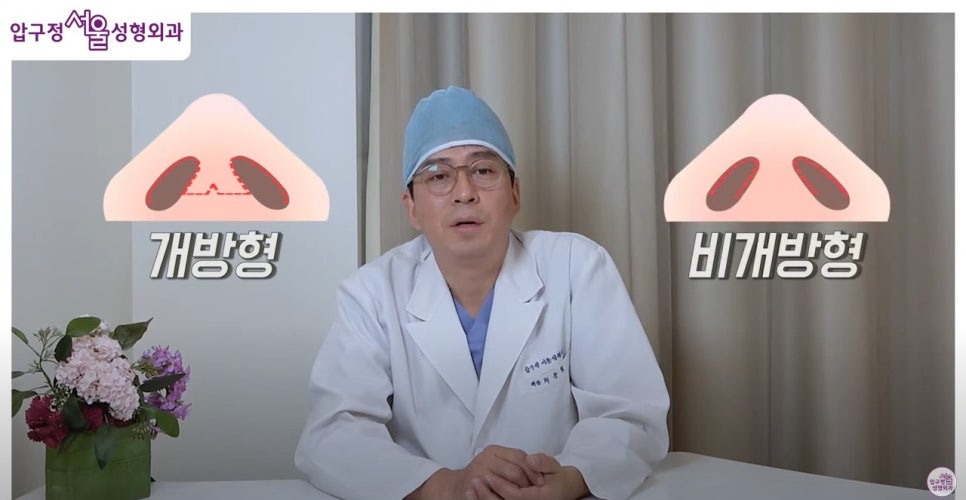
Rhinoplasty surgery can be broadly divided into open and closed procedures, and recently, many patients who visit our clinic prefer closed rhinoplasty without visible scarring.
Today, I’ll explain which types are suitable for closed and open rhinoplasty, along with their differences, advantages, and disadvantages.
Open vs. closed rhinoplasty methods
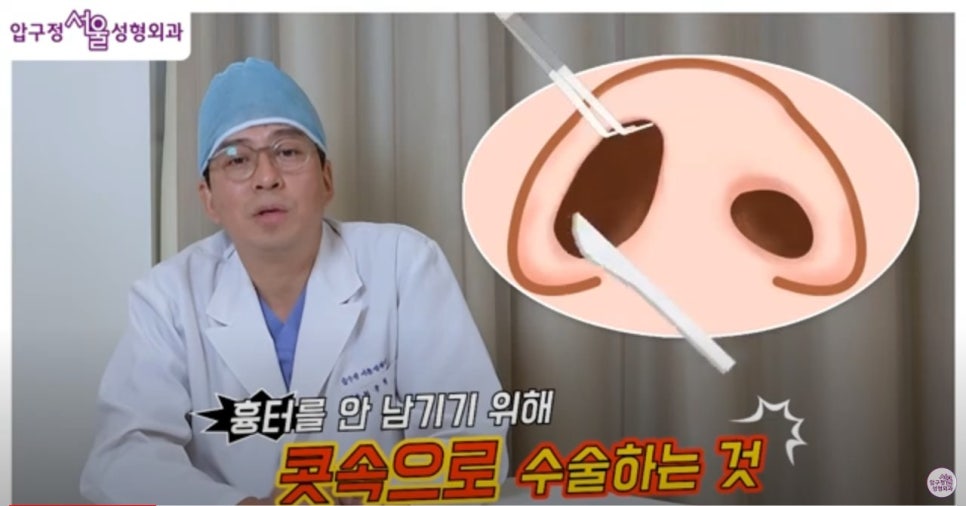
Many people think that closed rhinoplasty means surgery without any incision, but it is actually a method in which the incision is made inside the nose so that no scar remains.
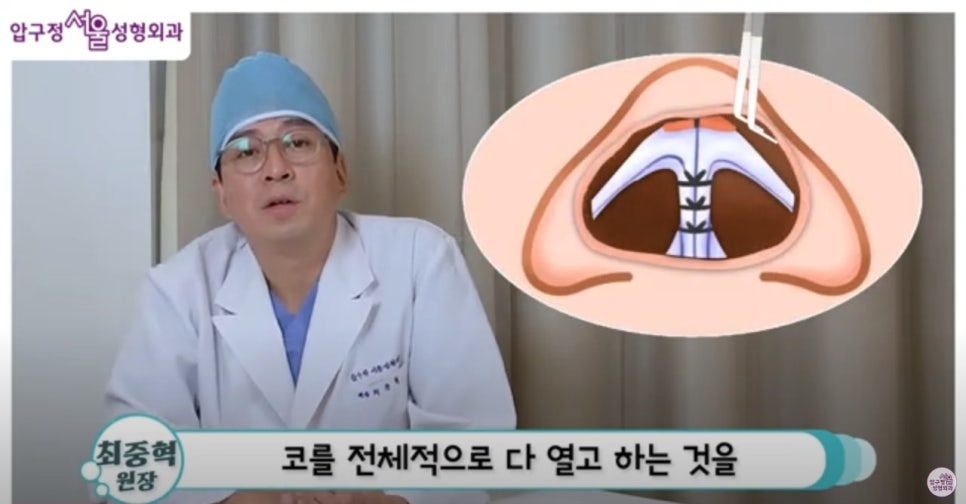
Open rhinoplasty involves incisions in the columella and the inside of the nose, opening the skin and soft tissue surrounding the nose for surgery, so scars may remain.
Types suitable for open rhinoplasty
Because open surgery broadens the range of access, it is especially convenient when the nasal tip also needs to be operated on, since cartilage can be harvested and the tip can be supported more easily.
It is also advantageous for correcting a deviated septum, often referred to as a crooked nose, or for balancing the nose.
Those who need complex procedures such as tip support or crooked nose correction may find open rhinoplasty more suitable.
Types suitable for closed rhinoplasty
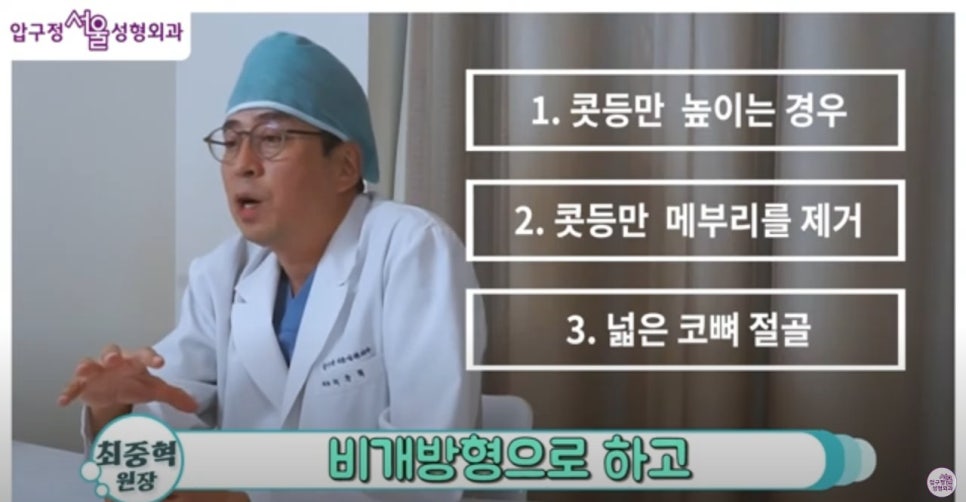
Because the dissection range in closed rhinoplasty is narrow, it is suitable for relatively simple procedures such as removing a dorsal hump, performing a wide nasal bone osteotomy, tying the tip cartilage, or simply raising the bridge of the nose.
Since the dissection range is narrower than in open surgery, there are limitations in handling the tissue and cartilage inside the nose, and it is also more difficult to perform rhinoplasty in cases that require correction of a deviated septum.
Open vs. closed: a summary
The advantage of open rhinoplasty is that it allows for precise surgery through wide dissection, enables a variety of procedures, and makes it easier to manage bleeding when necessary.
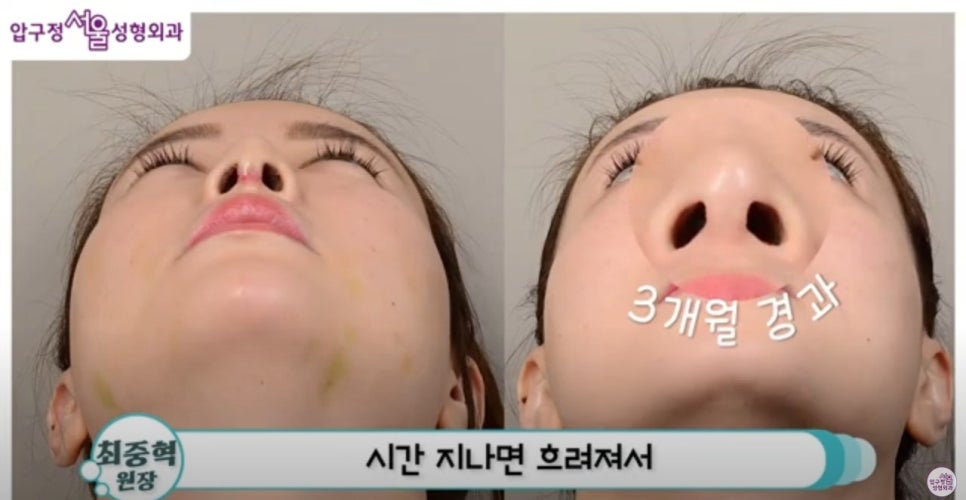
However, it has the disadvantage of leaving a scar on the columella and taking a little longer to recover than closed rhinoplasty. Still, the scar on the columella becomes barely noticeable over time, so there is no need to worry too much.
Closed rhinoplasty is often used for the simpler procedures mentioned above, and because the dissection is done inside the nose, there is no visible scar and swelling subsides more quickly. However, it has the disadvantage of being limited when correction is needed or when operating on the nasal tip.
Today, we looked at the differences, advantages, and disadvantages of closed and open rhinoplasty.
If you are curious about rhinoplasty or are considering surgery,
please visit the clinic for a one-on-one consultation with a specialist to find the nose that is right for you.
Thank you.