Hello.
I’m Dr. Choi Joong-hyuk from Apgujeong Seoul Plastic Surgery!
In rhinoplasty, the nasolabial angle is an important factor because it determines the overall shape and three-dimensional look of the nose.
Recently, Shin Se-kyung and Minji, who are often mentioned in connection with the popular straight-to-slightly-curved nose line trend, also have an ideal nasolabial angle, which makes the overall shape and impression of their noses appealing to many people.
I’ll explain why the nasolabial angle is important in rhinoplasty and go into detail about its effects through real review cases.
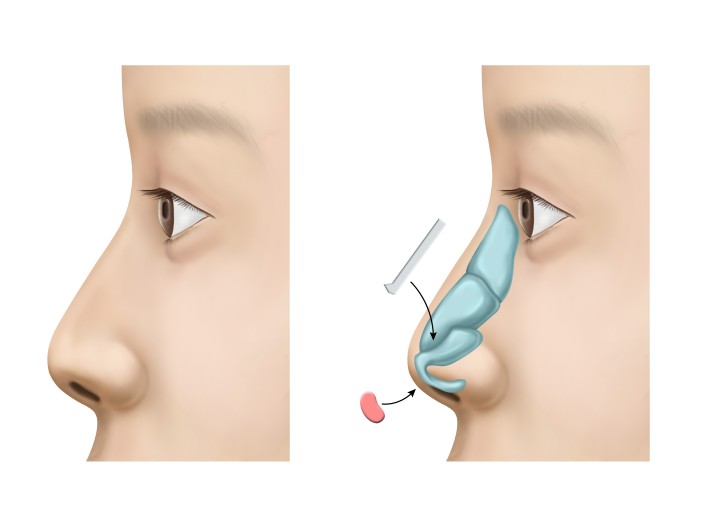
Reasons nasolabial angle improvement is needed
The nasolabial angle refers to the angle formed between the tip of the nose and the upper lip.
Generally, an angle of 90–95 degrees is ideal for men, and 95–100 degrees is ideal for women.
When the nasolabial angle is well balanced after rhinoplasty, it adds dimension to the entire face and can make a protruding mouth appear less prominent.
However, if the nasolabial angle is not properly improved and only the bridge of the nose becomes higher while the philtrum remains sunken, it may look unnatural.
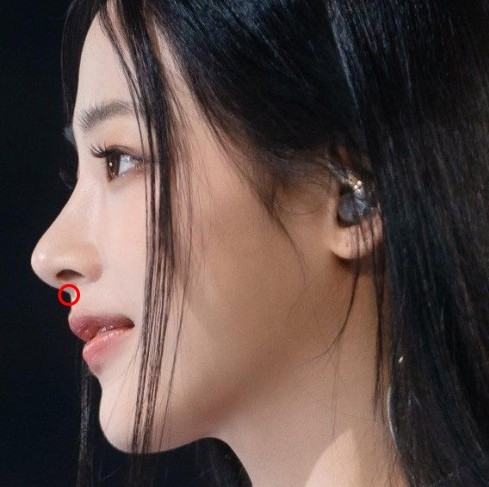
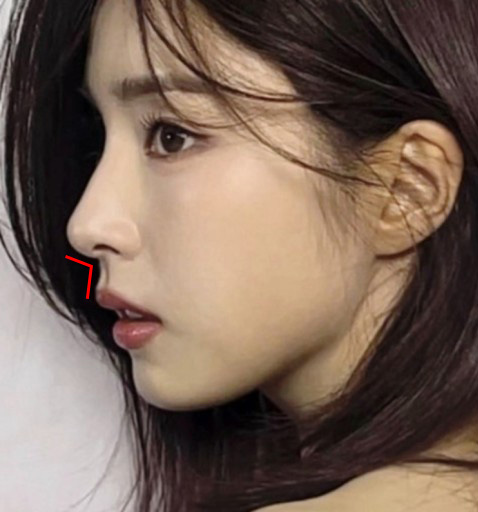
The photos above show Shin Se-kyung and NewJeans’ Minji. You can see that they have small faces with distinct, well-defined facial features.
Recently, the straight-to-slightly-curved line, which is between a straight line and a semi-curved line, has become very popular. In particular, the noses of Shin Se-kyung and Minji are considered the ideal example of this line.
If you look closely at the nose, you can see a slightly protruding part along the line from the tip of the nose to the philtrum.
The more this area projects forward and the more appropriate the angle between the tip of the nose and the lips becomes, the more natural and full the nose can look after rhinoplasty.
Real review cases and the effects of nasolabial angle correction
I’ll explain this through postoperative cases showing improvement in the nasolabial angle above.
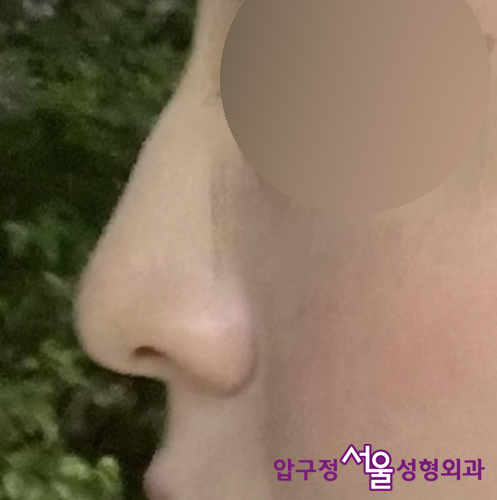
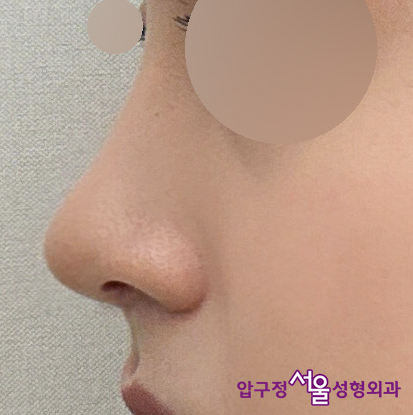
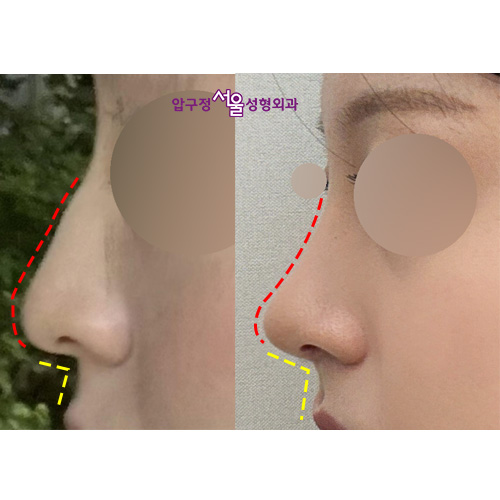
Looking at the before-and-after photos, the preoperative photo shows a relatively high nasal bridge, but the nasolabial angle is relatively sunken at about 70–80 degrees, making the overall balance look slightly unnatural.
In the postoperative photo after simultaneously correcting the hump and performing tip surgery, the nasolabial angle is restored even from a small angle, and the sunken area is lifted, creating a more voluminous improvement around the nose.
It can also make the protruding and short-looking philtrum appear less prominent and may have an effect of improving nasolabial folds.
Even if there is an ideal nasolabial angle, the most important thing is finding the angle of the nose that best matches each person’s facial shape and harmony.
If you have questions about rhinoplasty or are considering surgery, please visit in person and find the nose that suits you best through a one-on-one consultation with a specialist. Thank you.