Hello, I’m Dr. Choi Joong-hyuk, the director of Apgujeong Seoul Plastic Surgery.
Today, I’m going to take a detailed look at #upturnednose.
What is an upturned nose??
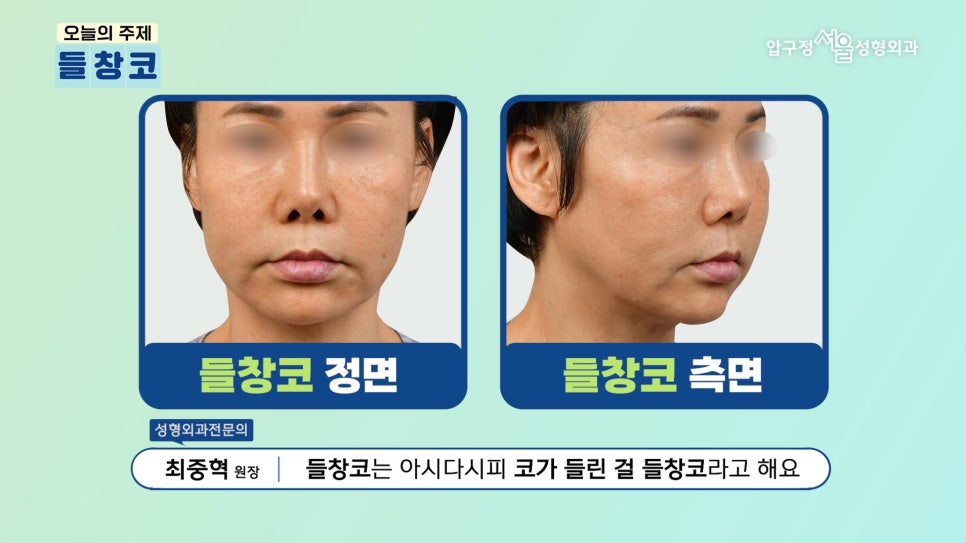
An upturned nose refers to a nose whose tip is turned upward.
This type of nose can be perceived differently depending on facial proportions,
and it can appear more prominent, especially in people with a small or narrow face.
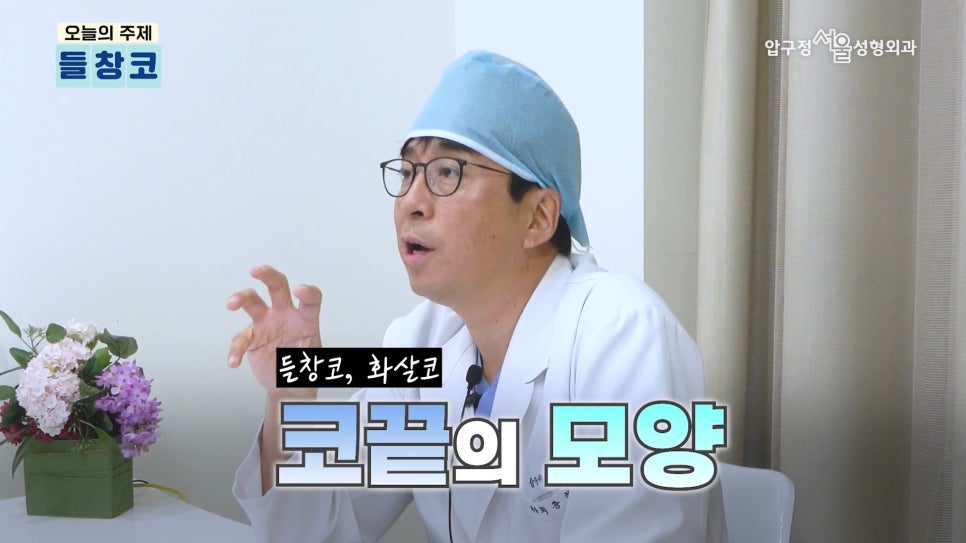
#The key factor that determines nose shape
#is the cartilage located at the tip of the nose.
#Depending on the shape and structure of the cartilage,
the direction and angle of the nasal tip are determined, and the development of the cartilage affects the overall impression of the nose.
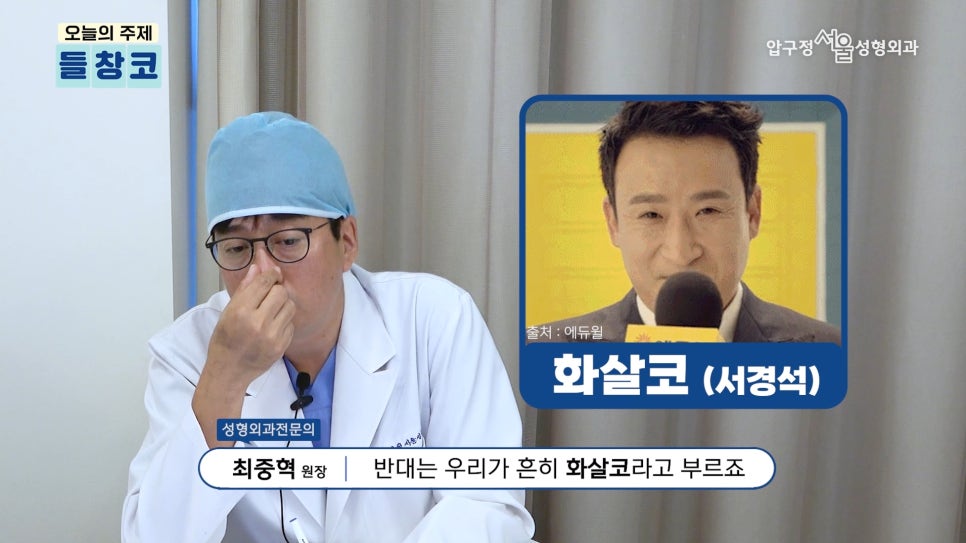
Conversely, when the nasal tip droops downward, it is called #hookednose,
and it may droop even more over time, so correction may be needed.
Differences between an upturned nose and a contracted nose
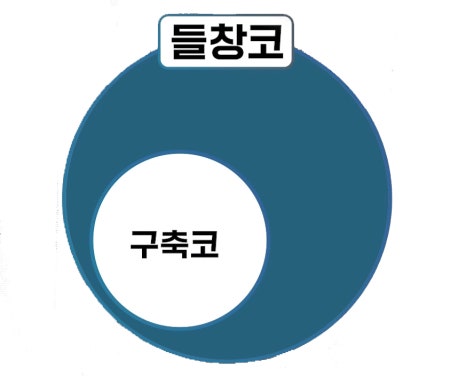
Some people think an upturned nose and a #contractednose are the same,
but a contracted nose refers to a condition in which inflammation occurs in the nose
or, due to improper care after surgery,
problems develop in the skin, soft tissue, cartilage, and so on,
causing the nasal tip to gradually curl upward.
Simply put, you can think of a contracted nose as a part within an upturned nose.
However, unlike a simple upturned nose, a contracted nose can be accompanied by serious tissue damage,
so proper surgical techniques and appropriate post-operative care are essential to prevent it.
If a contracted nose progresses, correction becomes more difficult,
so professional consultation and treatment are needed at an early stage.
The structure of the nose and
how upturned nose surgery is performed
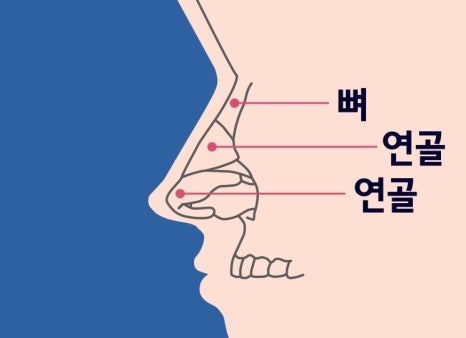
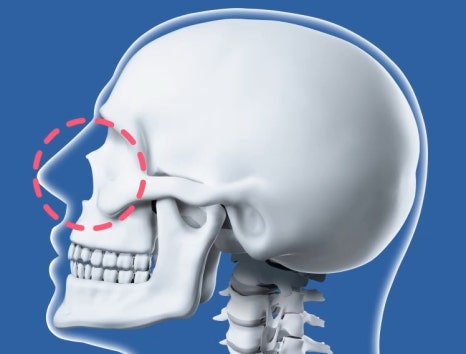
The nose is basically made up of three layers: bone, cartilage, and cartilage.
The bridge consists of bone and cartilage,
while the nasal tip cartilage is soft and movable.
Because of this, the bridge and the nasal tip are planned and performed separately in surgery.
How upturned nose surgery is performed
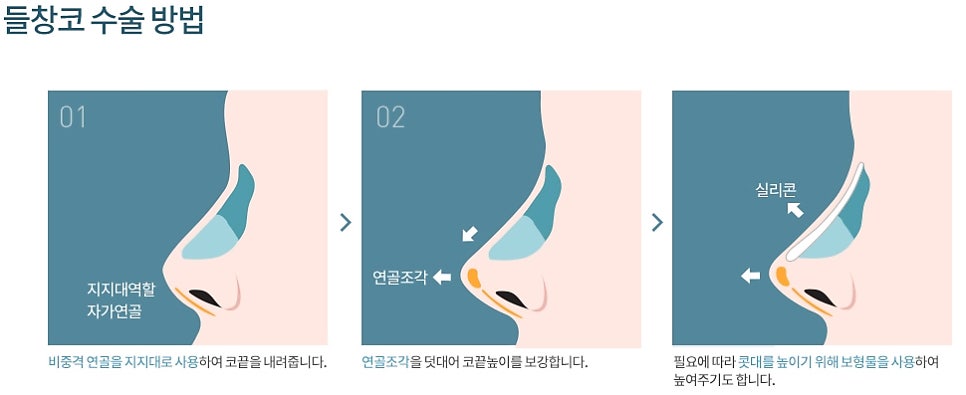
-
A support is created downward to lower the cartilage.
-
The cartilage is pulled and fixed in place.
-
The nasal tip is reinforced to the desired height.
-
If necessary, an implant is used to raise the bridge.
The key to upturned nose surgery is
the elasticity of the nasal tip cartilage and tissue.
You can understand that force is needed to bring the cartilage downward.
Depending on each patient’s condition,
the elasticity and force differ, so accurately assessing them is also very important.
If the nostrils are very visible,
is it an upturned nose?
Of course, if it is an upturned nose, the nostrils are more visible,
so that is generally how it is described, but it can vary depending on how upturned it is.
In some cases, the nose is not especially upturned,
but the nostrils are still very visible because there is insufficient skin.
In such cases, improvement is often made through what is commonly called nostril-lowering surgery.
Upturned nose, short nose
What is the difference?
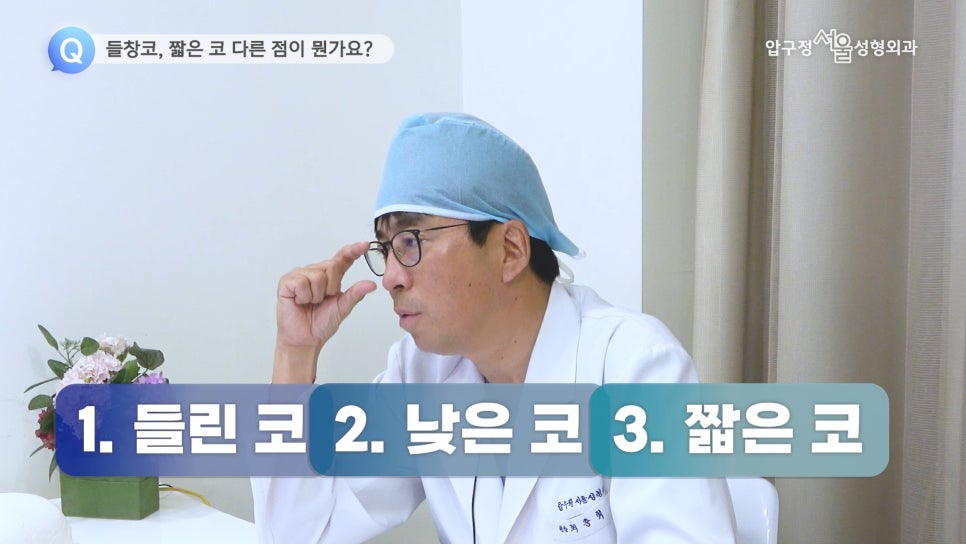
Sometimes the nose appears short because it is upturned,
and sometimes it appears short even if the nose is low.
A short nose simply means a nose that is short in itself.
In the case of an upturned nose, the nose is often low.
Rather than the difference between #upturnednose and #shortnose,
it may be better to think of the meaning of a short nose as including both a low nose and an upturned nose.
Types of cartilage used in nose surgery
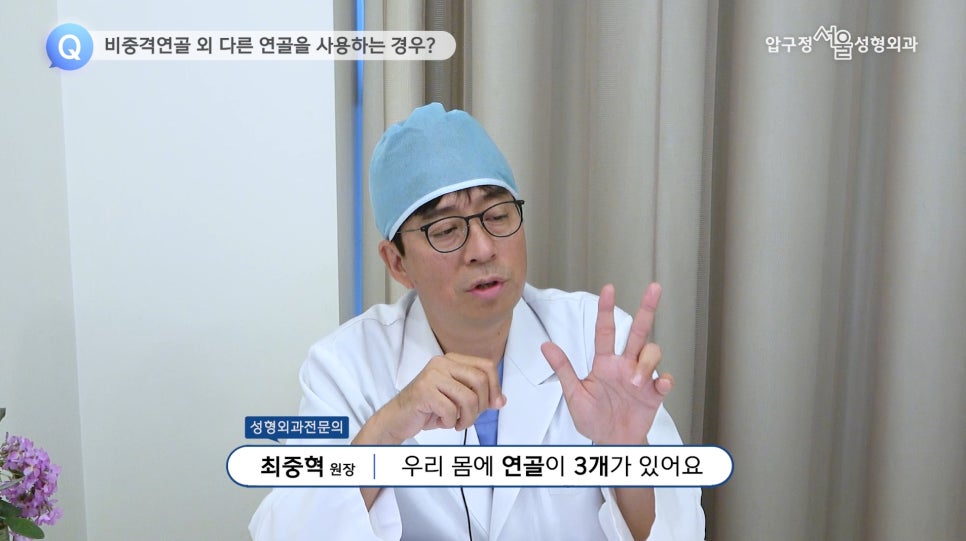

Cartilage is always used in nose surgery,
and there are three types: #earcartilage #septalcartilage #ribcartilage.
Ear cartilage: relatively weak in strength
Septal cartilage: has appropriate strength,
the most ideal material
Rib cartilage: strong, but increases cost and surgical complexity,
and may make the nose feel stiff.
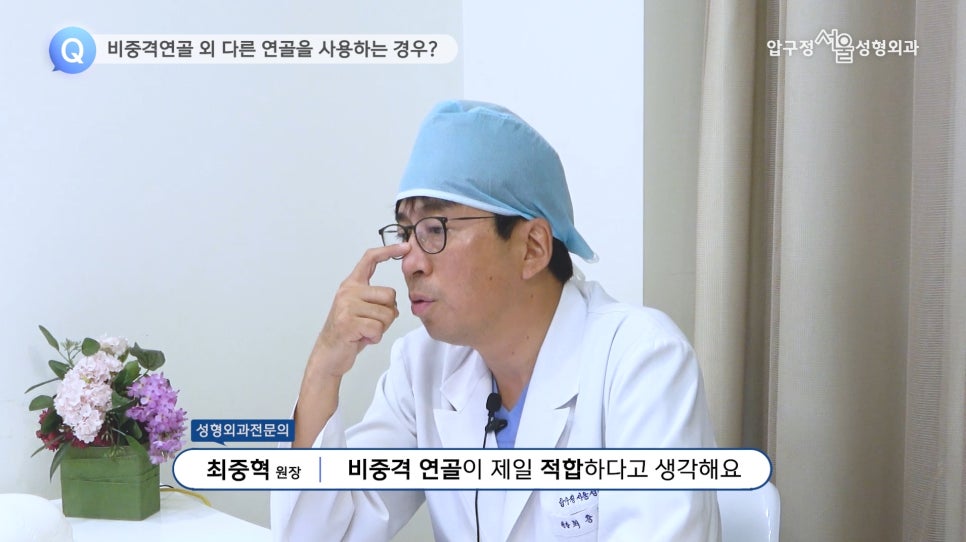
In general, septal cartilage is used as the primary material,
and ear cartilage is used as a supplement when needed.
In severe cases of upturned nose, septal cartilage alone may not be enough,
so rib cartilage may also be used for reinforcement.
For example, if the septum is completely absent, too small,
or surgery is difficult,
rib cartilage may be used.
If septal cartilage is felt to be insufficient, rib cartilage or ear cartilage is used as a supplement.
Upturned nose surgery is an important procedure that must consider not only cosmetic goals
but also functional aspects.
It is important to choose the optimal surgical method for yourself
through sufficient consultation and professional medical care.
Through consultation with a specialist, obtain accurate information,
and I hope you achieve a safe surgery and a satisfying result
through the proper surgical method and systematic post-operative care.