Hello, this is Apgujeong Seoul Plastic Surgery.
I’m Director Choi Junghyuk.
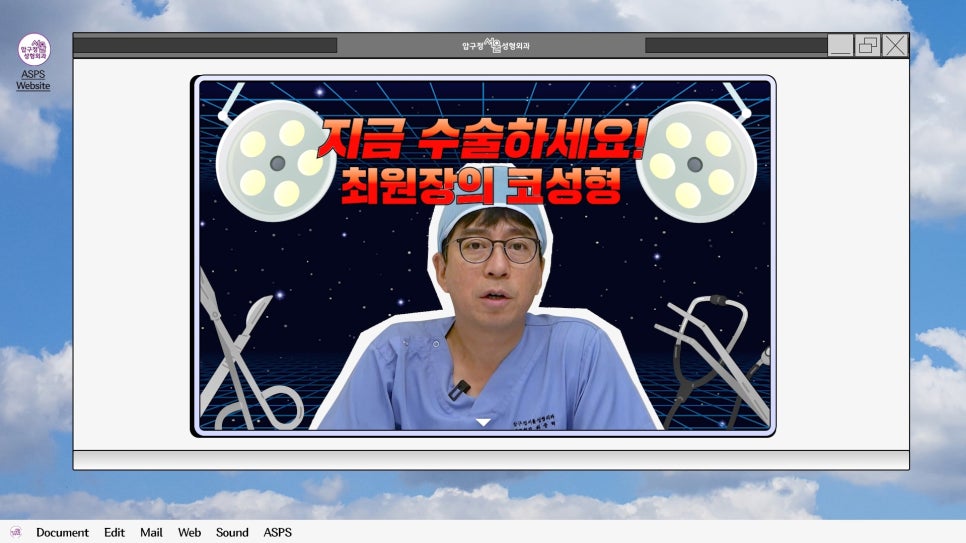
Today, I’ll compare a game that resembles an actual nose surgery
with the real procedure to see whether there are any differences.
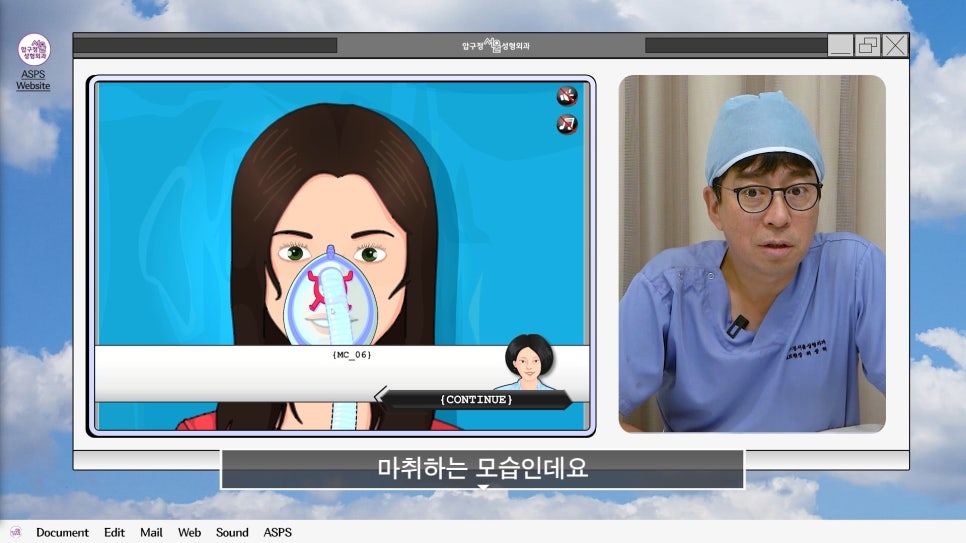
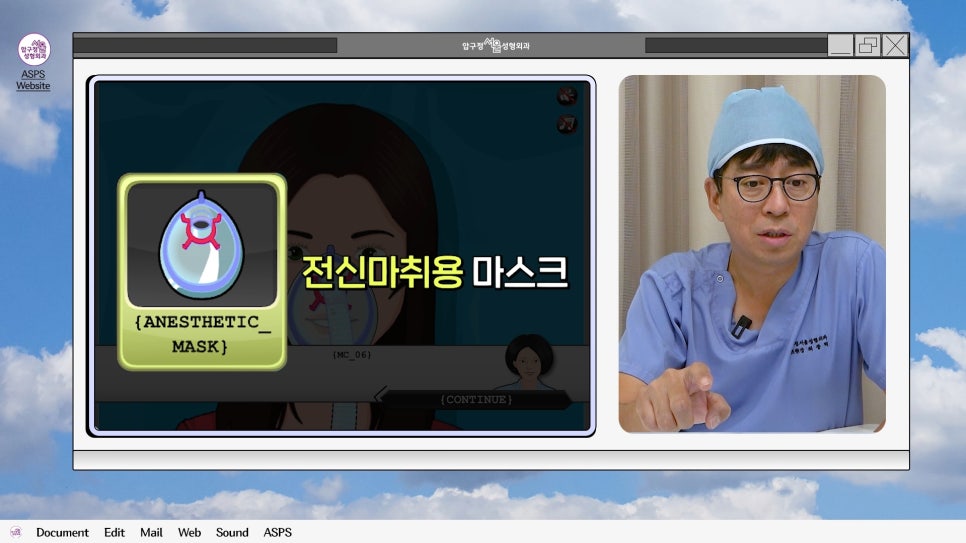
The opening scene of the game shows the patient being anesthetized.
When anesthesia is administered, a mask is used
only in general anesthesia.
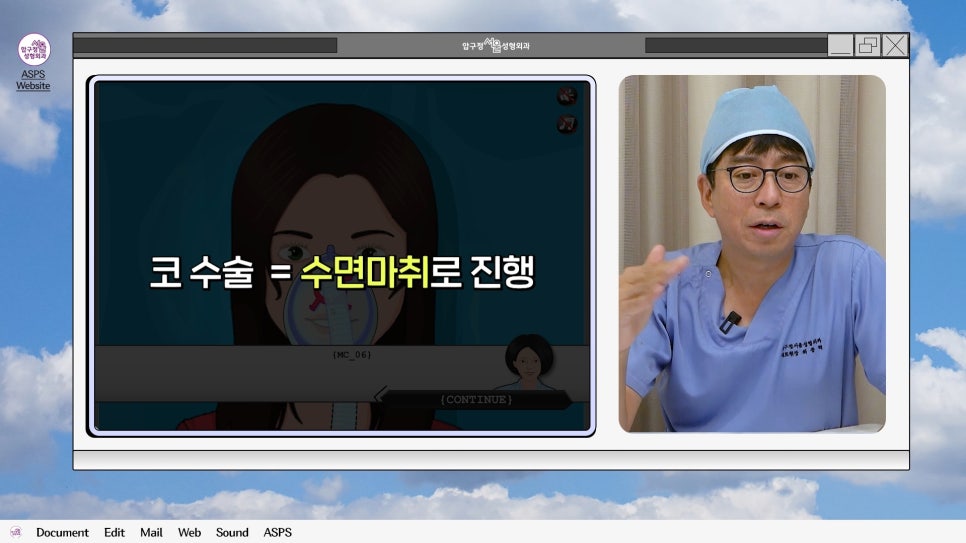
Nose surgery is performed under sedation,
so you do not need to wear a general anesthesia mask
like the one shown in the game.
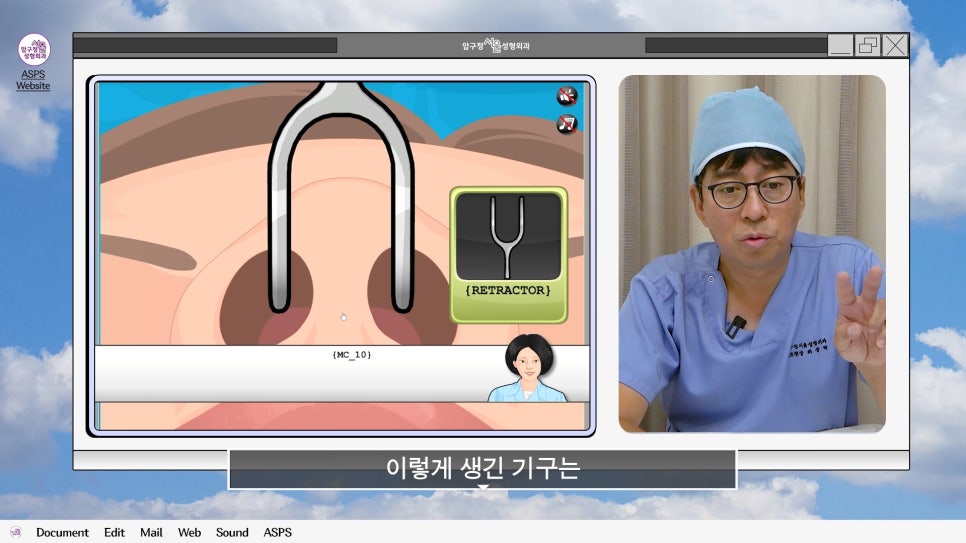
Next is the scene where the nose is incised.
To make an incision inside the nostril,
the surgical area must be clearly visible,
and the tool used at this stage is a retractor.
A retractor is a surgical instrument that spreads the skin or tissue
so the incision area can be seen clearly.
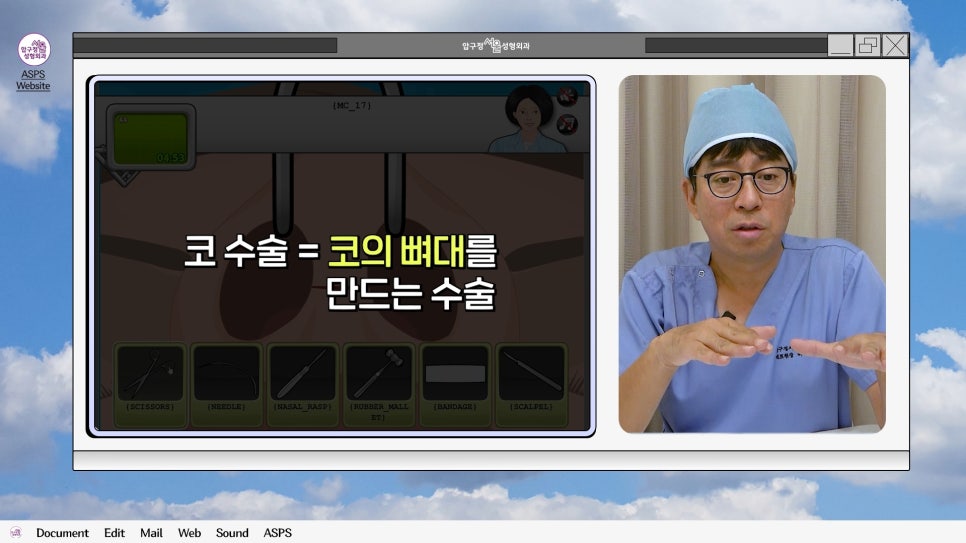
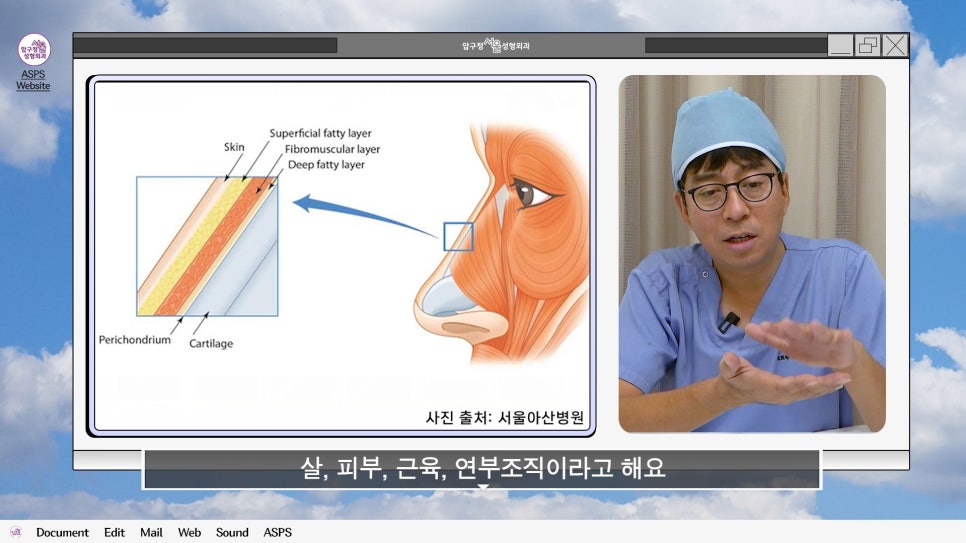
Nose surgery is an operation that creates the structural framework of the nose,
so the procedure is centered on that framework.
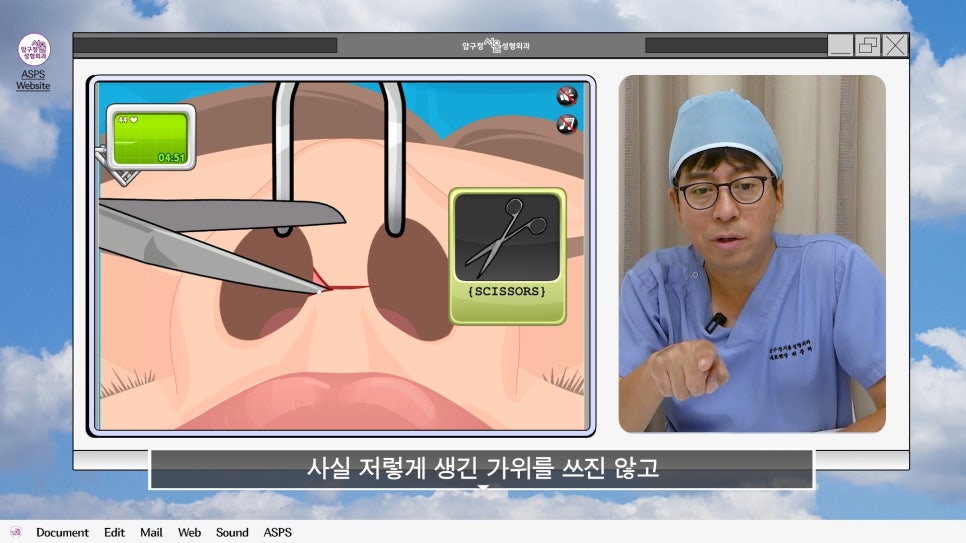

One of the tools used at this stage is scissors.
Rather than the ordinary scissors we commonly think of in the game,
we use a special medical scissor with a curved tip,
which allows delicate tissue to be cut safely.
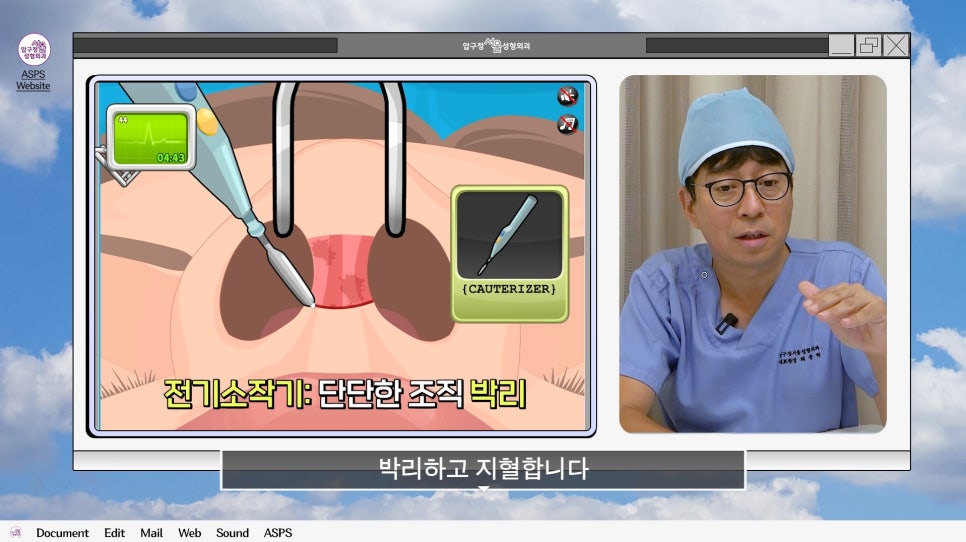
When the tissue is too firm, it is difficult to separate it with ordinary tools,
so electrocautery is used to perform dissection and hemostasis at the same time.
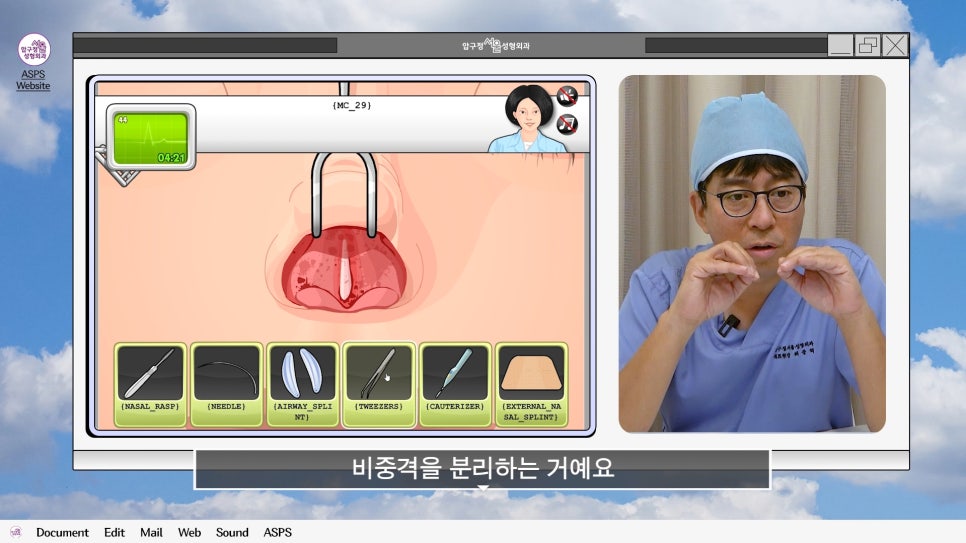
Next, the septum located in the center of the nose
is separated.
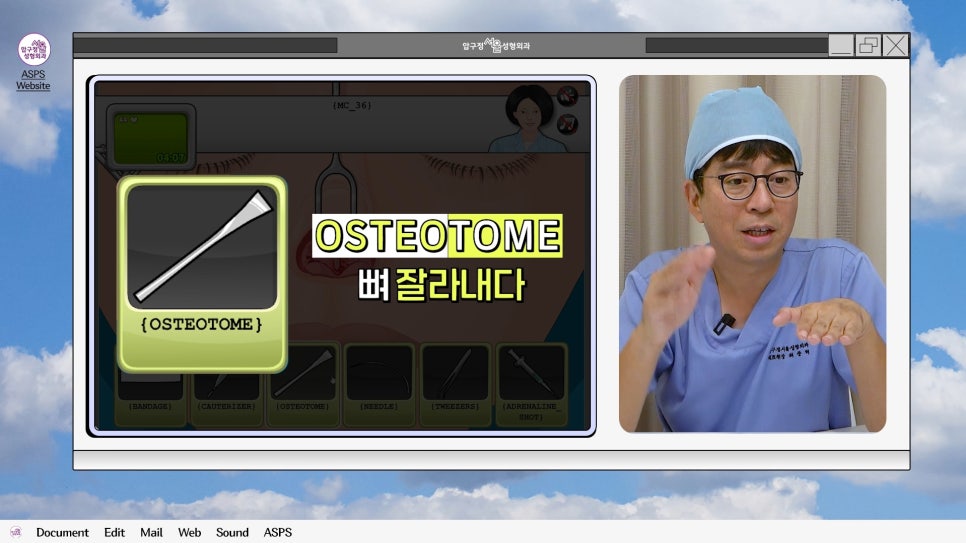

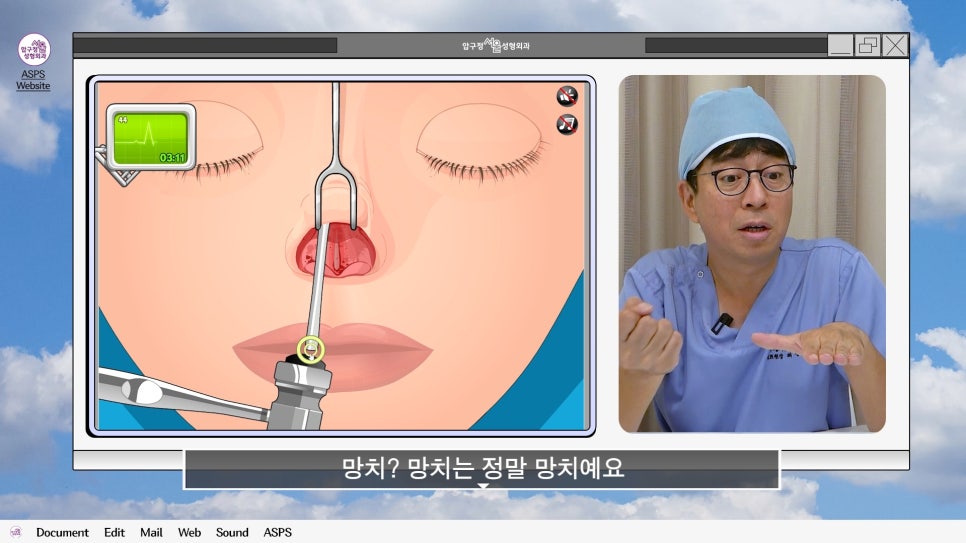
After the septum is separated, the protruding hump is removed.
The tool used here is an osteotome.
“Osteo” means bone, and “tome” means to cut,
so an osteotome is, simply put, a chisel-shaped instrument used to cut bone.
An osteotome is used together with a hammer
to neatly remove the protruding hump.
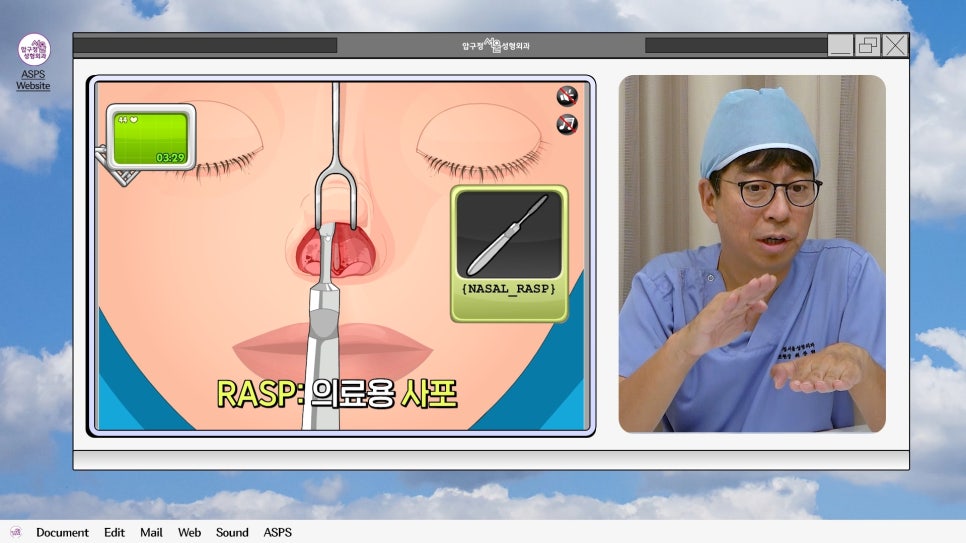

After the hump is removed, medical-grade sandpaper is used
to smooth out uneven areas.
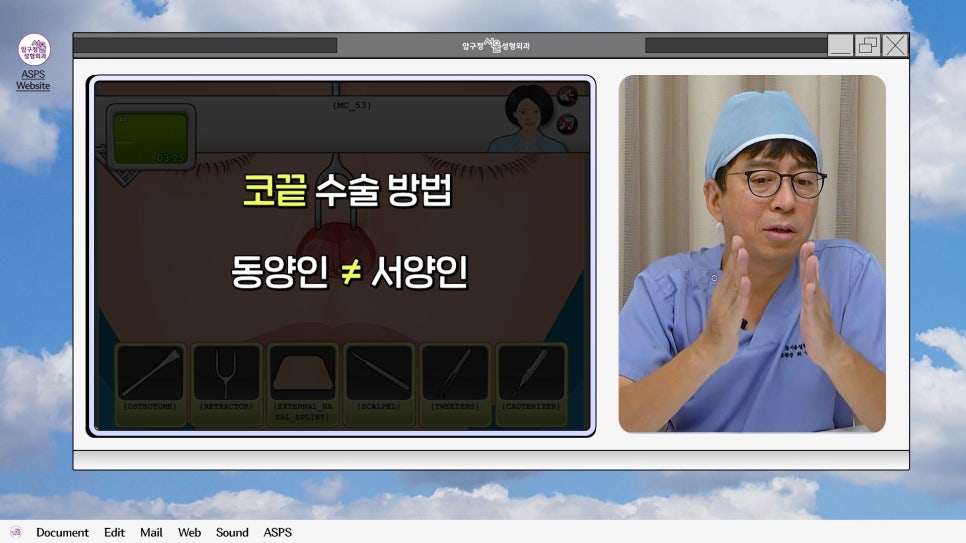
The next step is to shape the tip of the nose,
which is a very important part of nose surgery.
First, the tissues of Western and Asian noses differ,
so the surgical methods also differ.
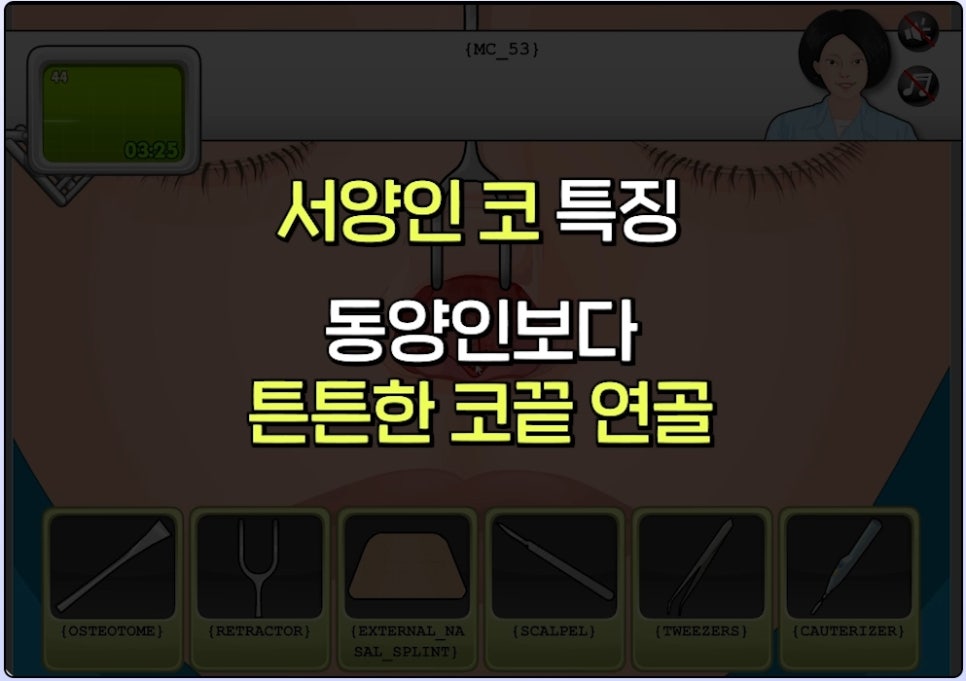
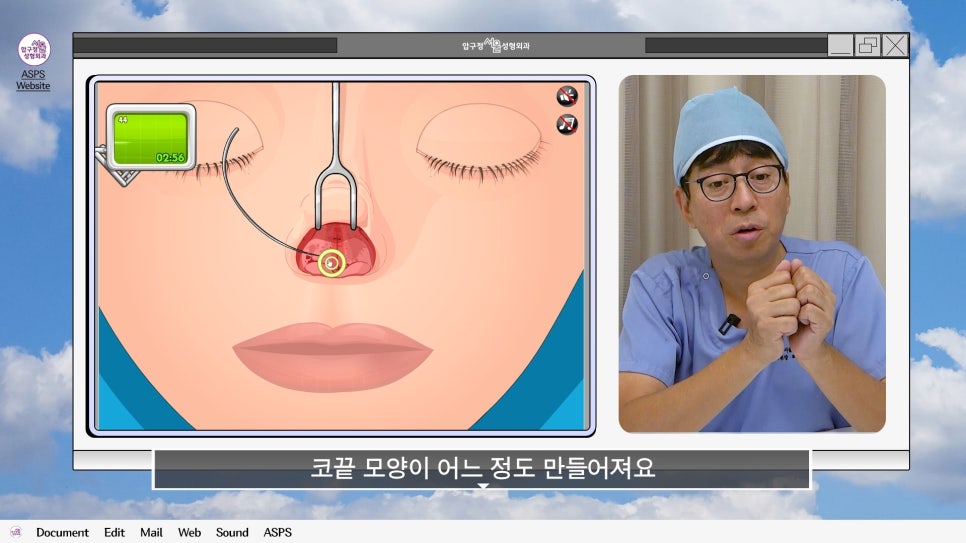
In Western noses, the cartilage that forms the tip tends to be stronger,
so simply tying the cartilage with sutures
can maintain the shape of the tip to some extent.
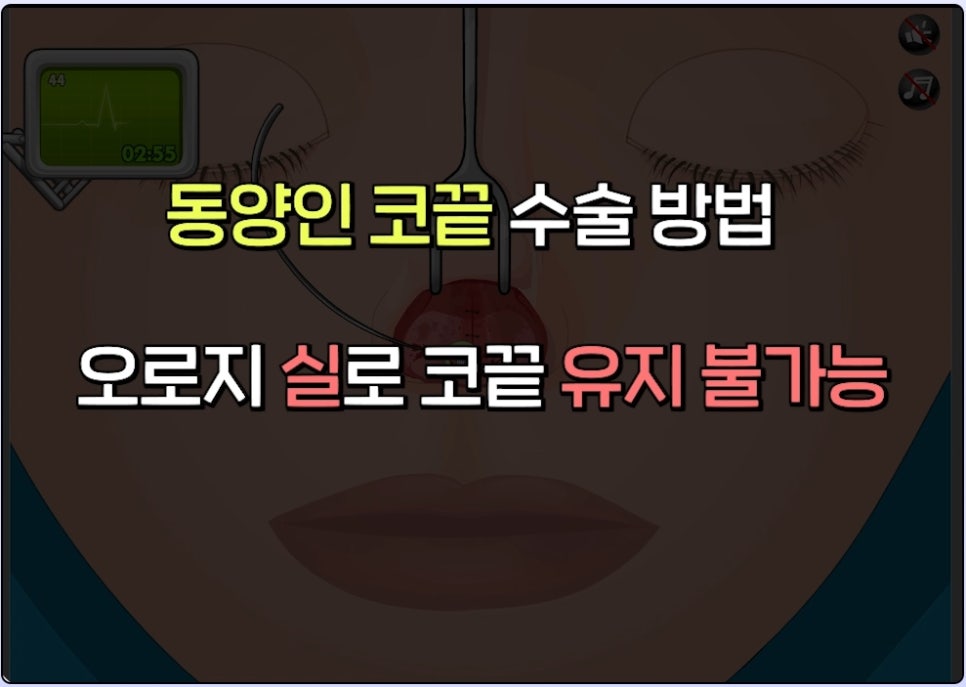
However, in many Asian noses, the tip cartilage is weaker,
so it is difficult to shape or maintain the form
with sutures alone.
Using septal cartilage, we build up the framework of the nasal tip,
and then correct the structure on top of it to create a firm nasal tip
with the desired shape.
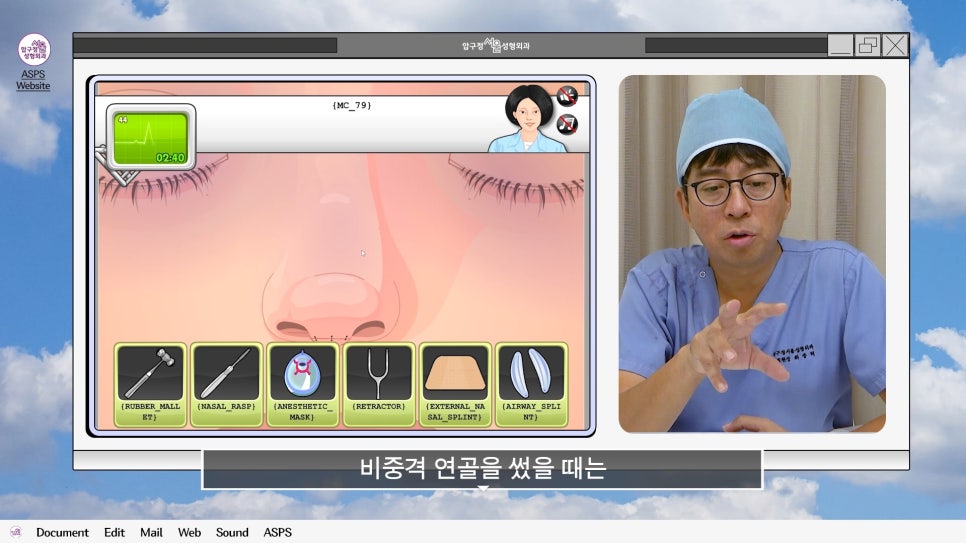
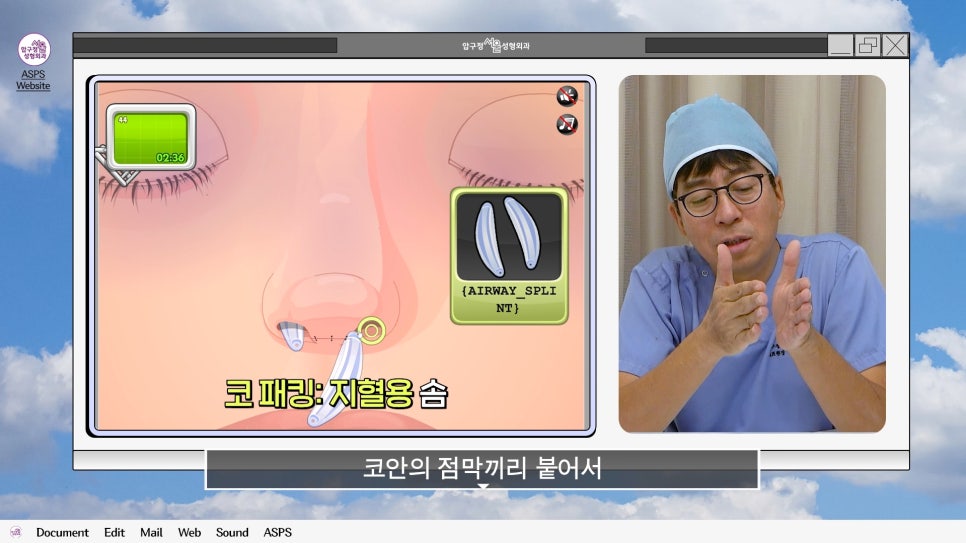

When septal cartilage is used,
swelling inside the nose, which is the surgical site,
or adhesion between the internal mucosal layers can occur,
and this can cause discomfort by blocking the nostrils.
To prevent this, packing (cotton or gauze)
is placed inside the nose.
Packing is usually kept in place for about a day and then removed.
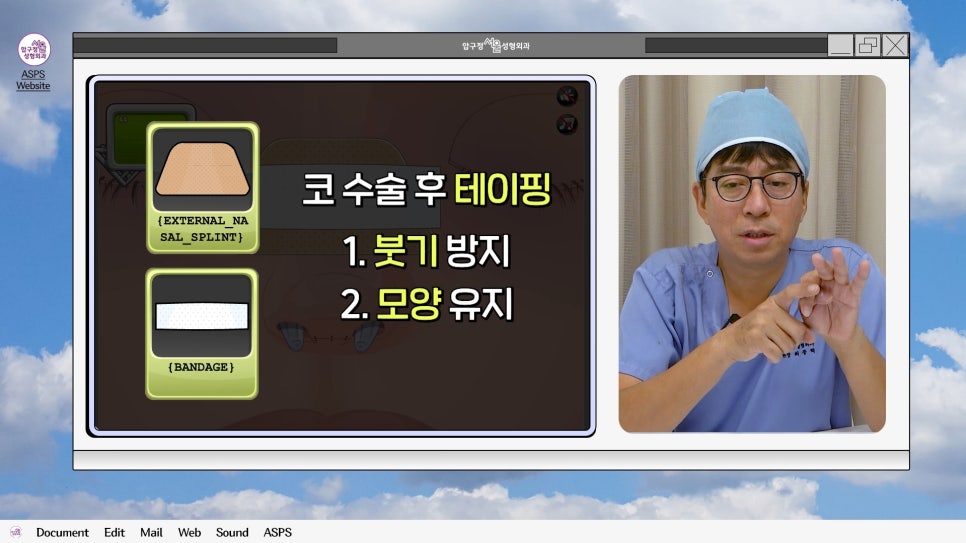
In addition, after surgery, taping is applied to the outside of the nose
to reduce swelling and help the shape settle properly.
In some cases, implants or supports are also fixed on the nose.

Today, while playing a nose surgery game,
I briefly explained the instruments used in actual surgery
and the overall procedure.
This game does differ somewhat from real surgery,
but it does seem to have been made with at least some basic understanding.
Of course, real surgery is far more precise than a game,
and is carried out carefully while considering each patient’s
individual anatomical characteristics and condition.
Therefore, there is no single fixed method for every patient;
instead, it is important to choose the method that best fits
your current nasal condition and surgical goals.
Through 충분한 상담 with a specialist,
carefully deciding on the surgical method that is right for you
is the first step toward a natural and satisfying result.
If you have any questions about nose surgery
or would like a consultation,
please contact us through the reservation link below.
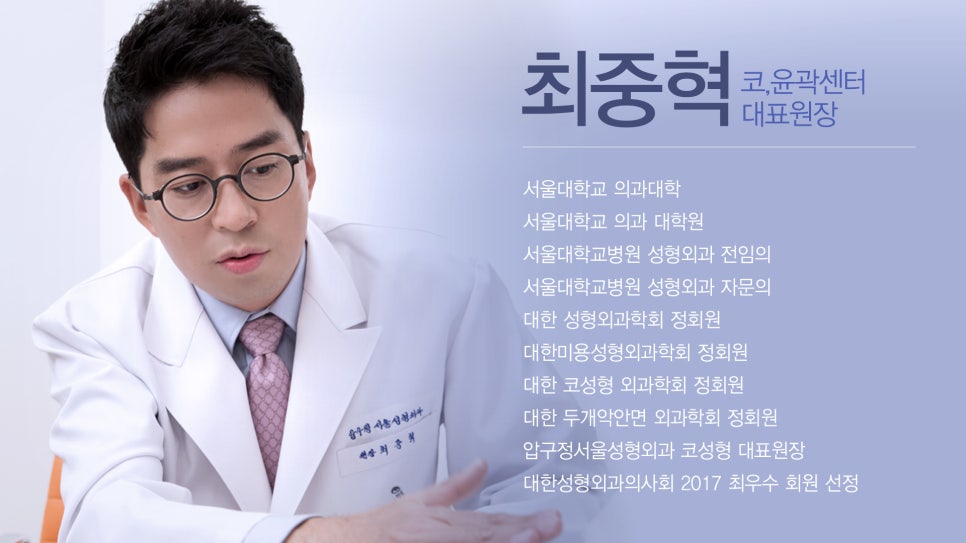
This has been Director Choi Junghyuk of Apgujeong Seoul Plastic Surgery.
Thank you.