Hello,
I’m Director Choi Junghyeok of Apgujeong Seoul Plastic Surgery.
Recently, as interest in facial contouring surgery has increased,
many of the patients who visit us
are also requesting consultations related to facial contouring.
Today, I would like to organize and explain the basic concepts of facial contouring surgery
and its types,
focusing on the questions we are often asked during consultations.
The Difference Between Facial Bone Surgery and Jaw Surgery
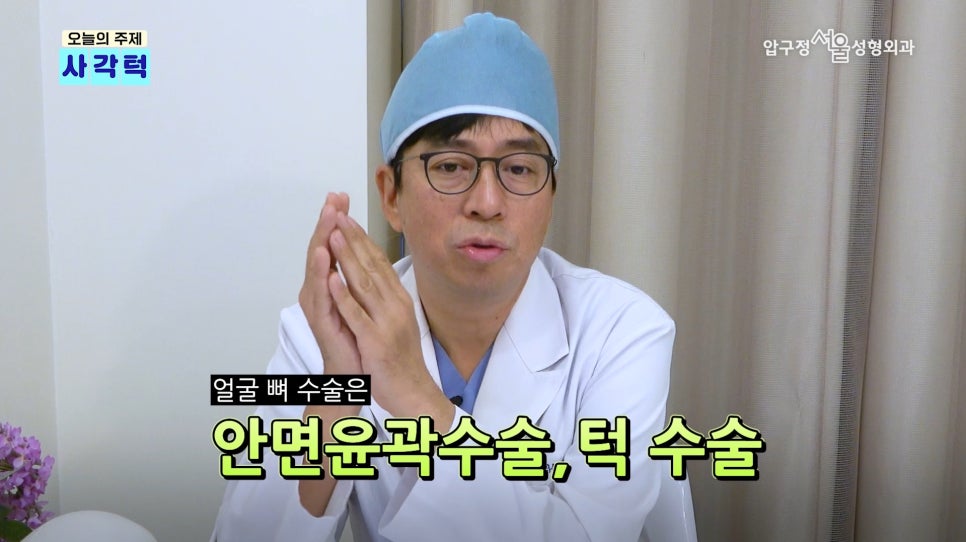
First, facial bone surgery can be broadly divided into two categories:
facial contouring surgery and jaw surgery.

Facial contouring surgery is a procedure performed to make the face appear softer
and more three-dimensional.
It focuses on improving facial shape
by cutting or repositioning bone.

Jaw surgery is a functional procedure that changes the central axis of the face
and mainly focuses on correcting malocclusion or jaw asymmetry.

When many people come in for consultations,
they think of facial contouring surgery as a single procedure,
but it is a general term that refers to three surgeries:
cheekbone, square jaw, and chin surgery.
This is a procedure that reduces the prominence of the cheekbone area,
which makes the face look wide,
by removing and repositioning bone to preserve three-dimensionality
while reducing the overall width of the face.
- Square jaw surgery
This is a procedure that removes the angular portion under the jaw
to create a softer and slimmer jawline.
- Chin surgery
If the chin is long or blunt,
it is reduced or refined to balance the overall face.
Today, among the three surgeries,
let’s take a closer look at square jaw surgery.
What Is a Square Jaw?

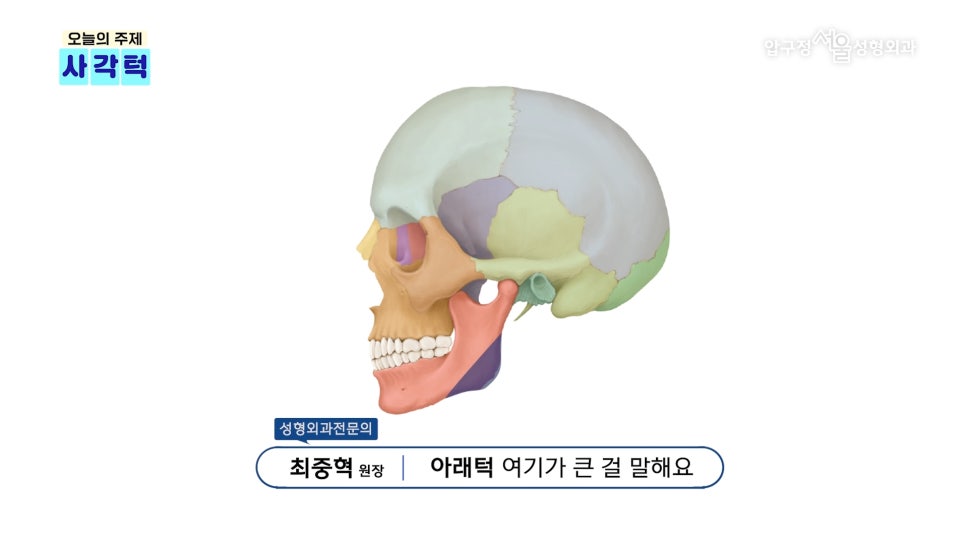
A square jaw refers to a condition in which the lower jawbone is large,
making the lower third of the face appear angular.
It does not mean that everyone with a large lower jaw
has a square jaw.
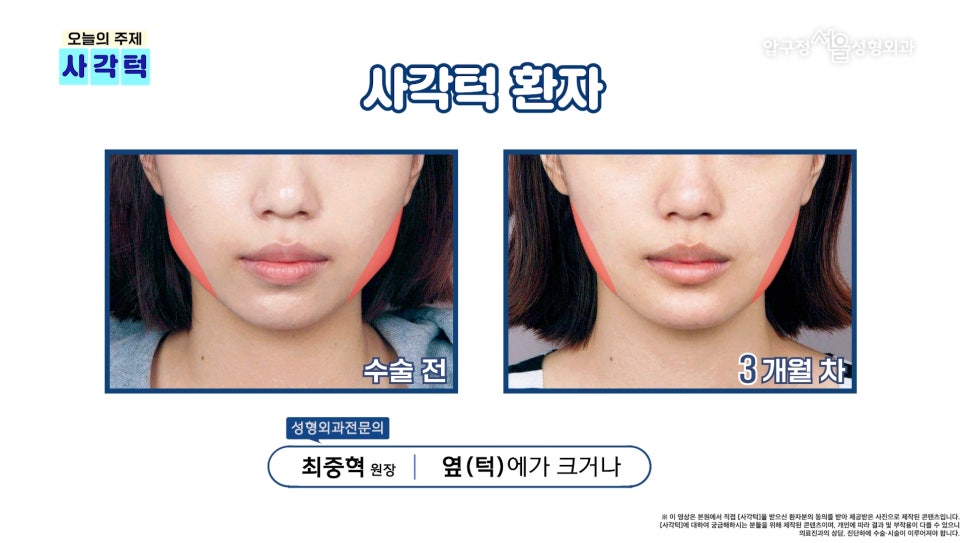
In cases of mandibular prognathism, where the entire lower jaw protrudes forward,
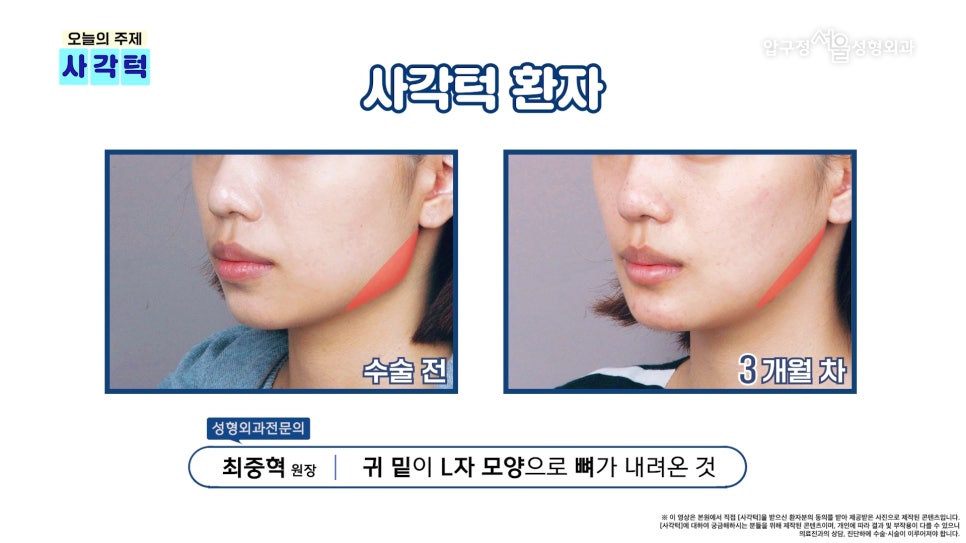
if the sides of the jaw appear wide from the front,
or if an L-shaped bone descends below the ear when viewed from the side,
this is called a square jaw.
Causes of a Square Jaw: Bone vs. Soft Tissue

The causes of a square jaw include bone and soft tissue.
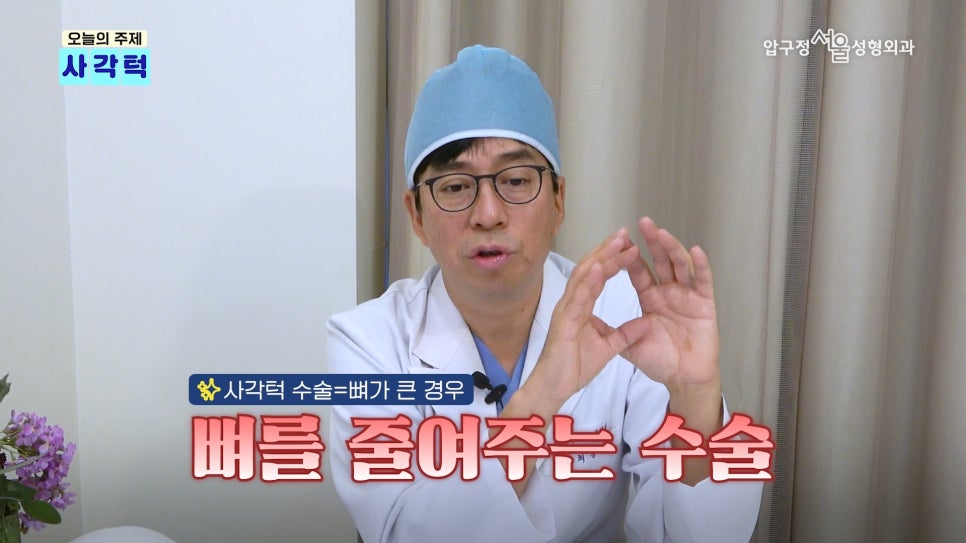
If the bone is large, the most certain treatment is to shape and reduce the bone through surgery.
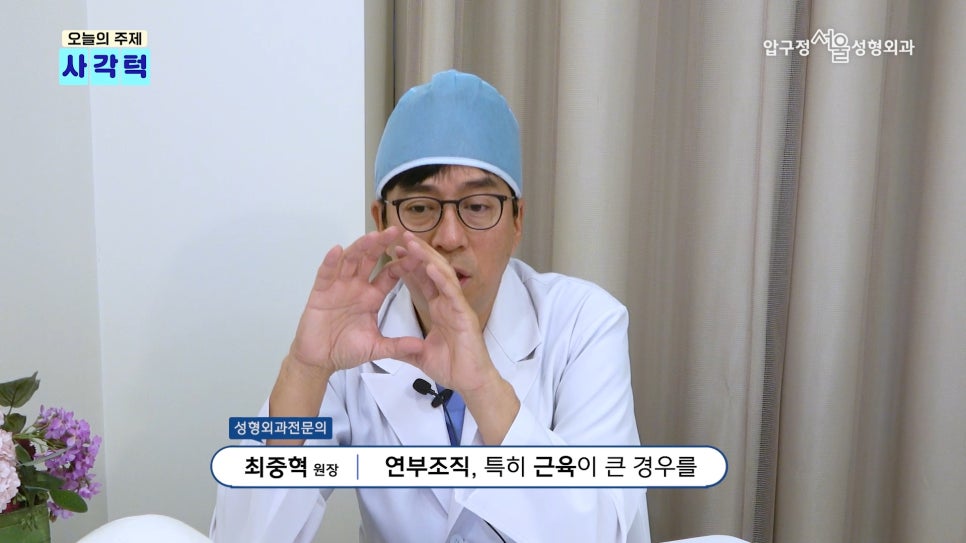

If soft tissue (muscle, fat) is developed,
two methods are available: Botox injections and radiofrequency treatment.
However, radiofrequency treatment also causes swelling after the procedure,
and its effect is limited,
so if you want a noticeable change during consultation,
it is better to consider square jaw surgery.
Square Jaw Surgery: How Is It Performed?
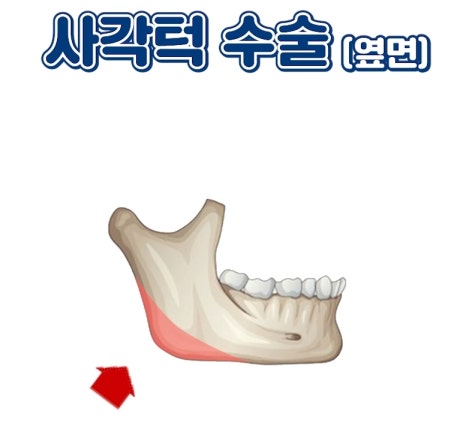
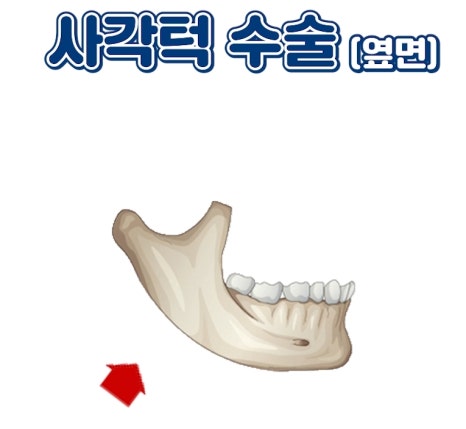
- Lateral square jaw reduction
The protruding jawbone seen from the side is removed
to reduce the angular appearance.
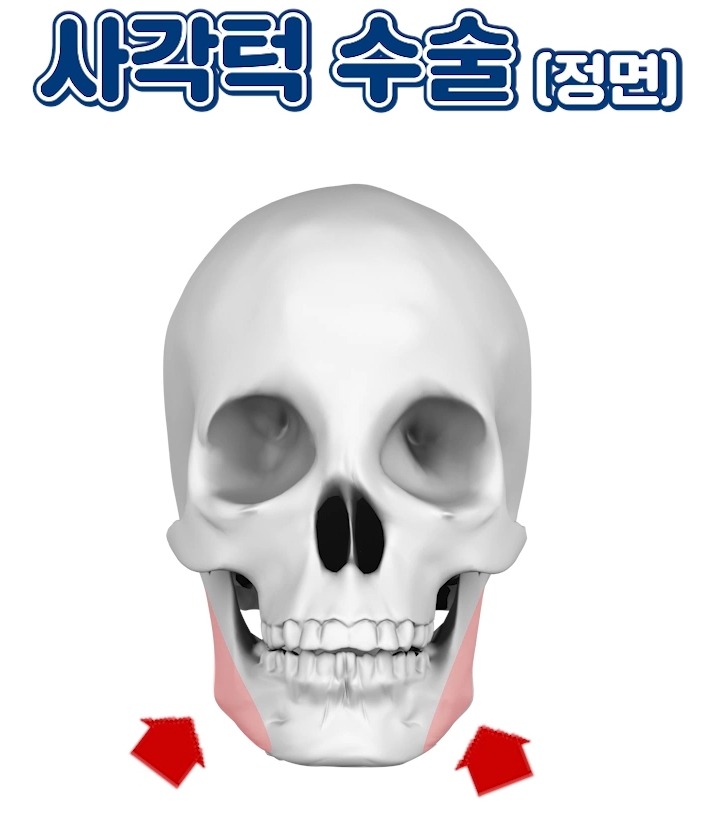
- Reduction for frontal effect
If the bone that spreads outward from the front view is removed,
it can make the face appear slimmer.
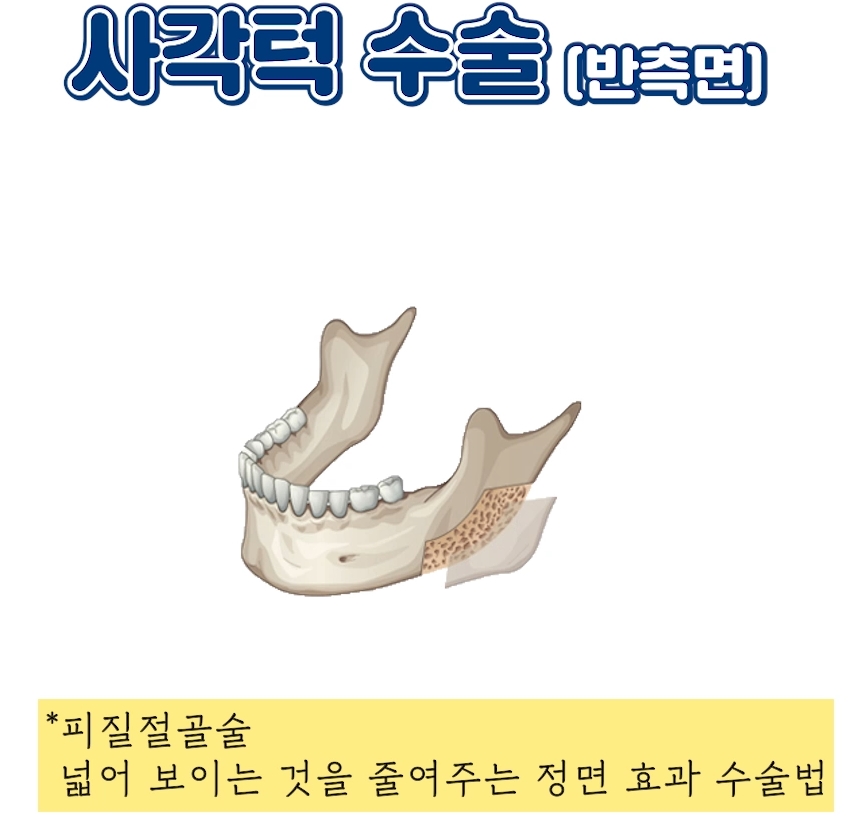
- Cortical osteotomy
This is a procedure to maximize the frontal slimming effect
by further reducing the outer layer of the jawbone (cortical bone)
to narrow its width.
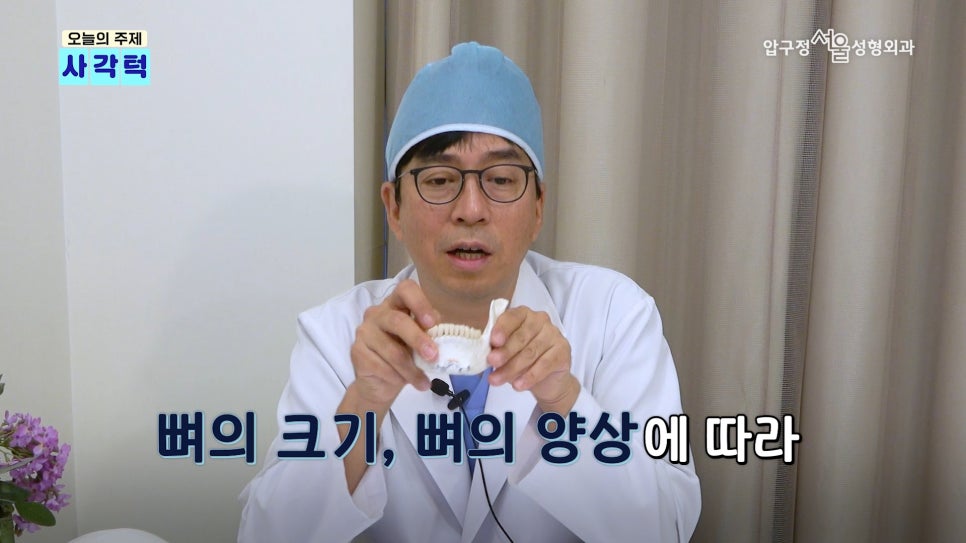

The effect of square jaw surgery
depends on factors such as the individual’s bone shape and thickness,
and the condition of the soft tissue.
Today, based on the questions I have received while consulting and operating on many patients,
I have summarized information about square jaw surgery.

If you visit us for a consultation,
with 25 years of experience and know-how,
we will do our best to help you achieve not just a pretty face through thorough consultation,
but a precise diagnosis and a personalized result that is natural and satisfying.
If you have questions about facial contouring
or would like a surgical consultation,
please contact us through the reservation link below.
This has been Director Choi Junghyeok.