Hello, I’m Director Choi Junghyuk of Apgujeong Seoul Plastic Surgery.
Rhinoplasty is a field that many people are interested in, so there is a lot of information out there,
but at the same time,
misinformation and baseless rumors also spread along with it.
Today, from a specialist’s perspective, I’d like to correct some common misconceptions
related to rhinoplasty and share the truth.
Based on accurate medical information and extensive clinical experience,
I hope this will be helpful to those who are considering it.
Q. Does wearing a mask cause the
operated nose to sink down?
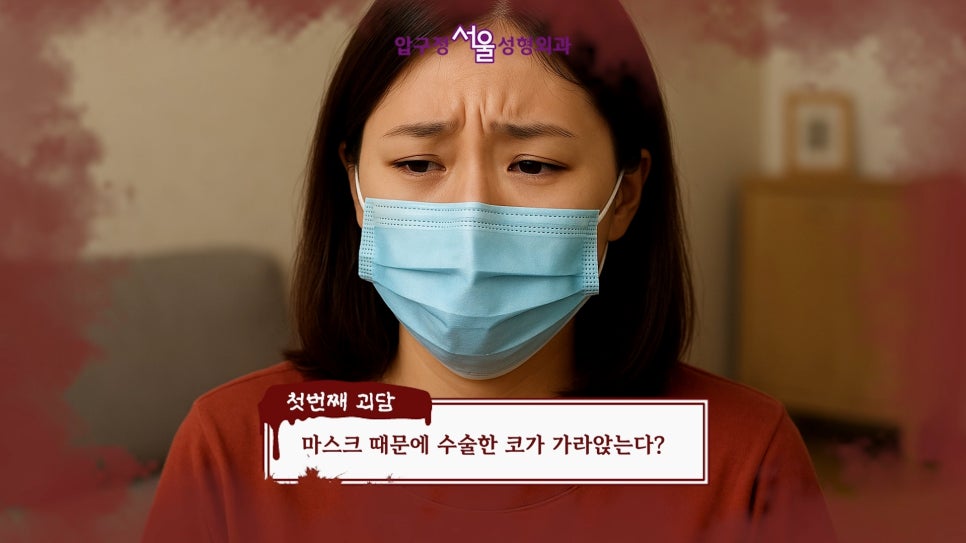
Simply wearing a mask is very unlikely to change the outcome of nose surgery.
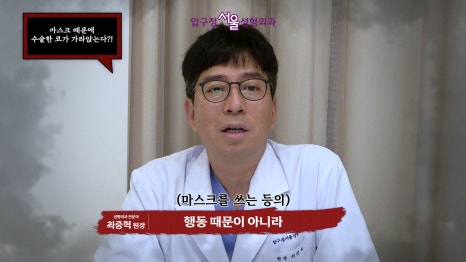
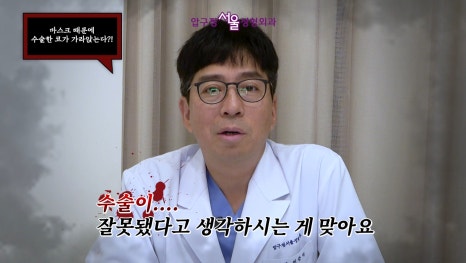
If the nose has become lower, it is more accurate to say that
it was not properly operated on, rather than blaming mask wear.
Q. After rhinoplasty, can’t you get a facial massage?
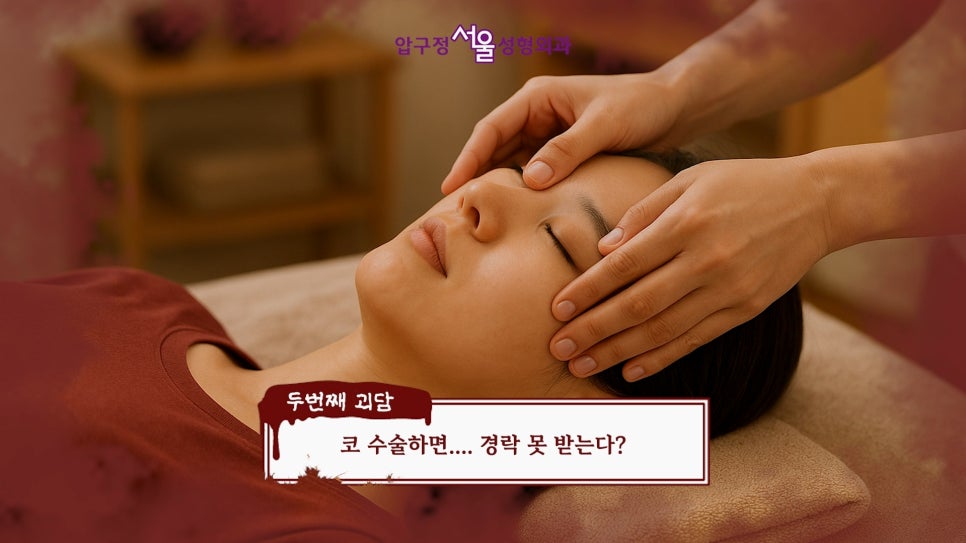
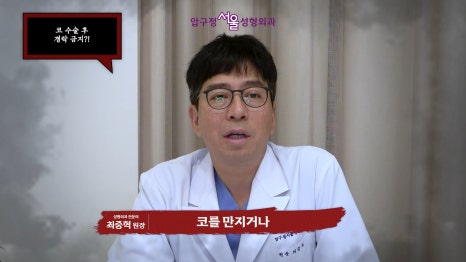
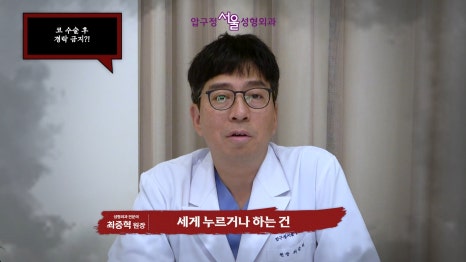
After rhinoplasty, it is recommended to avoid touching the nose or
applying strong pressure for at least about one month.
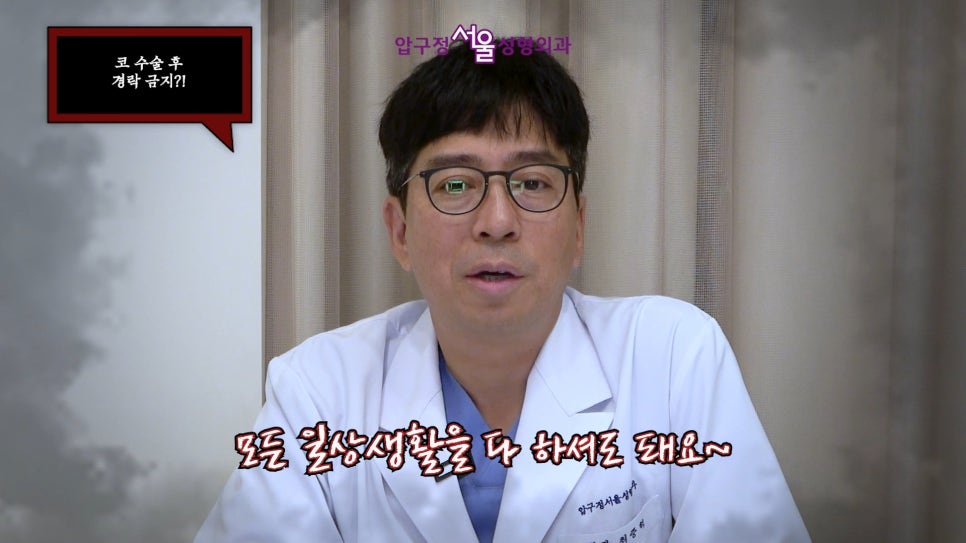
After one month has passed following surgery, you can resume all activities in daily life
without any special restrictions.
Q. Does a hump nose grow back after surgery?
Once a hump has been removed, it does not grow back.
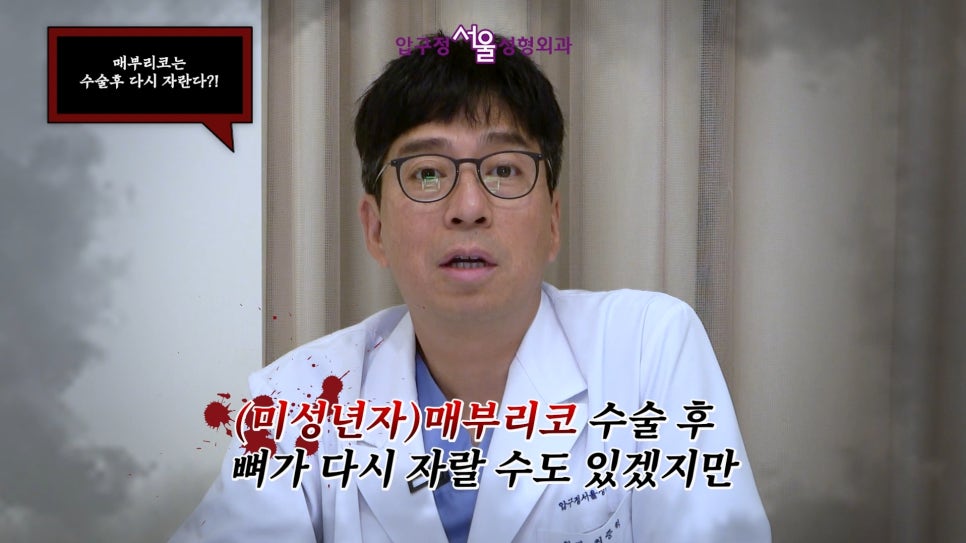
If you had hump nose surgery before the growth period ended,
such as at age 12 or 13,
there is a possibility that the bone could grow again after surgery.
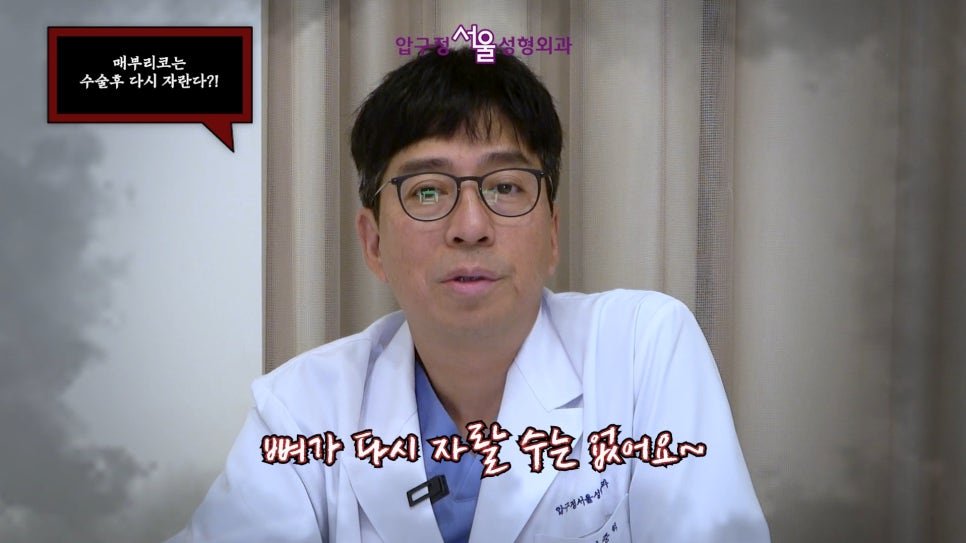
In adulthood, the growth plates close,
so the bone does not grow back after hump nose surgery.
People who feel that the bone has grown back after hump nose surgery
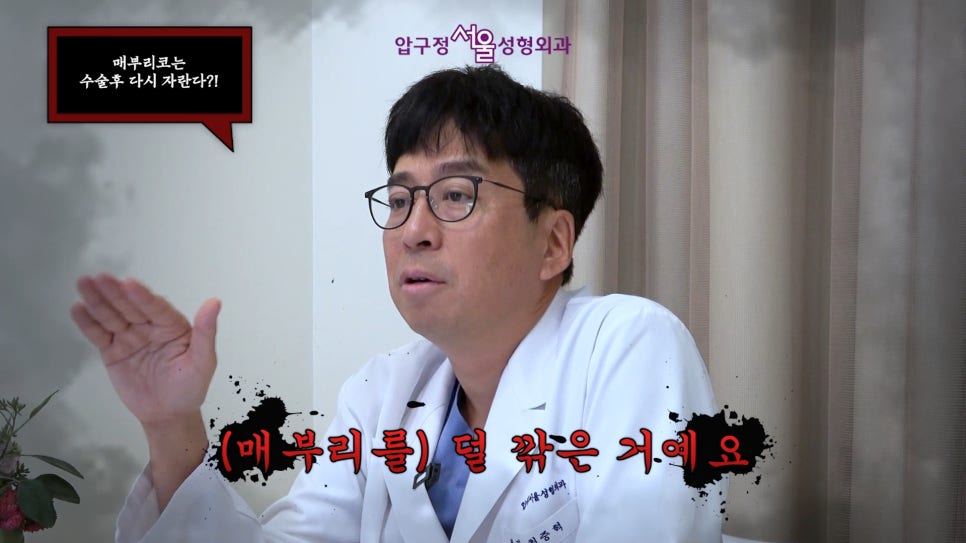
have not actually had bone regrowth;
the hump was simply not removed enough.
Right after surgery, swelling can make that area less visible,
and as the swelling goes down,
what was not fully shaved down can start to protrude,
which is often mistaken for the bone growing back.
It is not true that the bone can grow back after the hump is shaved down,
so the claim that silicone must be used to press down the hump is not correct.
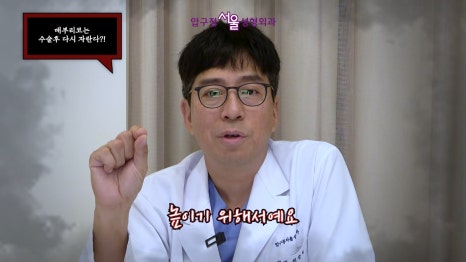
The purpose of inserting silicone is not to prevent bone regrowth,
but to raise the nose and improve its shape.
Q. Do dietary supplements make bruising and swelling worse?
Usually, for about 1 to 2 weeks before and after surgery,
unless they are truly essential medications such as blood pressure or diabetes medicine,
some dietary supplements may contain ingredients that thin the blood,
so they can interfere with hemostasis,
which is why it is better to stop taking them before surgery.
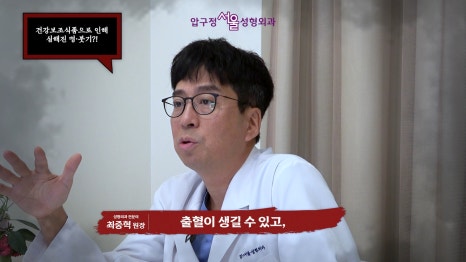
If hemostasis is affected, bleeding can occur,
and bruising or swelling may become more severe.
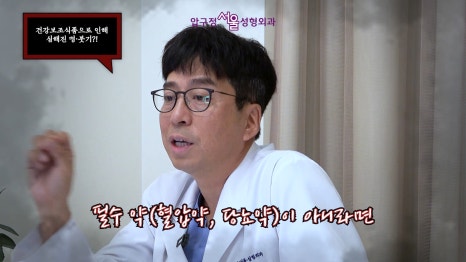
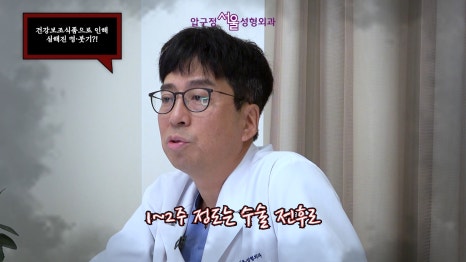
Unless they are essential medications (blood pressure medicine, diabetes medicine),
it is best to stop taking them about 1 to 2 weeks before and after surgery.
Q. Does silicone become more noticeable with age?
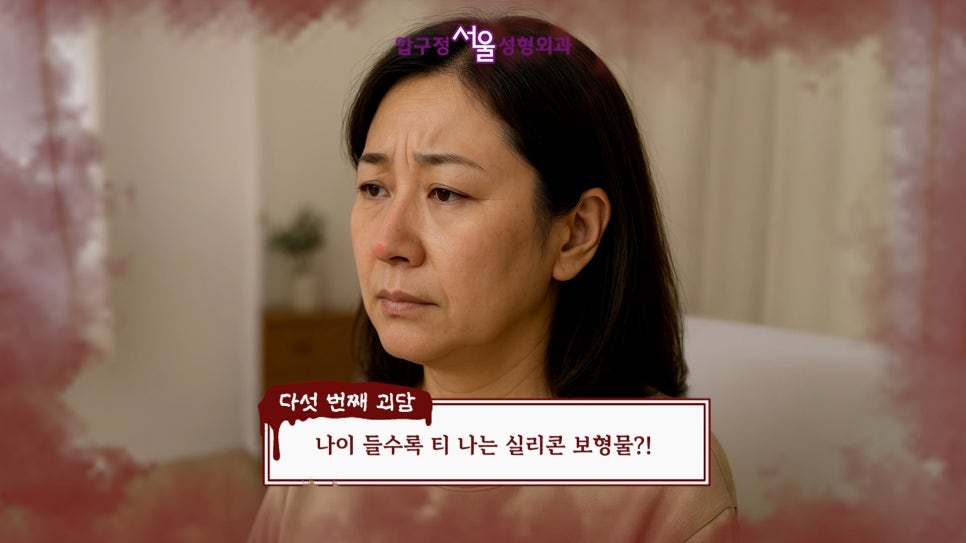
As people age, the skin becomes thinner.
Skin elasticity decreases, and it may become more noticeable,
but
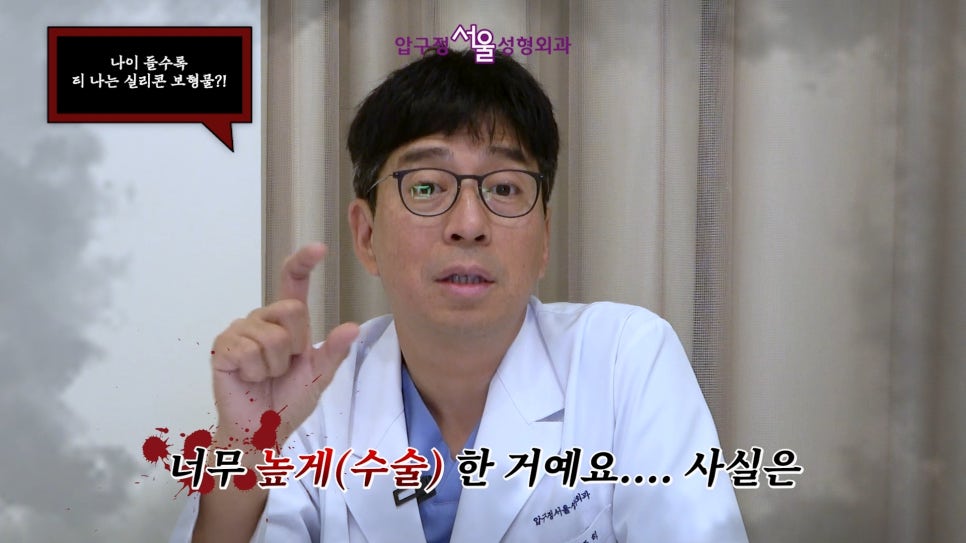
if the implant is noticeable, that means
it was placed too high from the beginning.
Also, there is no need to think that you should not have nose surgery
just because it might become noticeable after 10 or 20 years.
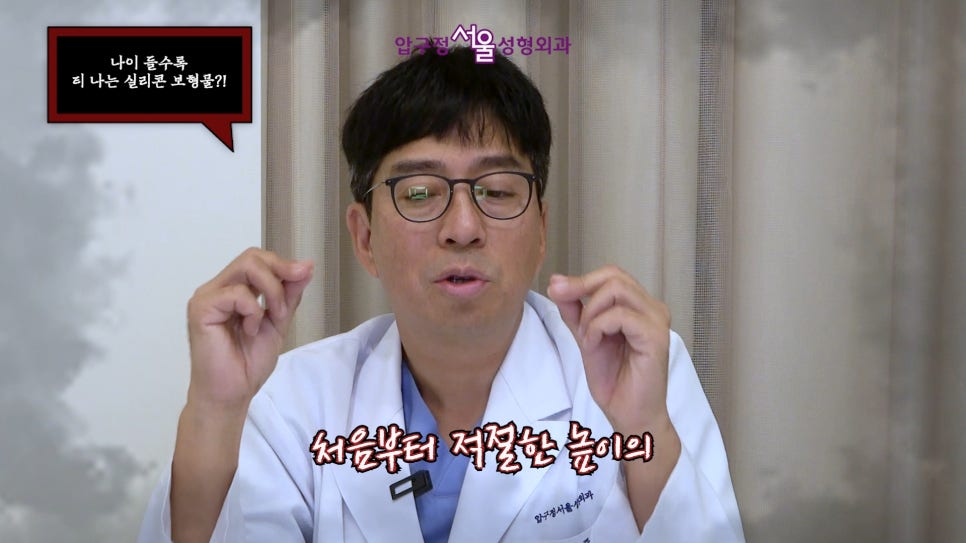

If you choose and perform surgery with an implant of an appropriate height from the start,
there is no need to worry in advance about the implant becoming noticeable.
Q. Is it standard to have nose surgery
twice?
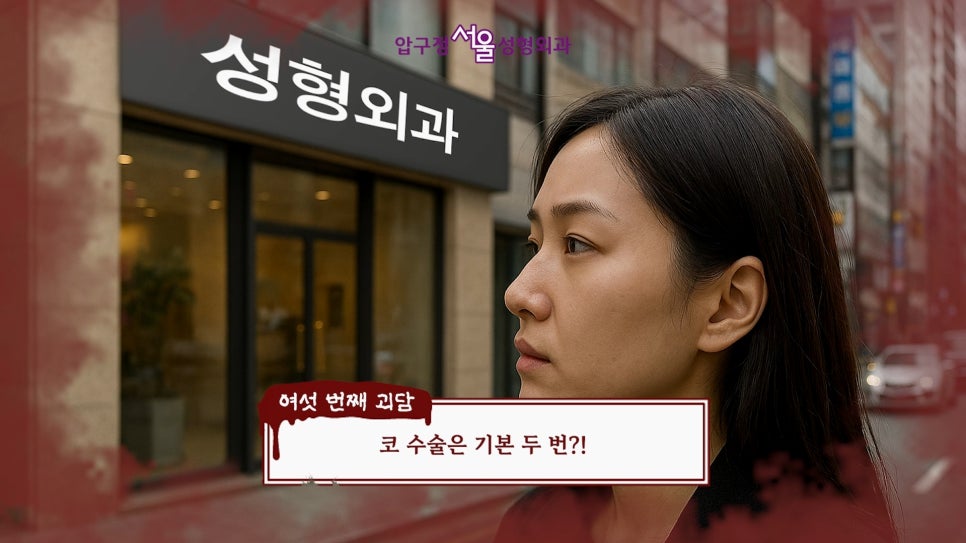
People often hear during consultations or online that revision rhinoplasty is common,
and that a second surgery is absolutely necessary.
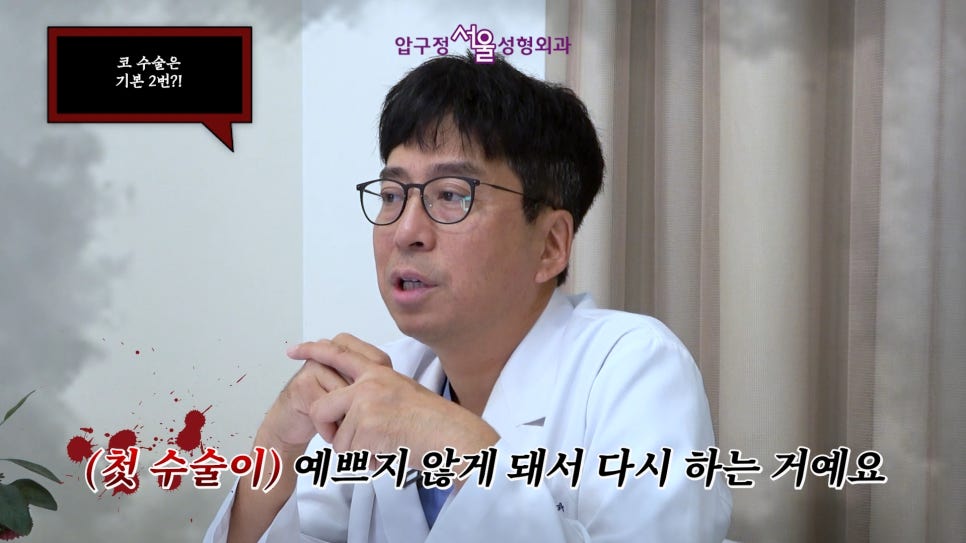
However, personally, I do not strongly agree with that.
Not only in rhinoplasty, but the biggest reason for all revision plastic surgeries is
that the initial surgical result is unsatisfactory,
leading people to undergo surgery again.


When deciding on nose surgery, it is important to consider whether your nose truly needs surgery,
whether surgery can make it look better,
and which parts should be corrected to achieve a more attractive result.
Q. Can’t you smell after nose surgery?

There is no need to worry about nerve damage during nose surgery.
There are no cases where the sense of smell is permanently reduced,
but immediately after nose surgery, swelling inside the nose can make breathing difficult,
while narrowed airflow passages can temporarily reduce the ability to smell.
To put it simply, it is the same principle as when we have a cold,
and the nose is swollen and runny,
making it hard to smell properly.
Right after nose surgery, for up to about a month, symptoms such as nasal congestion,
as if you had a cold, may occur and the sense of smell may decrease,
but after one month, the sense of smell recovers again.
If the nose becomes crooked after surgery and breathing is blocked,
this is not a problem with the olfactory nerve but a structural problem in the nose,
so if the crooked nose is causing blockage, the deviated part should be corrected.
Q. Does donated rib cartilage get absorbed or
cause inflammation?
You do not need to worry much about inflammation.
There is, however, some concern about absorption.
Among the tissues that survive well in the human body is cartilage,
because cartilage is a tissue that tolerates low blood supply well.
If possible, I believe it is best to use it only when unavoidable.
However, for most people, cartilage does not get absorbed nearly as much as patients worry,
so there is no need to worry too much.
Today, I explained some of the things people often misunderstand
or get wrong about nose surgery.
The nose sits in the center of the face,
so it is an area that is very important not only aesthetically
but also functionally.
Because of that, it is true that expectations and concerns about nose surgery are both very high,
but I hope this article has helped ease some of your worries and anxiety.
Apgujeong Seoul Plastic Surgery is a plastic surgery clinic with 25 years of history,
and based on years of experience, we promise not just a simple cosmetic procedure,
but to help improve patients’ confidence and quality of life,
and to deliver satisfying results.
I hope today’s explanation was of some help to you,
and
if you have any questions about rhinoplasty or would like a consultation,
please make a reservation through the link below.
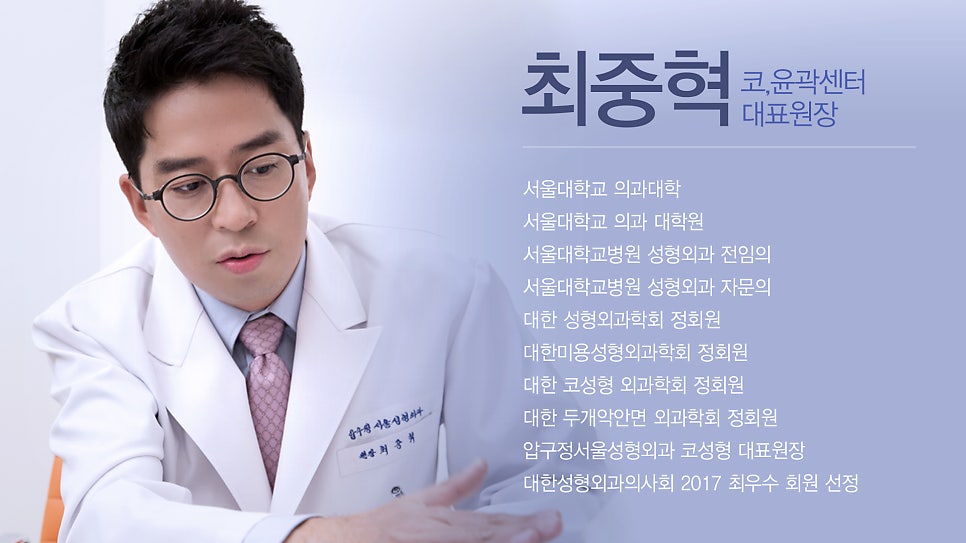
This was Dr. Choi Junghyuk, a specialist at Apgujeong Seoul Plastic Surgery.
Thank you.