Hello, this is Dr. Choi Junghyeok from Apgujeong Seoul Plastic Surgery.
After undergoing nose surgery, as time passes,
if you become dissatisfied with the shape or feel that it no longer suits your face,
you naturally start thinking about revision surgery.
In consultations, many people often ask whether revision surgery is really necessary,
how many times it is possible,
and whether the silicone implant should be replaced.
In this post, I have gathered the questions patients most often ask about nose revision surgery.
I will explain when revision surgery is actually needed
and which concerns you do not need to worry about.
Is revision surgery always necessary after nose surgery?
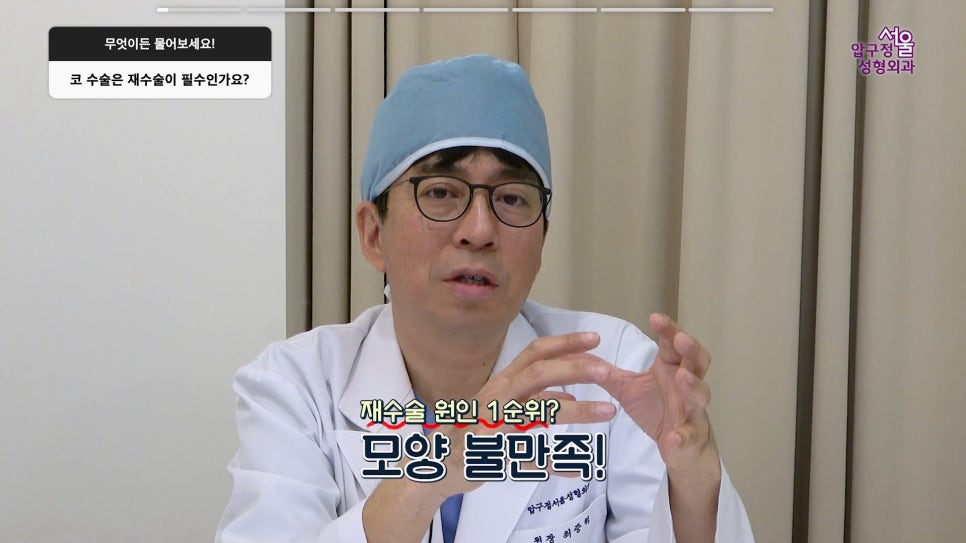
The most common reason for nose revision surgery
is not inflammation or side effects from the silicone itself.
In reality, dissatisfaction with the shape
is the biggest reason.
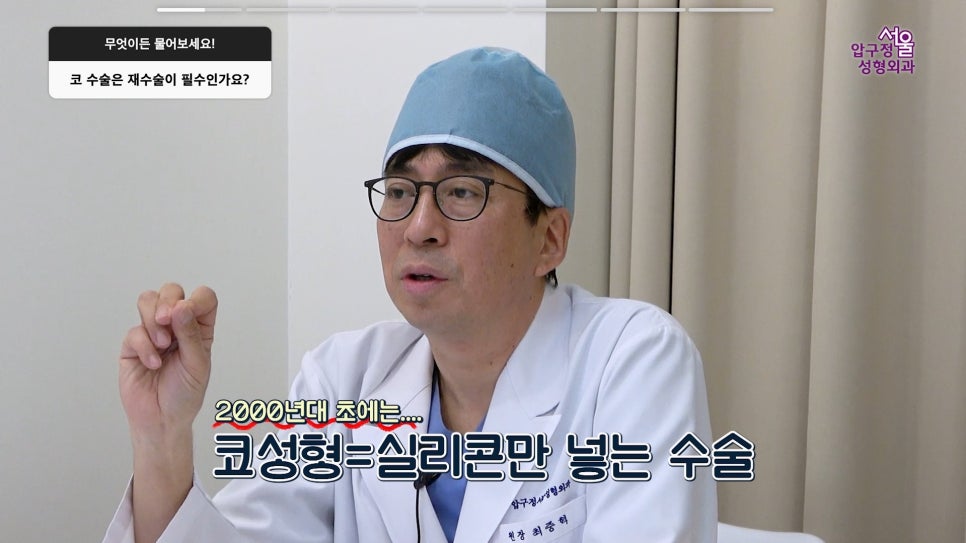
In the past, when people thought of nose surgery,
it was often seen simply as a procedure
that inserted a silicone implant.
At that time, the focus was not on carefully considering
the shape of the nasal tip or the overall balance,
but rather on simply raising the bridge of the nose.
However, over time, patients’ ideal image of a nose
has become more specific,
and harmony with the face has become more important.
So when surgery in the past was done by simply inserting silicone,
many people later wanted revision surgery because
the nasal tip looked blunt or the nose did not harmonize with the face.
In the end, the biggest cause of revision surgery is not a simple “side effect,”
but a problem with the design and shape
that was not sufficiently considered at the time of the first surgery.
Are there cases where nose revision surgery is
difficult?
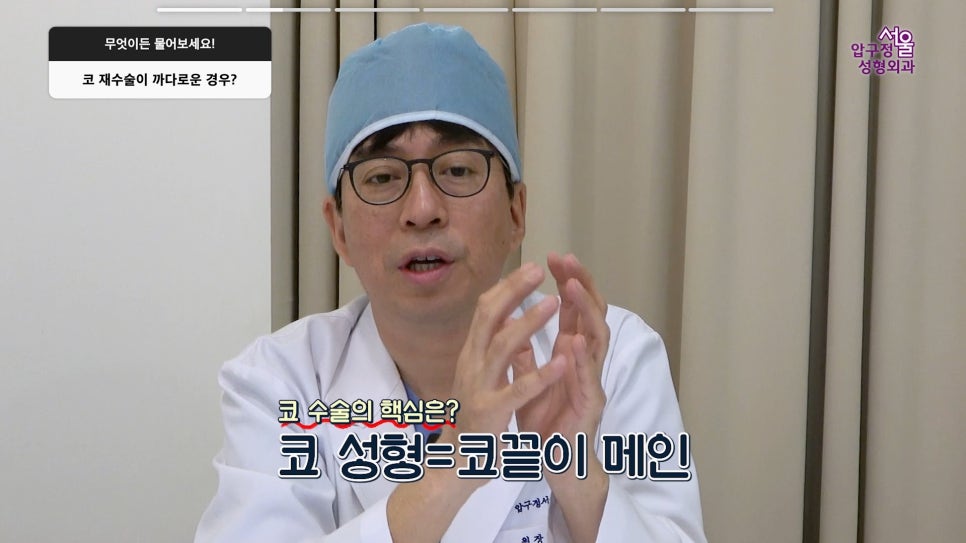
Nose surgery is broadly planned and performed by dividing
the bridge and the tip of the nose.
Among these, the most important part is undoubtedly the nasal tip.
In the case of the bridge, the structure is relatively simple,
so correction is comparatively easier.
Because it is made of bone and cartilage,
adjusting the height or straightening it is clear,
and it can be corrected with implants (silicone, Gore-Tex, etc.)
or through osteotomy to match the desired height and line.
For example, if the bridge is crooked or too low or too high,
the surgical method is relatively defined
and predictable results can be obtained.
On the other hand, the nasal tip is much more difficult.
The nasal tip requires a personalized approach because
skin thickness, the shape and strength of the cartilage,
and the structures supporting the tip
all differ from person to person.
Also, it is not just a matter of raising or lowering it;
fine design
(length, angle, degree of projection, natural curve, etc.)
is required, so the outcome can vary.
For this reason, surgery on the nasal tip is more difficult,
requires delicate technique, and if satisfaction is low,
the rate of leading to revision surgery is relatively higher.
If the skin is thin,
is revision surgery impossible?
It is not impossible.
However, just as in the initial surgery,
it is important to understand that nose surgery is not a procedure
that changes the skin or soft tissue itself,
but rather reconstructs the bone and cartilage beneath the skin.


At this time, the patient’s skin thickness
has a major influence on the result.
If the skin is too thin, the newly created framework inside
or the shape of the cartilage may show through the skin.
So even if the height and shape are adjusted as desired,
it can actually become more noticeable and look less natural.



In other words, when the skin is thin, rather than forcing excessive height
or pursuing an overdone design,
a safe and natural shape that harmonizes with the face
becomes the realistic goal.
This is why the surgical method and results can differ
depending on skin thickness.
Can revision surgery make the nose higher?
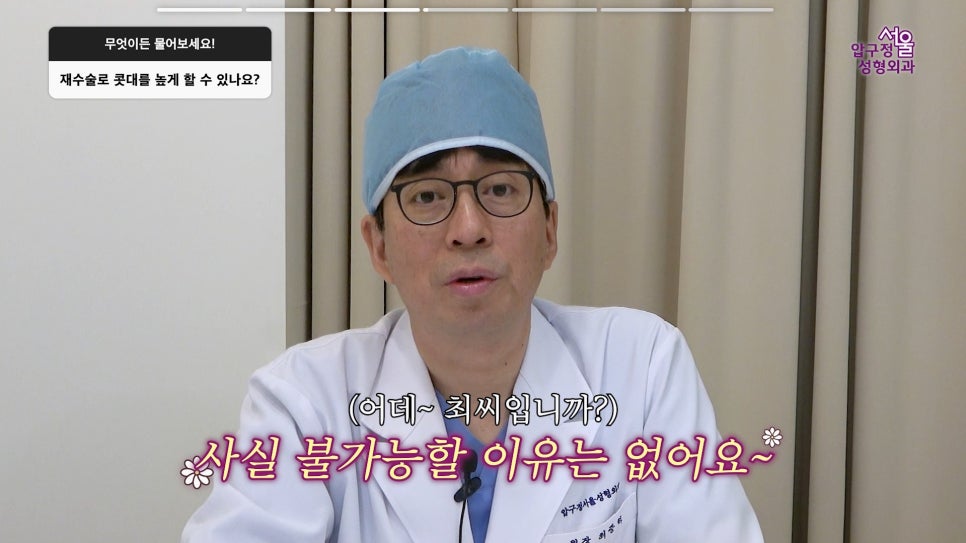
There is no reason it cannot be done.
In particular, the bridge is relatively simple.
If desired, it can be raised by using a silicone implant
that is higher than the previous one.
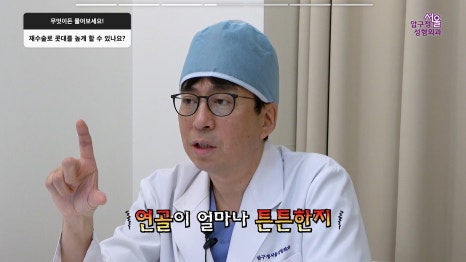
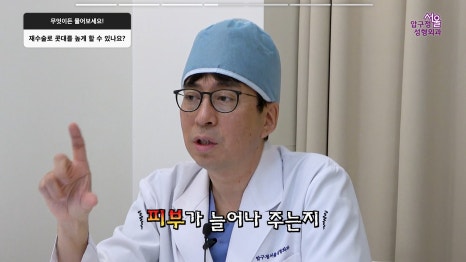
However, the nasal tip is a bit different.
Depending on the strength of the cartilage, how much the skin can stretch,
and the condition of the tissue,
the range in which it can be raised may be limited.
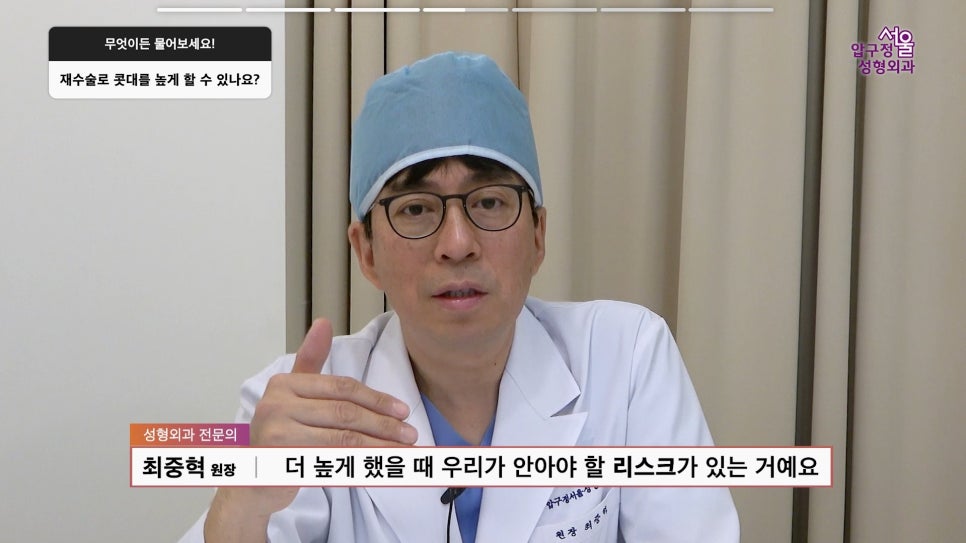
In other words, the important point is not so much that it cannot be raised further,
but that there are risks to consider if it is raised more.
If it is raised too aggressively, the skin may become thinner or turn red,
and over time the likelihood of contracture or deformity increases.
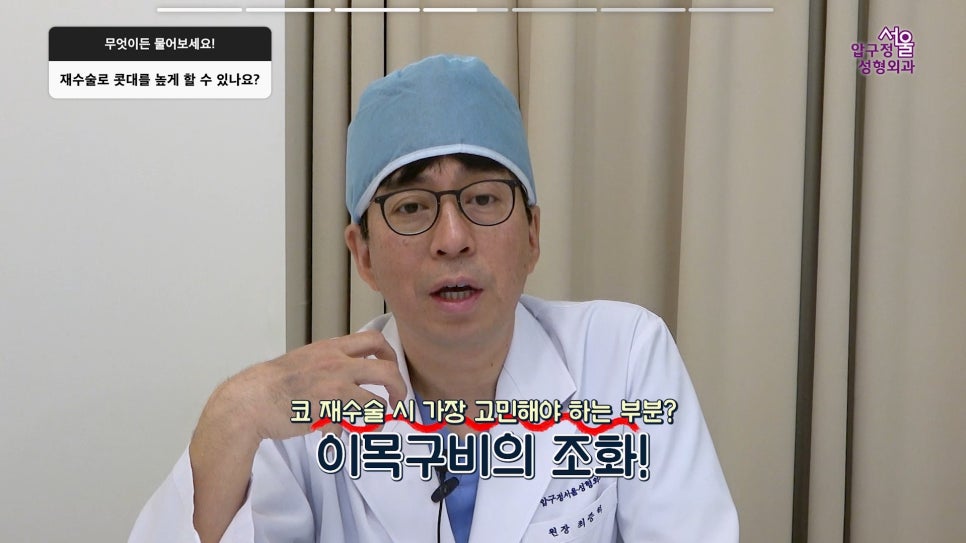
Therefore, when considering revision surgery,
rather than simply asking how much higher it can be made,
the more important criterion is how well it can harmonize with the entire face.
How many times can nose revision surgery be
performed at most?
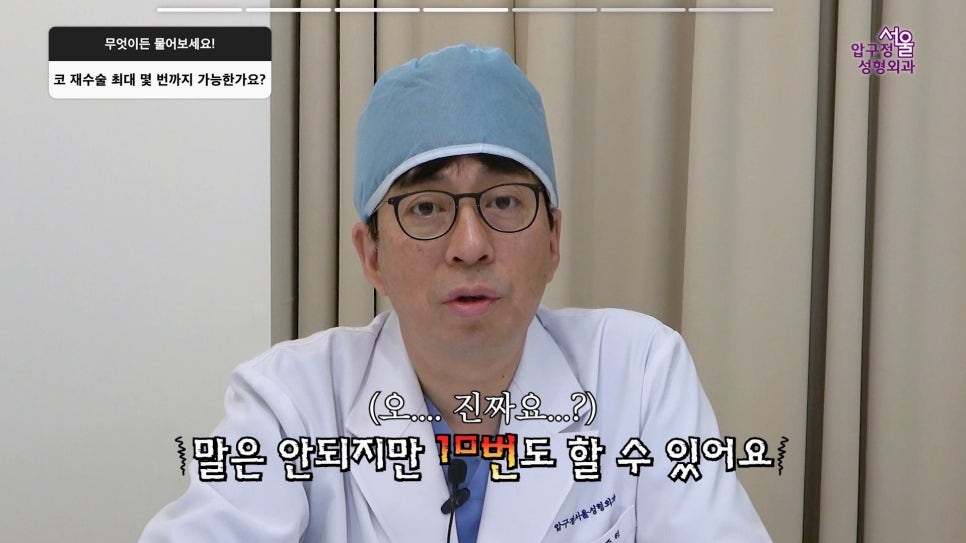
It is not possible to give a simple number.
In extreme terms, it can be done even 10 times.
However, it is true that with repeated surgeries,
tissue damage accumulates,
and the procedure naturally becomes more difficult.
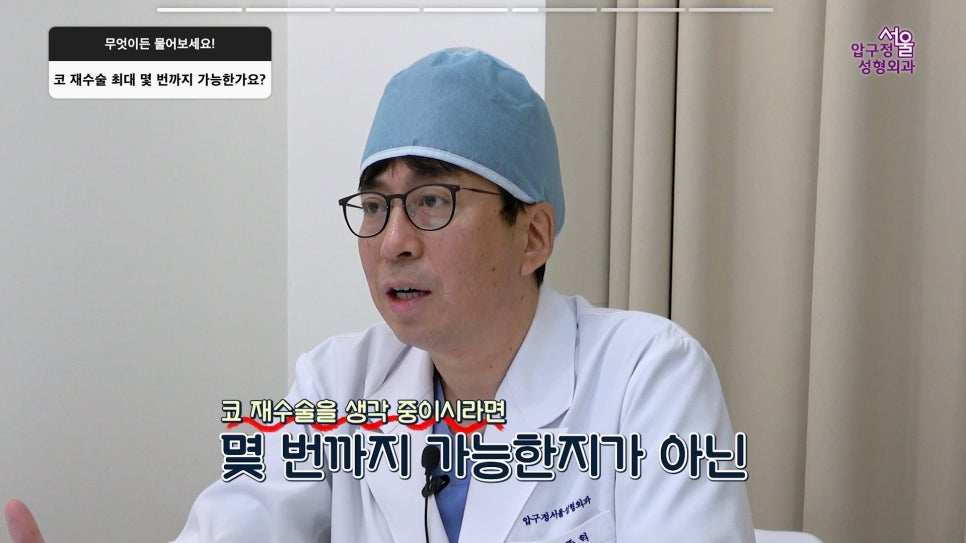


Therefore, what matters is not the number of times it can be done,
but whether revision surgery is possible in the current condition
and whether the conditions for correction are in place.
A comprehensive assessment of several factors is needed,
such as skin thickness, the condition of the cartilage and bone,
and the degree of scar tissue,
in order to establish a safe revision surgery plan.
In the end, what patients need most is not fixation on the number of times,
but a detailed review with a specialist of the best possible result
and stability in the current condition.
Do silicone implants in the nose need to be
replaced every 10 years?
Not at all.
In principle, silicone implants do not have a fixed replacement schedule,
and if there are no special problems, they can be used for life.


There are separate cases in which replacement is needed.
For example, over time,
the shape may no longer be satisfactory,
or in rare cases the implant may calcify
or inflammation may occur.

If the shape of the nose changes or discomfort arises in such situations,
that is when revision surgery is considered.

In other words, the statement “it must be replaced every 10 years”
is not true.
If you periodically check the condition and there are no problems,
there is no need to replace it.
What matters is the current condition of the implant and the health of the nose,
rather than time alone.
Will swelling after nose revision surgery
be worse than after the first surgery?
It may be worse, or it may not be.
There are also revision surgeries that are very simply corrected.
If only the height of the silicone is adjusted,
or the nasal tip is lifted just a little more,
a minor corrective procedure will cause far less swelling than the first surgery.
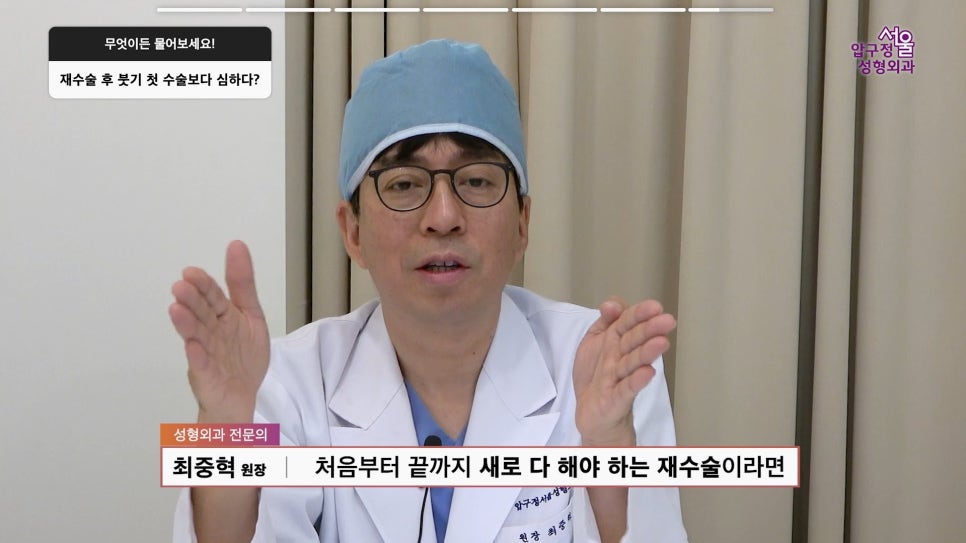

If it is a revision surgery that requires starting over from beginning to end,
the swelling may be somewhat more severe.
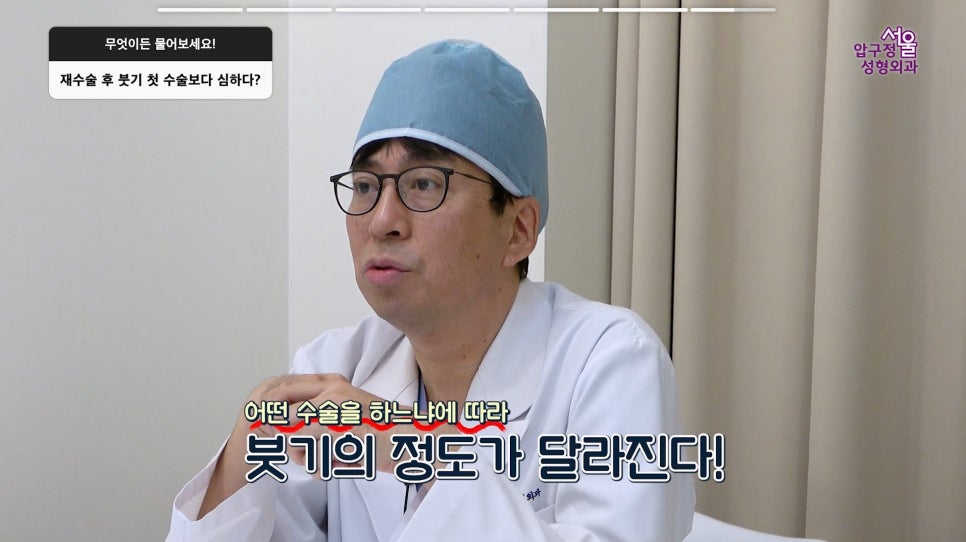
The degree of swelling varies depending on what kind of surgery is performed.
You do not need to think, “It is more severe just because it is a revision surgery.”
Revision nose surgery is a delicate process that goes beyond simply raising or lowering the nose;
it requires comprehensive consideration of harmony with the entire face,
the condition of the skin and cartilage,
and the patient’s expectations.
Therefore, when considering revision surgery,
it is important to fully discuss with a specialist what method can produce the safest
and most natural result in the current condition.
Our clinic has over 25 years since opening,
and based on accumulated know-how from extensive clinical experience,
we perform customized nose surgery and revision surgery tailored to each patient.
Our goal is not simply to change the appearance,
but to create results that remain natural and safe even over time.
If you are considering revision nose surgery,
we recommend consulting with a specialist to obtain an accurate diagnosis of your current condition
and find the optimal method.
Today, we took time to discuss and answer questions
that we receive often during consultations.
I hope this article was helpful, even a little,
for those considering nose surgery or revision nose surgery.
If you have more questions about nose surgery
or would like a consultation,
please contact us through the reservation box below.

This was Dr. Choi Junghyeok,
specialist at Apgujeong Seoul Plastic Surgery.