Hello.
Apgujeong Seoul Plastic Surgery
I am Dr. Choi Joong-hyeok, a board-certified plastic surgeon.
Today, I’d like to talk about double eyelid revision surgery, which many people are curious about.
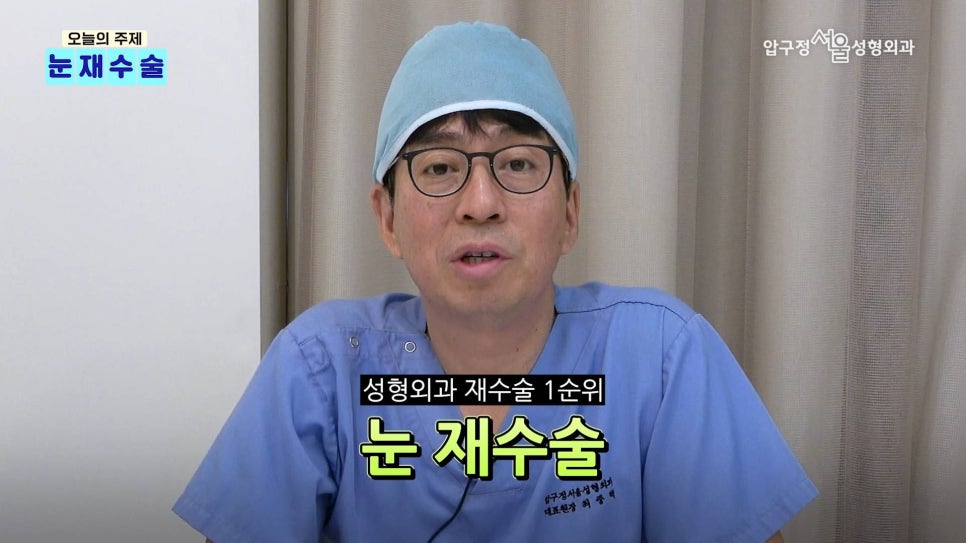
Double eyelid surgery is one of the most commonly performed procedures in plastic surgery,
and for that reason, many people also visit us for double eyelid revision surgery.
In fact, not only double eyelid revision surgery but all revision surgeries are more difficult than the first surgery.
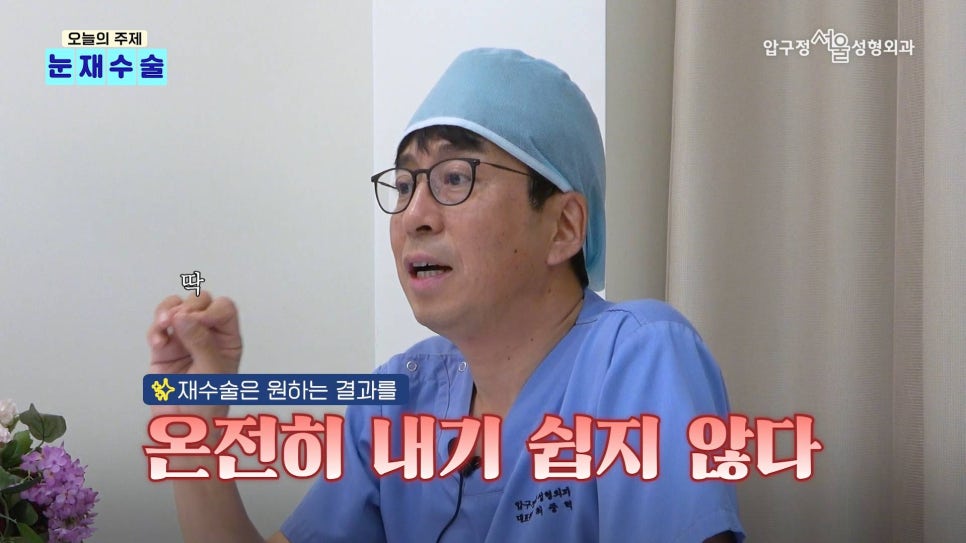
In other words,
it means that creating the exact result you originally expected
requires a more delicate approach and a more precise plan.
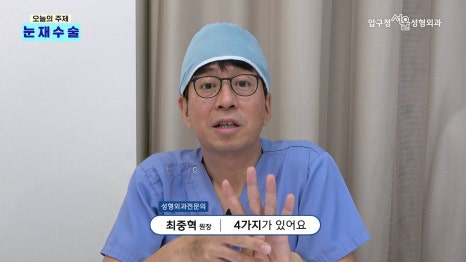
The main reasons people consider double eyelid revision surgery
can be broadly divided into four categories,
and in today’s post I will explain each one step by step.
At Apgujeong Seoul Plastic Surgery,
we have prepared information that may be helpful for accurate diagnosis and safe revision surgery,
so please read to the end.
- A double eyelid line that is too high
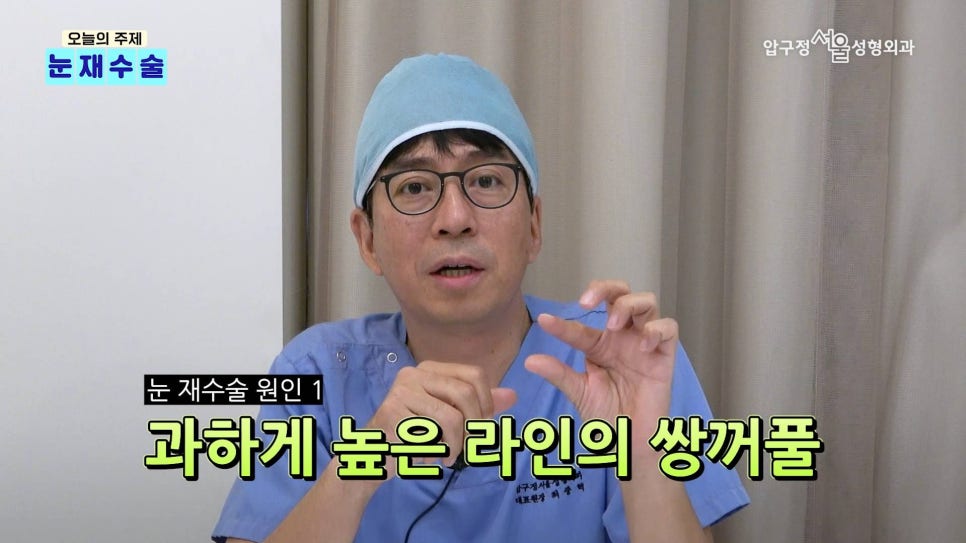
The first and most common reason for considering revision surgery
is a double eyelid line that is positioned too high.
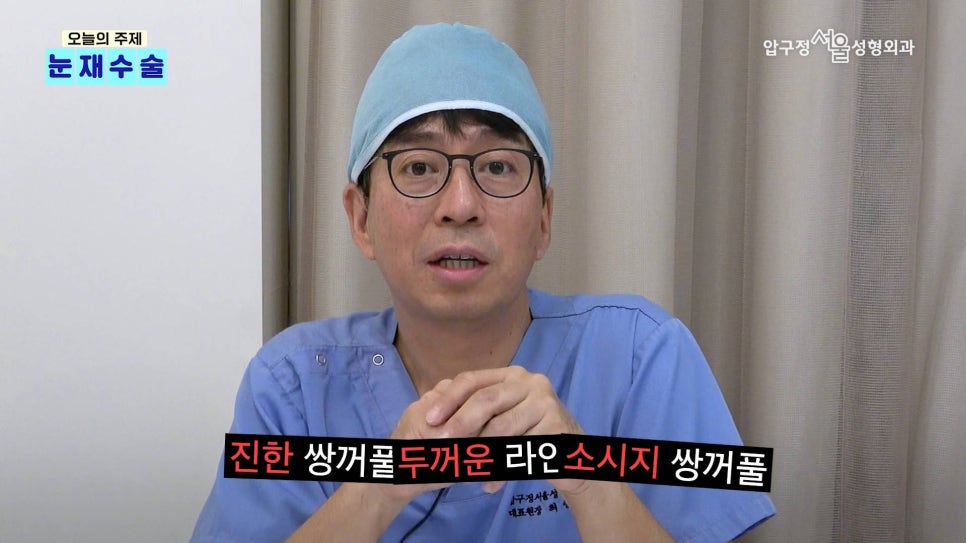

Terms such as a thick double eyelid, a heavy line, or a sausage-like double eyelid
all refer to cases where the double eyelid line
has formed too high.
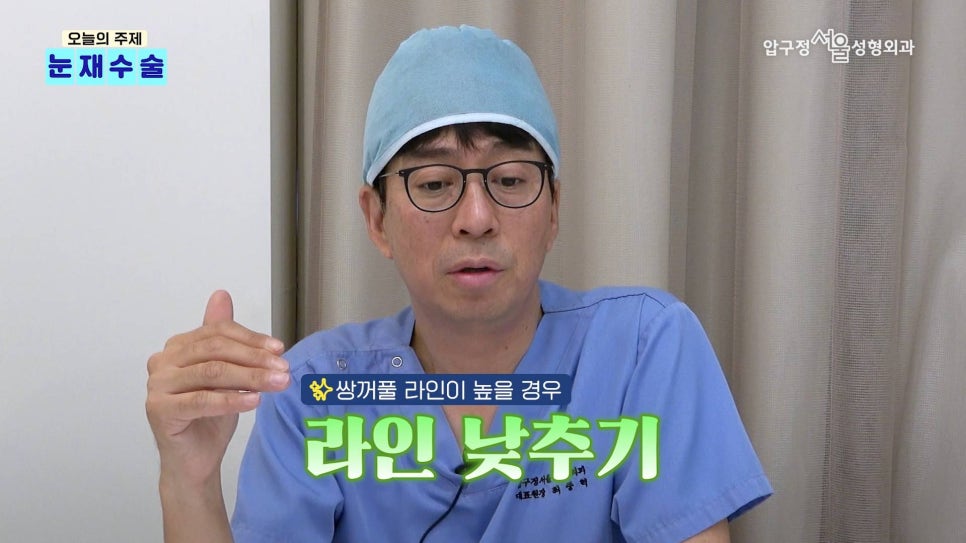
After double eyelid surgery, when people hear comments like “it looks like you had surgery,”
it is usually because the line has been placed higher than necessary, and in such cases
surgery to lower the line is considered.

The process of lowering a high line requires completely releasing
the existing double eyelid fold,
and if the skin is thick,
additional steps such as removing fat or soft tissue
may be needed so that the line can settle naturally,
making it more complicated than it may seem.
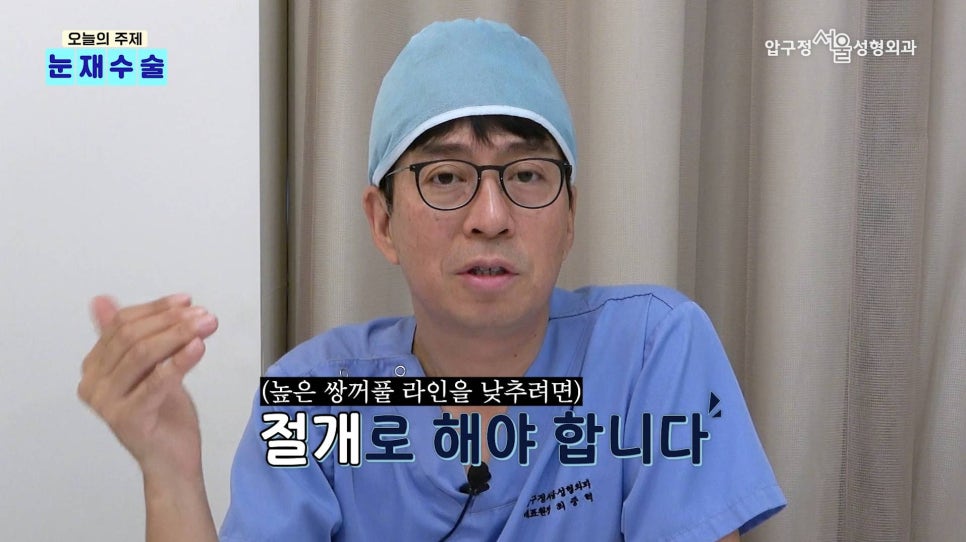
For this reason,
when correcting an overly high double eyelid line,
revision surgery using the incision method is usually necessary.
- A low double eyelid line
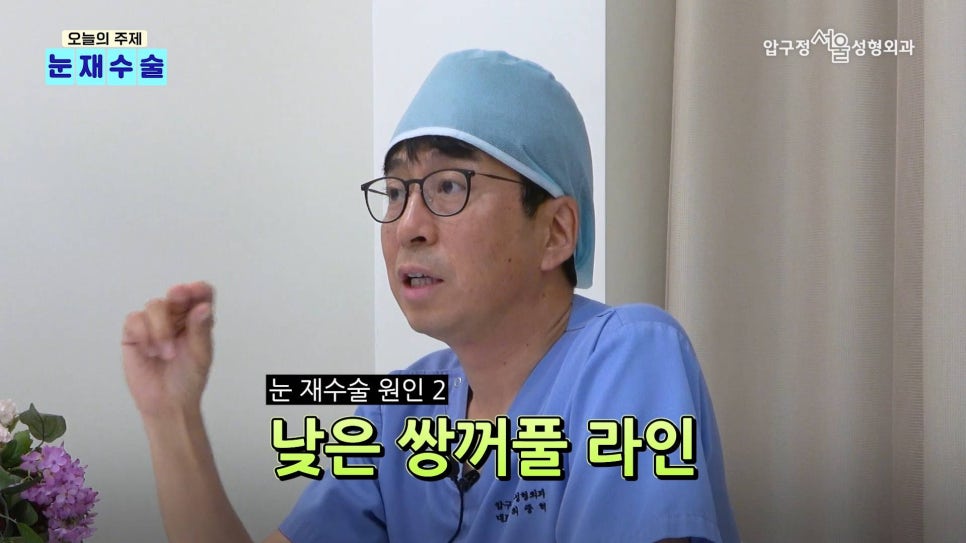
On the other hand, revision surgery is also considered when the double eyelid line is too low.

It looks too natural and not noticeable, there is no effect, or the eyes still look small.
These are cases where the person feels they did not achieve the clear impression they originally expected.
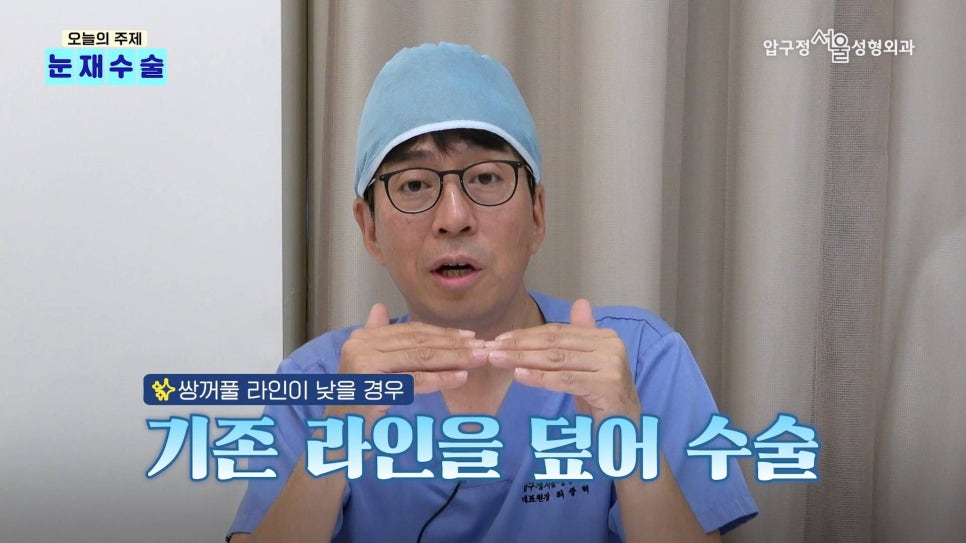
Because the existing low line can be left in place and a new line can be created above it,
revision surgery to raise a low line is relatively simple.
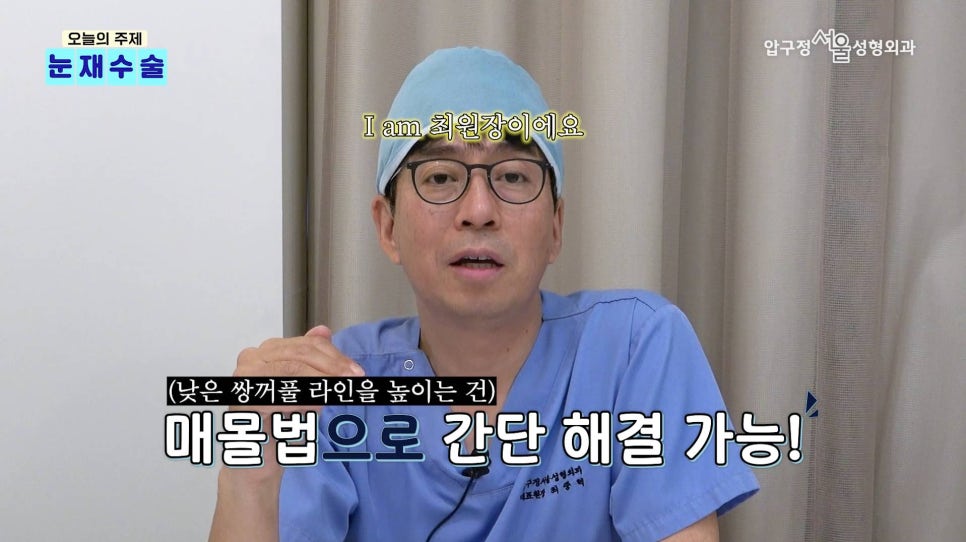
So in these cases,
most patients can achieve a natural-looking higher line with the non-incisional method,
and satisfaction tends to be high.
It is an appropriate revision method for those who want a clearer, more defined eye shape
while maintaining a natural appearance.
- When the double eyelid line has come undone
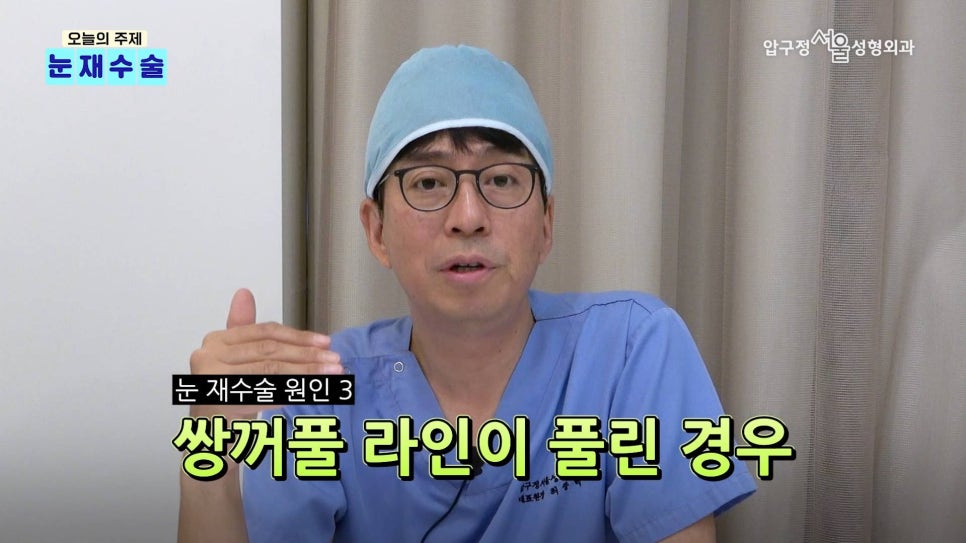
Simply put, this means the double eyelid does not stay in place
and has disappeared.
In such cases,
correction is possible by forming a new line again.
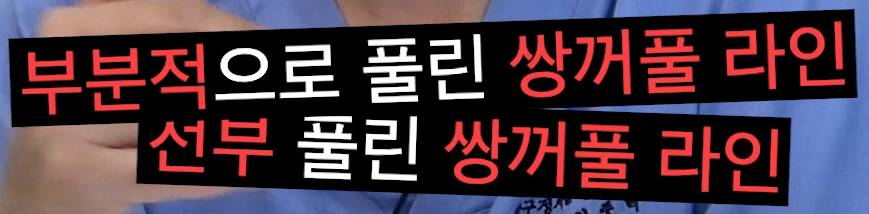
The reasons a double eyelid unfolds can vary.
Sometimes the line disappears completely, and sometimes only part of it comes undone,
as if it has broken in a section.

Regardless of the cause,
a stable result can be restored by creating a new double eyelid line,
including the area where it has come undone.
Revision surgery for a line that has come undone
focuses on reinforcing the existing line
or resetting a new line
to restore a natural and clear double eyelid.
- A problem with opening the eyes
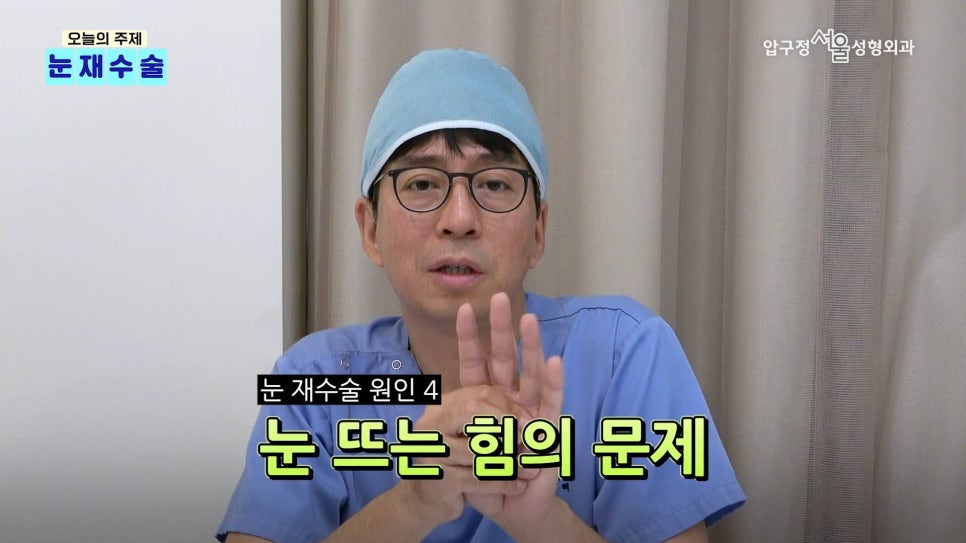
Lastly, an important reason for considering revision surgery is
weak eye-opening strength, that is, a problem with the levator muscle function.

In this case, simply creating a double eyelid line is not enough.
The functional aspect must also be addressed through ptosis correction
so that the eyes can open properly,
in order to achieve natural results.
If weak eye-opening strength is not considered
and only double eyelid surgery is performed,
the line is more likely to keep coming undone or asymmetry may develop,
so when performing revision surgery, it is essential to determine whether ptosis correction is also needed.
Some cases of double eyelid revision surgery are easy,
and some are difficult.
There are revision cases that can be resolved more simply and easily than the first surgery,
and there may also be cases that are nearly impossible.
When you are unhappy with the line,
or unhappy with the result of eye surgery,
as with other surgeries, the current appearance can continue to change

and the line can become lower or the fixation can change,
so in revision surgery, the tissues must be stabilized
before correction can be performed.

This is why revision surgery is usually possible about 6 months after the first surgery.
After 6 months, an accurate judgment is made,
and if necessary, a revision plan is then established.
Today, I explained the main causes of double eyelid revision surgery
that are considered in various situations,
along with the solutions.
Double eyelid revision surgery often cannot be solved simply by remaking the line
or changing the shape,
so it is most important to accurately analyze the current condition of the eyes
and establish a surgical plan tailored to it.
Whether the line is too high or too low, whether the line has come undone,
or whether there is a functional issue such as weak eye-opening strength,
each situation requires a different approach,
so the first step is to accurately identify the cause in your own case.
If you are considering double eyelid revision surgery,
I recommend carefully discussing with a specialist
how the current eye shape was created,
how much improvement is possible through surgery,
and when it is safe to proceed.
If you have more questions about eye plastic surgery,
please contact us through the reservation link below.

This has been Dr. Choi Joong-hyeok, a specialist at Apgujeong Seoul Plastic Surgery.
Thank you.