Revision Surgery for Contracted Nose
You need to know the cause first.
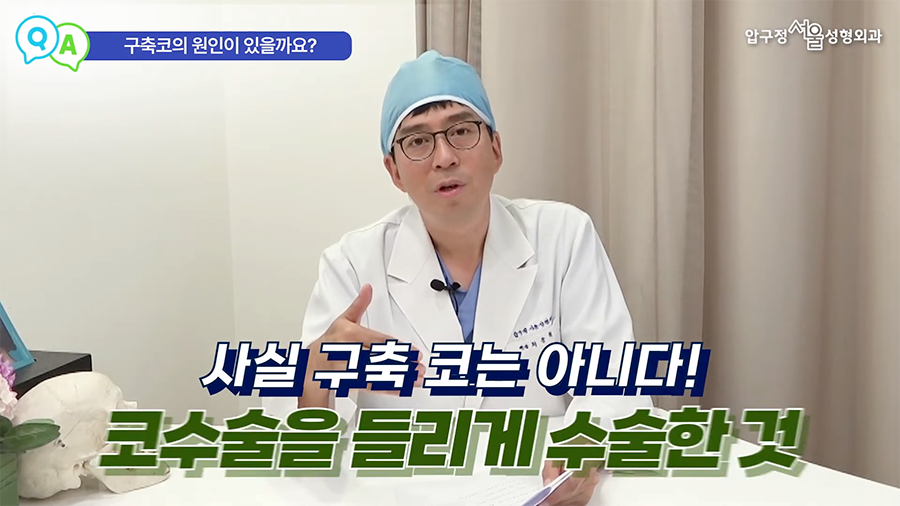
Hello.
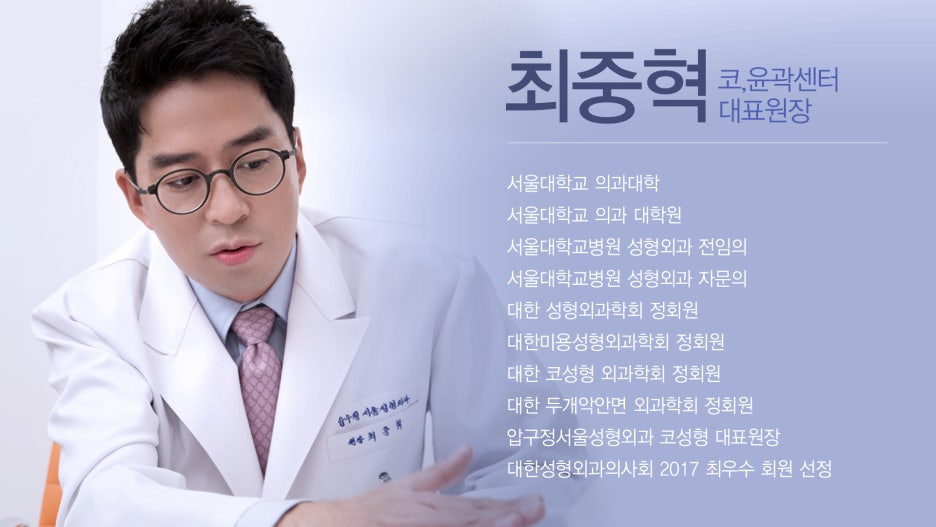
I am Choi Joonghyuk, a board-certified plastic surgeon at Apgujeong Seoul Plastic Surgery.
The word that comes to mind as the biggest fear after rhinoplasty is unquestionably “contracture.”
Looking in the mirror and seeing the tip of the nose gradually lifting higher and higher.
The helplessness and anxiety that come with that feeling.
I would like to give honest answers, based on clinical data accumulated over time, to the questions:
“Why did my nose end up like this?”
“Is it okay to have surgery again?”
An Upturned Nose and Revision Surgery for Contracted Nose
A precise diagnosis is the starting point of revision surgery.
Many people think that if the nose lifts after surgery,
it must be contracture.
But that is not always the case.
It can be largely divided into two types.
First, if the surgical design itself made the nose excessively upturned, it is simply an upturned nose shape.
Second, a contracted nose occurs when inflammatory reactions cause internal scar tissue to contract.
If it is simply a design issue, it may be improved sufficiently with cartilage repositioning alone.
But in an actual contracted nose, the skin itself becomes wrinkled and tightly hardened.
Only by accurately diagnosing this difference can an appropriate surgical plan be established. Rather than hastily concluding, “My nose is contracted,” please first clearly distinguish through consultation with a specialist whether the current condition is due to inflammation or design.
The Key Cause of Revision Surgery for Contracted Nose: “Inflammation”
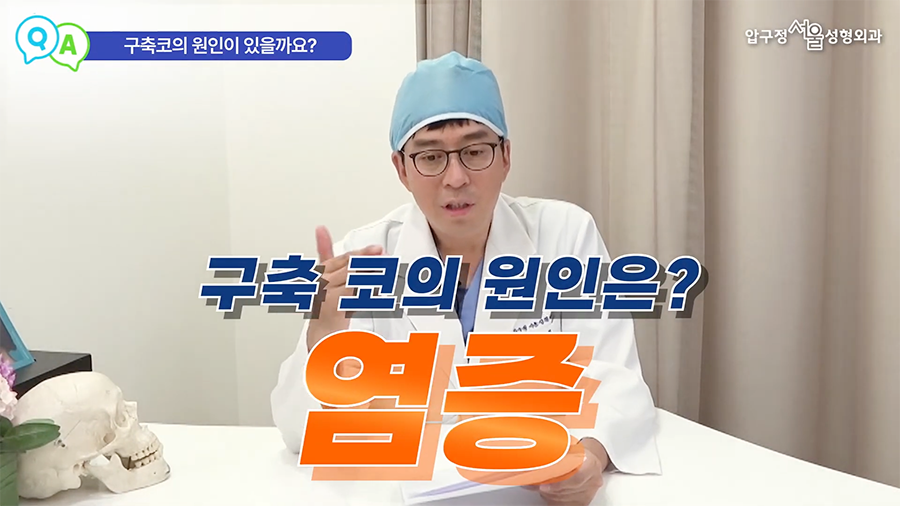
The fundamental cause of a contracted nose is repeated inflammation.
When inflammation occurs, the body creates scar tissue during the healing process, and as these tissues pull against each other, the nasal tip is lifted upward.
One important point to remember here is that not everyone who develops inflammation will get a contracted nose.
If you receive appropriate antibiotic treatment and care in the early stages of inflammation, it can be sufficiently prevented. If the nose becomes red, swollen, painful, or feels unusually soft and mushy, you should visit the hospital without delay.
The 6-Month Rule for Successful Revision Surgery for Contracted Nose
If contracture has already progressed, the timing of revision surgery is more important than anything else.
You may feel impatient, but in principle, it is safest to perform surgery after about 6 months have passed, once inflammation treatment has been completely completed and the tissue has softened.
If revision surgery is rushed while the scar tissue is still hard and unstable, the risk of complications such as another contracture or skin necrosis increases. It is best to prepare calmly while communicating with a specialist until the scar tissue settles into place and the skin’s flexibility is restored.
“Dissection” to Release the Firmly Bound Scar Tissue
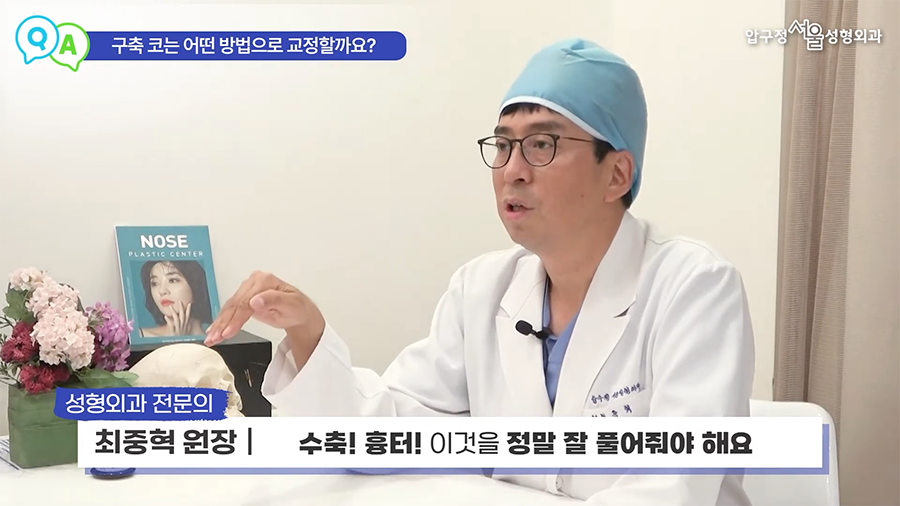
Revision surgery for a contracted nose consists of two major steps.
The first, and most important, step is dissection to carefully release the contracted scar tissue.
By sufficiently loosening the tightly adhered scar tissue, enough skin slack can be secured to bring the nasal tip downward.
Next comes cartilage repositioning, which builds a strong support structure and fixes the nasal tip cartilage in the desired position.
Given the strong skin resistance characteristic of a contracted nose, selecting materials with excellent support, such as autologous costal cartilage, and firmly reinforcing the structure so that the nasal tip does not rise again is the key to surgical success.
Postoperative Care,
Why Are Alcohol and Smoking So Harmful?
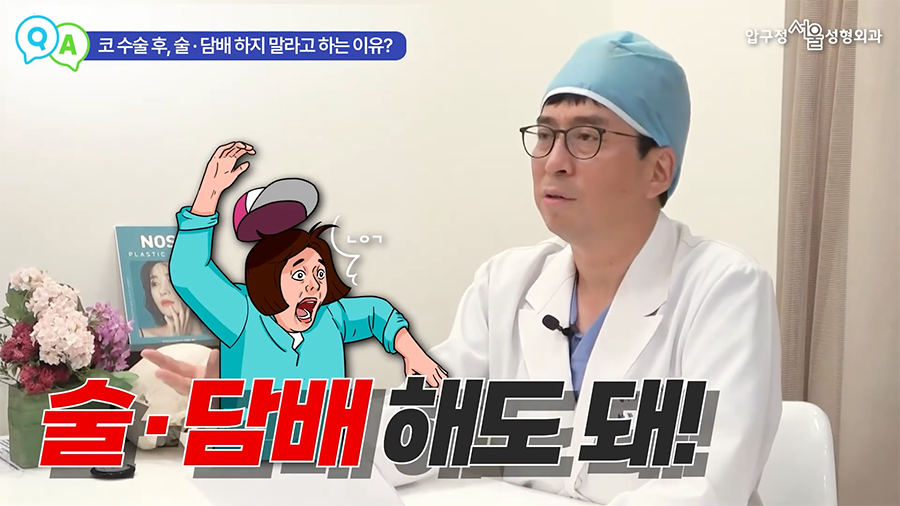
One of the questions patients ask most often is,
“Are alcohol and smoking really not allowed?”
Smoking interferes with vascular regeneration and significantly slows wound recovery.
Since revision surgery involves already sensitive tissue, blood circulation is more important than anything else.
Although alcohol and smoking do not directly cause contracture, it is clear that they reduce recovery capacity and increase the likelihood of inflammation.
It is best to refrain from smoking and drinking for about 2 weeks after surgery, or as long as one month in some cases.
Closing Remarks
A contracted nose is certainly inconvenient and difficult, but it is not an unsolvable surgical problem.
It is a relatively rare complication, and modern medical techniques can correct it sufficiently.
In actual consultations, many people come in feeling anxious without being able to distinguish whether their nose is truly contracted or simply structurally upturned.
That is why today I explained the exact causes of a contracted nose and the basic principles of revision surgery.
What matters is not the result that it has lifted, but understanding why it lifted.
The approach differs depending on whether it is scar contraction caused by inflammation or a structural design problem.
Surgery for a contracted nose is not simply a procedure that lowers the nasal tip.
It is a process of comprehensively redesigning the skin and scar condition, the position of the cartilage, and even the support structure.
Even if two noses are similarly upturned, the surgical method and prognosis can differ depending on the internal condition.
If you have more questions about revision rhinoplasty, please make a consultation appointment through the reservation link below.
This has been Choi Joonghyuk, board-certified plastic surgeon at Apgujeong Seoul Plastic Surgery. Thank you.