Eye-Shape Correction and Ptosis?
Accurate Definitions of Commonly Misunderstood Terms
Comparison of Ptosis Surgery Reviews

Hello.
I am Choi Joong-hyuk, a board-certified plastic surgeon at Apgujeong Seoul Plastic Surgery.
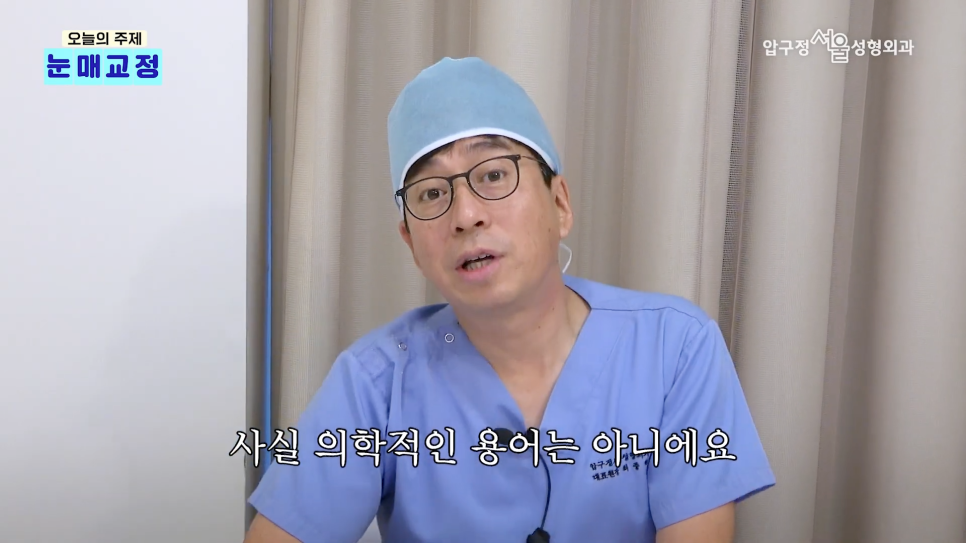
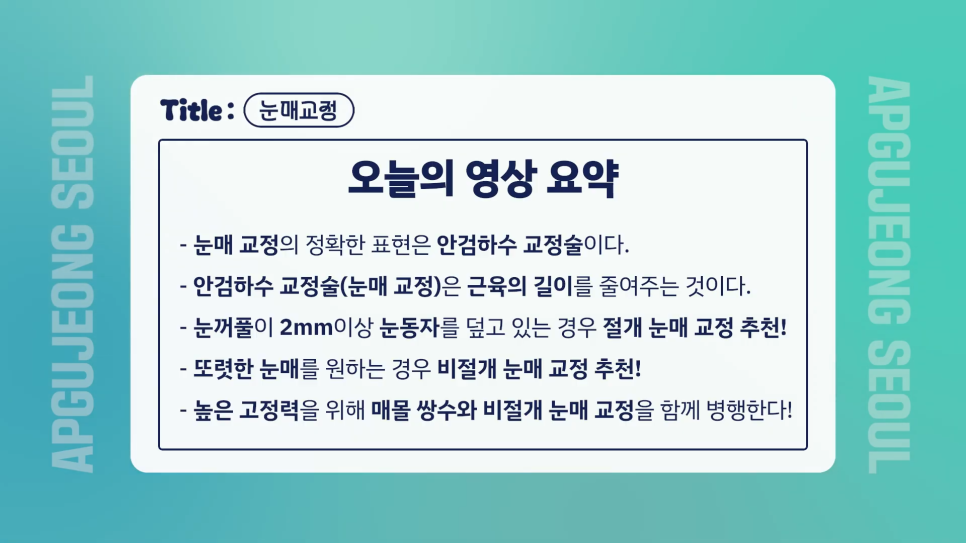
The term “eye-shape correction surgery,” which we often encounter in hospital promotions and reviews, is not actually a medical term. It is simply a term used popularly to help patients understand the procedure. The accurate medical name is “ptosis correction surgery.”
Ptosis does not simply refer to having small eyes. It describes a condition in which the eyelids droop and the eyes look sleepy because the muscles that open the eyes are weak.
When I meet patients in the consultation room, many ask definitively whether they have ptosis. Clinically, however, ptosis is not classified according to a simple black-and-white distinction of “present” or “absent.”
The diagnosis and surgical approach can differ completely depending on how much the eyelid covers the iris—1 mm, 2 mm, or 3 mm or more—in other words, on the extent or severity of the ptosis.
Shortening the Length of the Eye-Opening Muscle
The Principle Behind Ptosis Surgery
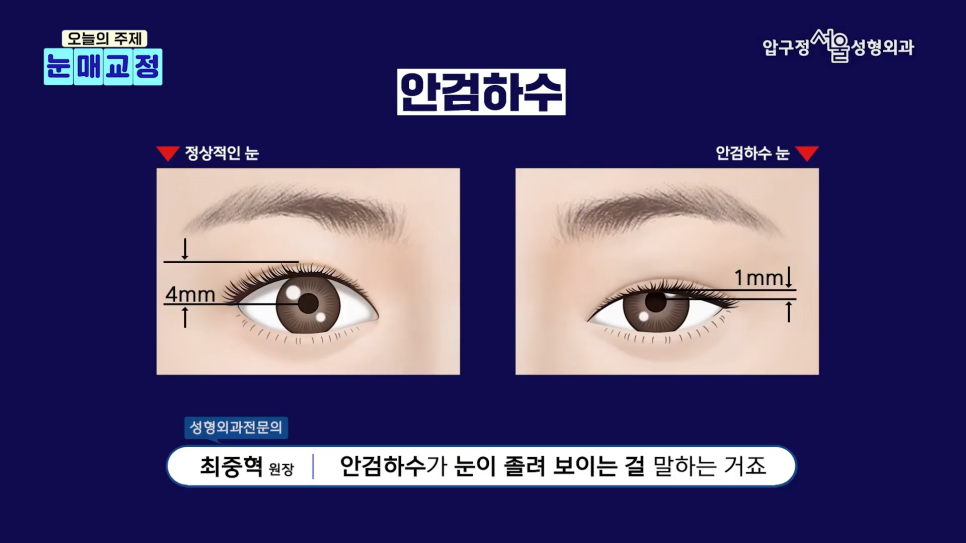
The core principle of ptosis correction surgery is to “strengthen the muscles that open the eyes.” How can muscle strength be increased? The principle is more intuitive than you might think. Shortening the overall length of a muscle makes it stronger.
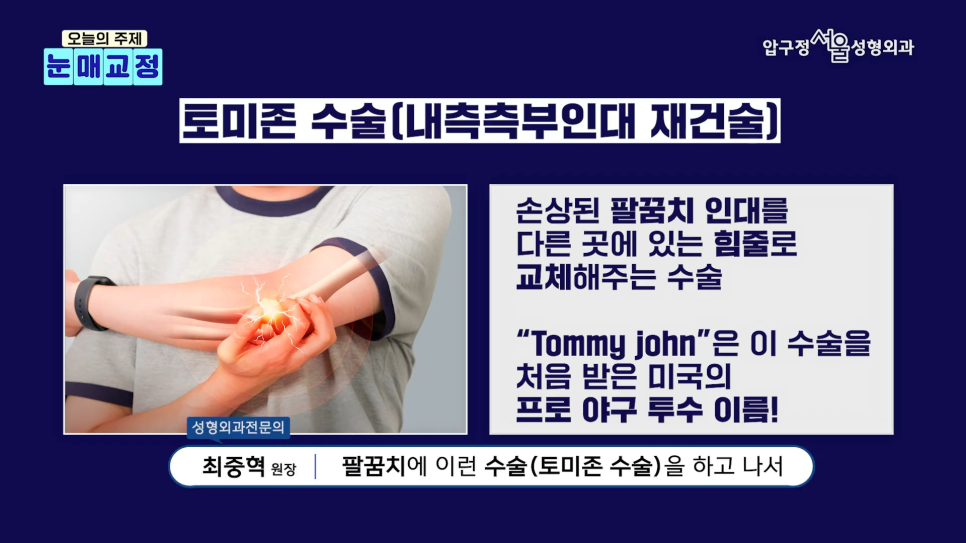
To help explain this, let us consider the example of a baseball player. You may have seen pitchers return after undergoing surgery on the ligaments or muscles around the elbow and sometimes throw faster than before. This is because the attachment areas of the muscles and tendons become firmer during surgery, or their length is shortened slightly, strengthening their contractile force.
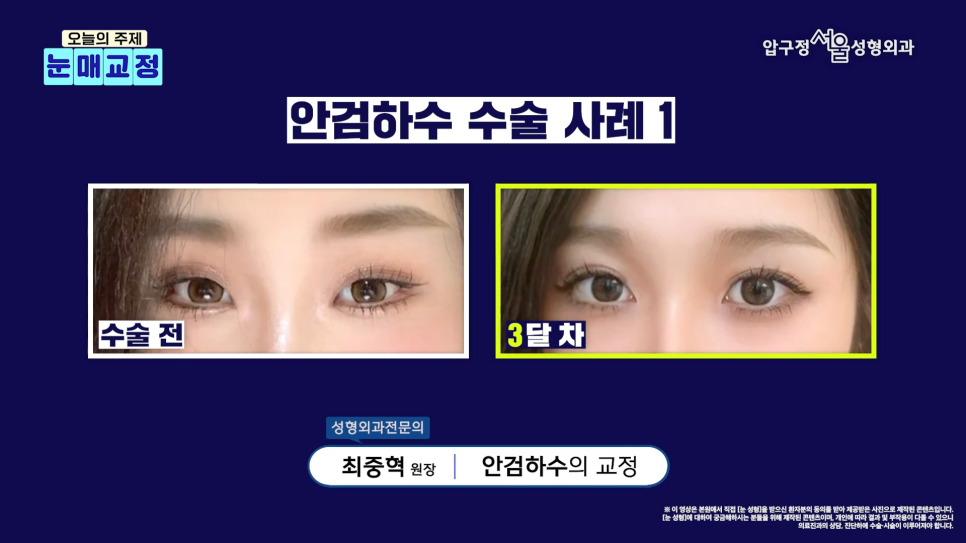
Ptosis surgery works in the same way. To lift drooping eyelids, the eye-opening muscles are tightened or partially removed to shorten their length. Because this is a traditional method that directly shortens the muscle, it generally involves making an incision in the skin.
Comparison of Incisional vs. Non-Incisional Eye-Shape Correction Surgery
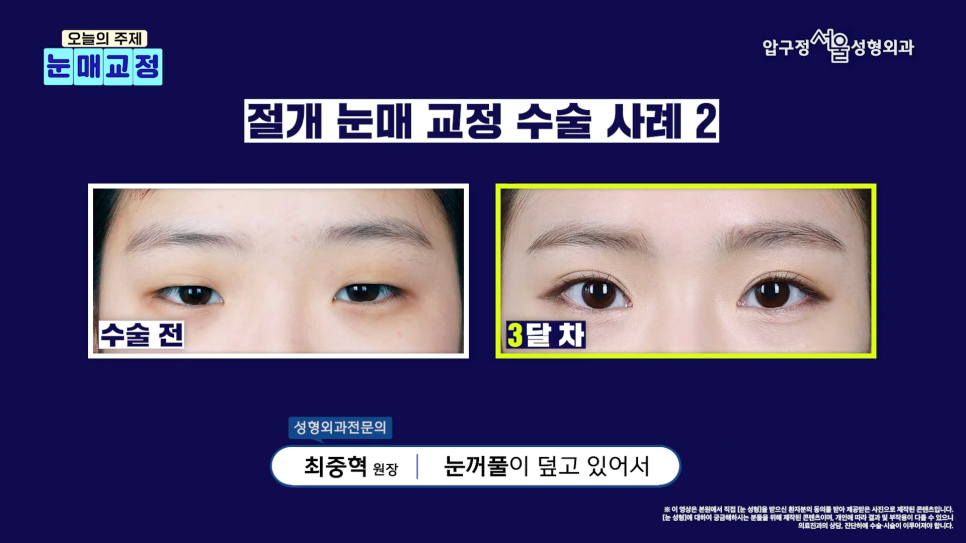
The point that most often confuses patients when they look at ptosis surgery reviews is the choice between the “incisional” and “non-incisional” methods. Based on our clinical data, I will clearly compare the key differences between the two procedures and the patients for whom they are appropriate.
| Surgical method | Key approach | Suitable candidates | Surgical characteristics, advantages, and disadvantages |
|---|
| Non-incisional eye-shape correction | The muscle is tied with sutures through the buried-suture method, without making an incision in the skin | Those with little to no ptosis who want only a subtle improvement in the appearance of the eyes | Short recovery period and minimal scarring; limited corrective effect for severe ptosis because it is an auxiliary procedure |
| Incisional eye-shape correction | After making an incision in the skin, the eye-opening muscle is directly partially removed and shortened | Those with ptosis of 2–3 mm or more, whose eyelids cover a significant portion of the iris and make the eyes look sleepy | Definite and lasting corrective effect, with the potential for clear functional improvement; requires a longer recovery period than the non-incisional method |
Actual clinical cases reflected in ptosis surgery reviews show that patients whose eyelids cover a large portion of the iris and whose eyes look markedly sleepy generally need the incisional method to achieve a successful outcome.
By contrast, non-incisional eye-shape correction is an auxiliary method used selectively when only a very small degree of correction is needed.
Why Buried-Suture Double-Eyelid Surgery + Eye-Shape Correction Is Recommended
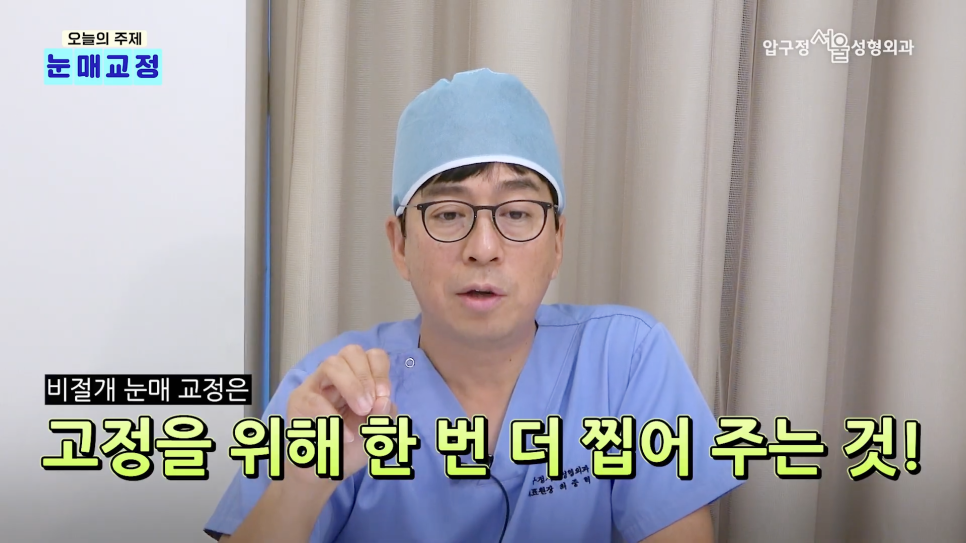
During consultations, I am often asked, “My ptosis is not severe, so why was non-incisional eye-shape correction recommended along with buried-suture double-eyelid surgery?”
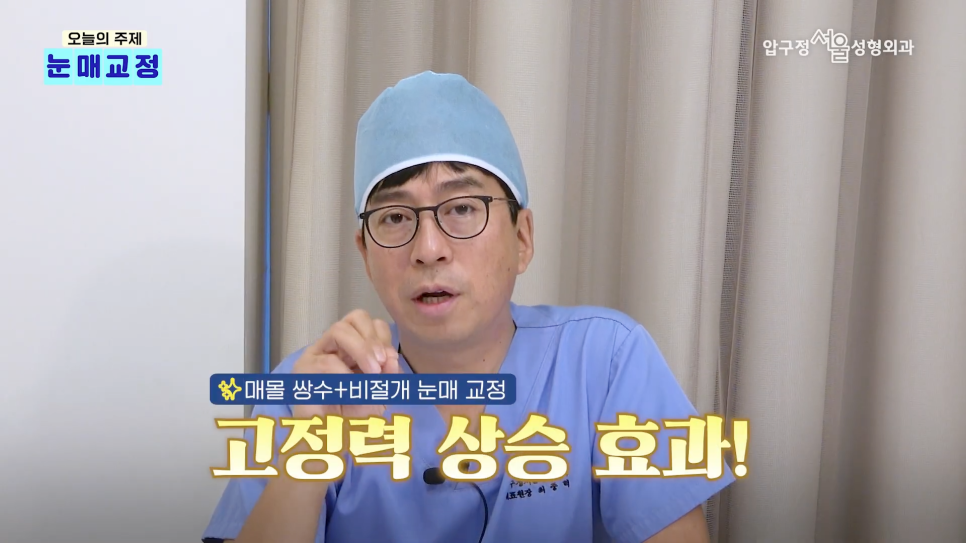
Non-incisional eye-shape correction is usually performed together with buried-suture double-eyelid surgery rather than used on its own. The buried-suture method is a procedure that pinches the skin using knots made with sutures. Performing non-incisional eye-shape correction at the same time means placing an additional firm suture around the eye-opening muscle—the levator palpebrae superioris—when tying the sutures.
In other words, its purpose is not necessarily to correct ptosis dramatically, but rather to reinforce the support so that the double-eyelid line does not loosen and remains stable. Because it can create a useful synergistic effect by increasing the fixation strength of the buried-suture method, specialists often recommend performing it at the same time.
Key Tips to Know Before Looking for Ptosis Surgery Reviews
After performing eye plastic surgery for more than 20 years, I have concluded that the proportion of patients who actually need medical ptosis correction—eye-shape correction itself—is not as high as many people think.
In particular, teenagers and patients in their 20s do not need to assume that they have severe ptosis simply because their eyes look small or sleepy. In most young patients, the reason their eyes appear small is not ptosis, but the absence of a double-eyelid fold, which allows drooping eyelid skin to cover the lower part of the iris. Their eyes look small because the skin has not been lifted, while the muscle itself is often functioning normally.
Therefore, if you are considering surgery, there is no need to become anxious in advance by looking only at ptosis surgery reviews from YouTubers or blogs and asking yourself, “Do I need incisional eye-shape correction too?” The order of the questions you should consider first is as follows.
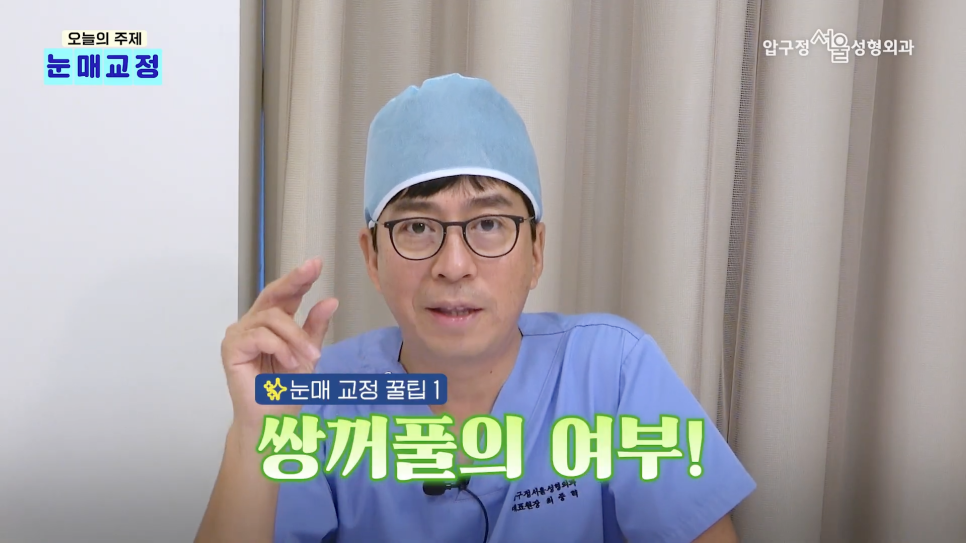
Step 1
Should I create a double-eyelid fold or not?
First, consider how much more open and refreshed your eyes might look when a double-eyelid line is created.
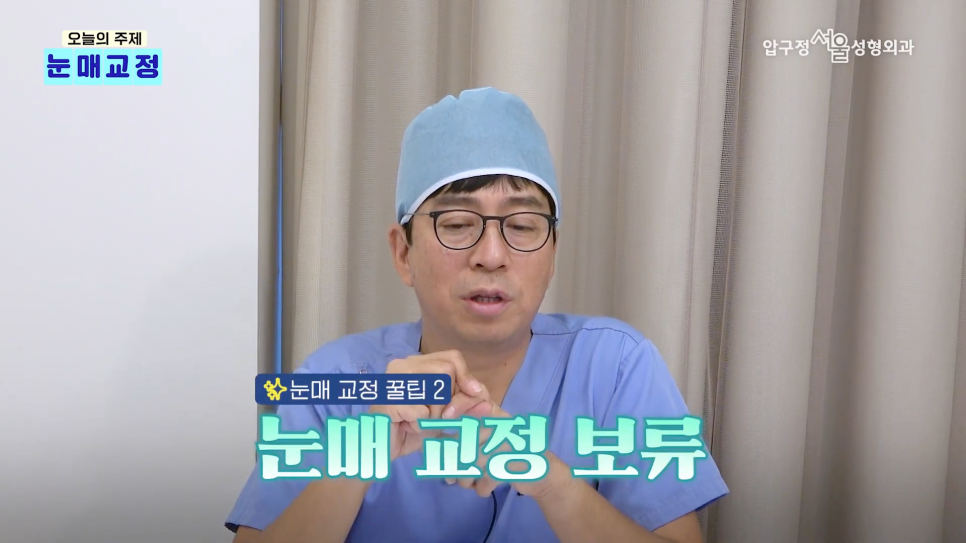
Step 2
After that, you can leave the question of whether eye-shape correction—ptosis correction—is necessary to a board-certified plastic surgeon. Whether the muscle is truly lacking in strength can be confirmed quickly through precise measurements in the consultation room; it is only a secondary consideration.
At Apgujeong Seoul Plastic Surgery, we comprehensively analyze the current structure of the eyes, the condition of the skin, the desired appearance, and the amount of strength needed from the eye-opening muscles before explaining the surgical method appropriate for each individual. Ptosis correction is not simply a procedure to make the eyes look larger; it is a procedure that must consider the balance and function of the entire face together.
If you are considering surgery, rather than looking only for reviews, consult sufficiently with a specialist to determine the method that is right for you. That process is the most important first step toward a satisfactory result.