Nasal Packing Removal After Nose Surgery
Why One Day Matters
Nasal packing is used to prevent bleeding, but keeping it in for a long time is not necessarily better.

Hello.
I am Dr. Choi Joong-hyuk of Apgujeong Seoul Plastic Surgery.
One of the questions people preparing for nose surgery ask most often during consultations is:
"When is the packing placed in the nose removed?"
"Won’t my nose be blocked for longer than I expect?"
Quite a few people are more concerned about the period when their nose is blocked and it is difficult to breathe after surgery than about the surgery itself. In fact, when the nose feels stuffy, it can be difficult to sleep, and breathing only through the mouth can make the throat dry and cause considerable discomfort.
However, the packing placed inside the nose is not simply meant to block the nasal passages. It is an important part of controlling bleeding immediately after surgery. That said, contrary to what many people may think, leaving it in longer is not necessarily better.
When Is Nasal Packing Removed After Nose Surgery?
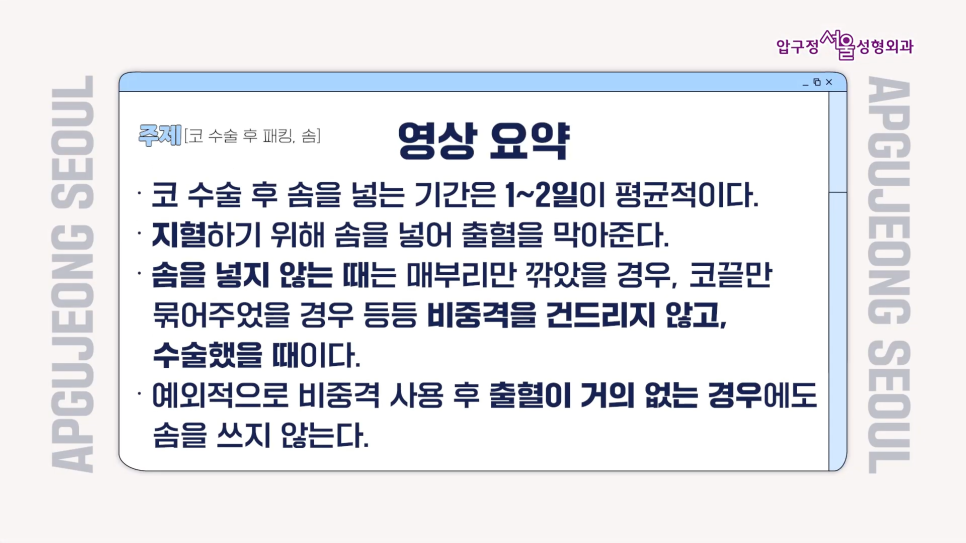
In most cases, it is usually removed within one to two days.
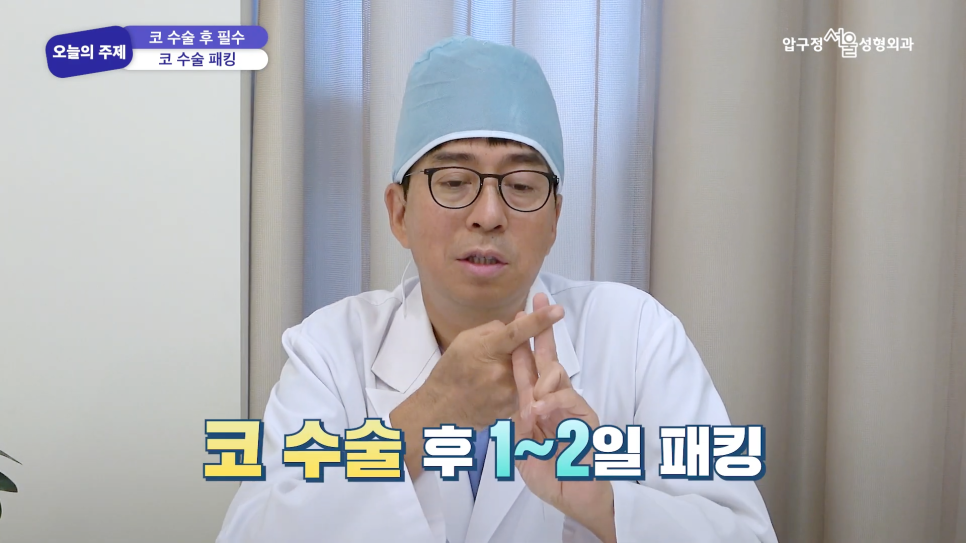
To give you the conclusion first, nasal packing is usually removed the day after surgery or within 48 hours.


Although the timing may vary slightly from one hospital to another, unless there are special circumstances, it is not often kept in place for more than two days. In fact, keeping it in longer than necessary may increase the risk of infection or inflammation, so short-term placement is now the general treatment principle.
| Category | Details |
|---|
| Packing removal timing | Usually the day after surgery to within 48 hours |
| Purpose of placement | Compression to control bleeding and achieve hemostasis |
| If kept in for too long | May increase the risk of infection and inflammation |
| Is it necessary for every surgery? | No. It depends on the surgical method. |
Why Is Nasal Packing Used After Nose Surgery?
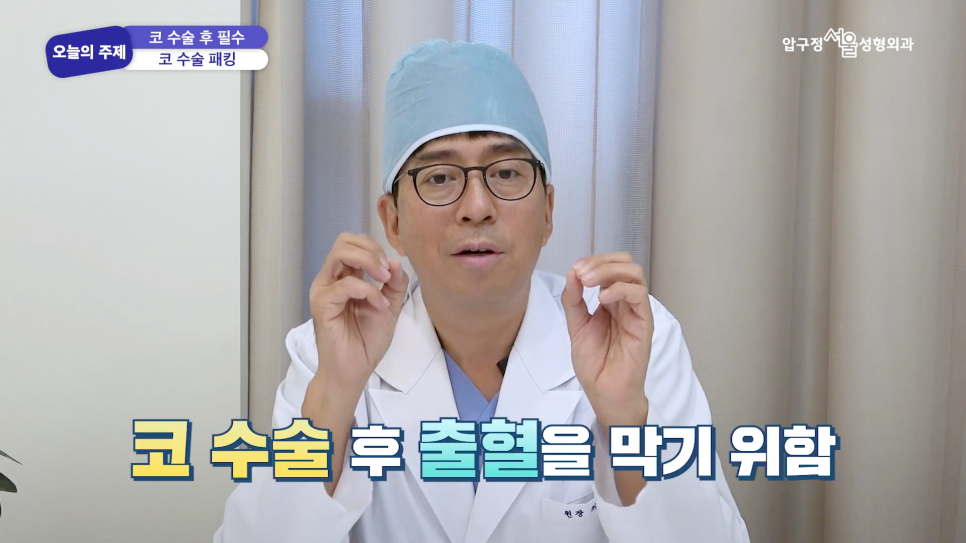
Its primary purpose is to stop bleeding in a stable manner. The inside of the nose contains tissue with a very rich supply of blood vessels. When the nasal septum or mucous membrane is handled during surgery, bleeding may occur, but the inside of the nose is not an area that can be directly compressed by hand.
Therefore, packing materials such as Merocel are used to gently compress the bleeding area and promote hemostasis. It may be helpful to think of it as working on the same principle as pressing a wound with gauze to stop bleeding. In other words, the packing is not used simply to block the nose; it is a medical treatment intended to support safe recovery.
How Is a Silastic Sheet Different from Nasal Packing?
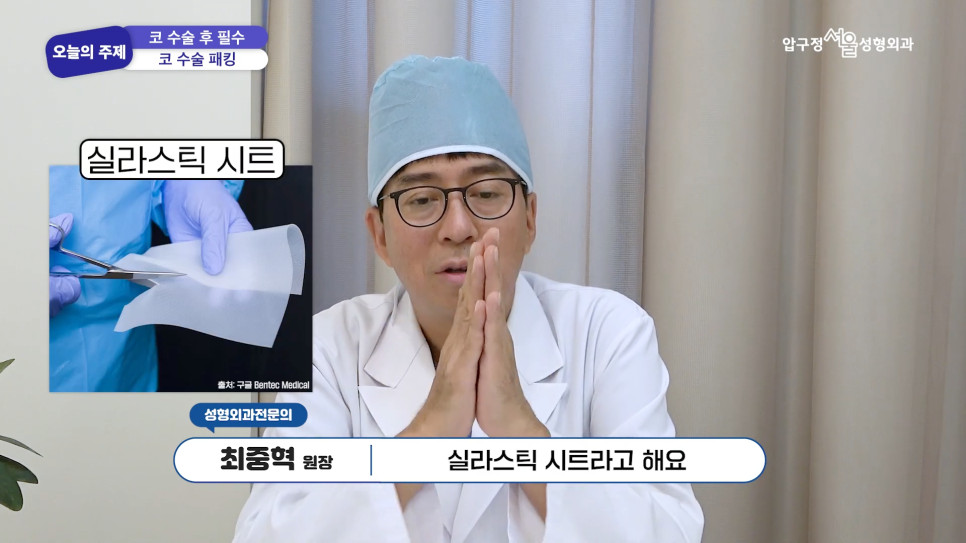
Their purposes are entirely different. One thing patients often confuse with packing is a Silastic Sheet. Silastic is a thin sheet made of silicone, and it is not used to stop bleeding. When the nasal septum mucous membrane has been treated, there is a possibility that the mucous membranes on both sides may stick together during the recovery process.
To prevent this adhesion, the Silastic Sheet is secured in place for a certain period.
In other words,
Even though both may be placed inside the nose, their roles are completely different.
Even After Nose Surgery,
Packing May Not Be Used in Some Cases.
Not every type of rhinoplasty involves packing. These days, depending on the surgical method, packing is often not used.
For example:
-
When only a dorsal hump is reduced
-
When only the tip of the nose is corrected
-
When the nasal septum is not involved
-
When there is very little bleeding during surgery
In such cases, it may not be necessary to block the nose.
Having nose surgery does not necessarily mean that packing will be placed. The medical team makes this decision based on the extent of surgery and the amount of bleeding.
The Timing of Nasal Packing Removal After Nose Surgery
The Medical Team’s Judgment Is Most Important.
Safe recovery should come before relief from discomfort. Anyone may find it uncomfortable to have a blocked nose for about a day after surgery. However, understanding that this short period is part of achieving stable hemostasis and recovery may make you feel somewhat more at ease.
Conversely, touching or attempting to remove the packing on your own because it is uncomfortable may affect bleeding or recovery, so you must follow the medical team’s instructions. The timing of nasal packing removal is not simply a matter of choosing a date; it is determined by considering both the extent of surgery and the condition of the bleeding.
At Apgujeong Seoul Plastic Surgery, packing is used only when necessary according to the surgical method, and it is safely removed at the appropriate time after the patient’s recovery has been assessed.
Rhinoplasty is a treatment in which the recovery process is just as important as the surgery itself. If you have questions, rather than relying only on online reviews, please consult fully with the medical professional who performed your surgery and receive accurate guidance.