Before-and-After Facelift Review
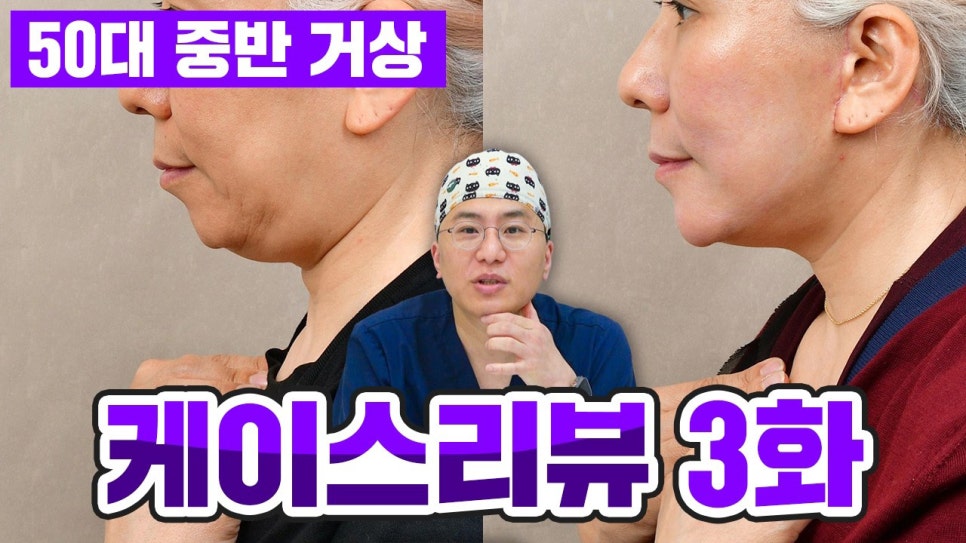
Changes Examined Through an Actual Case of a Patient in Her Mid-50s
Hello. This is Apgujeong Seoul Plastic Surgery Clinic.
As we age, one of the first changes that catches our attention when we look in the mirror is sagging in the face and neck. In particular, when nasolabial folds deepen and marionette lines begin to form below the corners of the mouth, we may feel that we look more tired or older than before. However, even among people in their 50s, patterns of facial sagging vary from person to person. Several factors need to be considered together, including the degree of skin laxity, the shape of the jaw, submental fat, and neck sagging.
Today, based on the actual before-and-after results of a patient in her mid-50s, we will examine her concerns before surgery and the changes observed afterward.
What were the concerns before surgery?

This patient was in her mid-50s and had developed nasolabial folds along with skin sagging. Marionette lines had also begun to appear. She sought a consultation because she found the sagging below her neck particularly stressful.
At her initial visit, the neck area appeared somewhat thick, with both fat and loose skin observed beneath the chin. In addition, because her chin was relatively small, the area beneath the chin appeared more prominent as the sagging progressed.
| Features Observed Before Surgery | Details |
|---|
| Nasolabial folds | Appeared along with skin sagging |
| Around the mouth | Marionette lines had begun to form |
| Beneath the chin | Appeared thick and prominent due to fat and skin sagging |
| Neck area | Sagging in the lower area was a concern |
| Chin shape | Sagging may appear more pronounced because of the relatively small chin |
It is important to examine the face, jawline, and neck together rather than assessing facial sagging based only on wrinkles in one area.
If the chin is small,
can sagging beneath the chin be more noticeable?
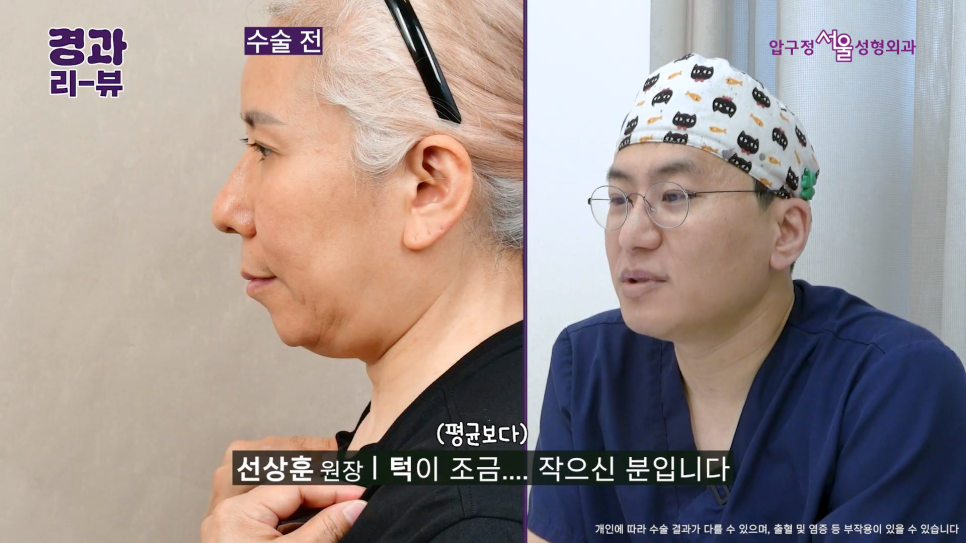
Because each person has a different facial bone structure and chin shape, the visible appearance can vary even when the degree of skin sagging is similar. In this case, the patient’s chin was relatively small, and the presence of both submental fat and loose skin made the lower area appear prominent.
Therefore, when reviewing before-and-after facelift cases, it can be helpful to compare not only how much the wrinkles were reduced, but also which areas of sagging were a concern on your own face and how those areas changed after surgery.
Can frequently looking down
also affect neck wrinkles?

This is one of the questions patients frequently ask in the consultation room. These days, many people spend long periods using smartphones or computers and maintain a posture with their head tilted forward for extended periods. Repeatedly adopting this posture may make wrinkles in the neck area appear deeper, so it is also advisable to pay attention to your usual posture when managing your results after surgery.
Surgery may be a way to improve sagging that has already appeared, but subsequent lifestyle habits and care also need to be considered.
What procedures were performed
in this before-and-after facelift case?
This patient underwent a facelift and neck lift, along with liposuction beneath the chin. The causes of sagging beneath the chin vary from patient to patient. In addition to the amount of fat and the degree of skin laxity, the condition of the muscles must also be considered, and in some cases, additional incisions and muscle manipulation may be necessary. In this case, however, based on the procedures provided, lifting of the face and neck areas was performed together with submental liposuction.
One month after surgery
What changes were seen before and after the facelift?
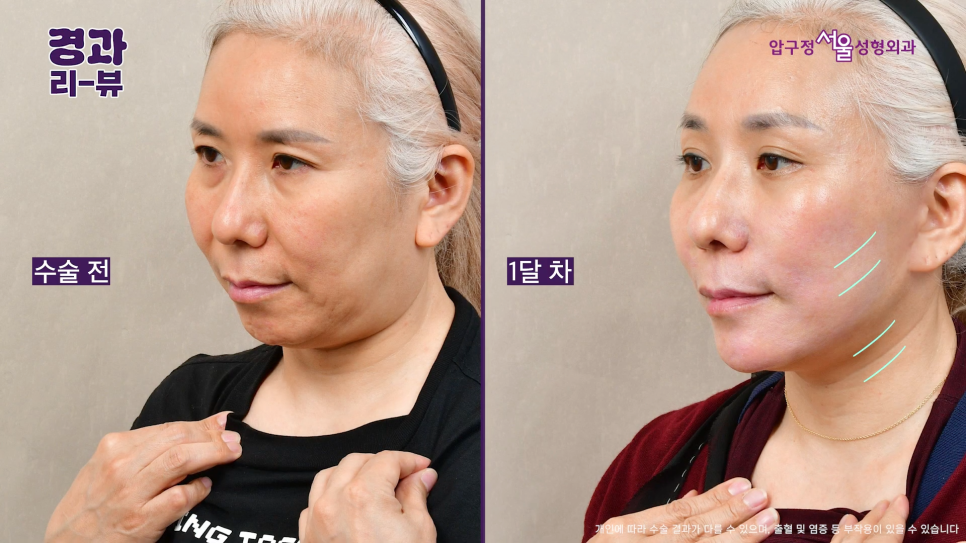
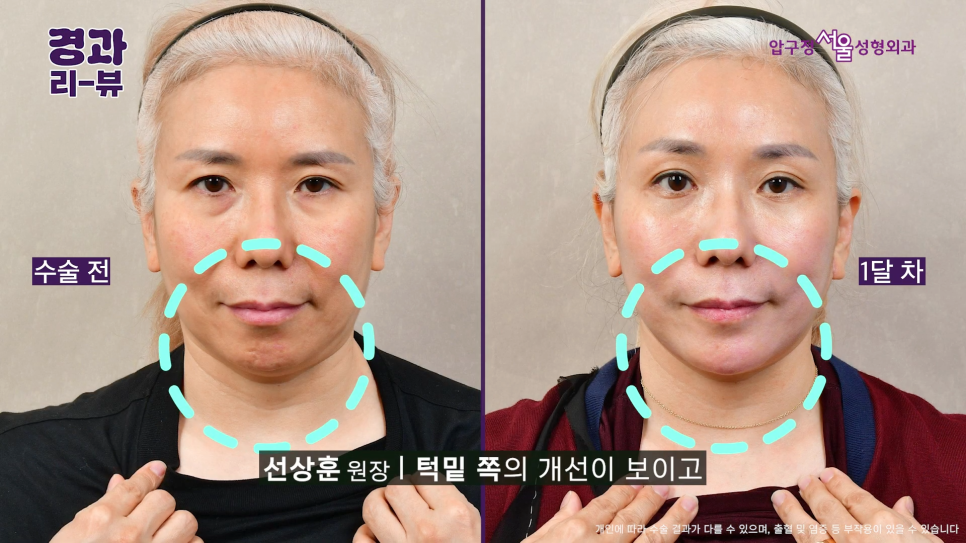
At the one-month follow-up, the front and side views could be compared. From the front, changes in the jawline area and improvement in the wrinkles around the mouth compared with before surgery could be observed. From the side, the prominence beneath the chin had decreased, and the removal of sagging skin and fat resulted in a smoother jawline and changes in the neck contour.
| Area Compared | Before Surgery | One Month After Surgery |
|---|
| Around the mouth | Sagging and wrinkles were observed | Appeared improved compared with before |
| Beneath the chin | Appeared prominent due to fat and skin sagging | The prominence appeared reduced |
| Jawline | The boundary appeared indistinct due to sagging | A more defined change was observed |
| Neck contour | Sagging in the lower area was a concern | Changes were observed after the lift |
When looking at before-and-after facelift cases, it is important not to expect identical changes for everyone. This is because the pattern of facial sagging, submental fat, and neck condition before surgery varies from person to person.
This actual case of a patient in her mid-50s involved examining not only changes in the nasolabial folds and around the mouth, but also sagging beneath the chin and in the neck.
When people see how their face has changed with age, many wonder, “Can I go back to how I looked before?” However, the important thing is not to expect exactly the same result as someone else, but to accurately determine which areas of your current face have changed and which improvement methods are appropriate.
If you are considering a facelift or neck lift, refer to before-and-after cases involving people in a similar age group, but also consult with a medical professional to assess your own skin laxity, facial structure, and the condition beneath your chin and in your neck.