Revision Double-Eyelid Surgery at Apgujeong Seoul Plastic Surgery
Methods by Type of Revision Eye Surgery

Hello, this is Apgujeong Seoul Plastic Surgery.
Double-eyelid surgery is one of the most commonly performed cosmetic procedures, so many people consider revision eye surgery when they are dissatisfied with the results. However, revision surgery is not necessarily more difficult than the initial procedure in every case. Because the current condition of the eyes and the changes in the tissue caused by the previous surgery must be taken into account, achieving the desired result precisely can be challenging.
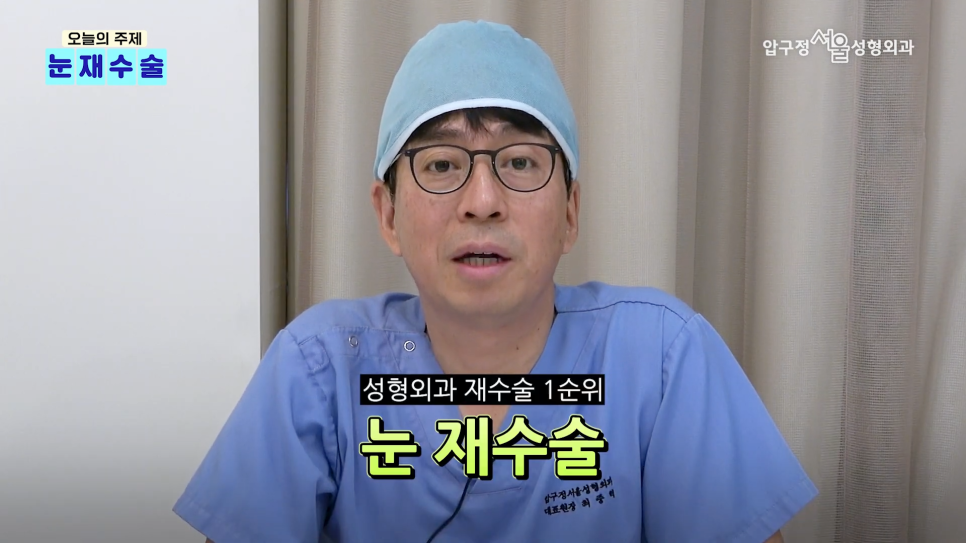
Conversely, depending on the existing problem, a relatively simpler approach may be possible than with the initial surgery. Ultimately, what matters is not simply whether revision surgery can be performed, but accurately identifying the current problem.
Type 1.
When the double-eyelid crease is too high, thick, and pronounced
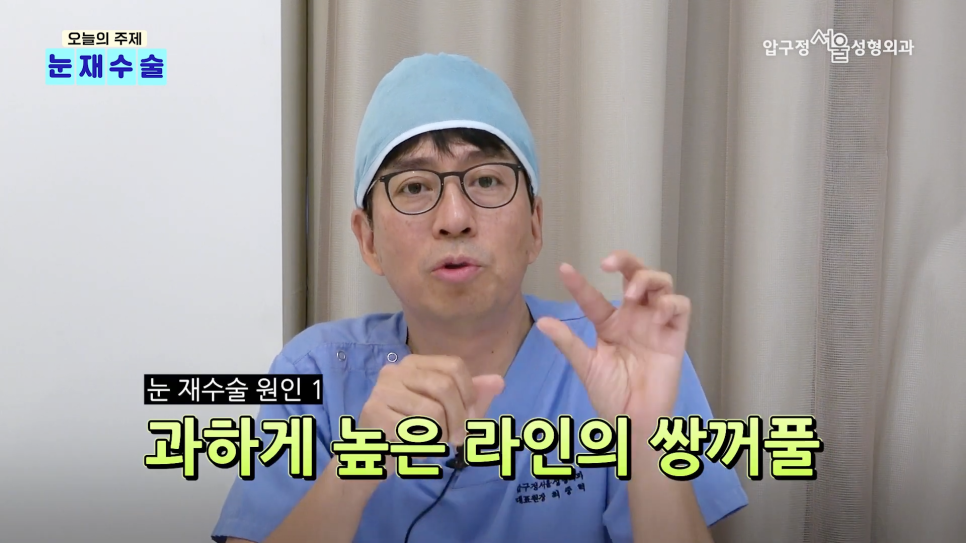
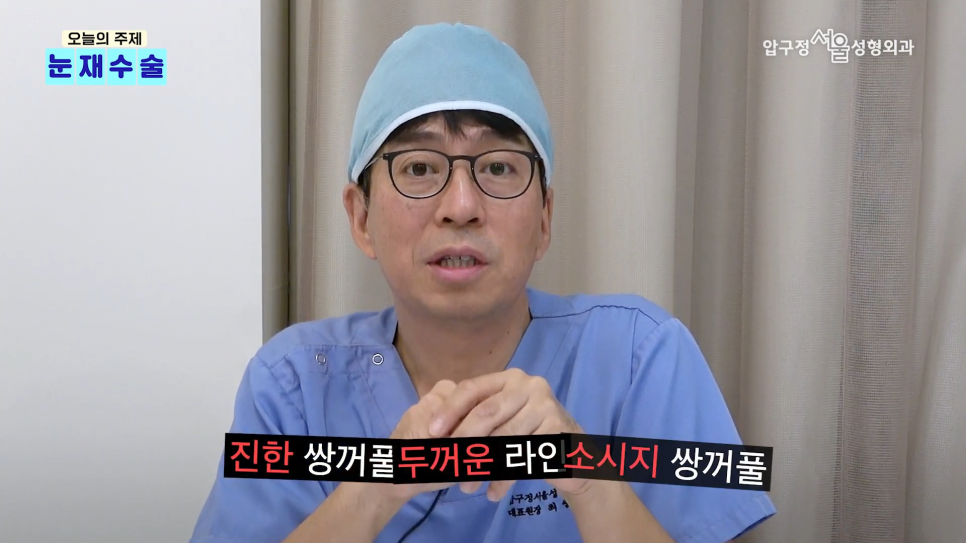
In some cases, the double-eyelid crease is excessively high, thick, or pronounced, making the surgery appear obvious. This is often described as a “sausage” appearance.
| Concern | Surgical approach |
|---|
| The double-eyelid crease is too high | Lower the existing crease |
| The crease is too thick and pronounced | Refine the existing crease and create a new crease |
| The skin or fatty tissue is thick | Consider the tissue within the necessary range |
Lowering a high double-eyelid crease through revision surgery requires a particularly careful approach. The previously created crease must be released, and if the skin is thick or there is a significant amount of fat, those tissues must also be taken into account. Therefore, in many of these cases, the incision method is used.
Type 2.
When the double-eyelid crease is too low or has loosened


Conversely, the double-eyelid crease may be too low, making the eyes still appear small, or the result may feel insufficient despite looking natural. In such cases, a new crease can be created above the existing one.

After surgery, a double-eyelid crease may loosen entirely or only partially. As a result, the revision method may vary depending on the extent of loosening and the current condition of the eyes.
| Revision type | Characteristics |
|---|
| The crease is too low | Create a new crease above the existing one |
| The double-eyelid crease has loosened | Recreate the double-eyelid crease after assessing the loosened condition |
| Partial loosening | Determine the surgical plan after assessing the extent and pattern of loosening |
Type 3.
A problem with the force used to open the eyes rather than with the double-eyelid crease
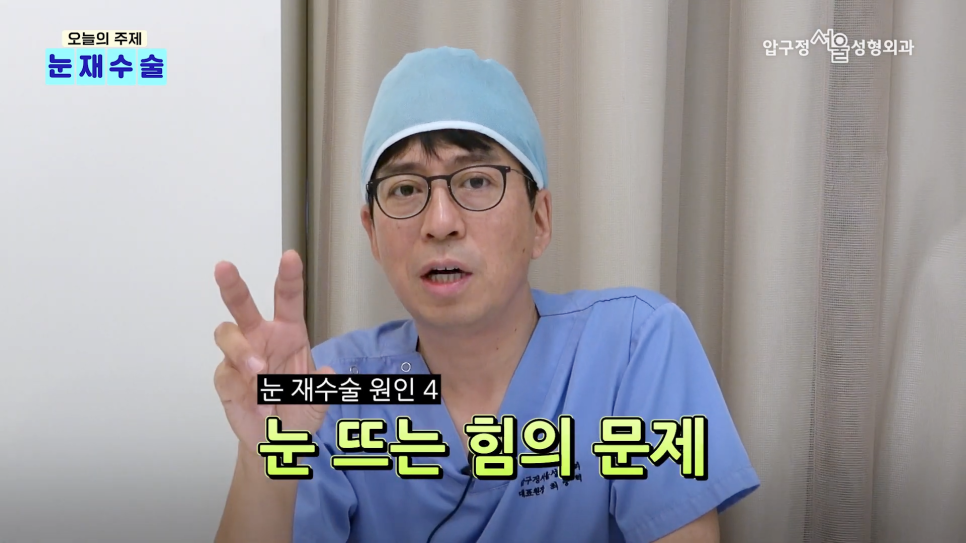
When considering a hospital for revision double-eyelid surgery, some people assume that the problem is limited to the double-eyelid crease. However, in some cases, the actual cause is weak eye-opening force. In such cases, rather than simply recreating the double-eyelid crease, the force used to open the eyes can be assessed, and eyelid-correction surgery may be considered if necessary. Therefore, in revision eye surgery, it is important not only to look at the result that the crease is unsatisfactory, but also to distinguish why the eyes currently look the way they do.
Revision Eye Surgery
When is it best to make a decision?

Immediately after surgery, the appearance of the eyes may continue to change. The double-eyelid crease may become lower, and its shape may change as the surgical area stabilizes. Therefore, it is important to assess the current condition accurately after the tissues have sufficiently stabilized. At a hospital for revision double-eyelid surgery, it is generally possible to assess whether revision surgery is needed and establish a plan approximately six months after the initial surgery.

Revision eye surgery is not simply a procedure to recreate the crease you want. First, it is necessary to accurately assess the current condition of the eyes, whether revision surgery is possible, the degree of improvement that can reasonably be expected, and the purpose of the revision surgery.
It is completely understandable to look in the mirror several times a day when you are dissatisfied with the results of eye surgery. However, rather than undergoing another procedure immediately out of impatience, it is important to have your current condition assessed objectively at a hospital for revision double-eyelid surgery after the tissues have stabilized.
If you are looking into a hospital for revision double-eyelid surgery, rather than simply listening to an explanation that “revision surgery is possible,” first check whether the issue with your eyes is a crease that is too high, a crease that is too low, a loosened crease, or a problem with the force used to open the eyes.
At Apgujeong Seoul Plastic Surgery as well, it is important to accurately assess these causes and the current condition before determining whether revision surgery is necessary and what approach to take.