Ultherapy, Thermage, and Onda are all known as lifting treatments, but they work on different layers and have different purposes.
The appropriate treatment may vary depending on skin thickness, fat volume, and degree of sagging, so it is important to accurately assess the condition of the face first.
Medical Advertising Review Approved by the Korean Medical Association No. 260601-중-213901호
What Is the Difference Between Ultherapy, Thermage, and Onda?
A Complete Guide to Recommended Lifting Treatments by Skin Thickness
Hello.
We are Jfeel Clinic,
pursuing the most beautiful look :)
Should I choose Ultherapy? Or Thermage?
This is the question we hear most often during lifting consultations.

However, as we continue the consultation,
people with thin skin,
people with fuller cheeks,
people concerned about a double chin,
and people whose nasolabial folds are becoming deeper
are often all considering the same lifting treatment.
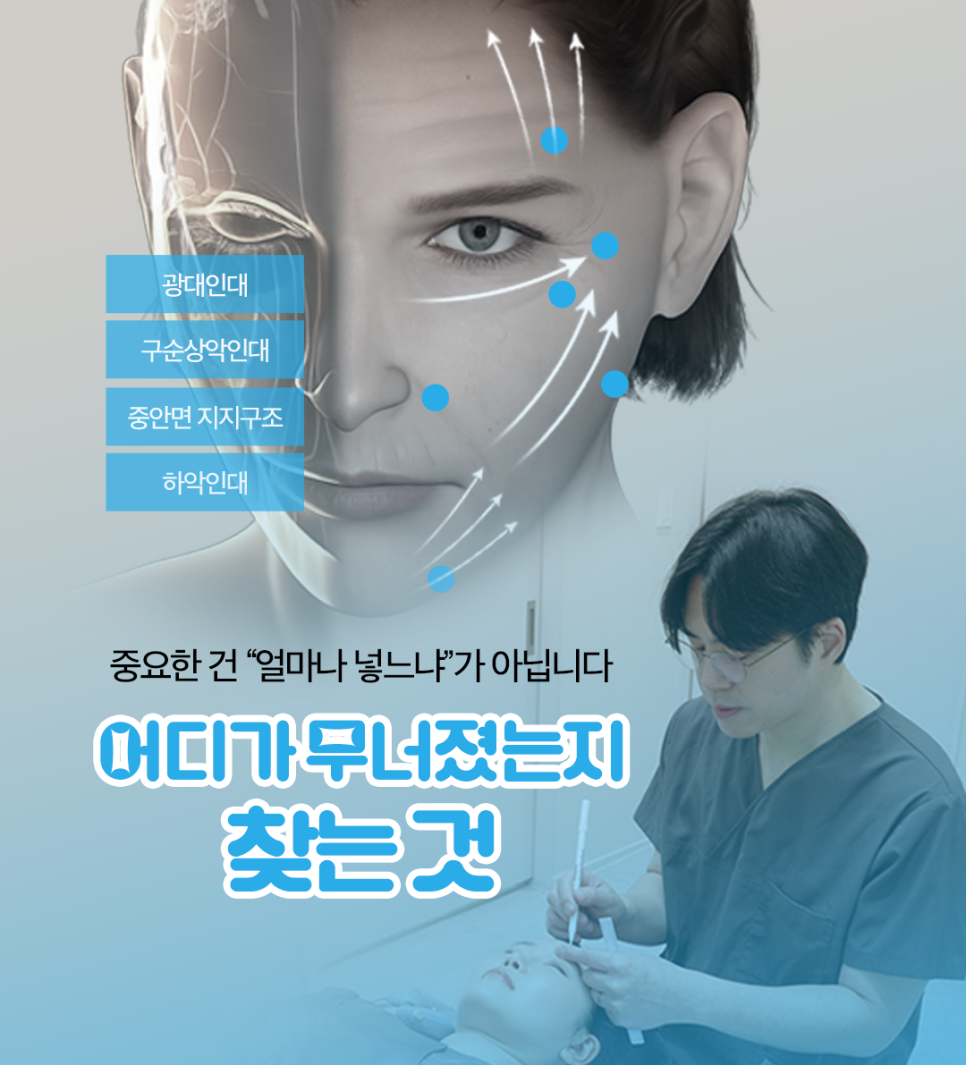
The problem is that the causes of sagging are not the same for everyone.
Whether the issue is skin elasticity,
fat,
or sagging of the deeper tissues,
the recommended lifting treatment may differ.
That is why, with lifting treatments, it is more important to first understand why the sagging has occurred and which layer is causing the problem than simply deciding which device is best.
Today, we will take a detailed look at the differences between Ultherapy, Thermage, and Onda, the effects of combining treatments, post-treatment care, and recommended lifting treatments by skin thickness.
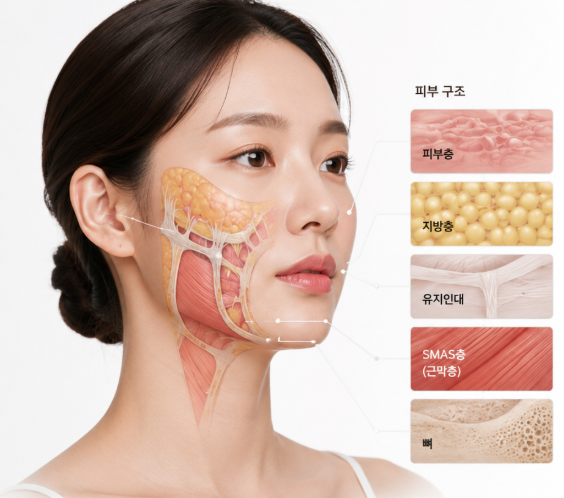
Why does facial sagging occur?
Many people think of aging simply as a loss of skin elasticity.
However, facial sagging is actually caused by several factors working together.
Common factors include:
✅ Reduced skin elasticity
✅ Decreased collagen
✅ Movement and increase of fat
✅ Changes in the retaining ligaments
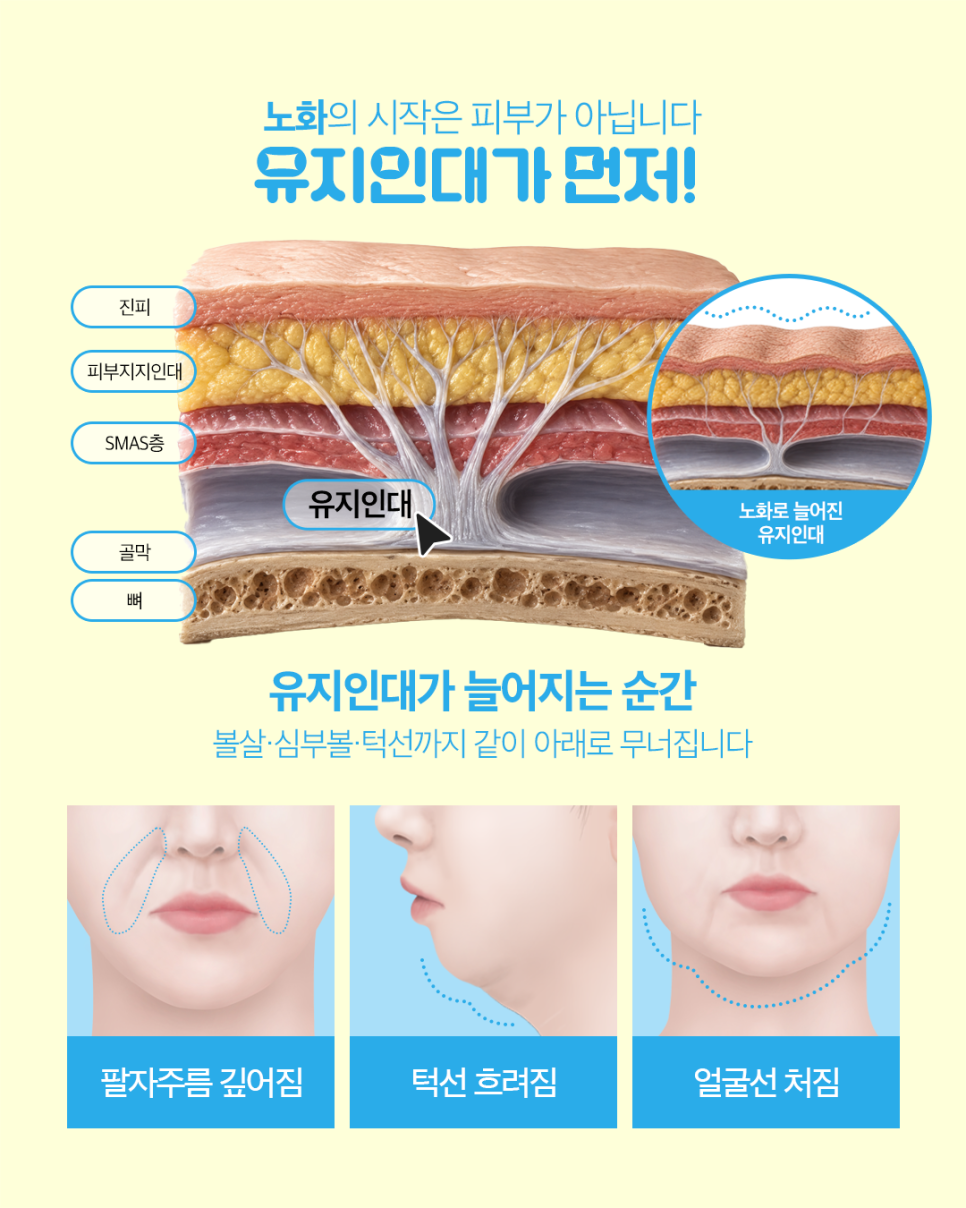
In particular, the retaining ligaments connect the skin to the deeper tissues and help support the face.
As aging progresses and elasticity decreases, the jawline may lose definition, and nasolabial folds or marionette lines may become deeper.
Therefore, lifting treatments should not be viewed as simply pulling up the skin. It is important to consider the structures that support the face, including the skin, fat, retaining ligaments, and SMAS layer.
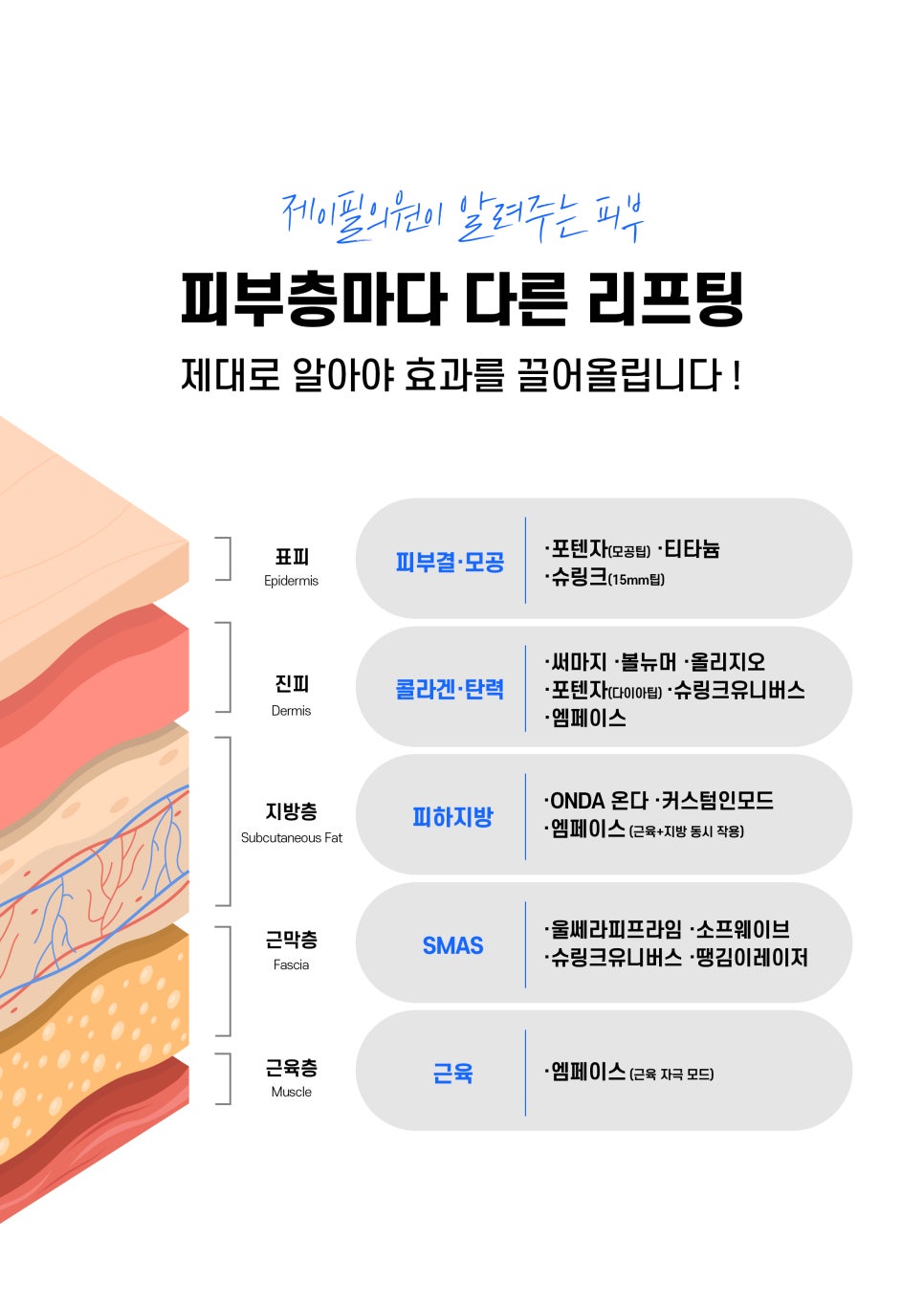
What is the difference between Ultherapy, Thermage, and Onda?
All three treatments are used for lifting, but they work on different layers and have different purposes.
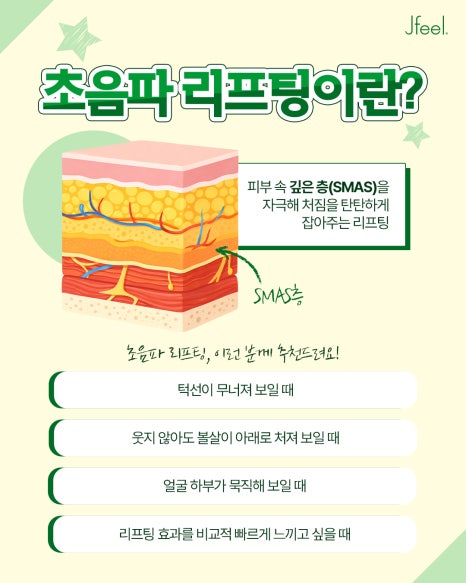
Ultherapy focuses on lifting the deeper SMAS layer,
while Thermage focuses on improving elasticity in the dermal layer.
Onda, in particular, may help reduce fat while also inducing tissue contraction and collagen regeneration, helping refine the facial contour and providing a tightening effect.
Therefore, when the face looks heavy due to a larger amount of facial fat, a fat-reduction effect may be considered. When there is not much facial fat, the goal may instead be a tightening effect that makes the skin feel firmer.
| Category | Ultherapy | Thermage | Onda |
|---|
| Energy | High-intensity focused ultrasound (HIFU) | Monopolar radiofrequency (RF) | Microwave |
| Main target | SMAS layer and deep tissues | Dermal and subdermal layers | Subcutaneous fat layer |
| Expected effects | Improvement in sagging, jawline and facial-contour lifting | Improved elasticity, fine lines, pores, and skin texture | Fat reduction, facial-line refinement, and lifting |
| When changes may be felt | Improvement over 1–3 months | Immediate tightening + collagen regeneration over 2–6 months | Changes begin after 2–4 weeks and improve over 1–3 months |
| Concerns it may be considered for | Loss of jawline definition, sagging cheeks | Reduced elasticity, fine lines, enlarged pores | Double chin, lower-cheek fullness, submental fat |
| Main focus | Contour lifting | Elasticity and skin texture | Fat and facial-line refinement |
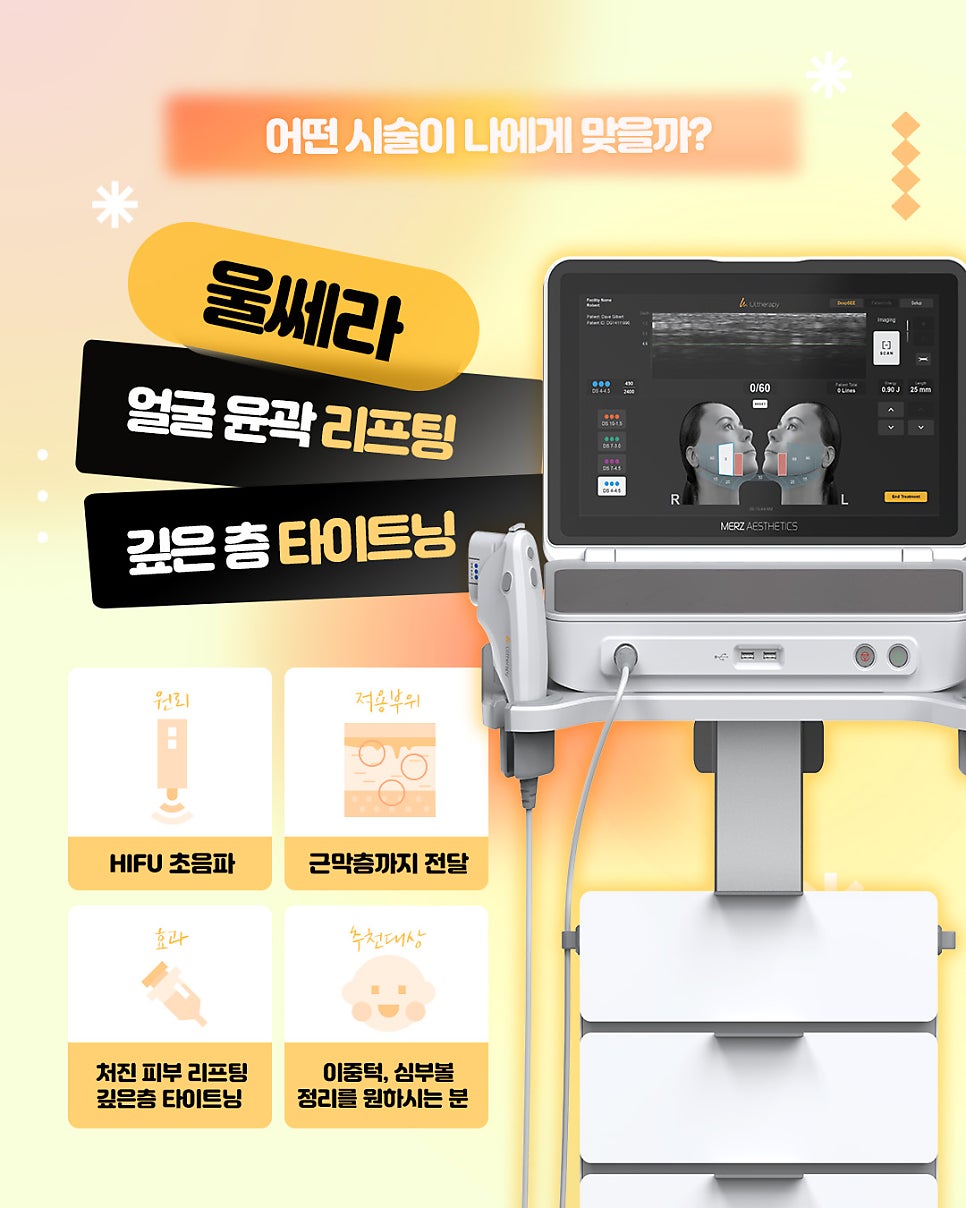
When may Ultherapy be considered?
Ultherapy may be considered after consultation in the following cases.
✔ When the jawline appears less defined
✔ When sagging cheeks are a concern
✔ When facial-contour lifting is desired
✔ When sagging of the deeper tissues is also suspected
However, when the skin is very thin or there is little cheek fat, it is important to plan the treatment carefully.
If the treatment is performed without considering the individual’s fat volume and skin thickness, changes such as hollowing or indentation in the cheeks may appear.
That is why, with Ultherapy, choosing the appropriate depth, energy level, and treatment-area design is more important than simply increasing the number of shots.
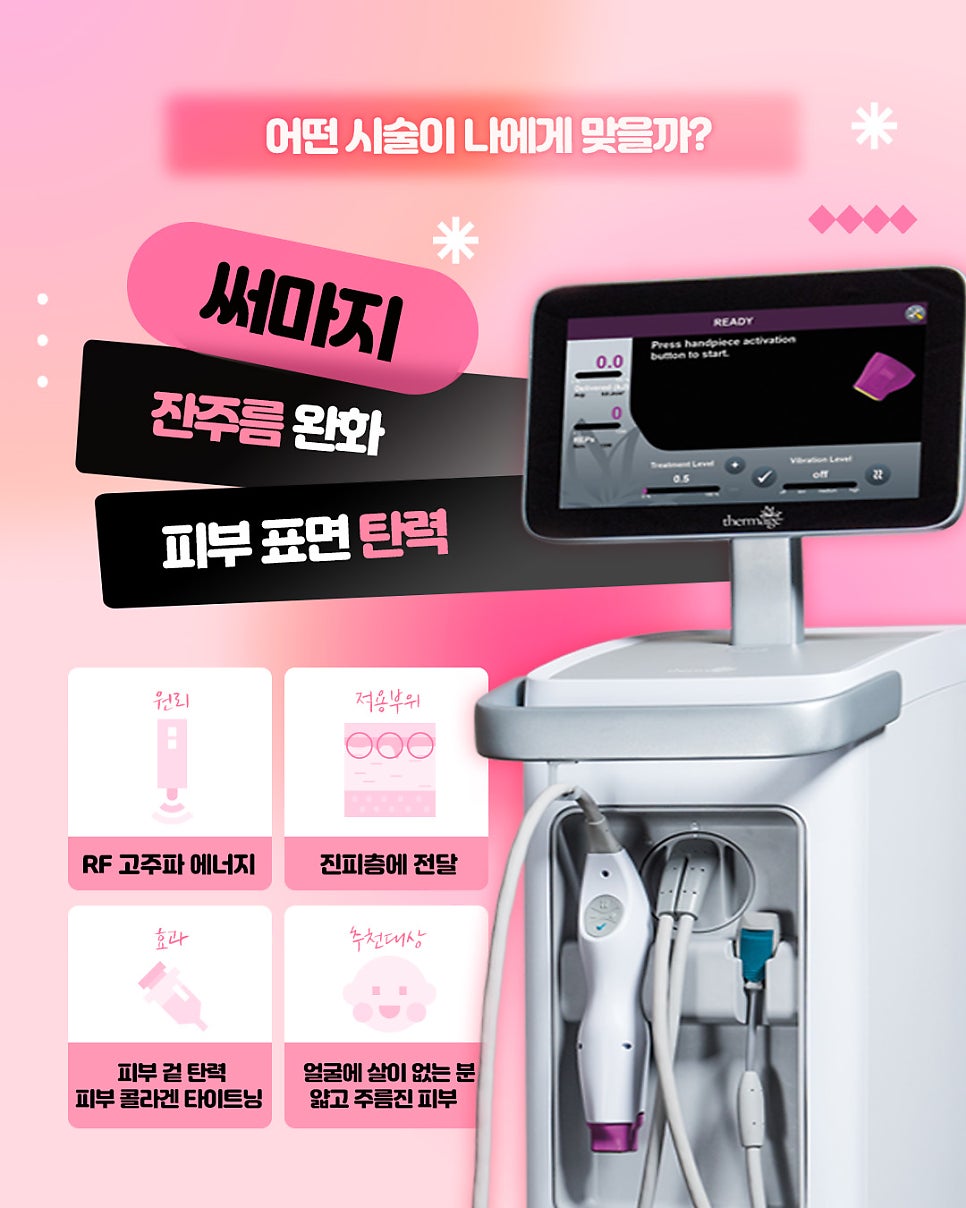
When may Thermage be considered?
Thermage is primarily considered for improving skin elasticity and texture.
✔ When the skin is thin and has lost elasticity
✔ When fine lines are a concern
✔ When the skin texture appears loose
✔ When pores appear enlarged
✔ When there is not much facial fat but reduced skin elasticity is a concern
Thermage uses heat energy within the skin with the goal of managing elasticity, so it may also be considered after consultation for people with thin or dry skin.
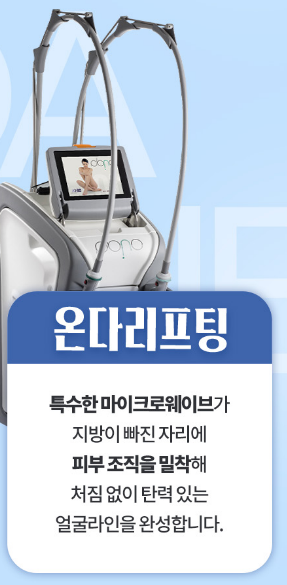
When may Onda be considered?
Onda may be considered when facial fat and facial-line refinement are concerns.
✔ When there is a double chin
✔ When submental fat is a concern
✔ When there is fullness in the lower cheeks
✔ When the face looks heavy
✔ When fat and reduced elasticity are concerns at the same time
However, rather than applying it aggressively to a face with little fat, it is important to check skin thickness and fat volume before planning the treatment.
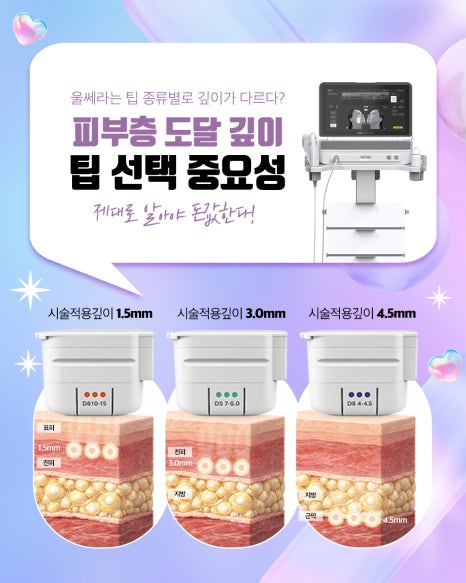
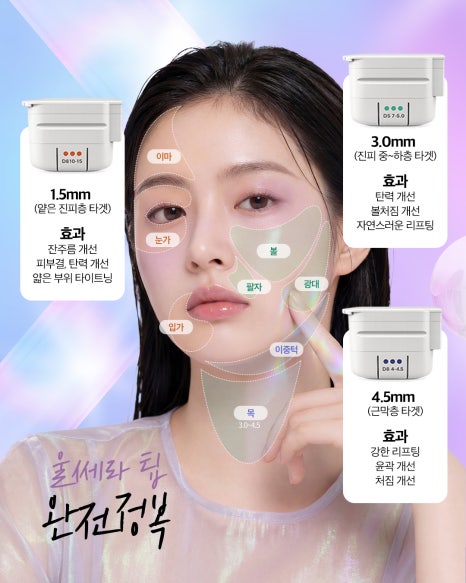
However, when the skin is very thin and there is little cheek fat, it is even more important to plan the treatment carefully.
Ultherapy is a powerful lifting device that targets the SMAS layer, but if it is performed without considering the individual’s fat volume and skin thickness, cheek indentation or hollowing may occur, potentially creating a more tired-looking appearance.
Therefore, rather than simply increasing the number of shots, it is important to accurately analyze the current condition of the face and design the treatment using an appropriate depth and energy level.
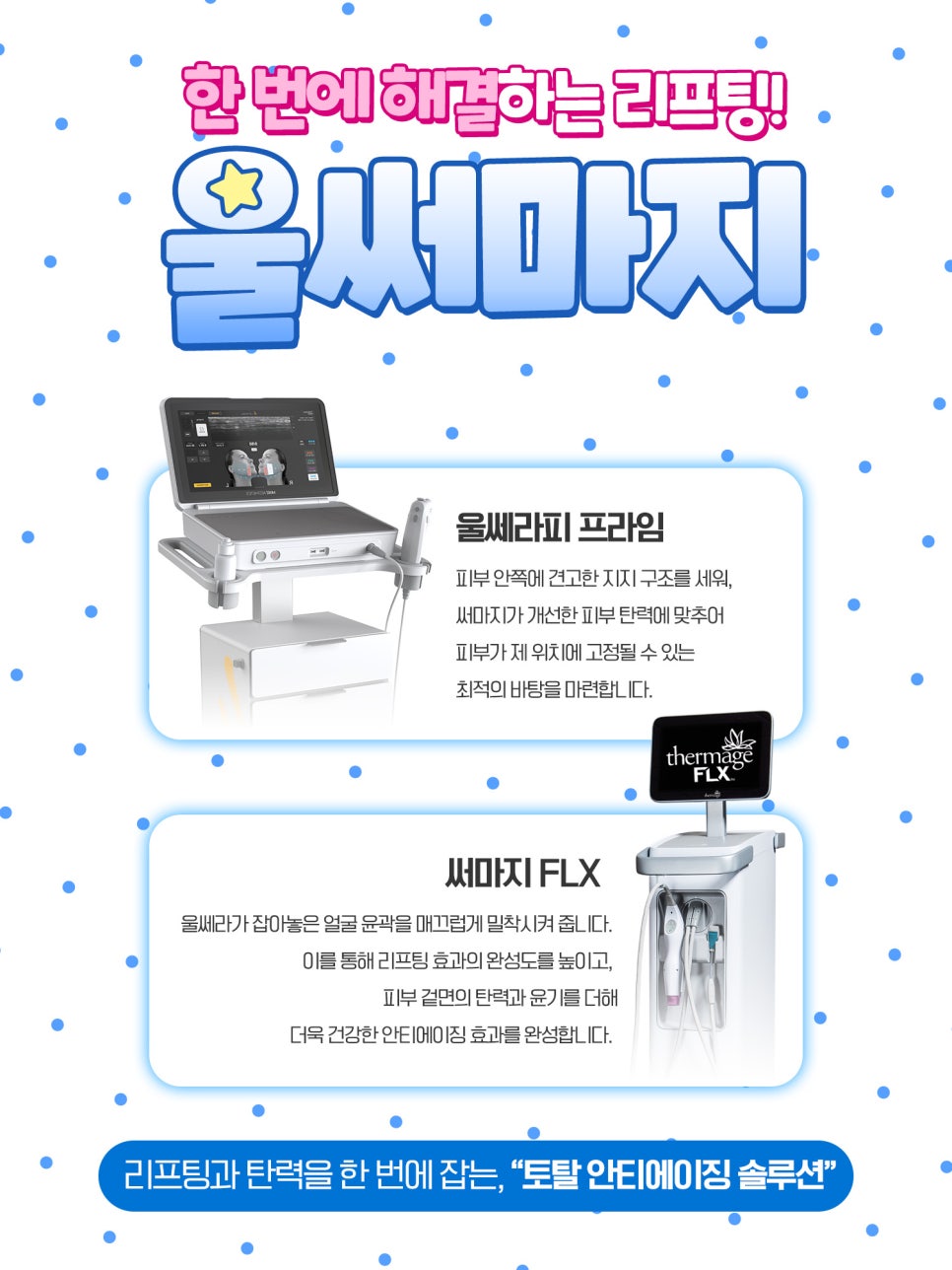
Why are Ultherapy, Thermage, and Onda sometimes combined?
Ultherapy + Thermage
Ultherapy targets the SMAS layer,
while Thermage targets the dermal layer.
Therefore, they are sometimes described as:
Ultherapy = structural lifting
Thermage = skin-elasticity lifting
If both concerns are present, combining the two may be considered.
Onda + Ultherapy
When there is a large amount of fat, the effects of lifting alone may feel limited.
In particular, when there is substantial lower-cheek or submental fat, the weight pulling the face downward itself may be a factor, so fat reduction and lifting may be considered together.
In this case:
1️⃣ Onda is used to reduce fat, and
2️⃣ Ultherapy is used to lift sagging tissue,
which may help create a more defined jawline and facial contour.
Onda + Thermage
This combination may allow for both fat reduction and improved skin elasticity.
It may be considered particularly when a double chin, lower-cheek fullness, and reduced elasticity are present together.
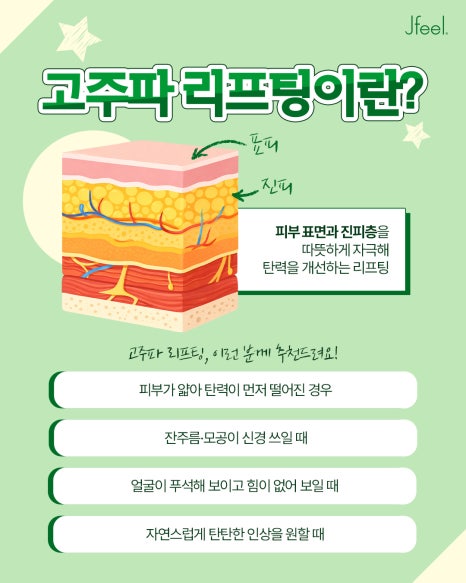
Recommended lifting treatments by skin thickness
The information below provides general examples. The treatment actually recommended may vary depending on an individual’s skin condition, including skin thickness, fat volume, and degree of sagging.
| Skin type and concern | Treatment that may be considered |
|---|
| Thin skin with reduced elasticity | Thermage |
| Thin skin with significant sagging | Ultherapy + Thermage |
| Little facial fat but loss of jawline definition and sagging cheeks | Ultherapy |
| Thick skin with a large amount of fat | Onda + Ultherapy |
| Double chin or substantial lower-cheek fullness | Onda |
| Fat and reduced elasticity together | Onda + Thermage |
| Sagging, reduced elasticity, and excess fat all present | Ultherapy + Thermage + Onda |
The important point is not simply whether the skin is thin or the cheeks are full, but to assess the overall balance of the face together with the cause of the sagging.
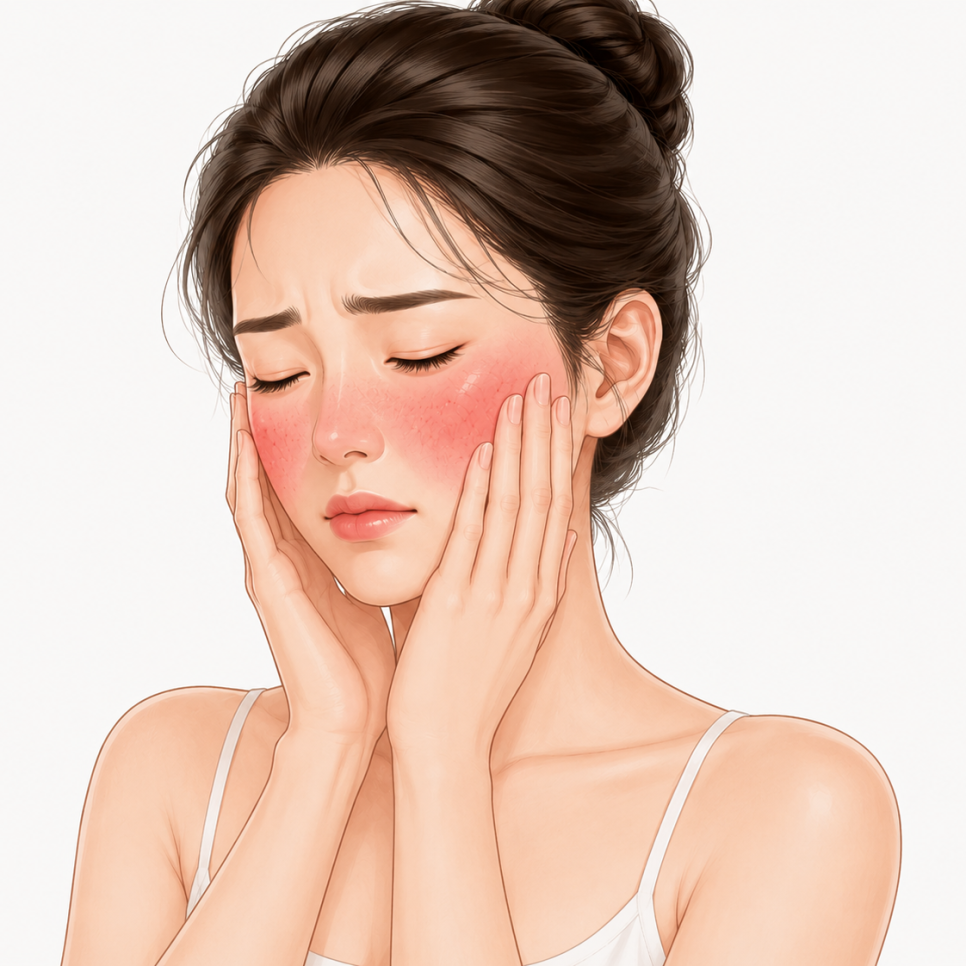
What precautions should be taken after a lifting treatment?
After Ultherapy, Thermage, or Onda, temporary redness, warmth, swelling, tightness, or pain may occur depending on the individual.
The following measures may help after treatment:
✔ Adequate moisturizing
✔ Sun protection
✔ Caution with alcohol and smoking
✔ Avoiding saunas and steam rooms
✔ Avoiding strenuous exercise
✔ Caution with peeling and exfoliation
The appropriate care methods and duration may vary depending on the individual’s condition and the treatment area, so it is best to follow the medical staff’s instructions.
After Ultherapy, as collagen regeneration takes place within the skin, a lifting effect may develop over 2–3 months. In rare cases, temporary tingling or altered sensation may occur.
With Thermage, the skin may feel firmer immediately after treatment, followed by collagen regeneration over the subsequent several months.
With Onda, gradual changes are often noticed beginning 2–4 weeks later as fat reduction and tissue-regeneration processes take place. Temporary pressure or soreness may occur.
All lifting treatments vary from person to person and are not permanent procedures, so maintenance treatments may be considered depending on the condition.
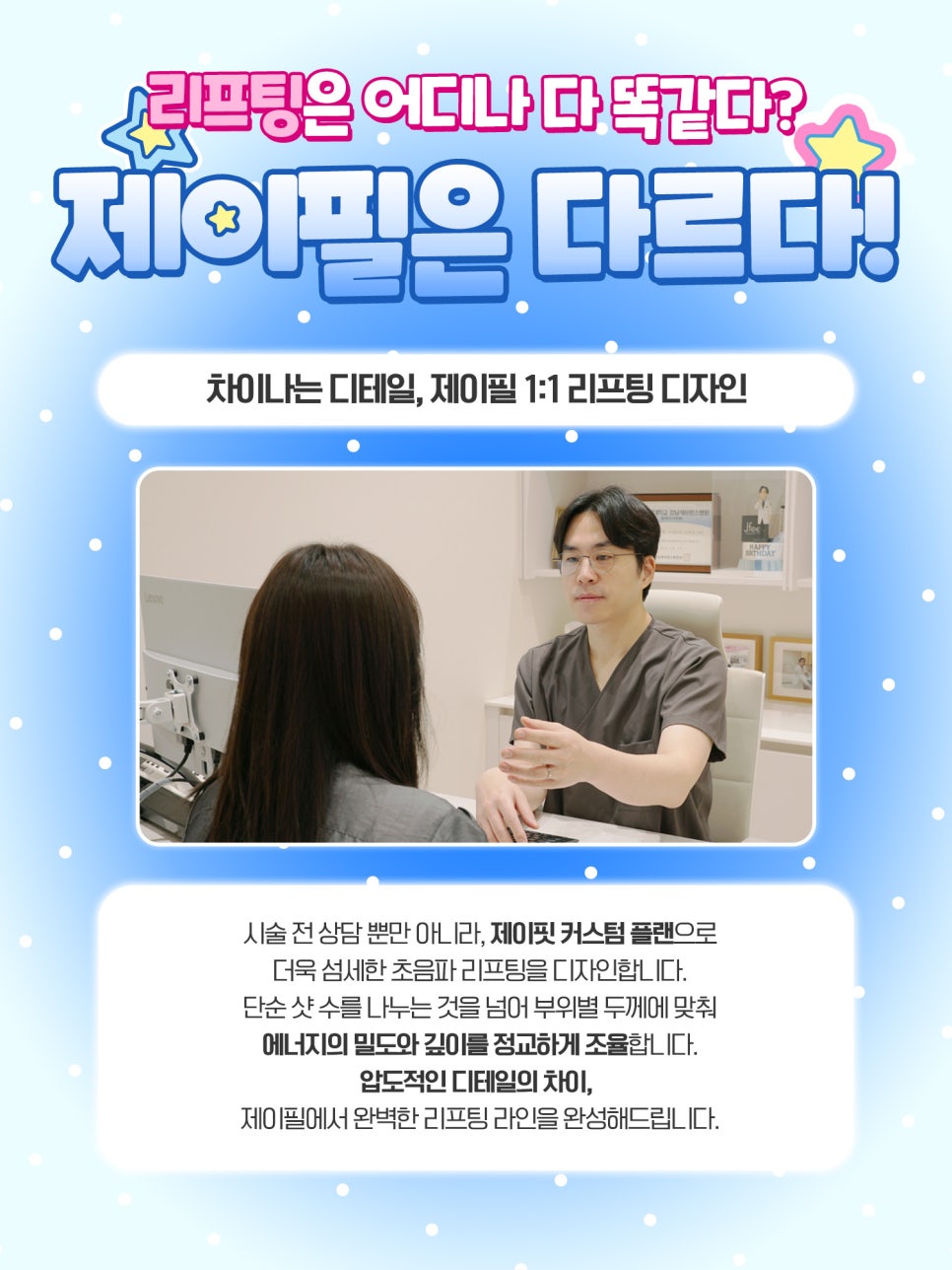
Ultherapy, Thermage, and Onda FAQ
Q. How long do the effects of Ultherapy last?
The duration varies by individual, but the effects may be maintained for a certain period. Since aging continues, maintenance treatments may be considered depending on the condition.
Q. When can I start to feel the effects of Thermage?
Depending on the individual, the skin may feel firmer after treatment. Gradual changes may then be expected as the collagen-change process continues.
Q. When do changes from Onda become visible?
Although individual results vary, gradual changes may be noticed over several weeks depending on the processes of change in the fat layer and tissues.
Q. Which is more painful, Ultherapy or Thermage?
Pain varies greatly from person to person.
Some people experience pressure or soreness in the deeper layers with Ultherapy, while others feel heat during Thermage.
The sensation may vary depending on the anesthesia method, energy intensity, and skin thickness.
Q. How many shots are needed to see an effect?
More important than a predetermined number of shots is treatment design tailored to the individual’s face size, skin thickness, fat volume, and degree of sagging.
It is important to treat the appropriate areas and depths rather than simply using a large number of shots.
Q. Do I need to receive Ultherapy, Thermage, and Onda all together?
Not everyone needs combined treatments.
The necessary treatment may vary depending on skin elasticity, fat volume, and degree of sagging, so it is best to create a plan through consultation.
It is also important to check that genuine devices and genuine tips are used.
For Ultherapy and Thermage, it is important to check not only whether genuine devices are being used but also whether genuine tips are used.
In addition, even with the same device, the energy settings and treatment design may vary depending on skin thickness, fat volume, and degree of sagging.
Therefore, rather than checking only the device name, it is best to also confirm whether the device is genuine and whether an individualized treatment plan is established.

It is also important to check that genuine devices and genuine tips are used.
For Ultherapy and Thermage, not only the use of genuine devices but also the use of genuine tips may affect the results and safety.
In addition, even with the same device, the energy settings and treatment design may vary depending on skin thickness, fat volume, and degree of sagging.
Therefore, rather than checking only the device name, it is important to confirm, along with the device’s authenticity certification, that an individualized treatment plan is established following a thorough assessment.

Ultherapy, Thermage, and Onda are all representative lifting treatments, but they work on different layers and have different purposes.
Therefore, rather than comparing which device is better, it is important to first identify whether the cause of the current facial sagging is reduced skin elasticity, increased fat, or sagging of the deeper tissues.
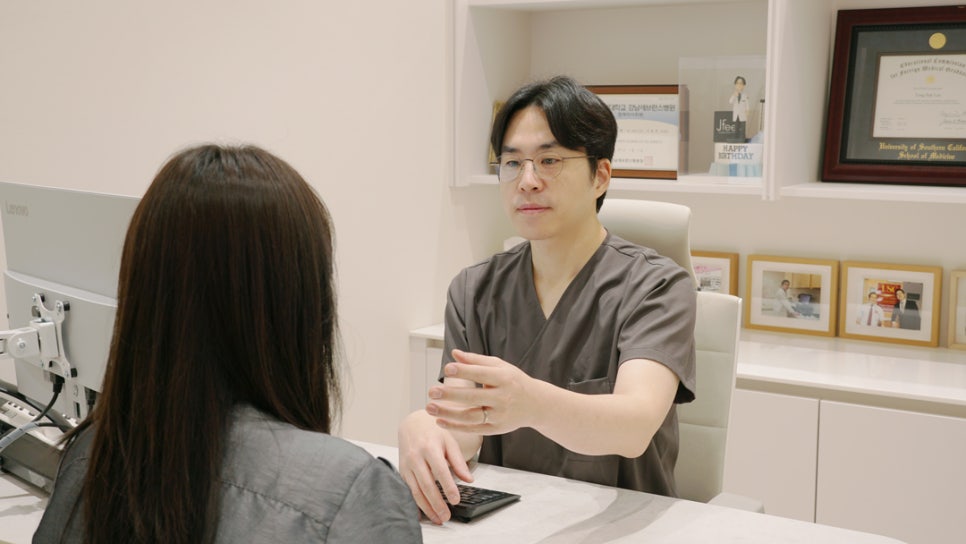
Since the appropriate treatment may vary depending on skin thickness, fat volume, and degree of elasticity, we recommend creating a lifting plan suited to you through a thorough consultation.

If you have any questions before treatment or would like a consultation, please feel free to contact Jfeel Clinic at any time!
Let’s create your best look together with Jfeel today💕
👉 Consultation and appointment required!
☎ 02-533-0060
📍 Gangnam Branch: B1, Starplex Building, 438 Gangnam-daero, Gangnam-gu, Seoul
📍 Hongdae Branch: 5th and 7th Floors, Mirae Plaza, 166 Yanghwa-ro, Mapo-gu, Seoul
📍 Gangbyeon Branch: 3rd Floor, Burger King Building, 466 Achasan-ro, Gwangjin-gu, Seoul
👉 If you found today’s post helpful, please like and share! 😊
👉 If you have any further questions, please get a consultation! ❤️