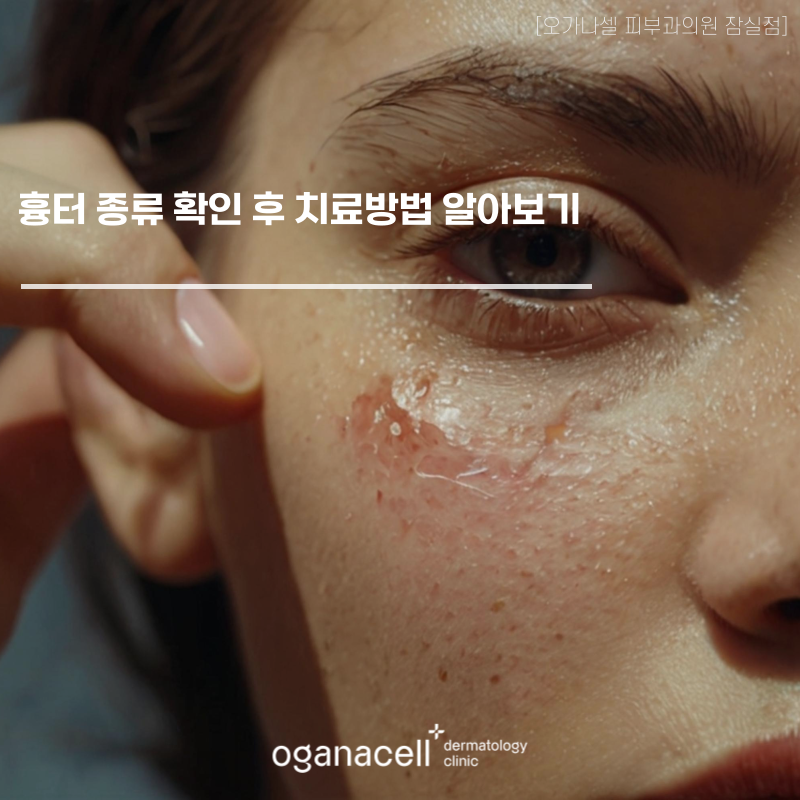
Learn About Scar Types and Treatment Methods
Scars or wounds can form on the skin of the face or other parts of the body for various reasons.
If a wound is not treated in time, a scar may form,
so care according to the type may be necessary.
Not all scars are simple cuts or scratches; raised
keloids or severe surgical scars may require different care
depending on the individual.
Let’s take a look at the different types of scars and
their treatment methods, and see how they differ!

What Is a Scar?
A scar refers to tissue that forms during the process of
skin injury and healing. As the damaged area of the skin
recovers, the scar that forms there may take on a shape
different from the original skin and settle in place.
Scars form differently depending on the size and depth of the wound,
the speed of healing, and an individual’s skin condition.
Types of Scars
There are various types of scars, and because each type
has different causes and characteristics, appropriate care
may be needed depending on the type.
Scar types include keloid, hypertrophic, contracture, atrophic,
and hypertrophic scars.
Shall we take a closer look at each scar type?
- Keloid Scar
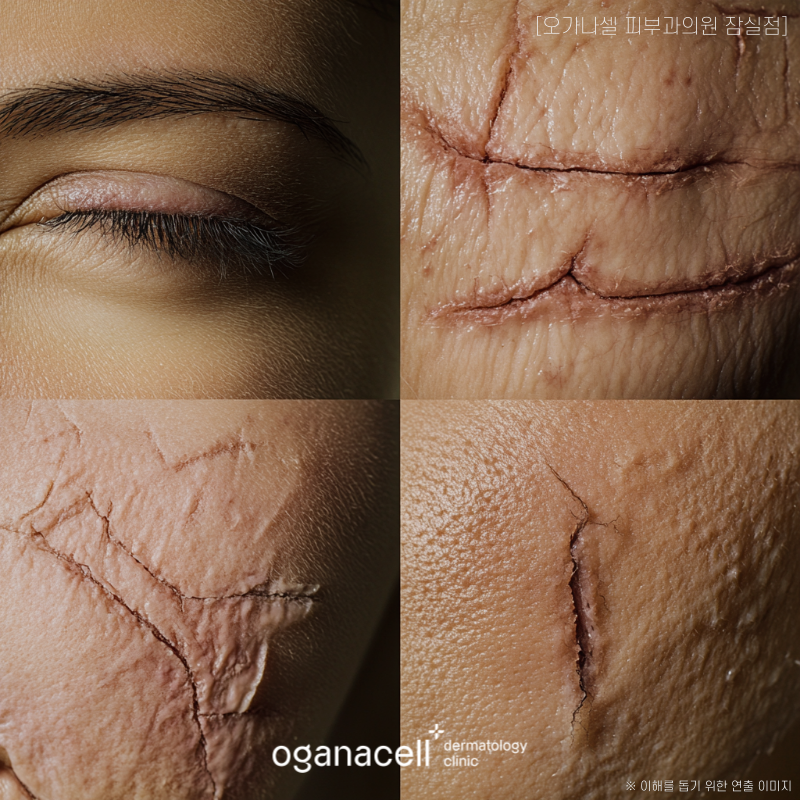
A keloid scar is a type of scar that rises above the skin
surface because excess collagen forms during the healing process.
Keloids usually have irregular wound borders and a
protruding appearance above the skin surface.
They are generally red or purple and may fade in color
over time.
- Hypertrophic Scar
A hypertrophic scar is a scar in which collagen accumulates
too much within the skin as a wound heals, but unlike a
keloid, it does not extend beyond the skin surface or protrude above it.
A firm, thick nodule usually forms at the wound site,
and over time its size may decrease and its color may change.
- Contracture Scar
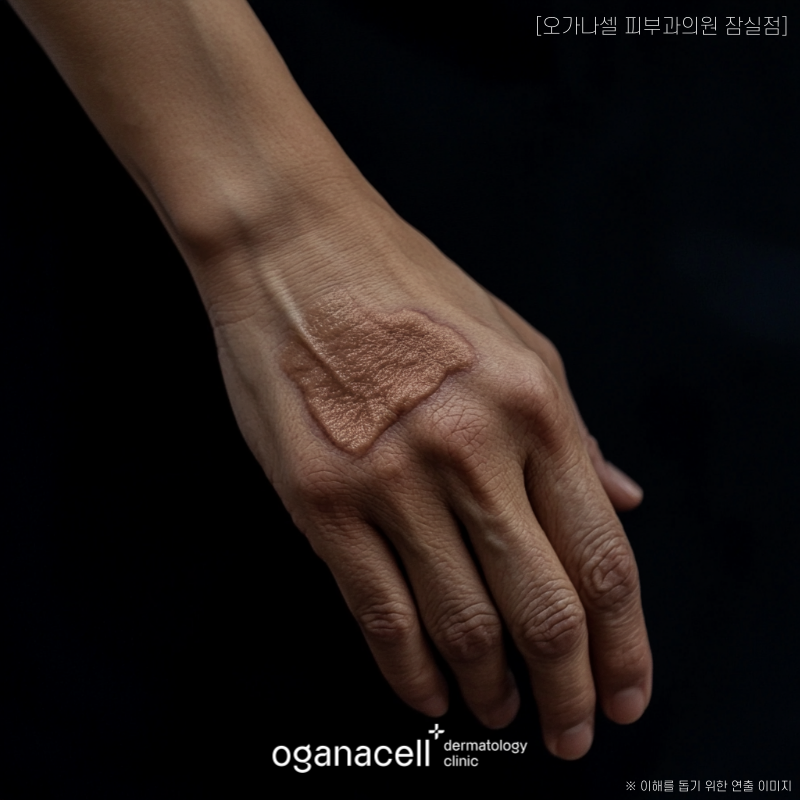
Contracture scars commonly occur in areas damaged by
burns or severe tears. This scar causes the skin and the
tissues beneath it to contract, making them firmer and
narrower than the original skin.
Contracture scars can also cause functional problems,
and there may be a pulling sensation in the skin or limitations in movement.
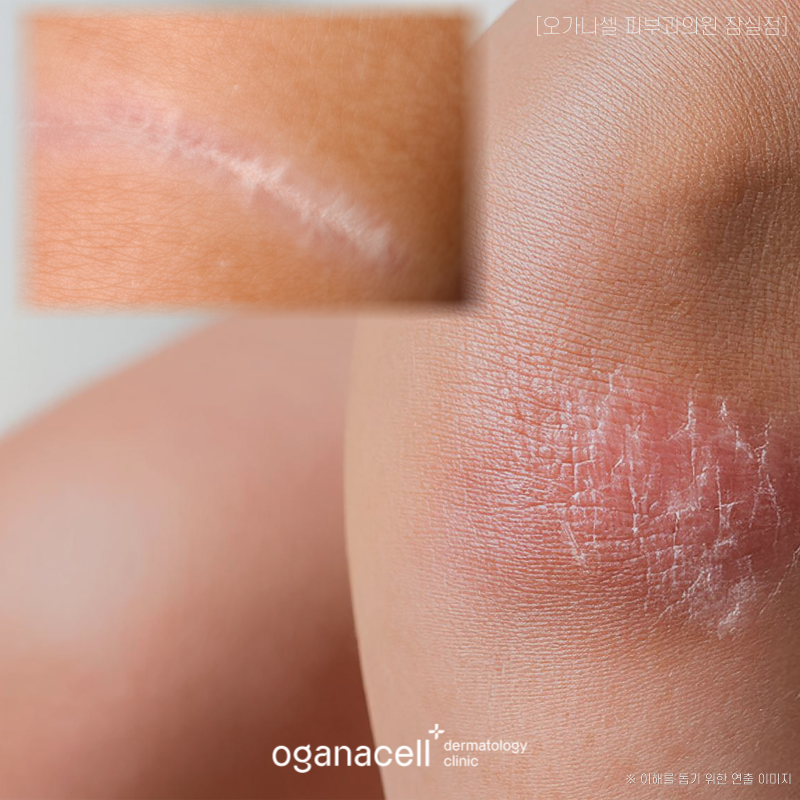
- Atrophic Scar (or Sunken Scar)
An atrophic scar is a scar that forms when a wound occurs in the deep layers of the skin
and appears as a depressed or sunken area.
It is mainly caused by acne, chickenpox, wounds, and similar factors,
and appears as an unevenly healed, pitted surface,
located lower than the surrounding skin and noticeable in appearance.
- Hypertrophic Scar
A hypertrophic scar is a scar that occurs when the skin at the wound site becomes excessively
thick. It is similar to a keloid scar, but its size is limited to the wound area.
This scar may decrease in size over time,
but if not managed, it can become noticeable.

How Are Scars Treated?
It is important to receive treatment using the method that
matches the type and condition of each scar.
The main goals are to improve the scar’s size, shape, and color,
and to minimize functional problems caused by the scar.
However, it should be noted that not all scars disappear completely,
and it may take a certain amount of time.
Keloids and hypertrophic scars are scars caused by excess collagen production,
so methods to suppress their growth may be considered.
Contracture scars mainly cause problems due to skin tightening,
so methods to restore skin flexibility are needed.
Atrophic scars are scars that occur in the deep layers of the skin,
and treatment is mainly carried out by reconstructing the skin.

Common scar care methods include moisturizing care,
sun protection, promoting blood circulation, and medication treatment!
Above all, it is important to manage scars using a method
that considers the characteristics of the scar and the individual’s skin condition.
Scars may be difficult to remove completely, but with proper
treatment and care, their appearance and function can be improved.
Thank you.
#ScarRemoval #ScarTypes #ScarTreatment