Melasma refers to brown
or gray-brown pigment changes that mainly appear on areas
frequently exposed to sunlight, such as around the eyes,
cheekbones, and forehead.
It is sometimes mistaken for simple blemishes,
but its causes and progression are a little more complex.
It appears as various internal and external factors
work together, and lifestyle and skincare habits
may also be deeply related.
So, shall we take a look at whether there is a connection?
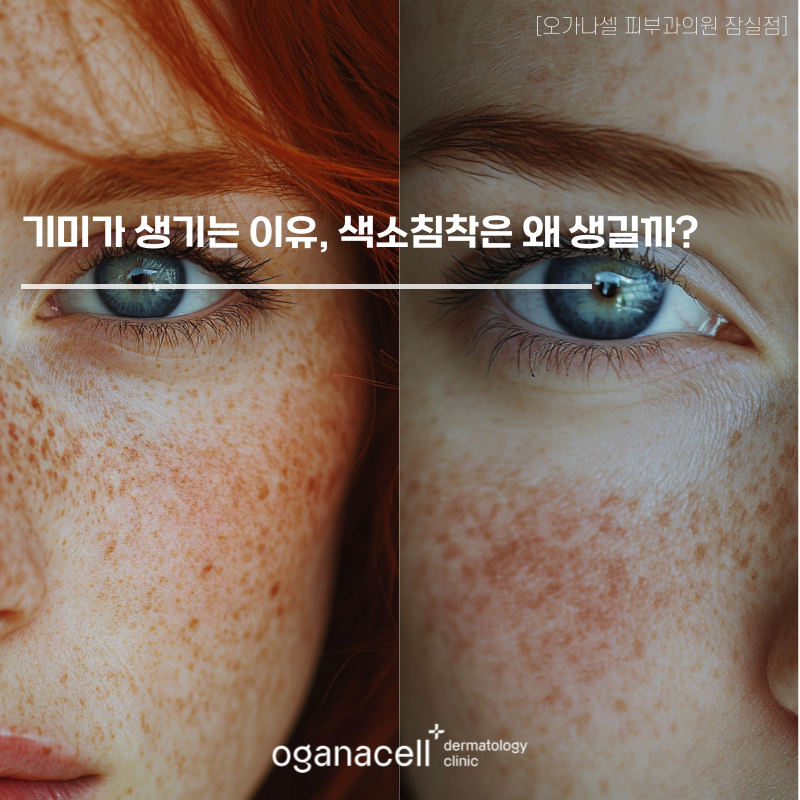
- The relationship between melanin production and melasma
Melasma occurs due to excessive production of melanin pigment.
When the skin is exposed to ultraviolet rays, melanocytes
become activated and produce pigment.
Originally, this function is a defense mechanism to
protect the skin from ultraviolet rays,
but if this process becomes excessive or abnormally
continues,
excess pigment remains in the skin.
As a result, darker brown
patches than the skin tone appear.

- There are various factors besides ultraviolet rays
In addition to ultraviolet rays, hormonal changes, genetic factors,
skin friction, and the use of cosmetics with certain ingredients
are also associated with melasma. In particular, pregnancy,
use of oral contraceptives, and menopause-related changes in
female hormones can directly affect the skin,
so it is important to pay attention to changes in your skin in daily life.
Also, the habit of touching or rubbing your face frequently can
cause irritation and make hyperpigmentation worse.
It is also important to keep your hands clean in everyday life!

- The difference between melasma, blemishes, and freckles
Melasma is hyperpigmentation with blurry boundaries and a
broad spread, and it is often confused with freckles or blemishes.
Freckles are small spot-like pigmented lesions that
appear relatively early in life,
and blemishes often appear as pigment changes caused by
external irritation or after an injury.
It can be difficult to distinguish them with the naked eye,
so skin care methods may also differ depending on the type of pigment.

- Can cleansing habits affect melasma?
Cleansing that is too vigorous, exfoliating too often,
and washing the face with water that has a large temperature difference
can irritate the skin barrier.
There is also the view that such repeated physical stimulation
reduces the skin's defense,
and can further stimulate the activity of pigment cells.
It is helpful to make cleansing a habit that is gentle and brief,
with an approach that minimizes irritation to the skin.

- Things to be careful about in daily life
To prevent melasma and reduce aggravating factors,
wearing sunscreen is key.
Even on cloudy days, ultraviolet rays are present,
so consistent sun protection is important regardless of
the season or weather.
In addition, reducing habits that irritate the skin,
and choosing skincare or cosmetics that are low-irritation
and centered on moisturizing
can be helpful.

Why Does Melasma Develop? Many Different Causes!
As we have seen so far, melasma develops due to various causes,
such as ultraviolet rays and genetic factors.
Of course, it is also a symptom that naturally appears as
part of aging over time.
Daily care can have an effect, so we recommend checking
your lifestyle habits as well!
Thank you,
The Jamsil branch of Ogana Cell Dermatology Clinic is located
on the 11th floor of the Medical Center in Lotte World Tower.








#melasma-causes #melasma-hyperpigmentation #Jamsil-dermatology-clinic